
工业AI平台

Search documents
黄仁勋最新演讲
第一财经· 2026-02-04 03:42
Core Viewpoint - NVIDIA's CEO Jensen Huang emphasizes the transformative impact of AI and virtual twin technology on industrial processes, predicting a shift towards software-defined manufacturing and design in the coming years [2][3][4]. Group 1: AI and Virtual Twin Technology - Huang highlights that the integration of NVIDIA's AI infrastructure with Dassault Systèmes' virtual twin technology will enable engineers to work at a scale 100,000 times larger than before, allowing for real-time simulations and designs [3]. - The combination of physical AI and simulation will revolutionize design processes, enabling real-time predictions of physical behavior and facilitating the organization of production lines in virtual environments [3][4]. Group 2: Industrial Infrastructure Development - Huang notes that the world is undergoing the largest industrial infrastructure build-out in history, valued at trillions of dollars, necessitating the expansion of chip, computer, and AI factories [4]. - The complexity of these factories requires pre-construction design and simulation in virtual twin environments to save time and costs [4][6]. Group 3: NVIDIA's Industrial AI Initiatives - Over the past year, NVIDIA has made significant strides in the industrial AI sector, including the announcement of the world's first industrial AI cloud in Germany, equipped with 10,000 Blackwell GPUs [6]. - Huang envisions that every manufacturer will operate two factories: one for producing products and another for creating the intelligence that drives those products [6].


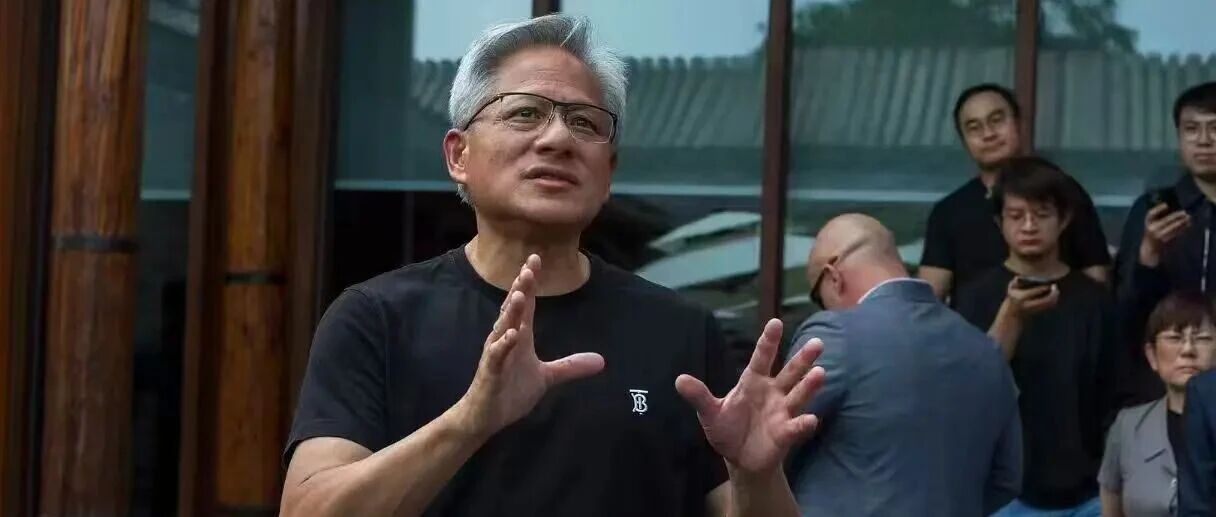
黄仁勋全球连轴转 最新演讲称AI将重塑全球工厂
Xin Lang Cai Jing· 2026-02-04 00:52
Core Viewpoint - NVIDIA's CEO Jensen Huang emphasizes the transformative impact of AI and software on industrial processes, highlighting a shift towards fully digital operations in manufacturing and logistics [1][6]. Group 1: AI and Software Integration - Huang discusses the significant advancements in AI models over the past year, particularly in the context of industrial applications [1]. - The future of design and manufacturing will see a complete reliance on software, moving from physical to digital processes [1][6]. - NVIDIA's collaboration with Dassault Systèmes aims to leverage virtual twin technology to create an industrial AI platform, enhancing capabilities in various fields such as biology, materials science, and engineering [3][8]. Group 2: Virtual Twin Technology - The integration of Dassault's virtual twin technology with NVIDIA's AI infrastructure will allow engineers to work at a scale 100,000 times greater than before, utilizing real-time generated virtual environments [3][8]. - This technology will enable real-time simulations and design processes, fundamentally changing how products are developed and tested [3][8]. Group 3: Industrial Infrastructure Development - Huang highlights the ongoing global industrial infrastructure buildout, valued at trillions of dollars, necessitating the expansion of chip, computer, and AI factories [4][9]. - The combination of physical AI and virtual twin technology will allow for rapid testing and reconfiguration of production systems, reducing setup times from months to hours [4][9]. - The complexity of AI factories will require pre-simulation to ensure operational efficiency, underscoring the importance of advanced technologies in modern manufacturing [4][9]. Group 4: Recent Developments - Over the past year, NVIDIA has made significant strides in the industrial AI sector, including the establishment of the world's first industrial AI cloud in Germany, equipped with 10,000 Blackwell GPUs [5][10]. - Huang envisions that every manufacturer will operate two factories: one for production and another for creating the intelligence that drives those products [5][10].
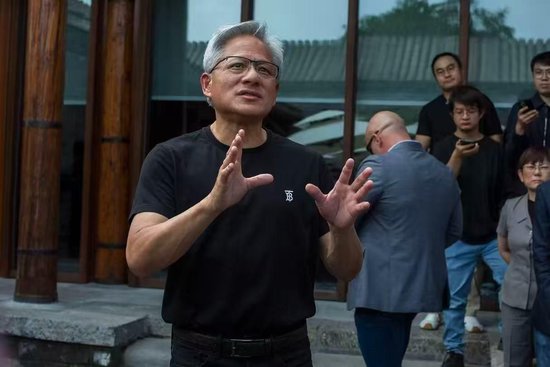
英伟达接近达成协议 在OpenAI最新一轮融资中投资200亿美元
Di Yi Cai Jing· 2026-02-04 00:52
Group 1 - Nvidia is nearing a deal to invest $20 billion in OpenAI as part of its latest funding round, marking Nvidia's largest single investment in OpenAI to date. The transaction is not finalized, and terms may still change [2] Group 2 - Nvidia CEO Jensen Huang recently spoke at the Davos Forum about the three major advancements in AI models over the past year, emphasizing that AI will reshape global factories [4] - Huang highlighted that future design and operations will be entirely software-defined, impacting everything from sports shoes to automobiles and factories [4] Group 3 - Nvidia announced a collaboration with Dassault Systèmes to build an industrial AI platform using virtual twin technology, which will integrate Dassault's technology with Nvidia's AI infrastructure [5] - The integration aims to enable engineers to work at a scale 100,000 times larger than before, allowing for real-time simulations and virtual twin environments [5] Group 4 - Dassault's executive Florence Hu-Aubigny stated that future factories will be software-defined, allowing for rapid testing and reconfiguration of production processes, reducing time from months to hours [6] - Huang mentioned the necessity of applying relevant technologies in AI infrastructure construction, as the world is undergoing the largest industrial infrastructure buildout in history, valued in the trillions [6] Group 5 - Over the past year, Nvidia has been actively positioning itself in the industrial AI sector, including the announcement of the world's first industrial AI cloud in Germany equipped with 10,000 Blackwell GPUs [7] - Huang proposed that every manufacturer will have two factories: one for producing products and another for creating the intelligence that drives those products [7]
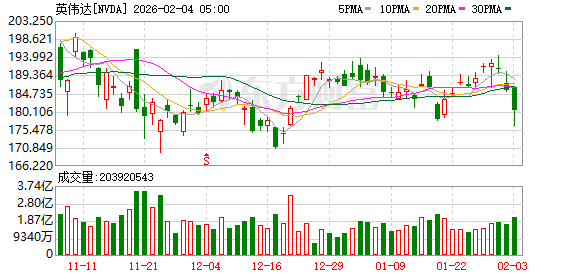
黄仁勋全球连轴转,最新演讲称AI将重塑全球工厂
Di Yi Cai Jing· 2026-02-04 00:50
Core Insights - Nvidia's CEO Jensen Huang emphasized the transformative role of software in defining future products and systems, suggesting that the future will see a complete shift towards digitalization in design and manufacturing processes [1][3] Group 1: AI and Software Integration - Nvidia announced a collaboration with Dassault Systèmes to leverage virtual twin technology for building an industrial AI platform, combining Dassault's technology with Nvidia's AI infrastructure [3] - The integration of technologies will enable engineers to work at a scale 100,000 times larger than before, allowing for real-time generation of virtual twin environments for product design and simulation [3] - Huang highlighted the potential of AI to predict physical behaviors in real-time, which could revolutionize design processes by integrating simulation and physical AI [3] Group 2: Future of Manufacturing - The current manufacturing and logistics systems are described as rigid and vulnerable, with the future of factories being defined by software-driven production systems [4] - The combination of physical AI and virtual twin technology will allow factories to test and reconfigure production processes in virtual environments, significantly reducing the time required for these processes from months to hours [4] - Huang noted the ongoing largest-scale industrial infrastructure construction globally, valued in the trillions, emphasizing the need for advanced technologies in chip, computer, and AI factories [4] Group 3: Nvidia's Industrial AI Initiatives - Nvidia has been actively positioning itself in the industrial AI sector, having announced the construction of the world's first industrial AI cloud in Germany, equipped with 10,000 Blackwell GPUs [4] - The vision presented by Nvidia includes manufacturers operating two factories: one for producing products and another for creating the intelligence that drives those products [4]
从融资平台到创新“加速器” 科创板助力“锻造”高端装备产业新格局
Shang Hai Zheng Quan Bao· 2025-06-11 18:42
Core Viewpoint - The Sci-Tech Innovation Board (STAR Market) serves not only as a financing platform but also as an "accelerator" for innovation, significantly enhancing the technological autonomy and innovation capabilities of high-end equipment manufacturing companies in China [1]. Group 1: Industry Overview - The high-end equipment manufacturing industry is crucial for national strength, supporting the development of new productive forces and a modern industrial system [1]. - The STAR Market has attracted over 100 high-end equipment manufacturing enterprises, covering advanced manufacturing sectors such as industrial robots and automation control systems, and supporting key industries like rail transit and aviation [1]. - Since the release of the "Eight Measures for Deepening STAR Market Reform," there have been 20 disclosed industrial acquisitions in the high-end equipment manufacturing sector, indicating a trend towards consolidation and growth [1][6]. Group 2: Company Developments - Kede CNC has maintained growth in revenue and has successfully transitioned from single-point technological breakthroughs to a system advantage in new productive forces, with over 1,300 applications in aerospace and aviation [2]. - Zhongkong Technology has evolved from a control system company to an industrial AI platform, enhancing its core technologies and establishing a complete AI ecosystem since its listing on the STAR Market [3]. - Nanfang Technology has led innovations in smart grid equipment and has been recognized for its contributions to the energy sector, including the establishment of a national manufacturing innovation center [4]. Group 3: Strategic Initiatives - The STAR Market has enabled companies to leverage capital market tools for strategic investments and mergers, enhancing their technological capabilities and market positions [6]. - Zhongkong Technology's acquisition of Hobré International's core assets exemplifies how companies are using the STAR Market to strengthen their technology chains and enhance their competitive edge in high-end process analysis instruments [6]. - Nearly 70% of high-end equipment manufacturing companies on the STAR Market are participating in initiatives aimed at improving quality and returns, reflecting a commitment to high-quality development [7].
