虚拟孪生

Search documents
黄仁勋再预言:AI结合实体经济,市场90万亿美元
经济观察报· 2026-03-17 10:43
Core Insights - Huang Renxun emphasizes that the true vast industry lies in the integration of information and the real world, valued at $90 trillion [1][13] AI Development and Applications - Huang Renxun outlines a "five-layer cake" framework for AI, highlighting significant improvements in model performance and practical applications that create real economic value [2] - The emergence of AI agents has led to explosive growth in computational demand, validated by the rapid deployment of OpenClaw across various industries [2][3] - The next wave of AI development is identified as "physical AI," which aims to integrate AI with real-world applications in manufacturing and robotics, presenting substantial growth opportunities [3][4] Understanding the Real World - For AI to effectively understand the real world, it must grasp fundamental physical principles such as gravity, friction, and causality, which are often overlooked in traditional AI models [4] - Huang Renxun defines "physical AI" as an AI capable of understanding natural laws, moving beyond mere language processing to interact with the physical world [4][6] Strategic Partnerships and Innovations - NVIDIA has formed a significant strategic partnership with Dassault Systèmes to integrate AI capabilities with virtual twin technology, targeting industrial applications [9][10] - This collaboration aims to create an "industrial world model" that leverages scientific validation and physical principles for critical tasks in various fields [9][11] Impact on Manufacturing and Industry - The integration of AI in manufacturing is expected to revolutionize processes, allowing for extensive digital simulations and reducing reliance on physical prototypes [11][12] - Huang Renxun predicts that AI will enhance the efficiency of manufacturing processes, enabling even small and medium-sized enterprises to adopt advanced technologies [13] - The arrival of physical AI is likened to the transformative impact of the internet on information flow, suggesting a fundamental shift in how the physical world is designed and operated [13][14]



马云现身阿里千问办公点;小米回应SU7起火丨科技风向标
2 1 Shi Ji Jing Ji Bao Dao· 2026-02-05 02:18
Group 1 - Xiaomi's SU7 vehicle fire incident was caused by residual fire sources igniting surrounding combustible materials, not due to the vehicle itself [2] - Baidu announced a new stock buyback plan with a maximum amount of $5 billion and plans to distribute dividends for the first time in 2026 [4] - Long光华芯 denied rumors of a 4.5 billion investment from Huawei, stating the information was false and misleading [5] Group 2 - Tencent's mixed AI Infra team launched an open-source high-performance LLM inference core operator library, achieving significant performance improvements in various models [6] - In response to rumors about space photovoltaic business, JinkoSolar confirmed no collaboration with Elon Musk's team, while GCL Group acknowledged their visit [7] - Tencent launched a standalone comic drama app, Fire Dragon Comic, joining the competitive market alongside ByteDance and Baidu [8] Group 3 - Vivo confirmed the internal project for a Vlog camera, targeting the DJI Pocket series, with an expected release in 2026 [9] - 中文在线 plans to collaborate with Tencent on animation micro-short drama licensing, with an estimated cooperation amount of 23.2 million yuan [10] - Dassault Systèmes and NVIDIA announced a strategic partnership to build an industrial AI platform supporting virtual twins [12] Group 4 - 英诺赛科's gallium nitride products have been integrated into Google's supply chain for AI hardware platforms, focusing on high-growth areas [13] - 云天励飞 announced a three-year strategy for high-performance AI inference chips, aiming to reduce the cost of large model inference significantly [16] - 锐新科技 is planning a major asset restructuring to acquire control of Wuhu Deheng Automotive Equipment Co., with details to be disclosed soon [17] Group 5 - iQOO launched the iQOO 15 Ultra smartphone, featuring advanced specifications and a focus on high-end performance, starting at a promotional price of 5499 yuan [19]

黄仁勋最新演讲
第一财经· 2026-02-04 03:42
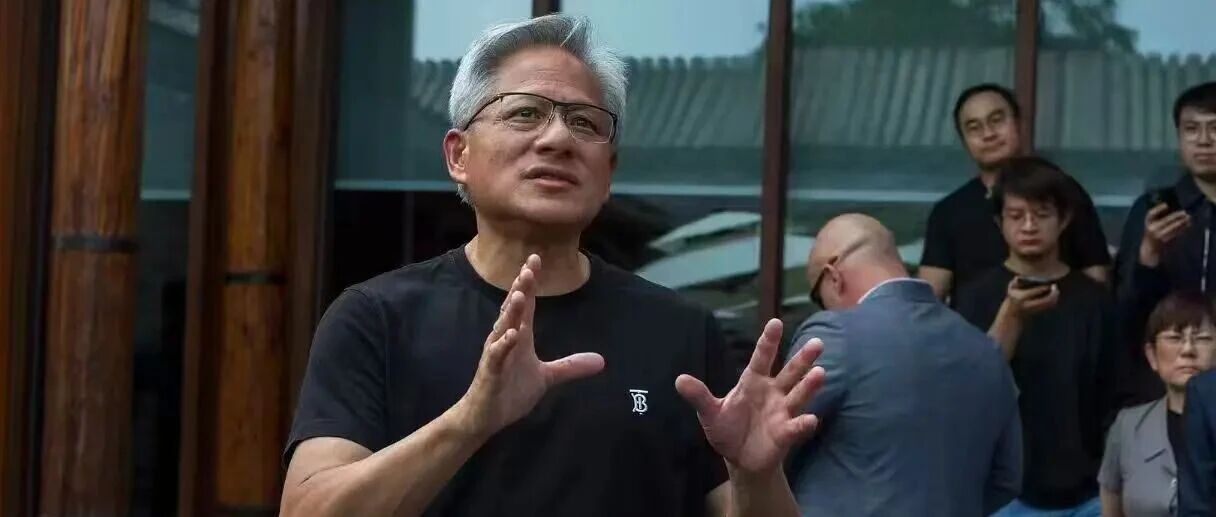
Core Viewpoint - NVIDIA's CEO Jensen Huang emphasizes the transformative impact of AI and virtual twin technology on industrial processes, predicting a shift towards software-defined manufacturing and design in the coming years [2][3][4]. Group 1: AI and Virtual Twin Technology - Huang highlights that the integration of NVIDIA's AI infrastructure with Dassault Systèmes' virtual twin technology will enable engineers to work at a scale 100,000 times larger than before, allowing for real-time simulations and designs [3]. - The combination of physical AI and simulation will revolutionize design processes, enabling real-time predictions of physical behavior and facilitating the organization of production lines in virtual environments [3][4]. Group 2: Industrial Infrastructure Development - Huang notes that the world is undergoing the largest industrial infrastructure build-out in history, valued at trillions of dollars, necessitating the expansion of chip, computer, and AI factories [4]. - The complexity of these factories requires pre-construction design and simulation in virtual twin environments to save time and costs [4][6]. Group 3: NVIDIA's Industrial AI Initiatives - Over the past year, NVIDIA has made significant strides in the industrial AI sector, including the announcement of the world's first industrial AI cloud in Germany, equipped with 10,000 Blackwell GPUs [6]. - Huang envisions that every manufacturer will operate two factories: one for producing products and another for creating the intelligence that drives those products [6].
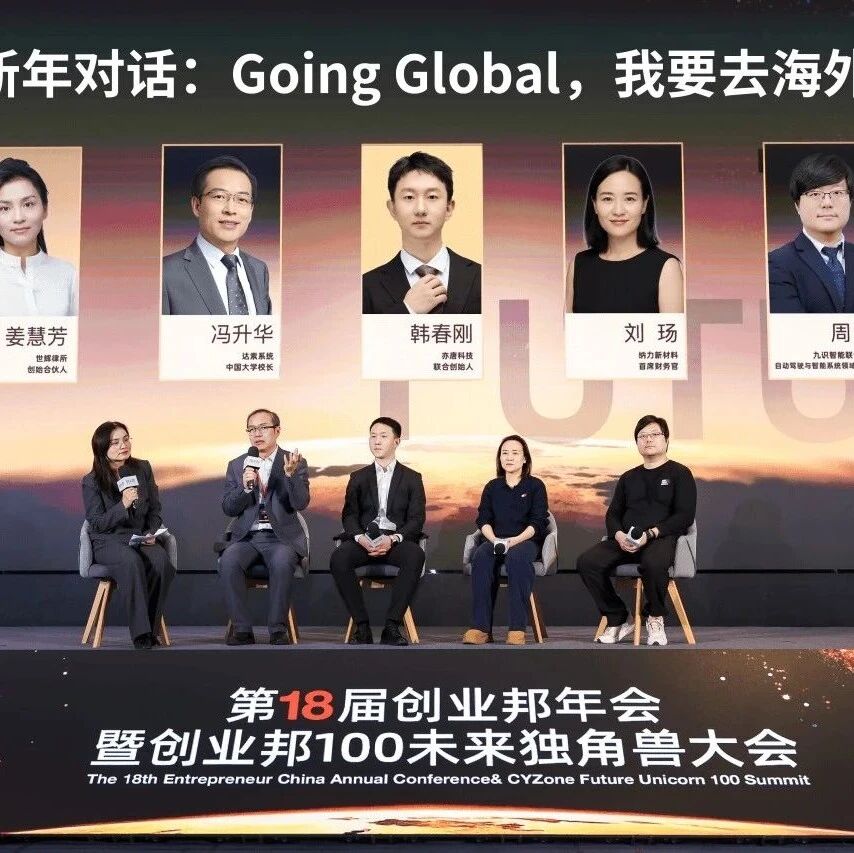
出海已是必答题,中国新势力如何带领产业“再全球化”?
创业邦· 2026-01-24 04:10
Core Viewpoint - The current wave of international expansion for Chinese technology companies has shifted from "lightweight" consumer products to hard technology breakthroughs, focusing on high-end manufacturing tools, software, and core materials, necessitating a comprehensive relocation of supply chains and production processes overseas [2][5]. Group 1: Industry Insights - The globalization logic for Chinese companies has fundamentally changed, making international expansion a mandatory strategy rather than an option [5]. - Companies like Dassault Systemes are pivotal in supporting Chinese enterprises by providing software that helps simulate and validate manufacturing processes before they are implemented abroad [8]. - The domestic market for high-end equipment, such as pick-and-place machines, is still largely dominated by international brands, indicating a significant opportunity for local companies to innovate and expand internationally [6]. Group 2: Strategic Considerations - Companies are considering international expansion primarily for two reasons: to complete the technology loop and to enhance industry resilience against market shocks [6][10]. - The strategy of companies like Nali New Materials involves not just selling materials but also providing technical services to ensure successful integration with international clients [10]. - The logistics and automation sector, represented by companies like RoboVan, emphasizes the importance of leveraging local partnerships and adapting to regulatory environments in target markets [12]. Group 3: Challenges and Solutions - Companies face significant challenges in adapting to local regulations and operational practices when entering foreign markets, which can lead to operational inefficiencies [15][16]. - The need for a skilled labor force in new markets is critical, and companies must negotiate labor agreements to ensure access to qualified workers [16]. - Compliance with international standards, such as carbon emissions regulations, is essential, and companies can utilize simulation technologies to preemptively address these challenges [18]. Group 4: Future Outlook - The future of international expansion for Chinese companies will rely on a combination of technological innovation and localized service offerings to create unique value propositions in global markets [20]. - Companies are encouraged to prioritize partnerships with established local firms to navigate regulatory landscapes effectively and enhance their market entry strategies [20].