布艺沙发

Search documents
年货节上新,勾勒春节品质消费新图景
Xin Lang Cai Jing· 2026-02-03 19:46
Core Insights - The upcoming Spring Festival is driving a surge in consumer spending, with a shift from merely purchasing goods to focusing on experience and service, indicating an upgrade in consumption quality [1][5] Group 1: Trends in Consumer Behavior - Consumers are increasingly participating in both online and offline "New Year Goods Festival" activities, reflecting a cultural significance and a festive atmosphere [1][2] - There is a notable shift in dietary habits towards healthier and more nutritious options, with retailers offering traceability for food products to ensure safety and quality [4] - The trend of "buying experiences" rather than just goods is emerging, with services like home cleaning gaining popularity among consumers [5][6] Group 2: Retail Strategies and Innovations - Retail platforms are implementing various promotional strategies, such as large discounts and consumer coupons, to stimulate spending during the New Year Goods Festival [3][4] - Instant retail services are being enhanced to meet the demand for quick delivery, allowing consumers to receive products within 30 minutes, thus supporting the shift towards "on-demand" purchasing [5][6] - The integration of cultural elements and local specialties into the New Year Goods Festival is being emphasized, creating immersive shopping experiences for consumers [3][6]
马年年货消费添新意: 年轻人扮靓“移动的家” 大件家装引爆西部市场
Mei Ri Shang Bao· 2026-01-14 23:36
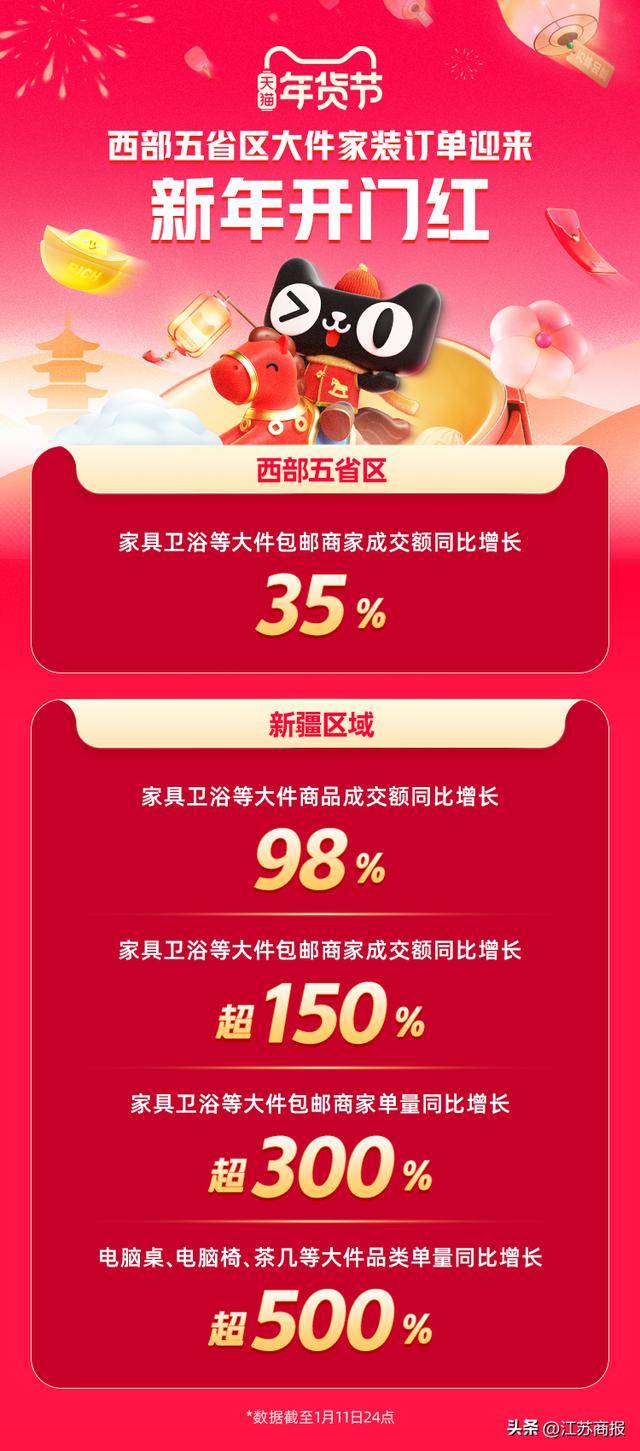
Group 1 - The core theme of the articles revolves around the increasing trend of young consumers personalizing their private cars with festive decorations for the upcoming Year of the Horse, highlighting a shift in consumer behavior towards more personalized and meaningful purchases [1][2][3] - The demand for car-related products has diversified, with consumers seeking both functional and emotional satisfaction, indicating a balanced interest in practical items like emergency supplies and decorative elements that enhance the festive atmosphere [2][3] - The sales of car accessories featuring horse motifs have seen significant growth, with some products experiencing a daily sales increase of 114%, showcasing the strong consumer interest in themed decorations for the New Year [3] Group 2 - The e-commerce sector has shown renewed vitality in the sales of large household items, particularly in Western China, where the introduction of free shipping for large items has led to a 35% increase in transaction volume for related merchants [4][5] - Notably, the Xinjiang region has demonstrated exceptional growth, with transaction volumes for large household items increasing by 98% and order quantities rising by over 100%, indicating a robust demand in this market [4] - Improvements in logistics and supply chain management have significantly enhanced delivery efficiency and service quality, contributing to the increased participation of merchants and overall sales growth in the Western market [4][5]

物流升级激活西部网购活力,天猫年货节“硬核年货”受热捧
Sou Hu Cai Jing· 2026-01-13 14:36
Core Insights - The Tmall New Year Shopping Festival has seen significant growth in consumption in the western regions of China, particularly in large home furnishings, which have been included in the free shipping policy for the first time this year [1][4]. Group 1: Consumption Trends - The western provinces of Gansu, Qinghai, Ningxia, Inner Mongolia, Xinjiang, and Tibet have experienced a surge in orders since the festival began on January 4, 2026, with traditional categories like clothing, fresh produce, and electronics remaining popular among consumers [1]. - Notable increases in sales include a 47% year-on-year growth in fur products and a 47% increase in sales of niche clothing categories like Lolita fashion [1]. - Products featuring horse elements, such as couplets, mascots, and clothing for the Year of the Horse, have also seen record sales [1]. Group 2: Large Home Furnishings - The introduction of large home furnishings into the free shipping policy has led to a 35% increase in transaction value for related merchants in the western regions [1]. - In Xinjiang, the transaction value of large home furnishings has increased by 98%, with order volume growing by over 100% and the number of users placing orders rising by nearly 80% [4]. - Categories such as furniture and bathroom fixtures have seen order volume growth exceeding 300%, with specific items like computer chairs and tables experiencing transaction volume increases of over 500% [4]. Group 3: Logistics and Supply Chain Improvements - The success of large items in the western regions is attributed to systematic improvements in logistics and supply chain management, including enhanced warehousing and transportation services by Tmall [4]. - The implementation of a consolidated shipping model has reduced logistics costs for merchants, encouraging more participation and growth [4]. - During the festival, the shipping time for consolidated services has been reduced by 8 hours compared to the previous year, ensuring faster delivery of goods [4].

2025-2031年中国沙发行业研究与投资前景报告
Sou Hu Cai Jing· 2025-08-21 05:38
Core Insights - The report titled "2025-2031 China Sofa Industry Research and Investment Prospects" provides a comprehensive analysis of the sofa industry in China, covering its development environment, market size, consumer demand, operational status, opportunities, and future prospects [2][3]. Group 1: Industry Overview - The sofa is defined as a multi-seat chair with soft cushions, typically featuring springs or thick foam, and is categorized as a type of soft furniture [2]. - The report includes a value chain analysis of the sofa industry, detailing the selection methods for purchasing sofas [3]. Group 2: Global Market Analysis - The report analyzes the global sofa industry from 2020 to 2024, including market development status, technological advancements, supply and demand conditions, and market characteristics [3][4]. - It provides insights into major global sofa brands and their market dynamics during the same period [3]. Group 3: Chinese Market Environment - The macroeconomic environment in China is assessed, including GDP analysis, consumer price index, urban and rural income, retail sales, fixed asset investment, and import-export totals [3][4]. - The report discusses the policy environment affecting the sofa industry, including industry-specific policies and their impacts [4]. Group 4: Market Development Status - The current status of the Chinese sofa industry is analyzed, focusing on market size, supply conditions, demand status, and brand penetration [4][5]. - Key developments in the industry include significant contracts and initiatives, such as the Han Zun brand's leather sofa being selected for the Expo China Pavilion and the establishment of a major production base in Haining [4]. Group 5: Sub-Sector Analysis - The report examines the market conditions for fabric sofas, leather sofas, solid wood sofas, and rattan sofas, including supply and demand characteristics, production capabilities, and market dynamics [5][6]. - It highlights the competitive strategies of various sub-sectors, emphasizing the need for product innovation and brand development [5][6]. Group 6: Consumer Preferences - Consumer preferences are analyzed based on income levels, age groups, and regional differences, providing insights into brand recognition and loyalty [6][7]. - The report discusses factors influencing purchasing decisions, such as price sensitivity and brand impact [6]. Group 7: Trade Analysis - The report includes an analysis of import and export data for the sofa industry, detailing quantities, values, and average prices [7]. - It identifies key countries and regions involved in the trade of sofas, both for imports and exports [7]. Group 8: Competitive Landscape - The competitive landscape of the Chinese sofa industry is assessed, including comparisons of domestic and international competitiveness, technological advancements, and brand competition [7][8]. - The report also discusses the concentration of production enterprises and market share among leading companies [8]. Group 9: Strategic Recommendations - Strategic recommendations for the sofa industry include comprehensive planning, technology development, business portfolio strategies, and marketing strategies [8]. - The report emphasizes the importance of brand strategy and management for the growth of Chinese sofa enterprises [8].