
息壤算力调度平台

Search documents
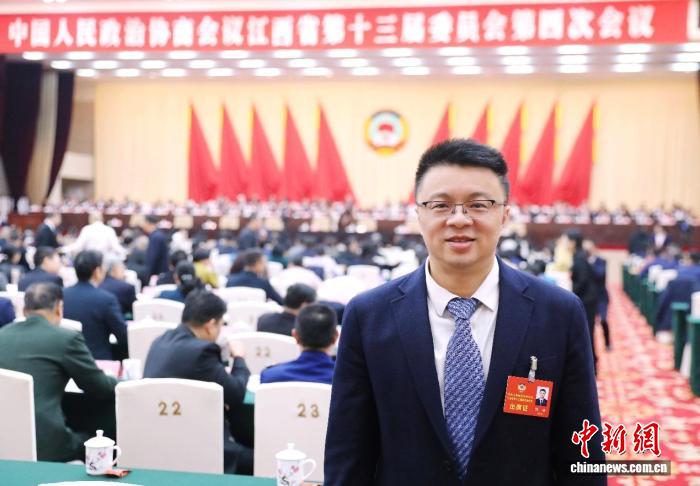
江西省政协委员建议加速人工智能与实体经济融合
Zhong Guo Xin Wen Wang· 2026-01-30 10:57
Group 1 - The core viewpoint emphasizes the need for Jiangxi to open up demonstration public application scenarios in intelligent manufacturing and low-altitude economy to accelerate the integration of artificial intelligence with the real economy [1][3] - Jiangxi Telecom, as a central enterprise in Jiangxi, is committed to driving industrial upgrades through digital innovation and supporting the development of new productive forces in Jiangxi [1][3] Group 2 - Jiangxi Telecom has been actively transforming traditional data centers into artificial intelligence data centers, creating a new pattern of computing power supply that is leading in scale and environmentally friendly across Jiangxi [3] - In 2024, Jiangxi Telecom plans to establish the first large-scale intelligent computing hub in Jiangxi, the Poyang Lake Intelligent Computing Center, and deploy the "Xiangran" computing scheduling platform, which is one of the top ten super projects of central enterprises in 2022 [3] - In 2026, Jiangxi Telecom will establish an artificial intelligence research institute focusing on computing power, models, and application scenarios, supporting the development of a distinctive "AI+" industrial ecosystem in Jiangxi [3] - During the 14th Five-Year Plan period, Jiangxi Telecom will increase investment and cooperation in computing power infrastructure, industrial digitalization, "AI+", and low-altitude economy to promote high-quality economic and social development in Jiangxi [3]


让算力像水和电一样方便取用
Ren Min Ri Bao· 2026-01-12 07:43
Core Insights - The article highlights the successful implementation of a mixed-rate network trial in China's core computing power regions, specifically the 400G and 800G dual-rate network, which enhances the efficient interconnection and collaborative development of computing resources [1] - The "East Data West Computing" project has positioned Guizhou as a national hub for integrated computing networks, transitioning from a "data warehouse" to a "computing factory" [1] - Guizhou's digital economy is projected to exceed 100 billion yuan in software and information technology services by 2024, with continuous growth rates among the highest in the country [4] Group 1: Computing Power Development - Guizhou has accelerated the establishment of a green data center that integrates general computing, supercomputing, and intelligent computing, increasing its computing capacity from 2P to over 10,000P [1] - The region has improved data transmission efficiency by establishing direct connections to 24 cities, reducing latency by 33% and cutting costs by over 30% for data transfers [2] - The "Xirang" computing scheduling platform has been launched to enhance the efficiency of computing resource allocation across various sectors [2] Group 2: Technological Advancements - The development of a 5G smart factory platform with 2,000 intelligent terminals has enabled full-process digitalization of production and sales [3] - The implementation of a "5G + digital twin factory" has led to a 40% reduction in accident rates and a 30% increase in management efficiency [3] - Guizhou is establishing an artificial intelligence laboratory to attract more companies in the computing industry, supporting high-quality development of the digital economy [3] Group 3: Industry Ecosystem - Guizhou has built a comprehensive digital economy framework, including cloud services, data storage, data processing, and application, attracting multiple enterprises to the region [4] - The province currently operates 50 data centers with a computing power scale of 150 billion billion calculations per second, with over 90% in intelligent computing and domestic production rates [4] - Guizhou is pioneering market-oriented reforms for data elements, promoting the development of a data trading market and facilitating nationwide data circulation [4]
让算力像水和电一样方便取用(创新故事)
Ren Min Wang· 2026-01-11 22:43
Core Insights - The article highlights the successful implementation of a dual-rate mixed network trial with 400G and 800G speeds in key computing power regions of China, particularly in the Guizhou-Guangzhou corridor, enhancing efficient interconnection and collaborative development of computing resources [1] - The "East Data West Computing" initiative has positioned Guizhou as a national hub for integrated computing networks, transitioning from a "data warehouse" to a "computing factory" [1][4] - Guizhou's digital economy is projected to exceed 100 billion yuan in software and information technology services revenue by 2024, with continuous growth rates among the highest in the country [4] Group 1: Computing Power Infrastructure - Guizhou has established a direct connection to 24 cities through a low-loss optical cable network, significantly reducing data transmission time by 33% and lowering costs by over 30% for businesses in the Guangdong-Hong Kong-Macau Greater Bay Area [2] - The computing power capacity in Guizhou has reached 150 billion billion calculations per second, with over 90% of intelligent computing being domestically sourced and regionally concentrated [4] Group 2: Efficient Computing Power Scheduling - The "Xirang" computing power scheduling platform has been launched in Guizhou, enabling nationwide coordination and scheduling of computing resources, akin to utilities like water and electricity [3] - Collaborations with local meteorological agencies have led to improved weather prediction accuracy and efficiency through the application of lightweight meteorological diffusion models [3] Group 3: Future Development and Industry Focus - Guizhou aims to further develop its computing power, data, applications, and industries, with a focus on intelligent computing, high-quality data aggregation, and artificial intelligence [5] - The establishment of an artificial intelligence laboratory in Guizhou is expected to attract more enterprises along the computing power industry chain, contributing to high-quality digital economic development [3][5]
常熟“智”启新程:一座江南小城的AI雄心与算力突围
Yang Zi Wan Bao Wang· 2025-11-21 06:31
Core Insights - The city of Changshu is undergoing a "computing power revolution," transitioning from traditional manufacturing to becoming a hub for artificial intelligence (AI) [1] - A strategic cooperation agreement was signed between the Changshu Municipal Government and China Telecom Jiangsu to establish the first county-level "AI+" innovation application demonstration zone in the Yangtze River Delta [1] Group 1: Computing Power as a Driver - The launch of the "Xiangran" computing power scheduling platform in Changshu will unify local computing resources and connect to the national "East Data West Computing" project, enabling efficient cross-regional collaboration [2] - Changshu has a solid industrial foundation with 33 industrial categories and an industrial output value of 490 billion yuan, providing a fertile ground for AI applications [2] - The city has over 200 AI-related companies generating more than 40 billion yuan in revenue, with 33 large models and 71 typical application scenarios developed [2] Group 2: AI Empowering Various Industries - AI is deeply integrated into the manufacturing chain in Changshu, enhancing efficiency and reducing costs across various sectors, including cross-border e-commerce and intelligent logistics [3] - AI applications are also being utilized in urban governance, such as agricultural subsidy calculators and intelligent water network risk warnings, improving public services [3] - China Telecom's "Xingchen" large model will support industry-specific model training and applications, fostering new AI-driven business models in Changshu [3] Group 3: Collaborative Ecosystem Development - The establishment of three key platforms, including the "Six Degrees Space" AI cluster and joint laboratories, aims to create a collaborative environment for AI enterprises [4] - The "Zhiyun STORE" initiative will allow businesses to select AI capability modules, facilitating rapid development of intelligent systems [4] - The focus is on building a self-evolving and diverse AI industrial ecosystem, avoiding isolated projects and promoting integrated development [5] Group 4: Changshu's Unique Advantages - Changshu's success in establishing a city-level AI brand is attributed to its robust manufacturing base, proactive government initiatives, and strong collaboration with central enterprises [6] - The city is actively inviting major tech companies to invest, with China Telecom providing a stable digital foundation for this transformation [6] - Changshu aims to become a model for intelligent transformation in county-level economies, showcasing its ambition and future potential [6]

一座陇东小城,算出“数”“治”未来
Zhong Guo Jing Ji Wang· 2025-08-22 01:51
Core Viewpoint - The city of Qingyang in Gansu Province is rapidly developing as a digital industry hub, leveraging its unique geographical advantages and robust legal framework to enhance its computing power infrastructure and attract digital resources from across the country [2]. Group 1: Computing Power Infrastructure - Qingyang is one of the eight computing power hub nodes in China's "East Data West Computing" project, with significant advancements in infrastructure development [2]. - As of August 2025, the Qingyang data center cluster is expected to have over 30,000 racks and a computing power scale of 66,000 Pflops, making it the fastest-growing and largest in terms of incremental growth among the national hub nodes [2]. - The goal for 2025 is to achieve a "double hundred" target of 100,000 Pflops of computing power and 100,000 standard racks [2]. Group 2: Business Ecosystem Development - The park has attracted 433 enterprises, focusing on big data storage, cloud services, and artificial intelligence research and development [4]. - The launch of the "Xirang" computing power scheduling platform by China Telecom's Qingyang computing center has significantly improved the utilization rate of computing resources [4]. Group 3: Digital Governance and Legal Framework - Qingyang is enhancing its digital governance by integrating artificial intelligence into its public service platforms, achieving a 100% online processing rate for public service matters and electronic transactions [4]. - The city has implemented a comprehensive data security system and introduced AI models to promote fair competition, correcting 181 unequal policy documents and 61 measures that hinder fair competition [5]. - Gansu Province has established regulations in data security, network security, and intellectual property protection, providing a clear framework for the development of the digital industry [5].
