护发品

Search documents
Ulta Beauty, Inc. (NASDAQ:ULTA) Faces Market Challenges Despite Strong Product Offerings
Financial Modeling Prep· 2026-03-13 21:09
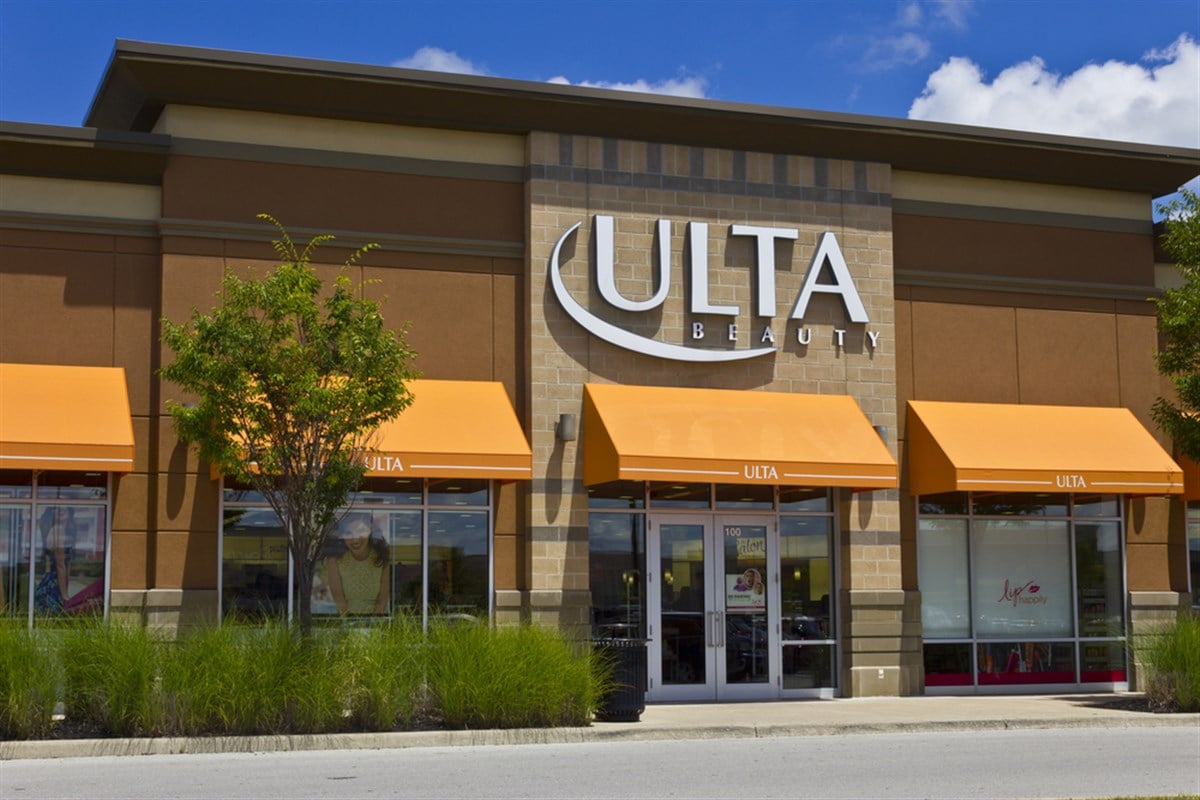
Core Viewpoint - Ulta Beauty, Inc. is facing challenges in maintaining investor confidence due to a disappointing quarterly profit report and a weaker-than-expected outlook for 2026, despite exceeding revenue expectations [2][3][5]. Financial Performance - Ulta's fourth-quarter earnings per share were $8.01, missing analyst estimates by 2 cents, while revenue reached $3.9 billion, exceeding expectations [3][6]. - The current stock price of ULTA is $547.16, reflecting a decrease of $77.54 or approximately -12.41% [4]. - Over the past year, ULTA has fluctuated between a high of $714.97 and a low of $323.37, with a market capitalization of approximately $24.53 billion [4]. Analyst Insights - Michael Lasser from UBS set a price target of $810 for ULTA, indicating a potential upside of approximately 48.20% from its then-current price of $546.56 [2][6]. - Analysts at Oppenheimer have reduced their price target for Ulta from $750 to $650, citing concerns over economic and geopolitical factors [5][6]. Market Context - Ulta competes with major beauty retailers like Sephora and operates over 1,200 stores across the United States, offering a diverse range of products and in-store salon services [1].


锂电池化妆品等商品带动上海与欧盟进出口保持正增长
Xin Hua Cai Jing· 2026-01-03 08:08
Group 1 - The core viewpoint of the article highlights the growth in trade between Shanghai and the European Union, with imports and exports reaching 742.31 billion RMB in the first eleven months of 2025, marking a 1.4% increase compared to the same period in 2024 [1] - Exports of lithium batteries from Shanghai amounted to 40.51 billion RMB, showing a significant year-on-year growth of 30.5%, with exports to the EU specifically reaching 20.93 billion RMB, a remarkable increase of 56.4% [1] - The export of cosmetics from Shanghai has also seen an upward trend, with a total export value of 4.11 billion RMB in the first ten months of 2025, reflecting an 8.9% increase year-on-year, and exports to the EU reaching 900 million RMB, up by 13.4% [1] Group 2 - In terms of trade with major EU economies, Shanghai's imports and exports with Italy reached 98.166 billion RMB, a growth of 2.32%, while trade with the Netherlands surged to 88.89 billion RMB, marking a 28.2% increase, and trade with Spain reached 32.478 billion RMB, growing by 6% [1]
2025中国美业发展新图景:全渠道破局,驭势而上
Sou Hu Cai Jing· 2025-10-21 02:05
Core Insights - The core theme of the report is the transformation of China's beauty industry by 2025, characterized by "omnichannel breakthroughs," with significant growth in both online and offline channels [1][6]. Market Overview - By the first half of 2025, the retail sales of cosmetics in China are projected to grow by 2.9%, reaching a market size of 610 billion yuan, with a year-on-year growth rate of 12.1% [1][25]. - The beauty industry has shown resilience despite global economic pressures, indicating strong consumer vitality and potential for further growth [1]. Consumer Behavior - Chinese consumers exhibit diverse and pragmatic beauty consumption habits, with 66% making purchasing decisions across both offline and online channels [2]. - 79% of consumers turn to online platforms when products are out of stock in physical stores, significantly higher than the global average of 63% [2]. - The willingness to pay a premium for faster delivery is noted in 58% of consumers, highlighting the importance of immediacy and convenience in purchasing decisions [2][21]. Channel Dynamics - Offline channels are adapting through differentiated positioning, with cosmetic stores focusing on core categories like skincare and attracting online brands to explore physical retail [3]. - Small supermarkets are transitioning to community-focused models, while large department stores are emphasizing customization and premium offerings [3]. - Online channels, particularly emerging e-commerce platforms, are driving growth in the beauty sector, with Douyin (TikTok) becoming the leading channel with sales reaching 276 billion yuan, a 47% year-on-year increase [4][22]. E-commerce Trends - Traditional e-commerce platforms like JD and Taobao still play crucial roles, with JD's beauty sales at 54.2 billion yuan (10% growth) and Taobao at 52.2 billion yuan (1.4% decline) [5]. - The beauty sector across various channels is not merely competitive but forms a complementary ecosystem, with different channels serving unique consumer needs [5][29]. Future Outlook - The integration of technology and omnichannel strategies is expected to be central to the future of beauty retail, with AI and advanced technologies enhancing consumer experiences [6]. - There is a growing demand for "one-stop channels," with 77% of consumers preferring stores or platforms that offer a comprehensive range of products [6][21].
2025年全渠道破局,驭势而上:中国美业图景报告-尼尔森IQ
Sou Hu Cai Jing· 2025-08-18 17:17
Core Insights - The Chinese beauty industry is undergoing a transformation with a shift towards omnichannel strategies, where online and offline channels are evolving in response to changing consumer behaviors and technological advancements [1][2]. Industry Development Stages - The retail sector of the Chinese beauty industry has experienced three phases: 1. Pre-2016: Consumption development phase, with cosmetics retail underperforming compared to overall retail market. 2. 2017-2021: High growth phase, outperforming the overall retail market. 3. 2022 onwards: Rational return phase, with performance lagging due to consumer confidence issues [1][2][19]. Retail Channel Dynamics - The Chinese beauty market heavily relies on online channels, reaching a scale of 610 billion yuan with a year-on-year growth of 12.1%. Notably, Douyin has emerged as a leading platform with sales of 244.5 billion yuan, marking a 43.6% increase [2][26]. - Offline channels are facing challenges, with department stores and malls experiencing a year-on-year decline of 8%, and cosmetic stores down by 10%. However, there is a trend towards differentiation in offline retail, with cosmetic stores catering to refined needs and modern channels optimizing product layouts [2][37][41]. Consumer Behavior Trends - Consumer expectations are improving, with 58% willing to pay a premium for faster delivery. The beauty category ranks fifth in high premium consumption tendencies, indicating untapped consumer potential [1][2][25]. - A significant 77% of consumers prefer shopping in one-stop channels with comprehensive product offerings, highlighting the need for refined operational strategies [2][26]. Technological Integration - Technology and artificial intelligence are becoming crucial drivers in the beauty industry, with companies like L'Oréal and Shiseido implementing AI skin detection and health correlation technologies to enhance consumer shopping experiences [2][2]. Future Outlook - The overall direction for the Chinese beauty industry is towards omnichannel integration and intelligent upgrades, presenting both opportunities and challenges in the evolving market landscape [2][4].


美妆已死,医美当道?
阿尔法工场研究院· 2025-06-16 13:05
Core Insights - The beauty industry is transitioning from a phase of "easy growth" to a "complex new stage" globally, with significant challenges ahead [2][5] - The McKinsey report predicts a global beauty market size of $441 billion in 2024, with a growth rate of 7% from 2022 to 2024, but a decline to 5% from 2024 to 2030 [3][4] - The Chinese beauty market is projected to account for 15% of the global market in 2024, with a compound annual growth rate (CAGR) of 3% from 2019 to 2024, but a significant drop to -3% from 2021 to 2024 [7][10] Regional Analysis - The Chinese beauty market has lost $6.33 billion (approximately 454 billion yuan) over four years, indicating a downturn post-pandemic [7] - The beauty giants are now looking for growth opportunities in emerging markets, particularly in the Middle East, Africa, and India, which are showing higher growth rates [11][12] - In 2024, major companies like L'Oréal and Unilever are increasing investments in emerging regions, with Unilever investing in seven Indian brands [13][14] Category Opportunities - Skincare remains the largest category in the beauty market, accounting for 41%, followed by haircare (21%), color cosmetics (19%), and fragrance (19%) [17] - Fragrance has shown the highest growth rate of 8% from 2019 to 2024, and is expected to continue leading with a growth rate of 4-6% from 2024 to 2030 [18][20] - The demand for health, sun protection, and personal care products is rising, indicating a shift in consumer preferences towards efficacy and certainty [22][24] Growth Drivers - Future growth in the beauty industry will primarily come from volume rather than price increases, as consumers are increasingly focused on the real value of products [26][30] - Price increases have been met with consumer resistance, as seen with Estée Lauder and L'Oréal, indicating a need for brands to focus on product quality and differentiation [28][31] - The beauty market is being segmented into five price tiers, and brands must compete on product strength or pricing rather than simply lowering prices [30][32] Consumer Trends - There is a noticeable shift in consumer spending towards emotional and experiential purchases, as evidenced by high-value art sales and changing preferences in the beauty sector [33][34] - The focus on value, differentiation, and individuality will be key opportunities in the current market landscape [34]