护垫

Search documents
卫生巾新国标全解读:尺寸用料从严要求,不达标小厂面临淘汰
Xin Jing Bao· 2026-01-30 08:53
Core Viewpoint - The newly released national standard for sanitary napkins (GB/T 8939-2025) addresses consumer concerns regarding length, experience, and safety, tightening requirements for various indicators compared to the old standard, and is set to be implemented on January 1, 2027 [1][18]. Group 1: New Standards and Requirements - The new standard reduces the allowable length deviation from "±4%" to "≥-2.0%" to better protect consumer rights [3][21]. - The new standard introduces stricter requirements for physical performance, including adhesive peel strength, absorption speed, and backflow volume, enhancing user comfort [4][6]. - Chemical safety indicators have been added, including limits on phthalates, heavy metals, and carcinogenic dyes, aligning with standards for infant products [9][10][11]. Group 2: Industry Impact - The new standard is expected to lead to increased R&D investment by sanitary napkin manufacturers, reducing low-quality competition and addressing issues of false labeling and substandard products [1][22]. - It is anticipated that approximately 30% of non-compliant small manufacturers may be eliminated from the market due to the new regulations [21][22]. - The overall market for sanitary napkins and pads is projected to reach approximately 589.8 billion yuan in 2024, showing slight growth but a significant slowdown in growth rate compared to previous years [21]. Group 3: Consumer Concerns and Market Dynamics - Recent safety incidents have heightened consumer awareness and concern regarding the quality of sanitary products, leading to a shift towards "medical-grade" products [12][18]. - The new standard aims to raise the safety baseline for consumer sanitary products, addressing the previous laxity in the old standards [21][22]. - The industry is experiencing a dichotomy in quality, with leading brands outperforming the old standards while smaller manufacturers struggle with quality issues [21].


2025年卫生巾品类知行数据观察报告
Sou Hu Cai Jing· 2026-01-30 02:36
Core Insights - The sanitary napkin market is undergoing significant structural changes, with a shift in consumer demand from basic absorption to health care, and a transformation in channel dynamics [1][2][3] Group 1: Consumer Demand Trends - Consumers are increasingly focused on health care benefits, with demand for functions like odor removal (+63%), sterilization (+39%), and itch relief (+26%) growing rapidly, while basic absorption needs are declining [2][14] - The market is moving towards a focus on private ecological balance, comfort, and long-term health care, indicating a clear upgrade in consumer needs [2][14] Group 2: Market Growth Dynamics - The Chinese female sanitary products market has transitioned from a "volume-driven" growth model to a "price-driven" model, with market growth stabilizing at 3.2% as urban penetration approaches saturation [3][16] - The growth is primarily driven by product premiumization and functional upgrades, with high-end products seeing significant price increases [3][16] Group 3: Online Channel Evolution - The online sales landscape is changing dramatically, with traditional platforms like Taobao experiencing declines, while Douyin is seeing explosive growth, with sales increasing over 170% in three years [4][5] - Douyin's content-driven e-commerce model is enhancing average transaction values, while Taobao's average prices are declining due to intensified competition [4][5] Group 4: Brand Competition Landscape - The shift in channels is reshaping brand competition, with domestic brands leveraging new platforms to achieve growth, while international brands face pressure on Taobao [5][6] - Douyin's platform allows smaller brands to quickly establish market presence through effective content marketing, leading to significant sales increases for brands like Duowei and Mianmian's Sheep [5][6] Group 5: Case Studies of Brand Growth - The rapid rise of the Duowei brand on Douyin exemplifies successful strategies, including leveraging celebrity endorsements and transitioning from influencer-driven traffic to self-operated private traffic [6] - The brand's evolution from low-cost trial products to mid-to-high-end bulk purchases illustrates a healthy revenue model, emphasizing the importance of trust and effective marketing strategies [6] Group 6: Pricing and Consumer Behavior - The average price of sanitary napkins has risen significantly, with high-end products increasing from 0.7 yuan in 1980 to 3 yuan by 2025, indicating a market segmentation between cost-sensitive consumers and those willing to pay for quality [18][19] - Despite the price increases, 67.5% of women report that the price of sanitary napkins has a minor impact on their lives, suggesting that the market can sustain higher prices without significant consumer pushback [18][19] Group 7: Product Quality and Consumer Preferences - Quality issues remain a concern, with 76.5% of women experiencing 1-2 quality problems annually, highlighting the need for improved product stability [20][21] - Key selling points for consumers include good absorption and comfort, with 49% prioritizing these features, indicating that basic functionality remains critical in market competition [20][21]
卫生巾品类知行数据观察
知行战略咨询· 2026-01-21 06:35
Investment Rating - The report does not explicitly state an investment rating for the industry Core Insights - Consumer demand is evolving from "basic absorption" to "healthcare," with a significant increase in demand for breathable and antibacterial features, showing growth rates of +63% and +39% respectively [5][6] - The market is transitioning from a "volume-driven" model to a "price-driven" high-end phase, with the mass market (31-50 yuan per cycle) serving as the baseline, while the high-end trend is pushing up unit prices [5][6] - The channel landscape is undergoing dramatic changes, with Douyin's sales increasing over 170% in three years, capturing a market share of 51% by 2025, surpassing Taobao [6] - Category opportunities are diverging, with Taobao seeing only the sleep pants category growing at +4.0%, while Douyin experiences explosive growth in niche categories like panty liners (+354.8%) and day-use pants (+694.0%) [6] - Brand competition is stratified, with international brands dominating Taobao but showing weak growth, while domestic brands on Douyin are thriving, with niche brands like Duo Wei achieving a staggering growth rate of +8307.7% [6] Summary by Sections Research Background Assessment - The report is conducted by Zhixing Consulting, which specializes in scientific marketing and big data analysis, providing strategic consulting in the consumer goods research field [3] - Data sources include the Zhixing database, covering sales data from Taobao/Tmall and Douyin, with a focus on the online market in mainland China [3] - The core data period is from January to December 2025, with some trend comparisons extending to 2023-2025 [3] Scope and Boundaries Confirmation - The report covers various feminine hygiene products, including sanitary napkins, sleep pants, panty liners, and more, focusing on the online market in mainland China [4] - The target demographic is Chinese female consumers, particularly those who prefer online shopping [4] Key Data Capture and Presentation - Key data points include that breathable features account for 22% of consumer demand, and Douyin's sales in feminine hygiene products are projected to reach 6.051 billion yuan in 2025, with a growth rate of 35.4% [8][9] - Douyin's panty liner category is expected to grow by 354.8%, while the brand Duo Wei has an astonishing growth rate of 8307.7% [8]
乐舒适20251217
2025-12-17 15:50
Summary of Leshu Group's Conference Call Company Overview - Leshu Group holds a leading position in the diaper and sanitary napkin market in Africa, with significant market shares in countries like Ghana, Cameroon, and Kenya. The company has established 18 sales branches in 12 countries, covering over 30 countries and serving more than 25 million customers, showcasing a strong first-mover advantage [2][3][4]. Core Business Insights - The group has built an efficient and robust global supply chain with 44 production lines across eight African countries. The design capacity for diapers exceeds 5.5 billion yuan, while sanitary napkins exceed 2.5 billion yuan. Local manufacturing shortens sales cycles, and global centralized procurement ensures stable raw material supply [2][3][4]. - Leshu Group collaborates with international consulting firms to establish a digital management system, enhancing decision-making efficiency [2][3]. - The company's ESG strategy drives four strategic directions, with a localization employee training strategy resulting in 90.5% of employees being locally hired, promoting win-win cooperation [2][5]. Market Dynamics - Emerging markets like Africa exhibit strong economic vitality and growth potential, with a youthful population and rising consumer power. Africa accounts for approximately 37% to 38% of the world's annual newborns, creating a substantial market opportunity [6]. - High import tariffs (around 25%) in Africa encourage local production, while supportive government policies in countries like Ghana boost demand for sanitary products [6][10]. Competitive Advantages - Leshu Group's core advantages include: 1. First-mover advantage in the sanitary products market in Africa, establishing strong manufacturing barriers [7]. 2. An efficient global supply chain centered on international manufacturing [7]. 3. A localization strategy that emphasizes local employee training [7]. - These advantages enable the company to effectively respond to challenges in emerging markets and maintain a competitive edge [8]. Financial Performance - The company experienced rapid business growth in 2023, with a revenue increase of 19% year-on-year for the first half of 2025, driven by core regional focus, cost control, tariff advantages, and new factory openings. The gross profit margin remains stable between 33% and 35.5% [4][19][20]. Future Growth Potential - The sanitary napkin market in Africa is projected to grow significantly, with the female population expected to reach 1.2 to 1.3 billion by 2050. The usage rate of sanitary napkins among African women is anticipated to rise to two-thirds, compared to current usage rates in China [9]. - Leshu Group plans to expand its product categories beyond diapers and sanitary napkins, exploring related food sectors and considering greenfield investments or acquisitions [29]. Challenges and Strategies - Entering the African market presents challenges such as time barriers and insufficient market knowledge. The company emphasizes the importance of local experience for effective decision-making [10][11]. - Leshu Group's digital operations enhance competitiveness through partnerships with leading firms like IBM and Deloitte, achieving comprehensive digital management across various functions [13]. Regional Focus: Ghana - Ghana is a strategic market for Leshu Group, characterized by a stable political environment and significant economic growth. The government has implemented policies that support economic development, making it an attractive investment destination [45][46]. - The company has established a strong presence in Ghana, with a diversified product strategy catering to different consumer needs and leveraging local market dynamics [55][56]. Conclusion - Leshu Group is well-positioned for continued growth in emerging markets, particularly in Africa, through its robust supply chain, localized strategies, and commitment to digital transformation. The company aims to maintain its leadership in the sanitary products sector while exploring new growth opportunities in related markets.
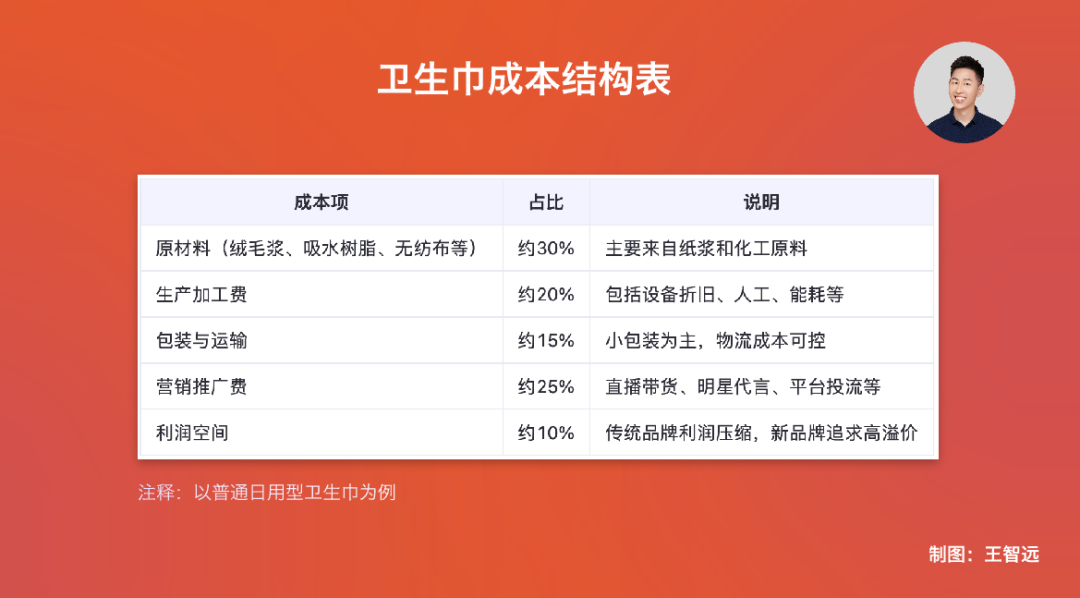
一片卫生巾,为何变成了“流量印钞机”?
Hu Xiu· 2025-06-21 23:49
Core Insights - The sanitary napkin market in China is experiencing significant growth, with a market size of 703.4 billion yuan in 2023, representing an 8.2% year-on-year increase [3][4]. - By 2025, the market is projected to reach 1.5 trillion yuan, with a compound annual growth rate of approximately 9.5% [5][6]. - The entry of celebrities and new brands into the sanitary napkin market is driven by high profit margins and a growing consumer demand for transparency and safety [9][13]. Market Dynamics - The sanitary napkin industry is characterized by high-frequency demand, with an average woman using around 10,800 to 15,000 pads in her lifetime [7][8]. - Major brands like Hengan International and Baiya have reported gross margins exceeding 55%, indicating a lucrative profit potential [10][11]. - The emergence of new brands is partly due to a trust vacuum created by scandals in the industry, leading consumers to seek alternatives that emphasize safety and transparency [14][15]. Consumer Behavior - Consumers are increasingly sharing their negative experiences with existing products, highlighting issues such as misleading product sizes and allergic reactions [24][25]. - The current regulatory standards are lagging behind consumer expectations, allowing for practices that may be legal but are perceived as unfair [28][32]. - The sanitary napkin market is witnessing a shift towards higher-priced products, driven by emotional marketing and the perception of quality, despite the absence of significant cost increases [44][46]. Competitive Landscape - The competition in the sanitary napkin market is evolving from price wars to battles over brand trust and emotional connection with consumers [21][22]. - New entrants are leveraging celebrity endorsements and social media influence to capture market share, with brands like Duowei and Dongfang Zhenxuan achieving rapid sales through live streaming [19][20]. - The industry is facing a potential backlash as consumers become aware of the disparity between price and actual product quality, which could lead to a market correction [60][68]. Future Outlook - The market may see a return to more rational pricing as consumers become more discerning and regulatory standards improve [69][70]. - Brands that focus on delivering quality products at fair prices while maintaining consumer trust are likely to emerge as winners in the evolving landscape [71].