
数据中心处理器

Search documents
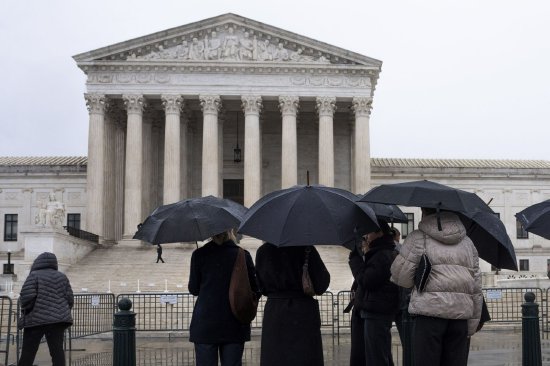
最高法院阻止关税重击后,特朗普开辟新道路
Xin Lang Cai Jing· 2026-02-22 20:28
Group 1 - The U.S. Supreme Court's 6-3 ruling has overturned several tariff policies implemented by President Trump, significantly altering the landscape of trade protectionism in the U.S. [1][3][24] - Following the ruling, Trump announced a new 10% tariff on global goods, which he later increased to 15%, indicating a continued commitment to his tariff agenda despite legal setbacks [1][24][34] - The ruling limits Trump's ability to impose tariffs unilaterally, requiring adherence to complex legal procedures, which may hinder his previous flexibility in trade negotiations [2][24][34] Group 2 - The ruling is seen as a pivotal moment that reinforces judicial authority over presidential economic policy, potentially reshaping the balance of power between the executive and legislative branches [5][26] - Economic indicators show that despite a temporary boost from AI investments, the U.S. economy is facing challenges, including a slowdown in Q4 and a persistent trade deficit, which contradicts Trump's core economic goals [26][29][40] - Polls indicate that voters believe Trump's tariffs have increased financial burdens on households, prompting him to consider adjustments to tariff policies ahead of the upcoming midterm elections [26][29][38] Group 3 - The Republican Party is experiencing internal divisions regarding tariff policies, with some members voting to repeal tariffs on Canadian imports, reflecting growing concerns over economic impacts [6][27] - Businesses are expressing a desire for a more stable and predictable trade environment, as current uncertainties have led to hesitance in investment and hiring decisions [31][32][37] - The expansion of tariff exemptions to cover over one-third of U.S. imports, including essential goods, suggests a shift towards a more nuanced approach to trade policy [37][40]

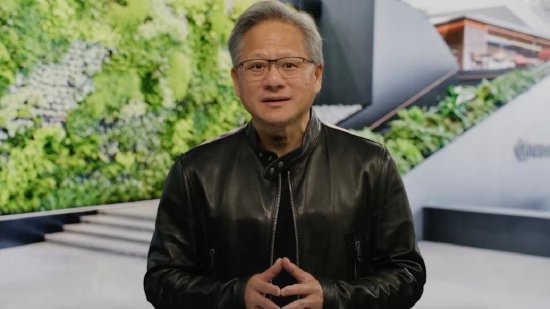
黄仁勋:人工智能领域的资本支出是合理且可持续的
Xin Lang Cai Jing· 2026-02-06 21:59
Core Viewpoint - Nvidia's CEO Jensen Huang emphasizes that despite concerns over excessive spending by clients in data centers, the current expenditure levels are reasonable and sustainable [1] Group 1: AI Infrastructure and Demand - The construction of artificial intelligence infrastructure is expected to continue for the next seven to eight years [1] - Huang states that the demand for artificial intelligence is "incredibly high" and its applications have become widely adopted [1] Group 2: Impact of Capital Expenditure - Major tech companies, including Amazon, Google, Meta Platforms, and Microsoft, have seen their market values collectively shrink by nearly $1 trillion due to large capital expenditures [1] - A significant portion of this spending is directed towards Nvidia, which produces data center processors essential for developing and running AI models [1] Group 3: Returns on Investment - Huang believes that artificial intelligence has already provided returns to adopters, and those clients with more data centers will see even greater benefits [1]
黄仁勋称AI资本支出适当且可持续 英伟达结束连跌涨超7%
Xin Lang Cai Jing· 2026-02-06 21:27
Core Viewpoint - Nvidia's CEO Jensen Huang asserts that the current spending levels on data centers are appropriate and sustainable, despite investor concerns about over-expenditure [2][6] Group 1: AI Infrastructure and Demand - Huang states that the construction of AI infrastructure will continue for 7 to 8 years, highlighting an "astonishing" demand for AI [2][6] - He emphasizes that AI has become useful and powerful, with a high adoption rate among users [2][6] Group 2: Capital Expenditure by Tech Giants - Major tech companies, including Amazon, Alphabet (Google), Meta Platforms, and Microsoft, have announced substantial capital expenditure plans, causing investor unease [2][6] - These companies have collectively seen a market value decline of nearly $1 trillion recently due to these expenditures [2][6] Group 3: Nvidia's Position and Market Reaction - A significant portion of the capital expenditures from tech giants is expected to flow to Nvidia, which produces data center processors for AI model development and operation [2][6] - Nvidia's stock rose by 7.8% on Friday, marking its largest increase since April 9, with a market value increase of approximately $325 billion [3][7] Group 4: Industry Capacity Concerns - Huang expresses no concern about the tech industry adding excessive capacity, noting that unlike the first wave of internet infrastructure, there is currently no idle infrastructure [2][6] - Companies like Anthropic PBC and OpenAI are generating substantial revenue, indicating a healthy demand for AI capabilities [2][6]

高通将推出可与英伟达芯片连接的数据中心处理器
news flash· 2025-05-19 08:33
Core Insights - Qualcomm plans to launch a custom central processing unit (CPU) for data centers that can connect with NVIDIA's GPUs and software [1] Group 1 - Qualcomm has signed a memorandum of understanding with the Saudi Arabian AI company Humain to develop data center solutions [1]
受益于“国补政策”,25Q1中国智能手机市场出货量正增长
Ping An Securities· 2025-04-28 08:56
Investment Rating - The industry investment rating is "Outperform the Market," indicating an expected performance that exceeds the market by more than 5% over the next six months [42]. Core Insights - The Chinese smartphone market experienced a year-on-year growth of 3.3% in Q1 2025, reaching 71.6 million units, driven by the "National Subsidy Policy" and the Spring Festival sales peak [5][8]. - The foldable smartphone segment saw a significant recovery, with a 53.1% year-on-year increase in shipments, totaling 2.84 million units in Q1 2025 [12][13]. - The global PC market also showed growth, with shipments reaching 61.4 million units in Q1 2025, up 6.7% year-on-year, primarily due to pre-purchases by manufacturers and increased adoption of AI-enabled PCs [18][19]. - The data center processor market, driven by generative AI, is projected to grow from $147 billion in 2024 to $372 billion by 2030 [24][25]. Industry News and Commentary - The smartphone market's growth is attributed to the inclusion of more Android products in the "National Subsidy" program, which improved performance in the Android segment with a 5.3% increase, while iOS saw a decline of 9.0% [8]. - The top five smartphone manufacturers in China for Q1 2025 were Xiaomi (13.3 million units, 18.6% market share), Huawei (12.9 million units, 18.0%), OPPO (11.2 million units, 15.7%), vivo (10.3 million units, 14.4%), and Apple (9.8 million units, 13.7%) [10]. - The semiconductor industry is currently in a recovery phase, with a focus on domestic substitution and AI-related opportunities, leading to recommendations for companies such as Northern Huachuang, Zhongwei Company, and Tuojing Technology [37].