数据可视化

Search documents
我国首次明确:培育三类数据流通服务机构
Sou Hu Cai Jing· 2026-02-09 07:00
Core Viewpoint - The recent joint release by the National Data Bureau, Ministry of Industry and Information Technology, Ministry of Public Security, and China Securities Regulatory Commission outlines the cultivation of three types of data circulation service institutions to accelerate the marketization and valuation of data elements in China [1][3]. Group 1: Types of Data Circulation Service Institutions - The three types of data circulation service institutions include data exchanges (centers), data circulation service platform enterprises, and data merchants, each with distinct roles [1][3]. - Data exchanges (centers) will focus on comprehensive service functions, while data circulation service platform enterprises will emphasize specialized development, and data merchants will enhance the development of data products and services [1][3]. Group 2: Policy Measures and Objectives - The opinion encourages diverse circulation and trading models, promoting data exchanges for data, orders, services, models, and scenarios, which is expected to enhance the value release of data elements [1][3]. - By the end of 2029, the capabilities of data circulation service institutions are expected to significantly improve, with more diverse trading forms and richer data products and services [4]. Group 3: Functional Positioning and Development - Data exchanges (centers) are encouraged to strengthen their comprehensive service functions, including compliance assurance and supply-demand matching, to enhance the efficiency of data product circulation [5][6]. - Data circulation service platform enterprises are supported to develop specialized services around industry chains and supply chains, promoting data utilization and value co-creation [6][7]. - Data merchants are encouraged to expand data acquisition channels and develop data products tailored to industry needs, exploring new trading models such as data-as-a-service [6][7]. Group 4: Enhancing Service Capabilities - The opinion emphasizes the need for data circulation service institutions to innovate trading models and increase the supply of high-quality data products and services [7][8]. - Institutions are encouraged to explore diverse trading modes, including data exchanges for various forms of data transactions, to lower transaction costs and promote broader data circulation [7][8]. Group 5: Implementation and Management - The National Data Bureau is tasked with coordinating the establishment of a management system for data circulation service institutions, ensuring clear responsibilities and efficient operations [12][13]. - There is a focus on strengthening supervision and management to prevent illegal activities and ensure compliance within data exchanges and circulation service institutions [12][13].
加快推进数据要素市场化(锐财经)
Ren Min Ri Bao Hai Wai Ban· 2026-02-08 22:51
Core Viewpoint - The Chinese government has issued an opinion to cultivate three types of data circulation service institutions to accelerate the marketization and value realization of data elements, aiming to enhance the data market ecosystem [4][10]. Group 1: Types of Data Circulation Service Institutions - The three types of data circulation service institutions defined are: data exchanges (centers), data circulation service platform enterprises, and data merchants, each with specific roles to play in promoting data circulation and marketization [5][6]. - Data exchanges are encouraged to enhance comprehensive service functions, including rule exploration, compliance assurance, and service matching [5]. - Data circulation service platform enterprises are supported to develop specialized services around industry and supply chains [5]. - Data merchants are urged to expand data acquisition channels and develop diverse data products and services [5]. Group 2: Enhancing Data Market Ecology - The opinion emphasizes the need for a clear functional positioning and collaborative development among various data circulation service institutions to establish a structured framework for the data circulation service system [6][10]. - It aims to stimulate the data market by encouraging diverse data circulation transaction models and enhancing service capabilities [8][10]. - The opinion supports the exploration of innovative data circulation transaction modes, such as data exchange for services or models, to lower transaction costs and promote broader data circulation [8]. Group 3: Addressing Data Scarcity in AI - The opinion addresses the "data scarcity" issue faced by many AI companies by supporting collaboration between data circulation service institutions and industry leaders to build high-quality data sets [9]. - It encourages partnerships with AI enterprises to provide data aggregation, governance, and model training services [9]. Group 4: Future Goals and Implementation - By the end of 2029, the goal is to significantly enhance the capabilities of data circulation service institutions, diversify transaction forms, and enrich data products and services [10]. - The opinion proposes promoting the use of standardized data circulation transaction contracts to ensure compliance and efficiency in data transactions [10]. - Industry experts view this opinion as a systematic and forward-looking design to address the critical "circulation bottleneck" in the value realization of data elements, marking a transition to a more functional and vibrant data market [10][11].


讲好数据故事:数据可视化设计终极指南
3 6 Ke· 2025-06-30 04:17
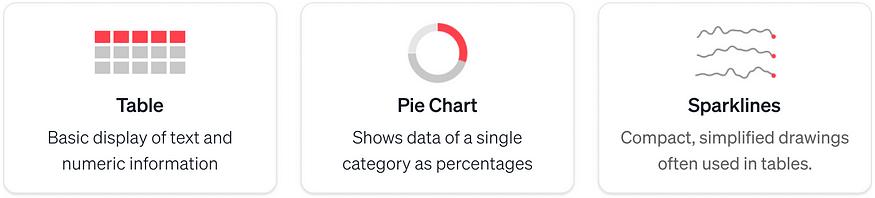
Overview - The article serves as a comprehensive guide to enhance data visualization work by combining technical expertise with design principles [1][2] - It provides strategies, methods, and best practices for creating more effective and impactful data visualizations [2] Data Visualization Principles - Effective data visualization requires careful design to transform raw data into meaningful insights [3] - The article emphasizes the importance of simplifying complexity, presenting data truthfully, and engaging the audience [3] - It highlights that humans generate an astonishing 25 quintillion bytes of data daily, necessitating data visualization for understanding [3] Project Initiation - Early decisions in data visualization projects can significantly impact the final product [5] - It is crucial to define the story to be told and understand the audience's needs [6] - Clarity should be prioritized in design, avoiding excessive chart "ink" and technical jargon [7][8] Comparison and Consistency - Comparisons must be meaningful and based on logically similar items to avoid misleading interpretations [9] - Consistency in metrics, colors, and styles throughout the visualization is essential to prevent confusion [10][12] Accessibility and Sustainability - Accessibility practices ensure that visualizations are usable by all audiences, including those with disabilities [14] - Designs should be flexible for easy updates, especially for dashboards that require real-time data integration [15] Visualization Formats - The article discusses various formats for presenting data, from simple tables to complex visualizations [16] - Basic data presentation formats include tables, pie charts, and bar charts, each suited for different scenarios [19][23][32] - Advanced formats like scatter plots, heat maps, and box plots are used for analyzing relationships and distributions [76][87][93] Data Visualization Tools - A variety of data visualization tools are available, each with unique strengths and considerations [143] - Tools like Tableau and Looker Studio are highlighted for their capabilities in handling large datasets and creating interactive visualizations [143][144] - Microsoft Excel and PowerPoint are noted for their accessibility and ease of use in basic data visualization tasks [146][149]