
数智工场

Search documents
税友股份(603171):深耕G端税务二十余载,B端AI+SaaS打开新空间:税友股份(603171):深度报告:
Guohai Securities· 2026-01-19 08:02
Investment Rating - The report maintains an "Accumulate" rating for the company [1] Core Views - The company is a leading domestic AI+SaaS provider in the financial and tax services sector, deeply involved in government projects such as the Golden Tax Phase III and IV. The B-end business is accelerating with the launch of the "Xiyou" AI platform, which integrates AI and financial services, creating a new growth point [8][9] - The company has seen significant growth in its B-end active customer base, reaching 11.8 million in the first half of 2025, with expectations for the AIBM ecosystem service market to reach 390.7 billion yuan by 2028 [9][11] - The company’s revenue is projected to grow steadily, with expected revenues of 2.256 billion yuan, 2.924 billion yuan, and 3.493 billion yuan for 2025, 2026, and 2027 respectively, alongside net profits of 175 million yuan, 363 million yuan, and 559 million yuan for the same years [13] Summary by Sections Company Overview - The company is a leading digital financial and tax service provider, focusing on digital governance and tax management solutions. It has transitioned from a G-end focus to a growing B-end business, with a stable revenue growth trajectory and a solid gross margin [17][22][40] - The company’s revenue has grown from 1.6 billion yuan in 2021 to 1.9 billion yuan in 2024, with a CAGR of 6.6% [35] B-end Digital Taxation Wave - The number of enterprises in China continues to rise, with a significant increase in the demand for compliance and tax optimization services among small and medium-sized enterprises (SMEs) due to more stringent tax regulations [44][48] - The company has developed the "Xiyou" AI platform to integrate AI with financial services, enhancing operational efficiency and compliance [55] Policy Support and G-end Business - The company benefits from favorable policies promoting digital transformation in tax services, with a clear positioning in G-end business and ongoing success in winning government contracts [12][20] Investment Recommendations - The company is expected to leverage its AI+SaaS capabilities to create a second growth point in the B-end market, with adjusted revenue forecasts indicating strong growth potential [13][15]

从概念到盈利,AI应用端迎来价值重估| A股2026投资策略②
Xin Lang Cai Jing· 2025-12-28 00:04
Core Insights - The A-share market's AI narrative is clearly defined by a "hardware-first" approach, with exponential growth in computing power driving significant revenue increases in hardware sectors like CPO, AI servers, and storage chips [1] - The focus is shifting from hardware to applications as the AI industry matures, with expectations for a dual explosion in performance and valuation for AI application companies in 2026 [1][2] - The advertising sector is leading the commercialization of AI applications, particularly in digital advertising, where companies are leveraging AI for operational efficiency and new revenue streams [1][2] Hardware Sector Performance - Industrial Fulian (601138.SH) reported a fivefold year-on-year revenue increase in AI server-related business, while Zhongji Xuchuang (300308.SZ) saw significant growth in optical module revenue [1] - The hardware infrastructure is expected to provide the necessary support for application layers, with several brokerages indicating a shift in investment opportunities from hardware to application sides in 2026 [1] Advertising Sector Developments - Applovin (APP.US) exemplifies the success of AI in advertising, with a stock price increase of up to 56 times since the launch of ChatGPT, and a 71% year-on-year revenue growth in Q1 2025 [2] - BlueFocus (300058.SZ) and Leo Group (002131.SZ) have also begun to realize AI advertising business revenue, benefiting from large existing businesses and rich data resources [2][3] Vertical Industry Applications - Companies in vertical industries such as industrial AI, tax services, and office automation are achieving significant revenue growth through AI integration [5][6] - Nengke Technology (603859.SH) reported AI business revenue of 335 million yuan, accounting for 30.79% of total revenue, driven by its AI Agent products [5] - TaxFriend (603171.SH) achieved a 42.33% year-on-year increase in net profit, attributed to AI-driven revenue growth and efficiency improvements [6] 3D Printing Innovations - The release of Google's Nano Banana Pro is expected to revolutionize the 3D printing industry by significantly reducing design cycles and costs, thus driving demand for raw materials [8] - Companies like Changjiang Materials (001296.SZ) and Yinbang Co. (300337.SZ) are positioned to benefit from the anticipated growth in the 3D printing sector [9][10] Future Outlook - The A-share AI investment landscape is expected to transition from hardware speculation to application performance validation in 2026, with companies that have deep industry knowledge and data barriers likely to see significant profit growth [10] - The common traits among successful AI application companies include strong industry expertise, focus on vertical scenarios, and clear monetization strategies [7][10]



税友股份第三季度净利增42.33% AIBM战略成效初现
Zheng Quan Shi Bao Wang· 2025-10-30 12:11
Core Insights - TaxFriend Co., Ltd. reported a revenue of 1.426 billion yuan for the first three quarters of 2025, marking an 11.1% year-on-year increase, with a net profit attributable to shareholders of 110 million yuan and basic earnings per share of 0.27 yuan [1] - In Q3 2025, the company achieved a significant net profit of 39 million yuan, reflecting a year-on-year growth of 42.33%, while the net profit after deducting non-recurring items reached 36 million yuan, up 54.23% year-on-year [1] - The growth in performance is attributed to the normalization and transformation of the bookkeeping industry, driven by the company's AI products and improved operational efficiency [1] Industry Overview - The bookkeeping industry in China has over 100,000 licensed bookkeeping agencies, and new regulatory measures announced on October 20 by the Ministry of Finance and the State Administration of Taxation aim to enhance compliance and standardization across the industry [1] - The shift from a "low-price competition" model to a "quality competition" model is expected, with an increasing proportion of high-value services [2] - The demand for digital tools among bookkeeping agencies is surging, leading to significant increases in IT investments within the industry, thereby creating market opportunities for financial technology companies [1][2] Company Strategy - TaxFriend's AIBM strategy is effectively addressing the transformation needs of the bookkeeping industry, focusing on the normalization and intelligent transition of services [3] - The launch of the Agentic platform "Smart Workshop" in August has improved efficiency in tax processing by tenfold compared to traditional methods, reducing labor costs by approximately 60% and achieving an accuracy rate exceeding 90% [2] - The company aims to further consolidate its competitive advantage in the B-end market through continuous technological innovation and product iteration, supporting high-quality development in the industry [3]
税友股份亿企赢CEO王安笑:AI Agent能更快撬动付费意愿 改善SaaS行业盈利难症结
Mei Ri Jing Ji Xin Wen· 2025-09-23 10:12
Core Viewpoint - The development of AI technology is evolving from Copilot to Agent, with TaxFriend Co., Ltd. launching the first Agentic platform "Smart Factory" to reconstruct financial and tax services through human-machine collaboration [1] Group 1: AI Technology Evolution - The transition from Copilot to Agent signifies a shift towards AI systems that can independently complete tasks, enhancing operational efficiency [3] - While Agent applications are becoming more prevalent, Copilot functionalities are still relevant in complex tasks requiring human oversight [3][5] Group 2: Application in Financial and Tax Services - The financial and tax sectors are identified as suitable for AI Agent applications due to their high certainty and clear regulatory boundaries [5] - AI Agents can significantly improve efficiency in these sectors, but human intervention remains necessary for ethical and responsibility reasons [5] Group 3: Industry Challenges - The "square cost curse" presents a challenge in AI development, where performance improvements lead to exponential cost increases, particularly in large model training [6] - TaxFriend is addressing this by optimizing their AI Agent for specific business needs to enhance user experience rather than solely focusing on cost reduction [6] Group 4: Market Dynamics and User Willingness to Pay - The B2B market for AI Agents is characterized by strong demand for cost reduction and efficiency improvements, with potential for faster commercialization compared to B2C [7] - Recent AI product launches have shown an increase in user willingness to pay, driven by tangible benefits and clear ROI from AI applications [9][10] Group 5: Competitive Landscape - The AI Agent market is expected to see increased competition as advancements in large models create new opportunities, leading to a proliferation of financial and tax AI products [11] - The key to success will be the accuracy of AI applications and their ability to meet industry-specific needs, with a focus on real-world effectiveness [12]


税友股份发布行业首个Agentic平台“数智工场”
Guo Ji Jin Rong Bao· 2025-09-01 11:41
Core Insights - The rapid development of the digital economy has led to increased demand for intelligent financial and tax management among small and micro enterprises, as well as for compliance and business empowerment [2] - TaxFriend Co., Ltd. launched the first Agentic platform in the financial and tax industry, named "Smart Workshop," which has shown initial optimization effects on financial and tax service models [2] - The platform's smart accounting function has achieved operational efficiency ten times that of traditional accounting, with an accuracy rate exceeding 90%, and has helped reduce labor costs by 60% [2] - TaxFriend's revenue from its intelligent financial and tax business reached 620 million yuan, a year-on-year increase of 11.95%, while its digital government business generated 300 million yuan, growing by 16.60% [4] Company Overview - TaxFriend Co., Ltd. was established in 1999 and is one of the earliest companies engaged in financial and tax information technology in China [3] - The company has participated in key tax infrastructure projects, including the national individual income tax reform and the smart electronic tax bureau [3] - TaxFriend operates a dual-brand strategy with its subsidiary "Yiqiying," focusing on B-end financial and tax SaaS services [3] Market Potential - The compliance tax optimization market is projected to have a market potential of over 100 billion yuan, with the domestic financial and tax AIBM ecosystem service industry expected to reach a market size of 390.73 billion yuan by 2028, with a compound annual growth rate of 74.9% [4] - The new generation of business owners is becoming younger, and small enterprises are showing increased compliance awareness, particularly in rapidly developing sectors such as e-commerce and new industries [4]
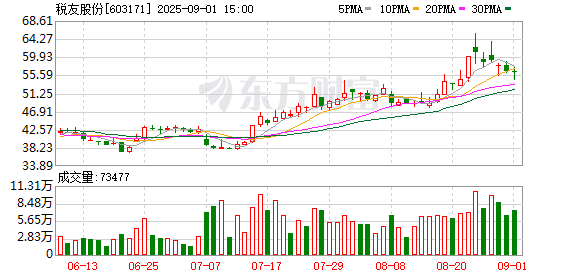
AI Agent入局,税友股份如何重塑财税服务业?
Hua Er Jie Jian Wen· 2025-08-29 02:07
Core Insights - The article discusses the launch of the "Agentic platform" named "Smart Factory" by TaxFriend Co., Ltd. (603171.SH), aimed at the financial and tax industry, highlighting the company's AIBM strategy and future plans [1][9] - TaxFriend has established a dual-driven business structure focusing on government (G-end) digital governance and enterprise (B-end) smart financial and tax services since its inception in 1999 [1][9] Business Structure - The G-end business serves as a stable revenue source, with TaxFriend being a core supplier for the national Golden Tax Project, contributing to system construction phases three and four [1][6] - The B-end business, particularly SaaS services for small and micro enterprises and tax service institutions, is the current growth engine, driven by increasing demand for efficiency and compliance management [1][6] AIBM Strategy Implementation - The AIBM strategy aims to address challenges in the highly specialized financial and tax sector, where general models struggle with knowledge gaps and logical reasoning [2][6] - TaxFriend has developed a specialized financial and tax domain model called "Xiyou" and has achieved preliminary results in building an AIBM digital ecosystem over the past six months [2] Smart Factory Platform - The "Smart Factory" platform is designed to tackle common pain points in the financial and tax service industry, such as low human efficiency, high operational costs, and inconsistent service quality [3][5] - The platform consists of a product matrix including "Cockpit + Smart Accounting + Smart Compliance Advisor," aiming to create a new human-machine collaborative work model [5] Performance Metrics - Pilot data for "Smart Accounting" showed that operational efficiency reached ten times that of traditional accounting, with an accuracy rate exceeding 90% and a 60% reduction in labor costs [5][8] - The company aims to assist 50,000 tax service institutions in improving efficiency and to establish AI financial departments for millions of small and micro enterprises [5] Market Expansion and Policy Alignment - TaxFriend is expanding its Agent services to government and public welfare sectors, aligning with current policies promoting refined financial and tax regulation and the acceleration of AI applications [6][11] - The market for financial and tax AIBM ecosystem services is projected to reach 390.73 billion yuan by 2028, indicating significant growth potential [11] Technological Foundation - The company has built a technical foundation comprising a "general model adaptation tool + financial and tax industry big data knowledge base + multi-agent reasoning model" [7] - The operational ecosystem supports tax service institutions through models like "tool empowerment + operational empowerment + joint management," with an average renewal rate increase of 15% for managed institutions [7] Business Model Transformation - The launch of "Smart Factory" signifies not only a technological update but also a transformation in the business model, shifting customer payment from "paying for tools" to "paying for results or digital labor" [8] - This shift is expected to enhance customer willingness to pay and increase average transaction value, as evidenced by the rapid growth of the product during its trial phase [8]
