星链V3卫星

Search documents
第三代星舰六周后首飞,商业航天产业驶入\"快车道\"
Xuan Gu Bao· 2026-01-28 14:51
Group 1 - SpaceX's CEO Elon Musk announced that the first flight test of the Starship V3 will take place in six weeks at the Starbase launch site in Boca Chica, Texas, with the primary goal of sending the next-generation Starlink V3 satellites into orbit and validating multiple key technological capabilities of the Starship V3 [1] - According to Guangfa Securities, China's commercial aerospace sector is experiencing a dual inflection point of "technological breakthroughs" and "scale explosion," with the market size expected to exceed 2.5 trillion yuan this year [1] - Guotai Junan Securities indicated that commercial aerospace is likely to drive the collaborative development of multiple industries, including low-orbit internet constellations, remote sensing, satellite navigation, and satellite communications, with various policies being introduced to catalyze the rapid growth of China's commercial aerospace industry [1] Group 2 - Steel Research High-Tech Company has strong technical reserves and market expansion capabilities in the high-temperature alloy sector, particularly in industries such as aerospace, power, automotive, and metallurgy, which supports stable performance [2] - Putian Technology is deeply involved in the "Three-Body Computing Constellation," a nationally pioneering space-based AI computing project, and is collaborating with partners like Zhijiang Laboratory and Alibaba to advance the "Star Cable Project" [2]
晚报 | 1月29日主题前瞻
Xuan Gu Bao· 2026-01-28 14:43
Group 1: Embodied Intelligence - Shenzhen is promoting the integration of AI embodied intelligence in the home industry, supported by a three-year action plan (2026-2028) [1][5] - The plan encourages smart home companies to adapt to domestic operating systems and chips, aiming for comprehensive AI integration in various home appliances [1][5] - The market for embodied intelligence is expected to grow significantly, with projections estimating a market size of 632.8 billion yuan by 2027 [1] Group 2: Cloud Services - Google Cloud announced a price increase for global data transmission services starting May 2026, with North American rates expected to double [2] - This price adjustment reflects a shift in the cloud services industry, where major players are passing on systemic cost pressures to end users due to rising AI computing demands and infrastructure costs [2] - The trend indicates a potential end to the long-standing price reduction in the cloud services sector, with expectations that other providers may follow suit [2] Group 3: Commercial Space - SpaceX CEO Elon Musk announced the first flight test of the Starship V3, scheduled to take place in six weeks, focusing on launching the new generation Starlink V3 satellites [3] - The Chinese commercial space sector is anticipated to experience significant growth, with market size projections exceeding 2.5 trillion yuan this year [3] - The development of commercial space is expected to drive collaboration across various industries, including low Earth orbit internet constellations and satellite communications [3] Group 4: Reusable Rockets - China Aerospace Technology Corporation emphasized the importance of reusable rocket technology in its 2026 work plan, aiming to enhance capabilities for commercial launches [4][7] - Reusable rockets are designed to reduce launch costs significantly, with projections suggesting costs could drop from 300,000 yuan per kilogram to 20,000 yuan per kilogram [4] - The commercial market for reusable technology is expected to expand, potentially unlocking a market worth hundreds of billions and fostering growth in satellite manufacturing and space applications [4]

SpaceX星舰V3六周后首次发射测试,航空航天ETF(159227)日均成交7.4亿
Xin Lang Cai Jing· 2026-01-28 05:16
Group 1 - The core index of the aerospace industry, CN5082, shows mixed performance among its constituent stocks, with Zhenxin Technology leading at a 3.82% increase, followed by Changyingtong at 2.83%, and Hongdu Aviation at 1.90%, while Guolian Aviation experienced the largest decline [1] - The Aerospace ETF (159227) is currently priced at 1.48 yuan, with a turnover rate of 9.46% and a transaction volume of 297 million yuan during the trading session [1] - Over the past month, the average daily transaction volume of the Aerospace ETF reached 740 million yuan, and its scale increased by 213 million yuan in the past week [1] Group 2 - SpaceX CEO Elon Musk announced that the first flight test of the Starship V3 version is scheduled to take place in six weeks at the Boca Chica Starbase in Texas, aiming to launch the next-generation Starlink V3 satellites and validate key technological capabilities [1] - CITIC Construction Investment Securities believes that the booming commercial aerospace industry, particularly driven by companies like SpaceX, is reducing launch costs through reusable rocket technology and large-scale satellite constellation deployment, enabling the possibility of deploying thousands of satellites [1] - The commercial aerospace industry's growth is expected to create a vast market for satellite internet, IoT, and future space computing, with leading companies actively exploring new technologies and products for inter-satellite and ground communication applications [1][2] Group 3 - The Aerospace ETF closely tracks the National Aerospace Index and covers key industry chain segments such as aerospace equipment, space equipment, satellite navigation, and new materials, with a high weight of 70% in commercial aerospace concepts [2] - The top ten holdings of the ETF include industry leaders such as Aerospace Development, China Satellite, Aerospace Electronics, AVIC Aircraft, and AVIC High-Tech [2]
马斯克,重大宣布!欧盟也有大动作!事关商业航天
证券时报· 2026-01-28 04:43
Core Viewpoint - The commercial space industry is experiencing significant developments, particularly with SpaceX's upcoming Starship V3 test and the European Union's satellite communication initiatives [1][3][8]. Group 1: SpaceX Developments - SpaceX CEO Elon Musk announced that the first test of the Starship V3 rocket will occur in six weeks, aiming to launch the next-generation Starlink V3 satellites into orbit [1][3]. - The Starship V3 features a lighter yet stronger stainless steel design, increased height by approximately 1.5 meters compared to V2, and enhanced payload capacity, allowing for longer mission durations [3][4]. - The Starlink V3 satellites will have a data transmission speed of up to 1 Tbps and a latency of less than 20 milliseconds, making them suitable for high-demand applications like finance and gaming [4][6]. Group 2: European Union Initiatives - The EU has launched its governmental satellite communication project, GOVSATCOM, which provides secure satellite communication for member states, focusing on military and government use [8][9]. - GOVSATCOM integrates existing military and commercial satellite capabilities and is expected to expand its bandwidth and coverage through partnerships [9][10]. - The IRIS2 satellite internet system, consisting of nearly 290 satellites, is anticipated to begin initial services by 2029, with the Ka military frequency already in use [10][11].

马斯克:星舰V3版6周后发射;苹果发布新款AirTag
Sou Hu Cai Jing· 2026-01-28 03:03
Group 1 - Anta Sports plans to acquire 29.06% stake in PUMA SE for €1.5055 billion (approximately ¥12.278 billion) to enhance its global market position and brand influence [2] - Shandong Agricultural University Fertilizer Technology Co., Ltd. is set to be listed on the Beijing Stock Exchange on January 28, 2026, with an initial public offering of 16 million shares priced at ¥25.00 per share, raising a total of ¥400 million [2] Group 2 - DeepWay has completed a Pre-IPO financing round of ¥1.177 billion, marking the largest single financing in the autonomous driving new energy heavy truck sector [3] - Turing Quantum has secured several hundred million in Series B financing, continuing its trend of raising significant capital within six months [4] - AI medical innovation company Xu Zhi Shi has completed an A+ round of financing exceeding ¥50 million, with plans for a B round to be initiated after the Spring Festival [5] Group 3 - Elon Musk announced that SpaceX's Starship V3 will undergo its first flight test in six weeks, aiming to launch the next generation of Starlink V3 satellites [6] - Ying Shi Innovation is set to launch a dual-camera handheld gimbal camera, with product details leaked prior to the official announcement [7] - Apple has released a new version of AirTag, featuring a wider tracking range and louder speaker, priced at $29 for a single unit and $99 for a four-pack [10]



刚刚!重磅利好突袭!
天天基金网· 2026-01-28 01:10
Core Viewpoint - The commercial space industry is experiencing significant catalysts, particularly with SpaceX's upcoming Starship V3 test and the European Union's satellite communication initiatives [2][10]. Group 1: SpaceX Developments - SpaceX CEO Elon Musk announced that the first test of the Starship V3 rocket will occur in six weeks, aiming to launch the next-generation Starlink V3 satellites into orbit [3][5]. - The Starship V3 features a larger design, approximately 1.5 meters taller than its predecessor, and is equipped with 33 Raptor 3 engines, doubling its thrust and significantly increasing its payload capacity [6]. - The Starlink V3 satellites will have a data transmission speed of 1 Tbps and a latency of under 20 milliseconds, making them suitable for applications requiring low latency, such as finance and esports [6][9]. - SpaceX plans to launch multiple Starlink V3 satellites per mission, with the first launches potentially occurring in the first half of 2026 [7]. Group 2: European Union Initiatives - The EU has launched its GOVSATCOM satellite communication project, which provides secure satellite communication for government and military use across member states [11][12]. - GOVSATCOM will initially include eight satellites from five countries, with plans to expand bandwidth and coverage through partnerships [12]. - The IRIS2 satellite internet system, consisting of nearly 290 satellites, is expected to begin preliminary services in 2029, serving as a precursor to the GOVSATCOM project [13].
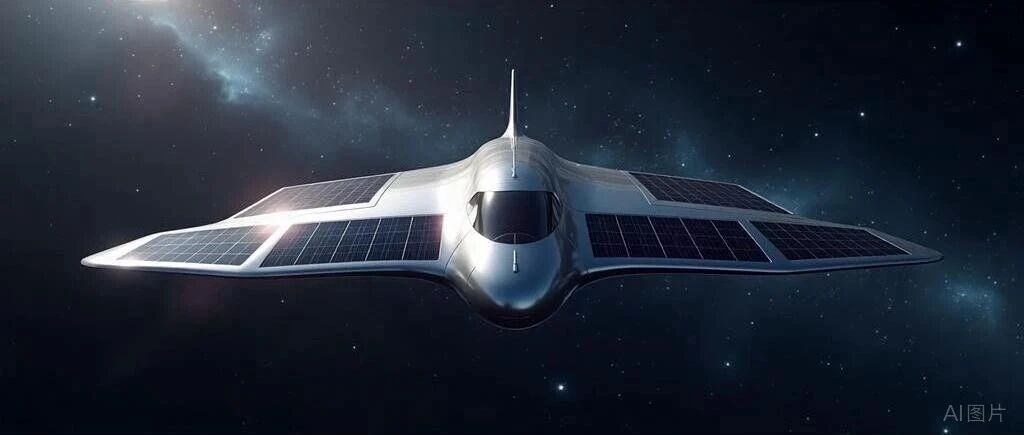
马斯克:第三代星舰6周后发射
新华网财经· 2026-01-28 00:48
Group 1 - The core objective of the upcoming SpaceX Starship V3 flight test is to launch the next-generation Starlink V3 satellites into orbit while validating multiple key technological capabilities of the Starship V3 [2][3] - Starship V3 features a thinner yet stronger stainless steel ring segment, which reduces weight while maintaining strength, and has a larger volume, approximately 1.5 meters taller than V2, allowing for more propellant and supporting longer mission durations [3] - The spacecraft will be equipped with 33 Raptor 3 engines, doubling the thrust and significantly enhancing payload capacity, enabling it to deliver 100 Starlink satellites in a single launch [3]

马斯克:第三代星舰6周后发射
财联社· 2026-01-28 00:35
Core Viewpoint - SpaceX is set to conduct the first flight test of its Starship V3 version in six weeks, aiming to launch the next-generation Starlink V3 satellites into orbit while validating several key technological capabilities of the Starship V3 [1][2] Group 1 - The primary mission objective is to deploy the new Starlink V3 satellites into orbit [2] - Starship V3 features a thinner yet stronger stainless steel ring segment, which reduces weight while maintaining strength, and is approximately 1.5 meters taller than V2, allowing for increased propellant capacity and longer mission durations [2] - The vehicle is equipped with 33 Raptor 3 engines, which double the thrust and significantly enhance payload capacity, enabling the launch of 100 Starlink satellites in a single mission [2]
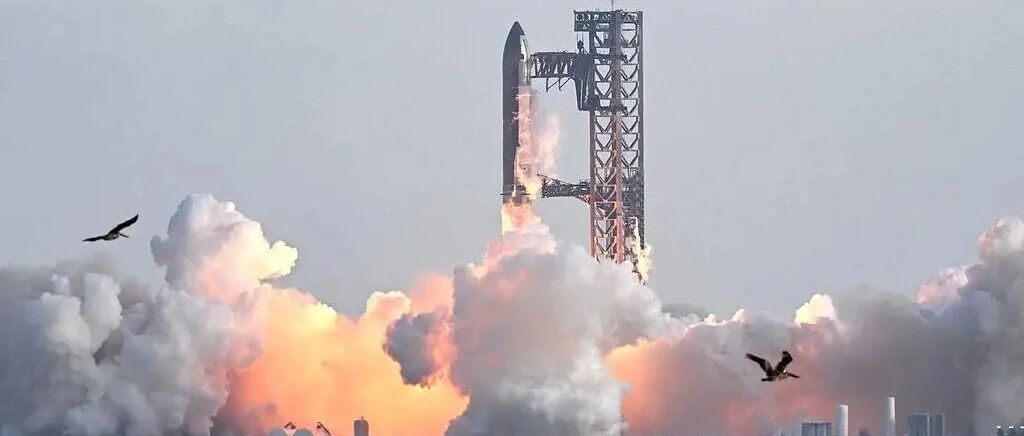
第三代星舰6周后发射 机构称商业航天产业拐点已现
Xin Lang Cai Jing· 2026-01-28 00:16
Core Viewpoint - SpaceX's CEO Elon Musk announced that the first flight test of the Starship V3 will take place in six weeks at the Starbase launch site in Boca Chica, Texas, aiming to send the next-generation Starlink V3 satellites into orbit and validate several key technological capabilities of the Starship V3 [1] Industry Summary - According to Dongwu Securities, the scale of China's commercial space market is projected to grow from 1.2 trillion yuan in 2024 to 4.8 trillion yuan by 2027, and is expected to exceed 7.8 trillion yuan by 2030 [1] - Zhongtai Securities believes that the commercial space industry is entering a new phase of rapid development, with the number of commercial space enterprises in China exceeding 600 and a total of 25 commercial space launch sites (18 operational and 7 under construction) [1] - The launch speed of the GW satellite constellation is significantly accelerating, and reusable rocket technology is approaching critical validation stages, driven by the demand for space computing capabilities [1] - A turning point in the commercial space industry has been observed, with the sector likely to experience concentrated catalysts in the near future, suggesting investment opportunities in the commercial space direction [1] Company Summary - Aerospace Technology has deeply entered the commercial space industry chain, collaborating with leading rocket manufacturers such as Jiuzhou Yunjian, Xinghe Power, Blue Arrow Aerospace, Tianbing Technology, Dongfang Space, and CAS Space, providing various supporting products including turbine discs, pumps, shells, flanges, and other forged components [1] - Xizi Clean Energy's subsidiary, Hangzhou Zhongneng Optoelectronics, has overcome challenges in large-area low-temperature preparation, high-precision laser scribing, and high-barrier packaging, providing reliable supply for high-power solar wings in space [1]


利好突袭!马斯克,重大宣布!欧盟也有大动作!事关商业航天
券商中国· 2026-01-27 23:25
Core Viewpoint - The commercial space industry is experiencing significant catalysts, particularly with SpaceX's upcoming Starship V3 test and the European Union's satellite communication initiatives [1]. Group 1: SpaceX Developments - SpaceX CEO Elon Musk announced that the first test of the Starship V3 rocket will occur in six weeks, aiming to launch the next-generation Starlink V3 satellites into orbit [2][4]. - The Starship V3 features a lighter yet stronger stainless steel design, increased size (approximately 1.5 meters taller than V2), and enhanced capabilities to carry more propellant for longer missions [5]. - The Starship V3 will utilize 33 Raptor 3 engines, doubling its thrust and significantly increasing its payload capacity, allowing it to launch up to 100 Starlink satellites at once [6]. - The Starlink V3 satellites will have a data transmission speed of 1 Tbps and a latency of under 20 milliseconds, making them suitable for high-demand applications like finance and esports [6][9]. - By the end of 2025, Starlink is expected to cover 155 countries with over 9 million users, establishing a vast global communication network [8]. Group 2: European Union Initiatives - The EU has launched its government satellite communication project, GOVSATCOM, which provides secure satellite communication for military and governmental purposes [11]. - GOVSATCOM integrates existing military and commercial satellite communication capabilities across EU member states, with initial operations involving 8 satellites from 5 countries [11]. - The IRIS2 satellite internet system, consisting of nearly 290 satellites, is set to begin preliminary services in 2029, with the Ka military frequency already in use [12]. - The EU emphasizes the need for reusable launch vehicles and rapid response capabilities for space missions, highlighting the upcoming maiden flight of the Ariane 6 rocket, which can carry 20 tons into space [12].