普拉达

Search documents
食饮吾见 | 一周消费大事件(2.9-2.13)
Cai Jing Wang· 2026-02-13 08:34
Regulatory Changes - The State Administration for Market Regulation (SAMR) has introduced new regulations for the bulk transportation of key liquid foods to enhance food safety oversight [1][2] - A comprehensive regulatory framework has been established, including a directory of key liquid foods, management methods for transportation permits, and standards for sanitary requirements [1][2] Food Safety Measures - The new regulations include a directory that categorizes 14 subtypes of liquid foods, specifying the use of dedicated transport containers [2] - A management method for transportation permits has been developed, detailing strict conditions and procedures for obtaining permits [2] - A traceability system has been implemented, requiring all parties involved in the transportation process to maintain accurate records [2] Industry Developments - Nestlé has been prompted to recall specific batches of infant formula due to the detection of Bacillus cereus toxins, with no confirmed cases of poisoning reported in China [3] - The revised Food Recall Management Measures emphasize the responsibilities of food producers and regulatory bodies, enhancing the framework for food recall processes [4] Corporate Strategies - The founder of Pang Donglai has announced that the company will never go public and aims to maintain a youthful management team [5] - Yonghui Supermarket has reported a significant turnaround with a dual increase in same-store sales and customer traffic after a strategic transformation [6][7] Financial Performance - L'Oréal reported a 4% increase in sales to €44.05 billion, with all business sectors showing growth, particularly in professional products [9] - Kraft Heinz announced a pause on its spin-off plans, focusing on returning to profitable growth amid a 3.5% decline in net sales [10] - Coca-Cola's Q4 net profit rose by 5% to $2.316 billion, driven by a 13% increase in sales of its no-sugar products [11][12] - Budweiser APAC reported a 6.1% decrease in revenue to $5.764 billion, with a focus on enhancing non-immediate and O2O channels to improve sales performance [13]



2025年零售圈十大收购事件发布
Tai Mei Ti A P P· 2026-01-06 13:14
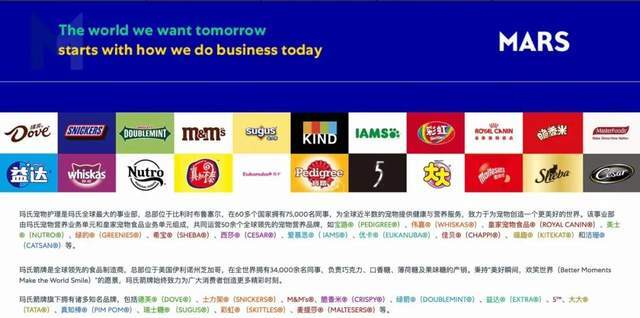
Core Insights - The retail industry experienced a significant wave of mergers and acquisitions in 2025, indicating a major capital reshuffle within the sector [1][27] - Major companies are either divesting non-core assets to focus on their main businesses or acquiring new brands to expand their portfolios [1][27] - Private equity firms are playing a crucial role in driving brand transformation and expansion in the retail sector [1][27] Group 1: Major Mergers and Acquisitions - Alibaba divested its stake in Suning and Intime Retail, marking a strategic shift to optimize resource allocation [3][26] - Mars, Incorporated completed the acquisition of Kellanova for approximately $35.9 billion, creating a global snack empire [5][7] - KKR acquired an 85% stake in Vista International, which is linked to the domestic beverage brand Da Yao, enhancing its control over the Chinese soda market [9][10] Group 2: Strategic Adjustments and Performance - After KKR's acquisition, Gao Xin Retail reported a revenue of 71.55 billion yuan, with a net profit of 386 million yuan, marking a turnaround from previous losses [4] - The acquisition of Kellanova by Mars is one of the largest in the packaged food sector in the last decade, highlighting the trend of consolidation among food giants [7][8] - CPE Yuanfeng's acquisition of Burger King China aims to accelerate local expansion with a commitment to invest $350 million [16][17] Group 3: Industry Trends and Future Outlook - The retail sector is shifting from scale expansion to lean operations, focusing on supply chain and brand value [2][27] - The relationship between brands and capital is evolving from mere financial support to active operational involvement, indicating a search for sustainable growth [27] - The ongoing mergers and acquisitions signal a re-evaluation of the value of physical retail, with supply chain and product strength becoming central to competition [27]


业绩不如意 普拉达CEO离职
Bei Jing Shang Bao· 2025-06-23 16:16
Core Viewpoint - Prada's CEO Gianfranco D'Attis will leave the company by the end of the month, with Andrea Guerra temporarily taking over, amid a challenging luxury market environment and internal brand performance disparities [1][2]. Group 1: Management Changes - Gianfranco D'Attis, the first non-family CEO of Prada, is departing the company, which raises speculation about his future due to his absence from the Milan men's fashion show [1]. - Andrea Guerra, the CEO of the Prada Group, will temporarily assume the role of brand CEO following D'Attis's departure [1]. - The management changes come as several luxury brands, including Kering and LVMH, are also adjusting their leadership amid market pressures [1]. Group 2: Financial Performance - Prada's revenue growth for 2024 is only 4%, with Q1 2025 showing zero growth, falling short of market expectations [2]. - In contrast, Miu Miu, a brand under the same group, saw retail sales surge by 93% in 2024 and continued to grow by 60% in Q1 2025 [2]. - The sales growth rates for Prada from 2021 to 2024 have decreased significantly, from 44% to 4%, while Miu Miu's growth rates have increased dramatically [2]. Group 3: Strategic Acquisitions - The recent acquisition of Versace for €1.25 billion is a significant move for the Prada Group, aimed at expanding its brand portfolio [3]. - Analysts express concerns that while the acquisition may benefit Prada in the long term, it could pose short-term challenges and require careful management [3]. - The integration of Versace is seen as a test of Prada's capabilities, necessitating sufficient funding and management focus [3]. Group 4: Market Outlook - The global luxury goods market is entering a phase of low growth, with projections indicating annual sales growth of only 2%-4% from 2025 to 2027 [4]. - The overall market environment is expected to improve slightly in 2025, with total sales growth potentially remaining under 4% [4]. - The current market conditions present opportunities for acquiring quality assets at lower prices, which could benefit companies like Prada [5].

百亿接过烫手山芋,范思哲不良业绩或将连累“优等生”普拉达
Xin Jing Bao· 2025-04-12 07:16
Core Viewpoint - Versace has been sold to Prada for $1.375 billion, approximately 33% less than the $2.15 billion paid by Capri Holdings seven years ago [1][2] Group 1: Acquisition Details - Prada announced on April 10 that it plans to acquire Versace for $1.375 billion (approximately €1.25 billion) [2] - Following the acquisition, Versace will become a subsidiary of Prada, which aims to leverage Versace's distinct aesthetic to complement its brand portfolio [2] - The acquisition price values Versace at 1.33 times its projected revenue for the fiscal year 2024 [6] Group 2: Financial Performance - Capri Holdings, Versace's parent company, has faced declining revenues, with a reported third-quarter revenue of $1.26 billion for the fiscal year ending December 28, 2024, down 11.6% year-over-year [4] - Versace's performance has been the weakest among Capri's brands, with a 28.2% year-over-year revenue drop to $201 million in the second quarter of fiscal 2025 [4] - In contrast, Prada reported a revenue of €5.432 billion for 2024, a 17% increase year-over-year, and a net profit of €839 million, marking a 25% increase [5] Group 3: Market Context and Challenges - The global luxury goods market is experiencing a downturn, with forecasts predicting annual growth of only 2% to 5% from 2025 to 2027 [7] - Analysts express mixed opinions on whether Prada's acquisition of Versace will be beneficial or pose financial risks, given the differing styles and consumer positioning of the two brands [6][7] - Prada's previous acquisition attempts have not been successful, raising concerns about its ability to enhance Versace's profitability [6]