
智神星二号运载火箭

Search documents
全球首条机器人关节自动化产线启动;三星电子将于2月向英伟达供应HBM4芯片丨智能制造日报
创业邦· 2026-01-26 04:09
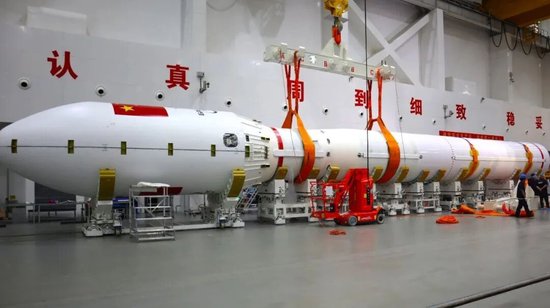
Group 1 - The core point of the article highlights significant advancements in the aerospace and robotics industries, including the anticipated launch of the Zhishen-2 rocket by Xinghe Power and the production of HBM4 chips by Samsung for Nvidia and AMD [2][3] Group 2 - Xinghe Power's Zhishen-2 rocket is expected to make its maiden flight in 2026, featuring a diameter of 4.5 meters and a modular design, with a basic model capable of carrying 20 tons to LEO and a CBC configuration with a capacity of 58 tons [2] - Samsung Electronics will begin supplying HBM4 chips to Nvidia and AMD in February after passing final quality tests, indicating a significant step in the semiconductor supply chain [2] - The world's first automated production line for robotic joints has been launched in Pudong, marking a breakthrough in the mass production of humanoid robot components, with an initial annual capacity of 100,000 units and plans to expand to 300,000 units [2]



星河动力总工李君:液体回收火箭智神星二号预计今年首飞
Xin Lang Cai Jing· 2026-01-25 14:08
Core Viewpoint - The core viewpoint of the article is the announcement of the expected first flight of the Zhishen-2 rocket by Xinghe Power in 2026, highlighting its specifications and capabilities in the commercial aerospace sector [1]. Group 1: Rocket Specifications - The Zhishen-2 rocket is a large modular reusable liquid launch vehicle with a diameter of 4.5 meters [1]. - There are two configurations for the Zhishen-2: the basic model and the CBC model [1]. - The basic model has a launch mass of approximately 757 tons, a launch thrust of about 910 tons, and a Low Earth Orbit (LEO) payload capacity of 20 tons [1]. - The CBC model has a launch mass of approximately 1950 tons, a launch thrust of about 2730 tons, and a LEO payload capacity of 58 tons [1].
星河动力液体回收火箭智神星二号预计2026年首飞
Xin Lang Cai Jing· 2026-01-25 14:08
Core Viewpoint - The core viewpoint of the article is that Xinghe Power's liquid recovery rocket, Zhishenxing II, is expected to make its maiden flight in 2026 [1] Group 1: Rocket Specifications - Zhishenxing II is a large modular reusable liquid launch vehicle with a diameter of 4.5 meters, available in two configurations: basic and CBC [1] - The basic configuration has a launch mass of approximately 757 tons, a launch thrust of about 910 tons, and a Low Earth Orbit (LEO) payload capacity of 20 tons [1] - The CBC configuration has a launch mass of approximately 1950 tons, a launch thrust of about 2730 tons, and a LEO payload capacity of 58 tons [1]
头部拟IPO火箭企业同台
财联社· 2026-01-24 10:38
Core Viewpoint - The 2026 Beijing International Commercial Aerospace Exhibition showcases the latest developments in China's commercial aerospace industry, highlighting a significant increase in investor participation and the focus on liquid reusable rockets as a mainstream path for high-frequency, high-capacity, and low-cost launches [2][4][7]. Group 1: Exhibition Highlights - The exhibition features a wide range of displays, including rockets, satellite manufacturing, space tourism, and supporting services, demonstrating the full industrial chain of China's commercial aerospace [4][6]. - Major companies such as Blue Arrow Aerospace, Star River Dynamics, and China Aerospace Science and Technology Corporation presented their latest technologies, with a particular emphasis on liquid reusable rockets [4][7][9]. Group 2: Technological Innovations - Blue Arrow Aerospace showcased the world's first continuously successful liquid oxygen-methane rocket, the Zhuque-2, and the Zhuque-3, which has completed China's first orbital-level launch verification for a reusable rocket [7][9]. - Star River Dynamics introduced the "Zhishen" series of medium-sized reusable liquid rockets, with the Zhishen-2 having a takeoff mass of approximately 757 tons and a low Earth orbit (LEO) capacity of 20 tons [9][11]. Group 3: Space Tourism Developments - The "Lihong-2" reusable spacecraft from China Aerospace Science and Technology Corporation, designed for space tourism, can carry at least 3 tons of scientific payload or 7 passengers, with a planned reuse of at least 30 times [12][13]. - Beijing Chuanxie Technology Co., Ltd. announced the "Chuanxie-1" commercial manned spacecraft, expected to achieve its first manned flight in 2028, with ticket pre-sales starting at 3 million yuan [12][13]. Group 4: Satellite Manufacturing and Applications - Galaxy Aerospace presented the "Lingxi-03" satellite, China's first satellite using flexible solar wings, which successfully launched in July 2023 and is designed for high-density deployment [14][16]. - The exhibition highlighted advancements in satellite internet technology, with Galaxy Aerospace achieving mobile direct connection capabilities comparable to SpaceX's Starlink [14][16]. Group 5: Industry Ecosystem - The Beijing Economic and Technological Development Area has become a hub for commercial aerospace, hosting over 210 companies and 75% of China's commercial rocket manufacturers, creating a dense industrial ecosystem [19].

智神星二号复用火箭发动机全系统试车成功
Ke Ji Ri Bao· 2026-01-20 23:56
Core Viewpoint - The successful full-system hot test of the CQ-90 engine marks a significant milestone for the company in the development of high-thrust, high-performance, pump-fed liquid rocket engines, laying a solid foundation for the maiden flight of the Zhishen-2 reusable launch vehicle [1]. Group 1: Engine Testing - The CQ-90 engine underwent a comprehensive full-system hot test at the Niutoushan engine test site, achieving successful results [1]. - The engine demonstrated stable ignition, consistent combustion, and normal shutdown during the test, validating the technical maturity and reliability of its core components and overall integration [1]. - Performance parameters of the engine met design specifications, with a combustion efficiency exceeding 96%, indicating advanced domestic standards [1]. Group 2: Engine Specifications - The Zhishen-2 rocket has a diameter of 4.5 meters and comes in two configurations: the basic model with a launch mass of approximately 757 tons and a thrust of about 910 tons, capable of carrying 20 tons to low Earth orbit (LEO); and the bundled configuration with a launch mass of around 1950 tons and a thrust of 2730 tons, capable of carrying 58 tons to LEO [1]. - The CQ-90 engine is an upgraded version based on the CQ-50 engine, featuring a pump-fed layout and six degrees of gimbal control [2]. - The engine incorporates several new technologies, including a high-performance adjustable needle valve injector, coaxial split-type dual-stage high-speed turbine pump, and high-performance gas generator, enabling multiple starts, deep throttling, and reusability [2].
星河动力回应发射失利
Xin Lang Cai Jing· 2026-01-17 09:52
Core Viewpoint - The recent launch of the Xinghe Power's Gushenxing No. 2 rocket was unsuccessful due to flight anomalies, and the company is currently investigating the cause of the failure [1][7]. Group 1: Gushenxing No. 2 Rocket - Gushenxing No. 2 is an upgraded model based on Gushenxing No. 1, featuring a three-stage solid rocket combined with a liquid upper stage, with a launch mass of 100 tons [8]. - The rocket has a payload capacity of 1.6 tons to a 500 km Low Earth Orbit (LEO) and 1.3 tons to a 500 km Sun-Synchronous Orbit (SSO), achieving an efficiency of 1.3% [8]. - The company aims to reduce launch costs significantly while maintaining flexibility and rapid deployment capabilities, with launch prices comparable to medium-sized liquid rockets of 200 tons [8]. Group 2: Gushenxing No. 1 Rocket - Gushenxing No. 1 is the main rocket model for Xinghe Power, having successfully conducted 21 commercial launches, delivering a total of 89 satellites into their designated orbits [10]. - The successful launch of the Gushenxing No. 1 sea-launch variant on January 16 marked a positive start for private commercial launches in 2026, successfully placing four satellites into near-Earth orbit [10]. Group 3: Zhishenxing Series Development - The Zhishenxing series is being developed for large constellation deployment, with the first flight of Zhishenxing No. 1 imminent [10]. - The main engine of Zhishenxing No. 1, CQ-50, has completed over 10,000 seconds of cumulative testing, achieving a significant breakthrough in thrust variability [10]. - Zhishenxing No. 2, a large reusable liquid rocket, is set to enter production, with its main engine CQ-90 having completed assembly and ready for system testing [12]. Group 4: IPO Plans - In October 2025, Xinghe Power filed for IPO guidance with the Beijing Securities Regulatory Bureau, joining the queue of commercial rocket companies for public offering [12].
天地之间的“快递员”——记北京星河动力航天科技股份有限公司总裁刘建设
Jing Ji Ri Bao· 2025-10-18 22:57
Core Viewpoint - The successful launch of the Vesta-1 rocket by Beijing Xinghe Power Aerospace Technology Co., Ltd. marks a significant achievement in China's commercial space sector, highlighting the potential for collaboration between state-owned and private enterprises in the aerospace industry [1][2]. Company Overview - Liu Jianshe, the president and technical leader of Xinghe Power, has been a driving force in the company's development since its founding, believing in the vast prospects of the commercial space market [2]. - The company has achieved 20 successful launches in just eight years, serving 27 satellite clients and successfully placing 85 different types of commercial satellites into orbit [2][3]. Technological Advancements - Xinghe Power is preparing for significant milestones in the fourth quarter, with the Vesta-2 and Zhi-1 rockets entering critical stages of development, aiming to enhance their launch capabilities [3]. - The Vesta-2 rocket is an upgraded model with parameters reaching international leading levels, designed to support various launch platforms and significantly reduce launch costs [3]. Market Position - Xinghe Power is recognized for its high success rate and cost control in the commercial space sector, achieving a 95% launch success rate and creating multiple milestones for private rocket companies in China [4][5]. - The company has implemented strict quality control and failure mitigation mechanisms, which have been crucial for maintaining its operational success [5]. Future Prospects - The company has recently completed a D-round financing of 2.4 billion yuan, aimed at accelerating the development of reusable liquid rockets and enhancing production and launch capabilities [7]. - Liu Jianshe anticipates a significant demand for low-orbit satellite launches in the next decade, emphasizing the importance of cost and reliability in the sustainable development of the industry [7].
