
智能医疗诊断

Search documents
人工智能如何行稳致远
Jing Ji Ri Bao· 2025-11-30 22:35
Core Viewpoint - The article discusses the ongoing debate about the "AI bubble" as global investments flood into the AI sector, focusing on whether China's AI industry can achieve sustainable growth amidst this environment [1][2]. Group 1: AI Development in China - China's AI development is characterized by a demand-driven and pragmatic approach, with continuous capital investment aligned with actual industry needs, making it more stable and cautious [1]. - As of June this year, the user base for generative AI in China reached 515 million, providing a solid foundation for AI training, optimization, and iteration [1]. - The AI technology is empowering various sectors such as agriculture, industry, and services, facilitating the transformation and upgrading of traditional industries [1]. Group 2: Policy Support for AI - The Central Committee of the Communist Party of China has called for the comprehensive implementation of the "AI+" initiative, aiming to integrate AI with various sectors including research, industry, culture, and social governance [2]. - Recent government policies emphasize the cultivation and opening of high-value application scenarios to better meet the development needs across technology, industry, consumption, and governance [2]. Group 3: High-Value AI Applications - High-value applications of AI are defined as those that move from basic to deep applications, addressing significant pain points and enabling scalable applications that drive the development of the entire industry chain [3]. - Examples of high-value AI applications include "flexible production" in smart manufacturing, where AI optimizes production processes to reduce inventory costs and shorten production cycles [3]. - The article emphasizes that true bubbles arise from concept speculation rather than the technology itself, urging investors to focus on core value segments of the AI industry chain and entrepreneurs to avoid blindly following trends [3].
人工智能产业如何行稳致远?
Zhong Guo Jing Ji Wang· 2025-11-26 07:06
Core Insights - The debate over the "AI bubble" is intensifying as global investments flood into the AI sector, raising questions about the sustainability of China's AI industry [1] - Historical lessons from the internet bubble suggest that while initial excitement may lead to a bubble, a few companies will emerge post-bubble to create significant societal value [1] Group 1: Current State of AI in China - China's AI development is primarily driven by demand, focusing on practical applications rather than speculative investments [1] - As of June this year, the user base for generative AI in China reached 515 million, providing a solid foundation for AI training and optimization [1] - AI technologies are being integrated across various sectors, including agriculture, industry, and services, facilitating the transformation of traditional industries [1] Group 2: Future Prospects and Strategic Directions - The "14th Five-Year Plan" emphasizes the implementation of the "AI+" initiative, aiming to integrate AI with various sectors to enhance productivity and societal welfare [2] - High-value AI applications are expected to evolve from basic to deep applications, addressing significant pain points and enabling large-scale implementations [2] - AI can optimize production processes in smart manufacturing, helping companies reduce costs and improve decision-making in complex scenarios [2] Group 3: Investment and Entrepreneurial Strategies - The true bubble arises from concept speculation rather than the technology itself, urging investors to focus on core value segments within the AI industry [2] - Entrepreneurs are advised to maintain clarity and avoid following trends blindly, emphasizing the importance of deepening scenario innovation [2] - Participants who concentrate on the essence of technology and its commercial value are likely to succeed in the ongoing technological revolution [2]
中国资产向上重估成共识 中国市场吸引力更稳固
证券时报· 2025-05-20 00:25
Core Viewpoint - The article emphasizes that amidst significant adjustments in the global economic landscape and increasing uncertainties, Chinese assets are viewed as a "safe haven" for investors, with a consensus emerging on their upward revaluation due to breakthroughs in high-end manufacturing and AI, alongside supportive policies and an improving institutional environment [1][3]. Group 1: Investment Opportunities in China - China's unique advantages are making it a "stable oasis" for global investors, particularly due to its industrial revolution and the development of new productive forces [3]. - The automotive sector, especially in electric vehicles, showcases China's leading position with significant advancements in battery technology and a competitive industry chain, maintaining the highest global production and sales [3]. - The AI industry reflects China's achievements in new productive forces, with Chinese companies positioned in the forefront of the global AI wave, demonstrating capabilities across the entire production system [4]. Group 2: Long-term Investment Logic - The development of new productive forces requires a collaborative effort from policies and funding, with "long money, long investment" seen as a crucial driver for nurturing these forces [6][7]. - Institutional improvements, such as the development of QFII/RQFII systems and the introduction of connectivity mechanisms, have made it easier for foreign investors to participate in China's capital markets [7]. - Recent policies aimed at stabilizing the financial market and boosting investor confidence have led to a notable increase in foreign investment interest in China, particularly in sectors like AI [10][11]. Group 3: Foreign Investment Trends - Foreign investors are increasingly focusing on the Chinese market, with a significant portion of them actively seeking investment opportunities in China, reflecting a shift in asset allocation strategies [11]. - Data indicates that foreign investors hold approximately 3 trillion yuan in A-share market, highlighting their recognition of China's long-term economic fundamentals and capital market value [8][10]. - The recent policy measures and communication from regulatory bodies have enhanced foreign investors' confidence, leading to a net inflow of funds into the Chinese market since late 2024 [10].

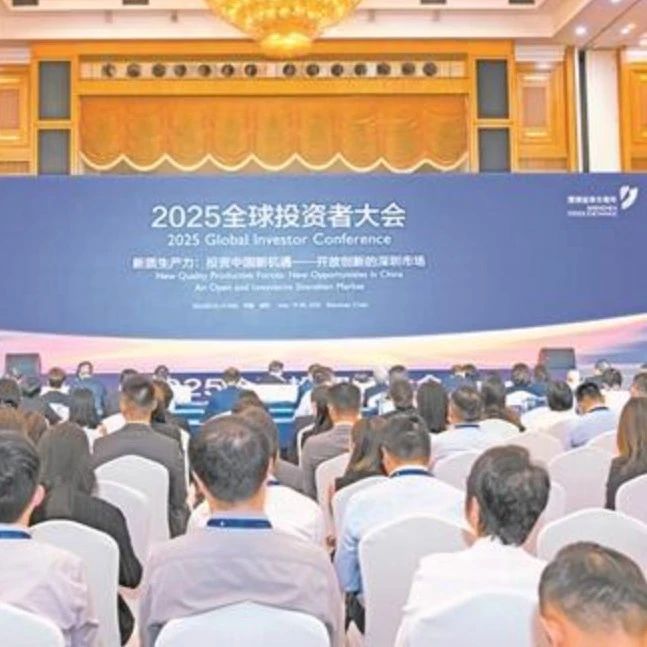
中国资产向上重估成共识 中国市场吸引力更稳固
Zheng Quan Shi Bao· 2025-05-19 18:01
Group 1 - The core viewpoint of the articles is that China is increasingly seen as a "safe haven" for global investors amid significant global economic adjustments and uncertainties, with a consensus emerging on the upward revaluation of Chinese assets [1][2][6] - China's strong breakthroughs in high-end manufacturing and artificial intelligence are reshaping the industrial landscape and releasing substantial investment potential [1][2] - The development of new productive forces in China is creating significant investment opportunities, particularly in advanced industries such as high-end manufacturing, smart driving, and new energy [2][3] Group 2 - China has established a competitive advantage in the electric vehicle industry, leading the world in both battery technology and production volume, thus forming a complete and competitive industrial chain [2] - In the AI sector, China is recognized as a leading player, capable of integrating disruptive technologies into production processes, with a growing number of patent applications and innovative applications emerging [3][4] - Foreign investment institutions are increasingly recognizing the investment opportunities arising from China's new productive forces, with multinational companies accelerating their "China +1" supply chain diversification strategies [3][4] Group 3 - The concept of "long money, long investment" is viewed as a crucial driver for nurturing new productive forces, supported by policies encouraging long-term capital allocation in China [5][6] - Recent policy measures aimed at stabilizing the financial market and boosting investor confidence have led to a significant increase in foreign capital inflows into Chinese assets [6][7] - The A-share market has become strategically important, with foreign investors showing a strong interest in China's economic recovery and growth potential, particularly in AI and related industries [6][7][8]