智能视觉反欺诈策略平台

Search documents
金融壹账通陈当阳:推动AI Agent体系化落地
2 1 Shi Ji Jing Ji Bao Dao· 2025-11-19 10:05
Core Insights - The article discusses the transformation of Chinese fintech companies, particularly Ping An Technology, from a "single technology output" model to becoming "industry standard setters" in overseas markets [1][4][6]. Group 1: Company Positioning and Strategy - Ping An Technology serves as the core platform for technology output from the Ping An Group, embodying the "AI in ALL" strategy through the integration of AI capabilities into financial services [2][11]. - The company aims to deepen its application of AI and SaaS subscription models to help financial institutions achieve cost reduction and efficiency improvements [4][12]. Group 2: International Expansion and Market Focus - The company has expanded its overseas business to 20 countries and regions, serving 214 clients, with a focus on Southeast Asia and South Africa as key strategic markets [1][6][7]. - In Vietnam, the company has partnered with major banks to implement core system projects capable of processing up to 10 billion transactions daily [7]. Group 3: Technological Innovations and Applications - The company has developed an "AI Agent" digital employee to enhance efficiency in customer service, marketing, and credit risk management within the banking sector [3][9]. - The "Intelligent Visual Anti-Fraud Strategy Platform" has been launched to combat fraud using AI, achieving a detection rate of over 99% in various applications [10]. Group 4: Future Goals and Development - Over the next 3-5 years, the company aims to solidify its position as a leader in fintech and AI, focusing on sustainable technology development and deep integration of AI into financial processes [11][12]. - The company plans to enhance its global presence by establishing standardized technology and service outputs, contributing to the international competitiveness of the Ping An Group [12].

21专访|金融壹账通陈当阳:推动AI Agent体系化落地
2 1 Shi Ji Jing Ji Bao Dao· 2025-11-19 09:51
Core Insights - The article discusses the transformation of China's financial technology sector from a "single technology output" model to becoming "industry standard setters" in the context of international expansion [1] - Financial institutions overseas are increasingly seeking compliance, security, and sustainability, with a preference for mature SaaS models to quickly deploy systems while meeting regulatory requirements and enhancing business efficiency [1][7] Group 1: Company Positioning and Strategy - Financial One Account is positioned as the core platform for technology output of Ping An Group, embodying the "AI in ALL" strategy by productizing and platforming AI capabilities accumulated over 30 years [2] - The company implements a "Five Intelligences" strategy, integrating AI into marketing, service, operations, management, and business processes to achieve comprehensive intelligent upgrades [2][3] - The company aims to deepen the application of AI agents and SaaS subscription models to help financial institutions reduce costs and improve efficiency [4] Group 2: Domestic Market Focus - In the domestic market, the company emphasizes precision and practicality, focusing on the core financial business and leveraging data ecosystems to provide sustainable digital empowerment [4][5] - The data ecosystem integrates internal and external data resources to create comprehensive data services, enhancing risk control and marketing capabilities for financial institutions [4] - The vehicle ecosystem supports small and micro-enterprises in the automotive aftermarket by providing insurance services and digital operations [5] Group 3: International Expansion - The company is intensifying its overseas expansion, with Hong Kong serving as a key international entry point and Southeast Asia as a strategic market [6] - The company has established partnerships in Vietnam and other Southeast Asian countries, focusing on digital banking, insurance system construction, and compliance management [6][7] - By June 30, 2025, the company plans to expand its overseas business to 20 countries and regions, serving 214 clients [1][6] Group 4: AI Integration and Innovation - The company is committed to embedding AI capabilities into business processes, transforming AI from a tool into a productive partner [8][10] - The "Intelligent Visual Anti-Fraud Strategy Platform" has been developed to enhance fraud detection and compliance, achieving a detection rate of over 99% [10] - The company aims to create a closed-loop structure of "data-model-intelligent agent-application" to make AI a true productivity tool for financial institutions [11] Group 5: Future Goals - In the next 3-5 years, the company aims to lead the financial technology and AI industry, focusing on core technologies like AI, big data, and intelligent risk control [11] - The company plans to build a new financial technology landscape that supports both domestic and international development, leveraging its SaaS and service output model [11] - The company will promote the internationalization of Chinese financial technology standards through standardized technology and service output [11]
厚积成势,向质而行——金融壹账通以科技创新助力金融业高质量发展
Huan Qiu Wang· 2025-10-28 08:37
Core Insights - The "14th Five-Year Plan" period marks a critical phase for China's financial industry, focusing on high-quality development and providing substantial funding to the real economy, totaling 170 trillion yuan [1] - Financial technology is becoming a vital component in enhancing financial services, making them more precise and efficient, and is transitioning from foundational construction to value creation [1][2] Financial Technology Development - The financial technology market in China is projected to reach 394.96 billion yuan in 2024, reflecting a year-on-year growth of 9.7% [2] - AI technology is central to the financial technology foundation, with major financial institutions leveraging extensive data and algorithms to enhance their services [2][3] Practical Applications of AI - Financial institutions are implementing AI-driven solutions to improve operational efficiency, such as reducing marketing strategy design time and enhancing debt collection processes [2] - The integration of AI in financial services is reshaping the ecosystem, leading to new value creation models and high-quality development [3] Digital Financial Services - Financial technology companies are supporting the digital transformation of financial institutions by providing comprehensive solutions that enhance customer-centric digital systems [5][6] - The insurance sector is also undergoing digital transformation, with AI and data analytics automating underwriting processes and improving operational efficiency [6] Inclusive Finance - The balance of loans to small and micro enterprises reached 36 trillion yuan, 2.3 times that of the end of the "13th Five-Year Plan," showcasing the impact of financial technology in facilitating access to finance [7] - Innovative loan products, such as the "Xiangyin Housing Loan," have successfully addressed financing challenges for small businesses through advanced data analysis [7] Risk Management and Security - The financial risk environment is becoming more complex, prompting enhanced regulatory measures and the adoption of advanced risk prevention technologies [8][9] - Financial technology is playing a crucial role in upgrading risk management capabilities, with a focus on proactive risk identification and response strategies [9] Cross-Border Financial Connectivity - The financial industry has made significant strides in opening up during the "14th Five-Year Plan," enhancing the international status of the renminbi and improving the business environment [10][11] - Financial technology is facilitating efficient cross-border transactions and infrastructure connectivity, exemplified by the integration of electronic signature recognition in the Greater Bay Area [11][12] Future Outlook - The transition from technology exploration to value creation in financial technology is evident, with a focus on integrating technology with the real economy [12] - The upcoming "15th Five-Year Plan" emphasizes high-quality development and the need for original innovation in financial technology to support China's modernization efforts [12]
“以AI对抗AI” 银行场景落地了
2 1 Shi Ji Jing Ji Bao Dao· 2025-10-24 11:45
Core Insights - The Hong Kong Monetary Authority (HKMA) has announced the second phase of its Generative Artificial Intelligence (GenA.I.) sandbox, featuring 27 use cases from 20 banks and 14 technology providers, selected from over 60 proposals [1][5] - The second phase marks a shift from initial explorations to a focus on secure and reliable AI applications, with several use cases employing an "AI against AI" strategy [5][6] Group 1: Participants and Use Cases - The second phase includes 20 banks, such as Ant Bank (Hong Kong), Bank of China (Hong Kong), and HSBC, along with digital banks like PAO Bank and Ant Bank [1][2] - A total of 23 banks have participated across both phases, with 7 banks appearing in both lists, including 7 domestic banks and 13 foreign banks [2] - Specific use cases include wealth management and risk management applications by Bank of China (Hong Kong) and AI-driven transaction monitoring by Industrial Bank [2][3] Group 2: AI Strategies and Technologies - The second phase emphasizes AI governance and includes use cases for automated quality detection of AI-generated content and simulation of attack-defense scenarios to combat digital fraud [5][6] - The platform developed by Financial One Account aims to detect AI-generated fraud through a comprehensive defense system, achieving a detection rate of over 99% [6] - Collaborations among banks and technology providers, such as Fubon Bank (Hong Kong) working with Alibaba Cloud and Ant Digital Technology, are set to explore AI assistant applications [6]

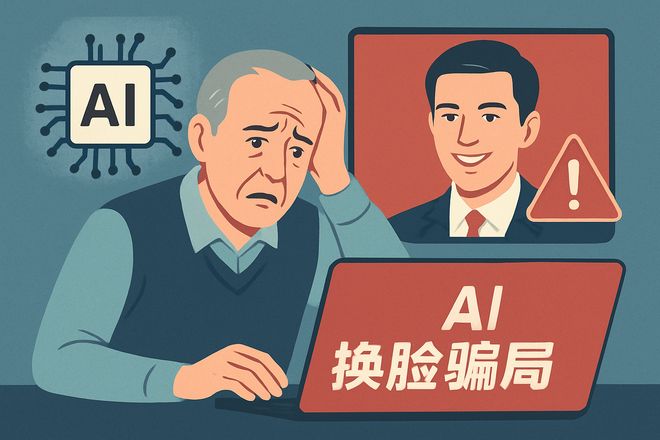
“AI换脸”骗局防不胜防,金融行业开打“反深伪”攻防战
Nan Fang Du Shi Bao· 2025-10-19 07:14
Core Insights - The rise of AI-generated fraud, particularly deepfake scams, poses significant risks to the financial sector, prompting regulatory and technological responses [1][4][9] Group 1: AI Fraud Trends - The Hong Kong Monetary Authority (HKMA) has launched the second phase of its Generative AI sandbox, focusing on risk management and anti-fraud measures in the banking sector [3][10] - A report from Qihoo 360 indicates a staggering 3000% increase in AI-based deepfake fraud in 2023, alongside a 1000% rise in AI-generated phishing emails [4][8] - The financial sector has seen direct economic losses exceeding 1.8 billion yuan due to AI-related scams from 2022 to early 2024 [8] Group 2: Case Studies and Impact - A notable case involved a Hong Kong employee losing 200 million HKD in a video conference scam where participants were deepfake representations [6][7] - The Beijing Financial Regulatory Bureau reported numerous cases of "AI face-swapping" scams, highlighting the vulnerability of individuals to such frauds [5][6] Group 3: Technological Responses - Financial institutions are developing AI-driven solutions to combat AI-generated fraud, such as the Anti-Fraud Strategy Platform, which boasts over 99% detection accuracy for deepfake images [10][11] - Regulatory measures are being implemented, including a new identification system for AI-generated content set to take effect in September 2025 [9][10] - The industry is exploring the use of AI to identify and counteract AI-generated fraud, emphasizing the need for advanced technological defenses [9][11]
金融壹账通携手PAObank入选香港金管局GenA.I.沙盒
Zheng Quan Ri Bao Wang· 2025-10-16 04:45
Core Insights - PAObank and Financial One Account have developed an "Anti-Fraud Strategy Platform" that has been selected for the second phase of the GenA.I. sandbox launched by the Hong Kong Monetary Authority and Hong Kong Cyberport [1][2] - The GenA.I. sandbox, set to launch in 2024, focuses on risk management, anti-fraud measures, and customer experience innovation in the banking sector, with a new module specifically targeting "deepfake fraud" [1] - The platform utilizes advanced AI technology to enhance operational efficiency and provide a secure digital banking experience for customers [1] Company Developments - Financial One Account has introduced a "Smart Visual Anti-Fraud Strategy Platform," creating a comprehensive defense system that employs AI to combat AI [2] - The platform is capable of in-depth analysis of AI-generated images, accurately identifying complex attacks such as face-swapping and forged videos, achieving a detection and defense rate exceeding 99% [2] - This technology has already been implemented by multiple financial institutions in China, successfully intercepting over 20,000 black market attacks [2]
PAObank与金融壹账通入选香港金管局第二期生成式人工智能沙盒参与者名单
Zhong Zheng Wang· 2025-10-15 13:15
Group 1 - The Hong Kong Monetary Authority and Hong Kong Cyberport announced the second phase of the generative AI sandbox, with PAObank and OneConnect selected as participants [1] - The second phase focuses on enhancing AI governance, employing an "AI against AI" strategy for automated quality detection of AI-generated content [1] - PAObank and OneConnect are concentrating on the identification of deepfake technology, utilizing advanced AI facial recognition for real-time verification of user selfies to detect potential fraud [1] Group 2 - China Ping An is promoting AI models and big data across its group, accumulating over 32 trillion text records, 310,000 hours of annotated voice data, and over 7.5 billion images by June 2025 [2] - The company aims to deepen its dual strategy of "comprehensive finance + healthcare and elderly care," driving digital transformation across various operational aspects [2]
20家银行、14家技术供应商入围,香港金管局最新公布
Zheng Quan Shi Bao· 2025-10-15 12:23
Core Insights - The Hong Kong Monetary Authority (HKMA) and Hong Kong Cyberport announced the second phase of the Generative AI (GenAI) sandbox, marking a shift from exploring AI possibilities to promoting safe and reliable AI applications [1] - A total of 27 proposals from 20 banks and 14 technology providers were selected from over 60 submissions, evaluated based on innovation, technical complexity, and potential industry value [1][2] Group 1: Participants and Proposals - The 20 participating banks include Ant Bank (Hong Kong), Bank of China (Hong Kong), and HSBC among others [1] - The 14 technology providers include AIFT, Alibaba Cloud, and EY, with applications covering risk management, anti-fraud measures, and customer experience [2] - Selected proposals include AI-driven credit portfolio management, smart trade financing, and AI-generated investment insights [2] Group 2: Focus on AI Governance - The second phase of the sandbox emphasizes strengthening AI governance, with several proposals employing "AI against AI" strategies for automated quality detection of AI-generated content [2] - The sandbox serves as a testing ground for innovative defense mechanisms against increasing deepfake fraud risks, with participants conducting simulated attack-defense tests [2] Group 3: Case Study - PAObank - PAObank, in collaboration with OneConnect, is developing an anti-fraud strategy platform focusing on deepfake technology recognition, utilizing advanced AI facial recognition for real-time user verification [3] - The platform boasts a defense rate exceeding 99% against AI-generated images, having already been implemented in multiple financial institutions in mainland China [3] - PAObank's customer deposits surpassed HKD 8 billion as of Q3 this year, reflecting strong growth in personal banking services [4]

20家银行、14家技术供应商入围!香港金管局最新公布
Zheng Quan Shi Bao Wang· 2025-10-15 12:13
Core Insights - The Hong Kong Monetary Authority (HKMA) and Hong Kong Cyberport announced the second phase of the Generative AI (GenAI) sandbox, marking a shift from exploring AI possibilities to promoting safe and reliable AI applications [1][4] - A total of 27 proposals from 20 banks and 14 technology providers were selected from over 60 submissions, evaluated based on innovation, technical complexity, and potential industry value [1][2] Group 1: Participants and Proposals - The 20 participating banks include Ant Bank (Hong Kong), Bank of China (Hong Kong), and HSBC among others [1] - The 14 technology providers include AIFT, Alibaba Cloud, and EY, focusing on various applications such as risk management, anti-fraud measures, and customer experience [2] - Selected proposals cover diverse scenarios like AI credit portfolio management, smart trade financing, and AI-generated investment insights [2] Group 2: Focus on AI Governance - The second phase of the sandbox emphasizes strengthening AI governance, with several proposals employing "AI against AI" strategies for automated quality detection of AI-generated content [2] - The sandbox serves as a testing ground for innovative defense mechanisms against the rising threat of deepfake fraud [2] Group 3: Case Study and Impact - An example is the Anti-Fraud Strategy Platform developed by PAObank and OneConnect, which focuses on identifying deepfake technology using advanced AI facial recognition [3] - The platform boasts a detection defense rate exceeding 99% and has successfully intercepted over 20,000 black market attacks in China [3] - As of Q3 this year, PAObank's total customer deposits surpassed 8 billion HKD, reflecting strong growth in its personal banking business [4]
20家银行、14家技术供应商入围!香港金管局最新公布
券商中国· 2025-10-15 12:00
Core Viewpoint - The second phase of the Generative AI (GenAI) sandbox program in Hong Kong marks a transition from exploring AI possibilities to promoting safe and reliable AI applications [1][4]. Group 1: Participants and Selection - A total of 27 proposals from 20 banks and 14 technology providers were selected from over 60 submissions for the second phase of the sandbox program [2]. - The participating banks include major institutions such as Ant Bank (Hong Kong), Bank of China (Hong Kong), and HSBC [2]. - Technology providers include AIFT, Alibaba Cloud, and Hong Kong University of Science and Technology, among others [2]. Group 2: Application Scenarios - The selected proposals cover various application scenarios including risk management, anti-fraud measures, and customer experience [3]. - Specific use cases include AI credit portfolio management, smart trade financing, market risk monitoring, and AI-generated investment insights [3]. Group 3: AI Governance and Security - The second phase of the sandbox emphasizes strengthening AI governance, with several proposals employing "AI against AI" strategies for automated quality detection of AI-generated content [3]. - The program also addresses the rising threat of deepfake fraud, providing a testing ground for innovative defense mechanisms [3]. Group 4: Case Study and Impact - An example is the Anti-Fraud Strategy Platform developed by PAObank and OneConnect, focusing on identifying deepfake technology during identity verification [3][4]. - The platform boasts a detection and defense rate exceeding 99% and has already been implemented in multiple financial institutions in mainland China [4]. - As of Q3 this year, PAObank's total customer deposits surpassed 8 billion HKD, indicating strong growth in its personal banking business [4].