智能AR眼镜

Search documents
中山AR眼镜硬核出圈,两会现场变“广货秀场”
Nan Fang Du Shi Bao· 2026-01-29 10:56
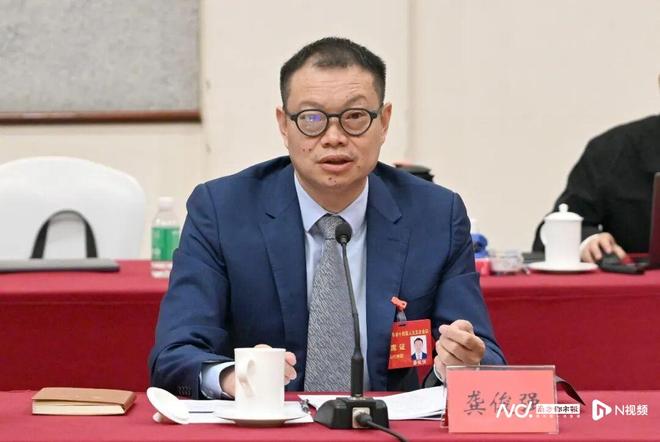
Group 1 - The core focus of the Guangdong provincial two sessions in 2026 was on development, livelihood issues, and media interaction, highlighted by a "Guangdong Goods Promotion Conference" showcasing local manufacturing strength through innovative products like smart AR glasses [1] - The smart AR glasses presented by the chairman of United Optoelectronics, Gong Junqiang, connect with smartphones to provide navigation and real-time multilingual translation, while maintaining a stylish and comfortable design [3] - United Optoelectronics, established in August 2005, has become a leader in optical stabilization, high-magnification zoom lenses, and ultra-high-definition 4K laser displays, with over 700 patents in the optical field [3] Group 2 - The AR glasses have linked with multiple software service ecosystems, enhancing user engagement, and are primarily sold overseas, with orders extending one to two months ahead [3] - The product exemplifies the core path of industrial upgrading in Zhongshan, promoting a synergy between industry and technology, and is part of a collaboration with Changchun University of Science and Technology Zhongshan Research Institute to create a closed loop of demand, innovation, and application [3]


董事长专访 | 优实资本邢杰:AI智能硬件全面重构的巨大商机才刚刚开始
Sou Hu Cai Jing· 2026-01-07 09:09
Core Viewpoint - The AI smart hardware industry is at the beginning of a comprehensive reconstruction of industry and life, with the next five years expected to be a golden window for explosive growth, particularly for Chinese companies in the global smart hardware market [1][8]. Industry Evolution - The development of AI smart hardware will undergo five stages, starting with the transition from conversational AI to edge inference, which began in 2023. Current products face limitations, such as forgetting previous interactions [3][4]. - The second stage (2025-2027) will see the emergence of smart agents, with significant changes in hardware forms and the integration of agent capabilities into consumer devices like smart glasses and wearables [4]. - The third stage (2027-2030) will focus on spatial intelligence and embodied intelligence, with the maturation of VLA (Vision-Language-Action) models and commercial breakthroughs in humanoid robots [4]. - The fourth stage (2028-2032) will introduce general artificial intelligence (AGI) with the application of neuromorphic chips and photonic computing, followed by the fifth stage (post-2032) characterized by superintelligence (ASI) [4]. Market Opportunities - The consumer market (C-end) is expected to experience explosive growth before the business market (B-end), with smart AR glasses emerging as a potential replacement for smartphones, projected to be used by half of smartphone users in five years [5]. - Health monitoring wearables are identified as another promising sector, with potential to transform healthcare by linking home devices with community-level smart detection stations and AI doctors [5]. - Smart home devices and family robots are also critical areas, with the Matter protocol resolving compatibility issues and fostering growth in the smart home ecosystem [6]. Global Expansion - Chinese smart hardware companies have significant opportunities for global expansion due to a robust supply chain, strong manufacturing capabilities, and innovative potential [7]. - An AI smart hardware export industry alliance is being established to enhance collaboration and resource sharing among over 50 participating companies and associations, aiming to create a powerful platform for Chinese manufacturers [7]. Future Outlook - The AI smart hardware sector is still in its infancy, with expectations of unprecedented growth in the next five years that will reshape industry dynamics and alter work and lifestyle [8]. - Companies that can identify technological trends, understand user needs, and integrate industry resources are likely to excel in this evolving landscape [8].

全链条助力汽车前沿技术走上生产线
Liao Ning Ri Bao· 2025-12-18 01:45
Core Insights - The "Future Mobility Acceleration Space" was launched in Shenyang, focusing on innovative technologies in the automotive industry through collaboration between Shenyang Automotive Group and BMW Group, along with Puyue China [1][2] - The initiative aims to incubate startups and projects in the automotive and mobility sectors, providing comprehensive support from technology incubation to funding and industrial application [1][2] Group 1: Strategic Collaboration - Shenyang Automotive Group is positioned as an investment platform for the city's automotive industry, emphasizing the need for technological innovation alongside mature projects [2] - Puyue China's CEO highlighted the focus on next-generation mobility, attracting talented individuals to drive innovation and identify potential unicorns for early investment [2] Group 2: Incubation and Support - The acceleration space will feature a dedicated service team, including experts from BMW, to provide cutting-edge insights in areas such as smart technology, electrification, and low-carbon solutions [2] - An innovation incubation fund will be established, targeting investments in areas like new energy batteries, intelligent cockpit technology, and industrial AI, with a focus on early-stage and hard technology investments [2]

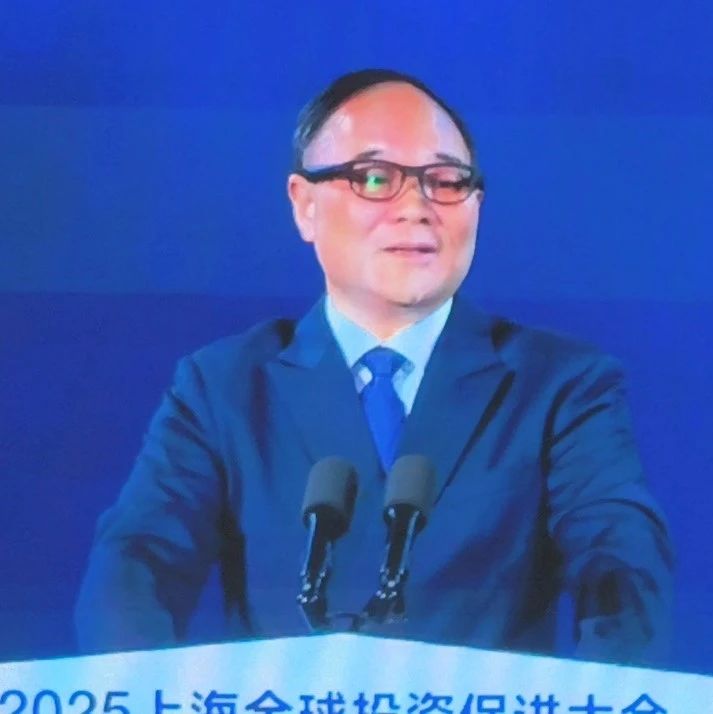
吉利李书福最新发声!
证券时报· 2025-03-25 04:28
Core Viewpoint - The speech by Li Shufu at the 2025 Shanghai Global Investment Promotion Conference highlighted the strategic importance of Shanghai for Geely Holding Group's transformation and globalization efforts, emphasizing the company's commitment to innovation and investment in the region [1][2]. Group 1: Investment and Growth in Shanghai - Geely has established over 10 projects in Shanghai, employing more than 8,000 people, with 80% being high-tech talents [5]. - The company anticipates that its workforce in Shanghai will soon exceed 10,000, contributing to the high-quality development of the automotive industry chain [5]. - In 2024, Geely expects to achieve total revenue exceeding 70 billion yuan and a total tax contribution of over 3 billion yuan in Shanghai [5]. Group 2: Technological Advancements - Geely's Galaxy Starship 7 model, designed in-house, achieved sales of over 30,000 units within 48 days of its launch in Shanghai [4]. - The intelligent driving technology developed by Geely's ZEEKR team in Shanghai has been integrated into ZEEKR products, showcasing the company's focus on innovation [4]. Group 3: Future Directions - Geely plans to continue increasing its investment in Shanghai, focusing on cutting-edge areas such as new energy vehicles, intelligent connectivity, and hydrogen ecosystems [6]. - The ongoing development of Shanghai as a global economic, financial, trade, shipping, and technological innovation center presents new strategic opportunities for global enterprises, including Geely [5].