曹操出行平台

Search documents
网约车司机的马年新春:坚守岗位,喜迎海内外游客
Di Yi Cai Jing Zi Xun· 2026-02-22 13:52
Core Viewpoint - The article highlights the significant role of ride-hailing drivers during the Spring Festival, emphasizing their contribution to urban transportation and the experience of both domestic and foreign tourists [2][11]. Group 1: Ride-Hailing Drivers' Contributions - During the nine-day Spring Festival holiday, ride-hailing drivers form a crucial "logistics team," ensuring safe transportation for travelers across various urban locations [2]. - Drivers like Wang Wenchao have adapted to cater to foreign tourists, providing not only transportation but also local insights and cultural experiences [3][4]. - The demand for ride-hailing services is expected to rise significantly, with predictions of a 40% increase in trips to major transport hubs and substantial growth in other service areas [5]. Group 2: Economic Impact and Growth - In January 2026, China exported 681,000 vehicles, marking a 44.9% year-on-year increase, with electric vehicle exports doubling to 302,000 units [5]. - The influx of foreign tourists is supported by the expansion of China's visa-free travel policies, leading to increased usage of ride-hailing platforms like Didi and Gaode [5]. - Didi's data indicates a substantial rise in demand for ride-hailing services during the holiday, with a projected average of over 200 million travelers per day across the country [11]. Group 3: Driver Experiences and Challenges - Many drivers, such as Hu Wen, balance their primary jobs with ride-hailing, earning additional income during peak travel times, especially during holidays [6]. - Drivers report a sense of fulfillment from helping passengers reach their destinations on time, particularly during busy travel periods [6][10]. - The article shares personal stories of drivers who, despite not returning home for the holidays, find meaning in their work through interactions with appreciative passengers [8][9]. Group 4: Support and Incentives for Drivers - Ride-hailing platforms have introduced various incentives, including significant subsidies and rewards for drivers during the Spring Festival, encouraging them to remain active [7][11]. - Didi has allocated over 400 million yuan in driver subsidies during the holiday, with nearly 200,000 drivers actively working to meet the increased demand [11]. - Platforms like Cao Cao Chuxing have also implemented additional service fees to support drivers who choose to work during the holiday season [11].


进军商旅市场,能帮曹操出行提升想象力吗?
3 6 Ke· 2026-01-08 11:51
Core Insights - Cao Cao Mobility has announced its first strategic acquisition since going public, acquiring 50% of Weixing Technology and 100% of Geely Business Travel for a total cash consideration of 2.25 billion yuan and 65 million yuan respectively, aiming to integrate business travel and high-end transportation services [1][2][4] Group 1: Acquisition Details - The acquisitions will allow Cao Cao Mobility to fully own Weixing Technology and Geely Business Travel, enhancing its service offerings in the business travel sector [1][2] - The acquisition prices are slightly below the fair value estimates of the companies, indicating a strategic move to ensure successful integration [8][9] - Both acquired companies have strong ties to Geely Group, which may reduce uncertainties in the integration process [5][6][7] Group 2: Strategic Intent - The acquisitions signal Cao Cao Mobility's intent to enter the business travel market, which is projected to grow significantly, with global business travel spending expected to reach $1.57 trillion by 2025, a 6.6% increase from 2024 [18] - The company aims to build a "one-stop technology travel platform," addressing the fragmented nature of business travel services [20][24] - Cao Cao Mobility's existing strengths in short-distance travel services complement the offerings of the acquired companies, potentially creating a comprehensive solution for corporate travel needs [12][23] Group 3: Market Context - The business travel market has shown growth potential, with a significant demand for integrated services that cover various travel needs, including short-distance transportation [18][20] - Cao Cao Mobility's average daily order volume reached 2.108 million, a 50.6% year-on-year increase, indicating a strong operational foundation to support its expansion into business travel [20][21] - The company has been actively deploying customized vehicles, contributing to a GMV of 2.5 billion yuan, which reflects its capability to enhance service offerings in the business travel sector [21][28] Group 4: Future Prospects - The integration of Weixing Technology and Geely Business Travel is expected to enrich Cao Cao Mobility's platform functionalities, potentially allowing users to manage all aspects of business travel in one place [23][24] - The move towards business-to-business (B2B) services is anticipated to increase customer loyalty and transaction values, providing a new revenue stream for the company [31][32] - The acquisition may also facilitate the collection of valuable travel data, enhancing operational efficiency and service delivery [33]
共享出行平台行业深度报告:行业呈燎原之势,曹操出行的弯道超车机会在即
Minsheng Securities· 2025-09-26 05:58
Investment Rating - The report maintains a positive investment rating for the shared mobility industry, particularly highlighting the growth potential of Cao Cao Mobility as a unique "three-in-one" autonomous driving operation platform [6]. Core Insights - The Chinese mobility market is the largest globally, with a projected market size of 8 trillion yuan in 2024, and a compound annual growth rate (CAGR) of 5.4% expected from 2025 to 2029 [1][10]. - Cao Cao Mobility, backed by Geely, is positioned as the second-largest shared mobility platform in China, achieving a gross transaction value (GTV) of 10.95 billion yuan in the first half of 2025, reflecting a year-on-year growth of 53.6% [2][3]. - The rise of aggregation platforms is reshaping the industry ecosystem, with the proportion of ride-hailing orders completed through these platforms expected to reach 53.9% by 2029, providing opportunities for second-tier companies to break through [1][19]. Summary by Sections 1. Market Overview - The Chinese mobility market is projected to reach 10.56 trillion yuan by 2029, with a CAGR of 5.4% from 2025 to 2029, driven by increasing demand in lower-tier markets and the expansion of shared mobility [10]. - The shared mobility market is rapidly expanding, with a forecasted growth from 344.4 billion yuan in 2024 to 804.2 billion yuan by 2029, representing a CAGR of 17.0% [13]. 2. Company Analysis - Cao Cao Mobility is the only "three-in-one" autonomous driving operation platform in China, leveraging significant synergies with Geely to build the largest customized vehicle fleet in the country [2][3]. - The company has a notable cost advantage with its customized vehicles, achieving a total cost of ownership (TCO) reduction of 33% and 40% compared to typical electric vehicles [2]. 3. Technological Developments - The report emphasizes the importance of autonomous driving technology, with Cao Cao Mobility planning to launch customized vehicles designed for Level 4 autonomous driving by the end of 2026, aiming for nationwide coverage [3][27]. - The market penetration of Robotaxi is expected to reach 20-60% between 2026 and 2032, indicating significant growth potential for autonomous driving services [3][41]. 4. Competitive Landscape - The report outlines a highly concentrated market with Didi Chuxing holding a 70.4% market share in 2024, while Cao Cao Mobility and T3 Mobility hold 5.4% and 5.3% respectively [16][17]. - The rise of aggregation platforms is leading to a decentralization of user traffic, allowing second-tier companies like Cao Cao Mobility to gain market share [19]. 5. Investment Recommendations - The report suggests a focus on the long-term development of the shared mobility industry, particularly on Cao Cao Mobility as a key player in the autonomous driving sector [3].
曹操出行获纳入恒生综指 多家机构看好 目标价看至103.17港元
Zhi Tong Cai Jing· 2025-08-22 10:56
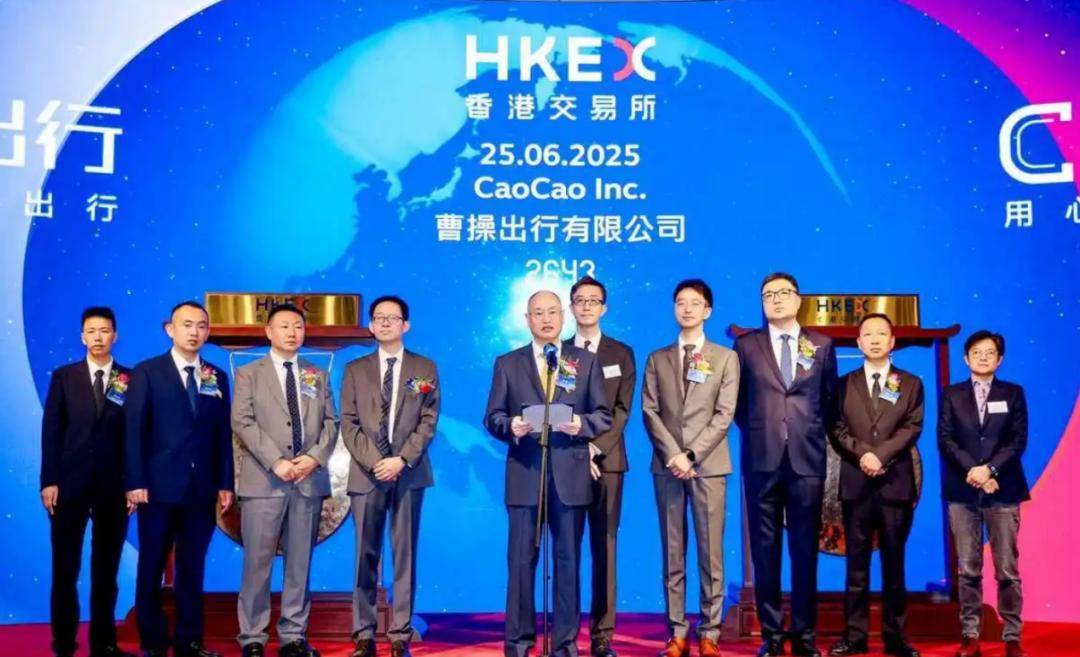
Core Viewpoint - Caocao Travel has been selected to be included in the Hang Seng Composite Index, effective September 8, 2025, indicating strong market recognition and potential for growth [1] Group 1: Company Performance and Market Position - Since its listing on the Hong Kong Stock Exchange on June 25, 2025, Caocao Travel's stock price has been on the rise, supported by positive ratings from various institutions [1] - The company has established itself as the second-largest player in the ride-hailing industry, leveraging the Geely ecosystem [1] - By the end of 2024, Caocao Travel is expected to have approximately 1.5 million active vehicles on its platform, achieving a Gross Transaction Value (GTV) of around 17 billion yuan [1] Group 2: Business Strategy and Growth Potential - Caocao Travel has deployed 34,000 customized electric vehicles in 31 core cities, leading the market in terms of fleet size [2] - The total cost of ownership (TCO) for the customized vehicles is 36% lower than typical electric vehicles, contributing to an expected gross margin increase to 8.1% in 2024 [2] - The Robotaxi business is anticipated to be the company's largest growth driver, with the "Caocao Zhixing" autonomous driving platform launched in February 2025 [2] - The company is collaborating with Geely to develop L4-level Robotaxi models, which are expected to have significantly lower TCO compared to industry peers [2] Group 3: Financial Projections - According to Zheshang Securities, Caocao Travel's projected revenues for 2025, 2026, and 2027 are 19.7 billion, 25.6 billion, and 30 billion yuan respectively, with a compound annual growth rate of 27% [2] - The company is expected to achieve positive EBIT for the first time in 2026 and to become fully profitable by 2027 [2] - Current valuation levels are significantly lower than international peers, presenting an attractive investment opportunity [2]
李书福资本帝国再扩张:曹操出行上市,十家上市公司总市值近7000亿
Sou Hu Cai Jing· 2025-07-02 08:41
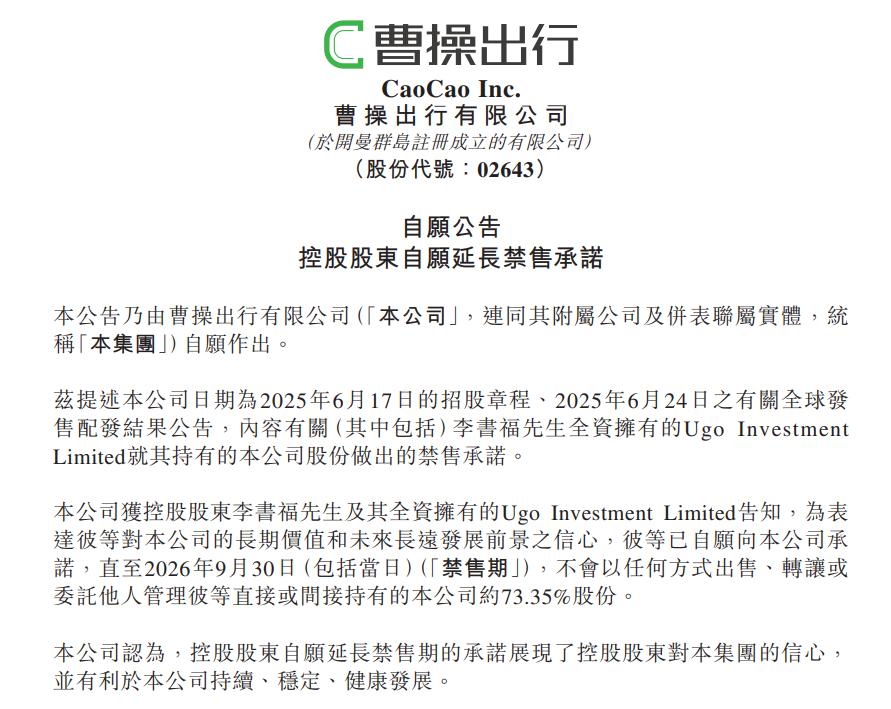
Core Viewpoint - Caocao Travel's listing on the Hong Kong Stock Exchange marks it as the largest ride-hailing platform in Hong Kong, but it faced significant stock price decline on its debut, indicating market skepticism about its financial health and future profitability [1][4]. Group 1: Company Overview - Caocao Travel, founded in 2015 and incubated by Geely Group, became the fourth listed ride-hailing company in China after Didi, Ruqi, and Dida [1]. - The company reported a revenue growth from 7.153 billion yuan in 2021 to 14.7 billion yuan in 2024, but it has accumulated losses totaling 8.241 billion yuan [1][4]. - As of June 30, 2023, Caocao's stock price was down 14.3% from its IPO price, with a market capitalization of 19.56 billion HKD [1]. Group 2: Financial Performance - The company has a high liquidity risk, with current liabilities reaching 9.682 billion yuan and cash reserves of only 159 million yuan [1]. - Despite narrowing losses, the net loss per order is projected to decrease to 1.34 yuan by 2024, indicating a long path to profitability [1][4]. Group 3: Competitive Landscape - Caocao Travel faces intense competition, with Didi still holding a 75% market share despite its delisting, and tech giants like Huawei and Tencent entering the ride-hailing space [4]. - The company's business model heavily relies on Geely's ecosystem, which may limit its ability to diversify its vehicle offerings and meet varied consumer demands [4]. Group 4: Leadership and Strategy - Li Shufu's control over Caocao Travel is significant, holding 83.9% of the shares through indirect ownership, reinforcing his influence in the automotive and mobility sectors [2]. - The listing of Caocao Travel is part of Geely's strategy to create a comprehensive ecosystem encompassing vehicle manufacturing, mobility services, and technology [9]. Group 5: Market Position and Future Outlook - The listing enhances Geely's capital portfolio, which now includes ten publicly traded companies with a total market value of approximately 699 billion yuan [2][6]. - The ongoing competition between traditional manufacturing and internet-driven business models, exemplified by Li Shufu and Lei Jun, highlights differing philosophies in the automotive industry [9].
曹操出行通过港交所聆讯:已成中国第二大网约车平台,一季度GTV同比增55%
IPO早知道· 2025-06-10 02:39
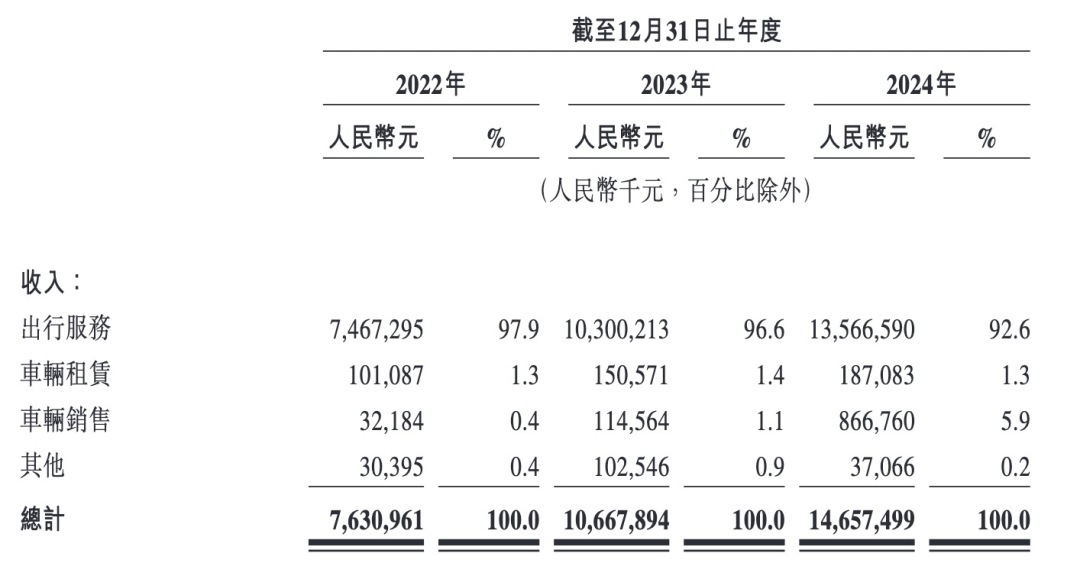
Core Viewpoint - CaoCao Inc. has shown significant growth in its business metrics, including GTV and revenue, positioning itself as a leading player in China's ride-hailing market, with a focus on customized vehicles and autonomous driving technology [2][3][6]. Group 1: Business Performance - As of December 31, 2024, CaoCao Inc. operates in 136 cities, having expanded to 85 new cities in 2024 [2]. - The total GTV for 2023 and 2024 was 12.2 billion and 17 billion respectively, reflecting growth rates of 37.5% and 38.8% compared to previous years [2]. - In Q1 2024, the total GTV reached 4.8 billion, marking a 54.9% increase year-over-year, with order volume also increasing by 51.8% [3]. Group 2: Fleet and Vehicle Customization - CaoCao Inc. has a fleet of over 34,000 customized vehicles across 31 cities, making it the largest fleet in its category in China [4]. - The total cost of ownership (TCO) for its customized vehicles, such as the Fengye 80V and CaoCao 60, is reduced by 33% and 40% respectively compared to typical electric vehicles [4]. - In 2024, orders fulfilled by customized vehicles accounted for 25.1% of the GTV, an increase from 20.1% in 2023 [4]. Group 3: Technology and Innovation - The company launched the CaoCao Intelligent Driving platform in February 2024, initiating Robotaxi services in Suzhou and Hangzhou [5]. - CaoCao Inc. aims to develop a comprehensive ecosystem integrating customized vehicles, autonomous driving technology, and ride-hailing services, with plans to introduce L4-level Robotaxi models by the end of 2026 [5]. Group 4: Financial Performance - Revenue figures for 2022, 2023, and 2024 were 7.631 billion, 10.668 billion, and 14.657 billion respectively, with a gross margin of 8.1% in 2024, up from 5.8% in 2023 [6][7]. - The company reported higher revenue and gross margin in Q1 2024 compared to the same period in 2024 [7]. Group 5: IPO and Future Plans - The net proceeds from the IPO will be primarily used to enhance vehicle service solutions, improve service quality, invest in autonomous driving technology, and expand geographical coverage [8].
曹操出行拟港股IPO:去年营收147亿元增37.4%,亏损持续收窄
Guang Zhou Ri Bao· 2025-05-01 15:32
Core Viewpoint - Caocao Travel has submitted an updated listing application to the Hong Kong Stock Exchange, indicating significant growth in its operations and financial performance since its establishment in 2015 as a ride-hailing platform incubated by Geely Group [1] Financial Performance - The total revenue for Caocao Travel is projected to grow from RMB 76.31 billion in 2022 to RMB 146.57 billion in 2024, maintaining a growth trend [3] - The company reported losses of approximately RMB 20.07 billion in 2022, RMB 19.81 billion in 2023, and RMB 12.46 billion in 2024, with losses narrowing over the years [3] - The gross margin improved from -4.4% in 2022 to 8.1% in 2024, attributed to the introduction of customized vehicles and optimization of total cost of ownership (TCO) strategies [3] Market Operations - By the end of 2024, Caocao Travel is expected to operate in 136 cities with a market share of 5.4% [1] - The company has a customized fleet of over 34,000 vehicles in 31 cities, making it the largest fleet of its kind in China [1] - The contribution of customized vehicle orders to the total GTV is expected to reach 25.1% by 2024 [1] Revenue Sources - The primary revenue source for Caocao Travel is ride-hailing services, which is projected to account for 92.6% of total revenue in 2024 [2] - The company has a high dependency on aggregation platforms, with orders from these platforms constituting 85.4% of GTV by 2024 [2] Future Developments - Caocao Travel plans to launch a Robotaxi service in Suzhou and Hangzhou by February 28, 2025, marking a significant milestone in the commercialization of autonomous driving services [4] - The company is collaborating with Geely Group to develop a new customized vehicle specifically for Robotaxi services, including an L4 level Robotaxi expected to be launched by the end of 2026 [4]