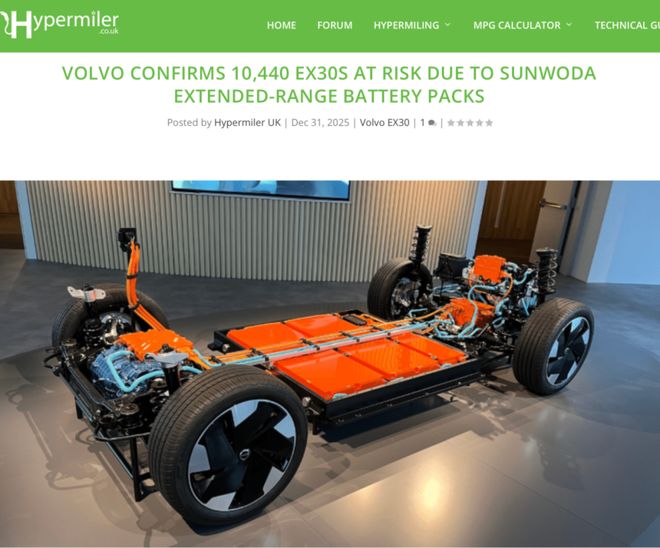
极氪001 WE86

Search documents
43天化解23亿危机,欣旺达与吉利如何“共赢”和解?
Xin Lang Cai Jing· 2026-02-14 05:57
Core Viewpoint - The resolution of a battery quality dispute between XINWANDA and Geely's subsidiary, Weirui Electric, marks a new paradigm for handling supply chain disputes in the electric vehicle industry, with XINWANDA agreeing to pay 608 million yuan over five years [4][22]. Group 1: Dispute Background - The dispute involved a claim of 2.314 billion yuan regarding battery quality issues, which was equivalent to XINWANDA's total net profit for 2023-2024 [4][22]. - Weirui Electric accused XINWANDA of delivering defective battery cells used in the Zeekr 001 WE86 model from June 2021 to December 2023 [4][22]. - The partnership between XINWANDA and Geely began in 2021, initially resulting in mutual benefits, with over 71,000 units of the Zeekr 001 WE86 sold in 2022, over 60% of which used XINWANDA's battery cells [4][22]. Group 2: Resolution Details - The lawsuit was filed on December 25, 2025, and a settlement was reached in just 43 days, on February 6, 2026 [9][27]. - The settlement terms included XINWANDA paying 608 million yuan, with costs for battery replacements incurred before December 31, 2025, settled under this agreement, while future costs would be shared [9][27]. - The agreement reflects a shift from traditional adversarial approaches to a more collaborative model, recognizing the complexity of battery manufacturing and the need for shared responsibility among stakeholders [10][28]. Group 3: Industry Implications - The case highlights structural issues within the rapidly growing battery industry, where XINWANDA's output increased by 125% to 25.3 GWh in 2024, yet profit margins remained low at around 10% due to aggressive price competition [12][30]. - The industry is transitioning from a focus on rapid growth to prioritizing quality, as evidenced by increasing recalls due to battery issues [14][32]. - The resolution sets a precedent for a new model of shared responsibility in the battery supply chain, moving away from a binary blame approach to a more nuanced understanding of the various factors affecting battery performance and safety [15][33]. Group 4: Future Directions - Following the settlement, Zeekr announced a recall of certain vehicles to replace the problematic batteries, demonstrating a commitment to user safety [16][34]. - The agreement encourages a shift in the relationship between automakers and battery manufacturers towards deeper technical collaboration, potentially leading to shared investments in research and development [16][34]. - The evolving landscape of the electric vehicle industry suggests a competitive focus on quality and safety, moving beyond mere sales figures [16][34].


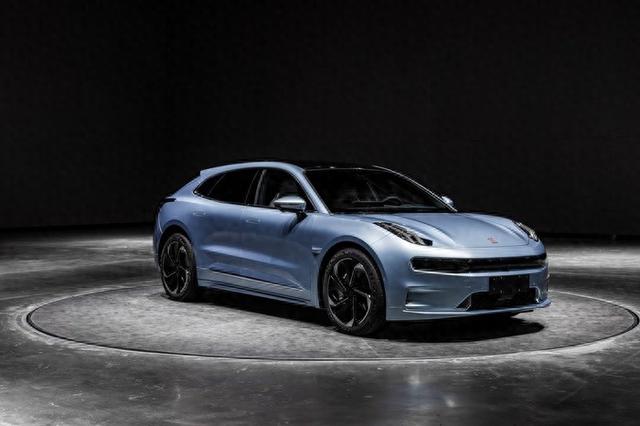
电池存热失控隐患,极氪召回超3.8万辆汽车
Guan Cha Zhe Wang· 2026-02-10 00:22
Core Viewpoint - Zhejiang Geely's Zeekr Intelligent Technology Co., Ltd. has initiated a recall of 38,277 Zeekr 001 WE version vehicles due to potential safety hazards related to high-pressure battery components, which may lead to battery performance degradation and thermal runaway risks [1][3]. Group 1: Recall Details - The recall plan, numbered S2026M0023V, affects vehicles produced between July 8, 2021, and March 18, 2024, starting from March 6, 2026 [1]. - Zeekr will conduct inspections or remote diagnostics on the recalled vehicles and will replace the battery assembly for free if necessary [1]. - An emergency response system will alert users of potential safety issues, and users are advised to contact Zeekr's service hotline for assistance [1]. Group 2: Background and Legal Context - The recall traces back to a partnership formed in July 2021 between battery supplier Sunwoda and Geely Group, leading to the establishment of Shandong Geely Sunwoda Power Battery Co., Ltd. [3]. - In December 2025, Geely's subsidiary sued Sunwoda for 2.314 billion RMB due to quality issues with battery cells supplied, claiming damages for losses incurred [3]. - A settlement was reached in February 2026, significantly reducing the financial impact on Sunwoda to 608 million RMB, with payment structured over five years [4][6]. Group 3: Industry Implications - The incident highlights significant issues within the electric vehicle supply chain, particularly regarding the legal gaps in long-term contracts for high-performance components [6]. - The resolution of the dispute through negotiation rather than prolonged litigation is seen as beneficial for maintaining supply chain integrity and brand reputation [6].

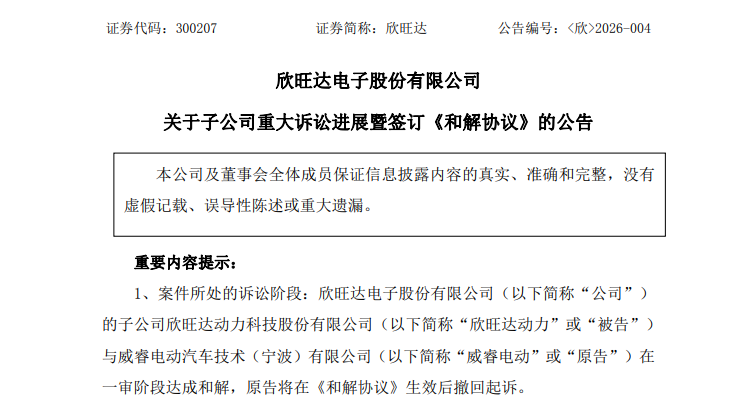
“问题电芯”索赔案落地!欣旺达与吉利系威睿电动达成和解,预计影响利润超5亿元
Jin Rong Jie· 2026-02-06 11:59
Core Viewpoint - Xiwanda Electronics Co., Ltd. announced that its wholly-owned subsidiary, Xiwanda Power Technology Co., Ltd., reached a settlement agreement with Weir Electric Vehicle Technology (Ningbo) Co., Ltd. regarding a significant sales contract dispute, leading to the withdrawal of the lawsuit by Weir Electric [1][3]. Group 1: Settlement Agreement Details - The agreement stipulates that all costs related to the replacement of power battery packs will be calculated based on actual costs and shared according to an agreed ratio, with all related battery packs belonging to Xiwanda Power after the resolution [3]. - Xiwanda Power is required to pay Weir Electric a remaining amount of 608 million yuan after deducting the costs already borne by Xiwanda Power, with a payment schedule extending over five years [3]. - The payment plan includes specific percentages to be paid in each year from 2026 to 2030, with 60% due in 2026 and the remaining balance to be settled by 2030 [3]. Group 2: Background and Industry Context - The dispute originated from a lawsuit filed by Weir Electric in December 2025, claiming damages of 2.314 billion yuan due to quality issues with battery cells delivered between June 2021 and December 2023 [4]. - Geely Electric, a subsidiary of Geely Holding Group, is a key player in the new energy vehicle sector, focusing on the development and manufacturing of core components such as power batteries and electric drive systems [4]. - Geely has adopted a multi-faceted strategy in the new energy sector, with plans to launch its self-developed all-solid-state battery by 2026 [5]. - In 2025, Geely's total sales reached 4.116 million units, a 26% increase year-on-year, with new energy vehicle sales growing by 58%, achieving a penetration rate of 56% [6].
比23亿更严重:欣旺达或让数万海外车主陷入安全隐患
Tai Mei Ti A P P· 2026-01-11 12:03
Core Viewpoint - Volvo Cars, known for its commitment to safety, is facing unprecedented challenges in the electric vehicle era due to safety concerns related to its EX30 model's battery supplied by Sunwoda [1][4][11]. Group 1: Battery Safety Issues - A total of 10,440 EX30 vehicles in the UK are affected by potential safety issues related to high-voltage batteries from Sunwoda, marking a significant acknowledgment of the problem [12]. - Among 33,777 EX30 vehicles produced with Sunwoda batteries, approximately 0.02% have reported overheating issues [4]. - A fire incident involving an EX30 in Brazil raised alarms, leading Volvo to issue warnings to owners to limit charging to 70% to mitigate fire risks [7][11]. Group 2: Recall and Legal Actions - Volvo is preparing for a large-scale recall, with the South African National Consumer Commission already issuing a recall notice for 372 EX30 vehicles due to potential battery defects [7][14]. - Geely Holding, Volvo's parent company, has filed a lawsuit against Sunwoda for 2.314 billion RMB, citing quality issues with batteries supplied between June 2021 and December 2023 [14][17]. Group 3: Consumer Trust and Market Impact - The battery safety crisis has raised significant concerns among consumers, with many questioning the reliability of electric vehicle batteries and the overall quality control in the industry [23][29]. - Volvo's temporary measure of limiting charging to 70% has led to dissatisfaction among owners, as it significantly reduces the vehicle's usable range [12][13]. - The incident has broader implications for the electric vehicle industry, potentially leading to increased scrutiny and a shift towards prioritizing safety and quality over cost [29].