柿子酒

Search documents
于烟火里,看见一座小城的动人模样
Shan Xi Ri Bao· 2026-02-25 08:13
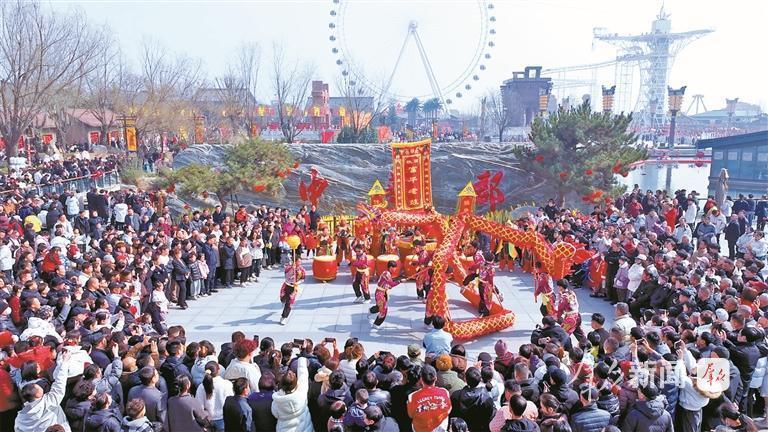
Core Insights - The article highlights the integration of cultural tourism and local industries in Fuping, showcasing how traditional resources are being revitalized through innovative practices and new business models [1][12]. Group 1: Cultural and Historical Significance - Fuping's old town, with over 600 years of history, features significant landmarks such as Wanghu Tower and the old county government, reflecting the city's rich cultural heritage [3]. - The old town has been revitalized to attract tourists, with a peak daily visitor count reaching 16,000 by 2025, demonstrating a successful blend of traditional and modern elements [6][8]. Group 2: Economic Impact and Tourism Growth - The Fuping area has seen a transformation in its tourism landscape, with 3A-level scenic spots and provincial-level rural tourism demonstration villages established, contributing to a total of 38 million visitors and over 13.4 billion yuan in tourism revenue over the past five years [17]. - The local persimmon industry has expanded significantly, with 360,000 acres planted, yielding 575 million kilograms of fresh persimmons and generating a total industry output value of 10 billion yuan [12]. Group 3: Innovative Practices in Cultural Tourism - The integration of non-material cultural heritage with tourism has led to the establishment of workshops and training programs, providing over 50 jobs and attracting nearly 50,000 visitors annually to local craft workshops [10]. - The newly developed Zhonghua Jun Cultural Tourism Scenic Area features diverse attractions, including food streets and ancient cultural experiences, which have drawn significant visitor interest, with 1.276 million visitors recorded during the recent Spring Festival [17].

发展柿子产业链,潍坊临朐隐士村村集体年收入近30万元
Qi Lu Wan Bao· 2026-01-26 08:42
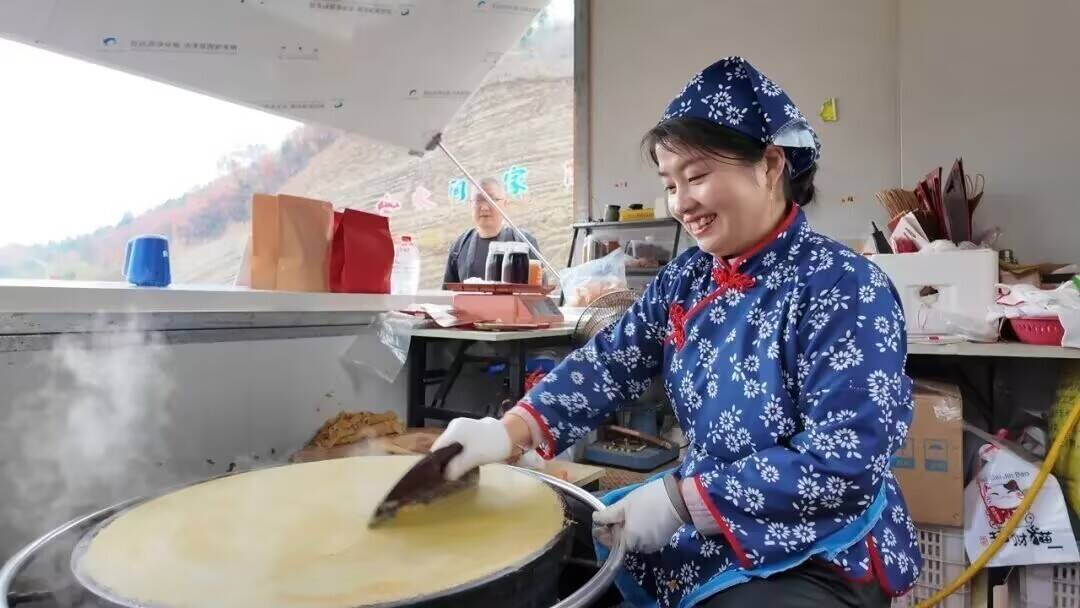
Core Insights - The article highlights the transformation of Yinshi Village through local entrepreneurship and skill training, exemplified by the success of a villager named Zhang Zhenzhen, who has turned her traditional craft into a profitable business [1][3]. Group 1: Entrepreneurship and Economic Development - Zhang Zhenzhen produces up to 200 persimmon pancakes daily, generating an annual income exceeding 100,000 yuan, showcasing the potential of local craftsmanship [1]. - The village's collective income has reached nearly 300,000 yuan, with per capita income surpassing 10,000 yuan, illustrating the economic uplift through entrepreneurship [1][5]. - The local government has implemented a "policy finds people, service comes to the door" approach, actively supporting villagers with entrepreneurial intentions [3]. Group 2: Skill Training and Innovation - The county's human resources department has organized customized training programs focusing on persimmon processing, food safety, and e-commerce marketing, enhancing the villagers' skills [4]. - Training has led to improved product quality and increased sales for local entrepreneurs, with Zhang Zhenzhen noting significant growth in her online store's performance [4]. - The initiative has fostered a new generation of skilled farmers who are not only producers but also market operators, contributing to the local economy [4]. Group 3: Industry and Community Impact - Yinshi Village has developed a composite industry ecosystem centered around persimmons, including products like persimmon pancakes, wine, and vinegar, alongside tourism and hospitality services [5]. - The rise of local businesses such as processing factories and homestays has created numerous job opportunities, benefiting the surrounding communities [4][5]. - The collaborative efforts between various local departments and training institutions have empowered villagers, leading to a sustainable model of rural revitalization [3][5].
(走进中国乡村)“柿柿如意”增添浙南山村“甜蜜味”
Zhong Guo Xin Wen Wang· 2025-12-18 00:04
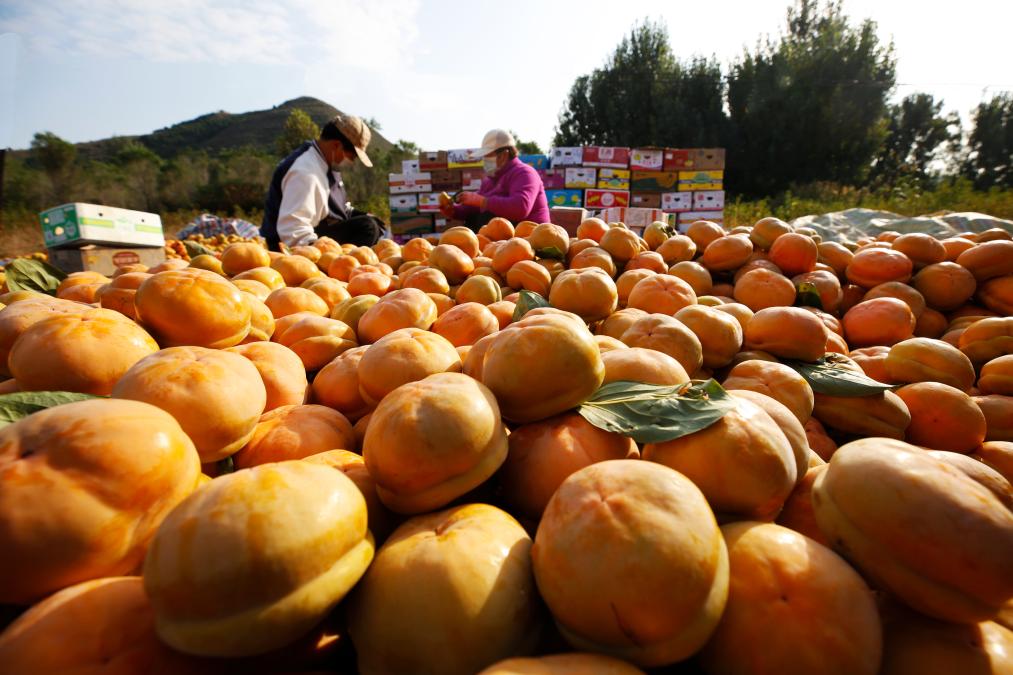
Core Insights - The article highlights the transformation of Donglu and Xilu villages in Zhejiang's Wenzhou region, focusing on the cultivation and commercialization of persimmons, which have become a significant source of income and tourism attraction for the local community [1][2]. Group 1: Agricultural Development - Donglu village has over 3,000 persimmon trees, while Xilu village is recognized as the "first village of southern Zhejiang for persimmons," with a cultivation history of over 700 years [1]. - Xilu village produces over 200,000 pounds of fresh persimmons and more than 50,000 pounds of dried persimmons annually, with a sales revenue exceeding 3 million RMB [2]. Group 2: Tourism and Cultural Integration - The villages have integrated agriculture with tourism, creating a full-chain industry that includes persimmon-themed cultural camps and creative workshops, attracting numerous visitors [1]. - The "2024 Persimmon Festival" in Donglu village is expected to generate over 1.5 million RMB in income for the village and its residents, with an average of over 7,000 visitors per weekend, a tenfold increase compared to previous years [4]. Group 3: Future Prospects - Donglu and Xilu villages are collaborating to develop deep-processed products like persimmon wine and enzymes, aiming to extend the industrial chain and enhance value [4]. - Future plans include the establishment of a persimmon-themed museum and art exhibitions to further develop the cultural aspects of persimmons, creating a comprehensive tourism experience [4].

“红灯笼”下话振兴——“柿子沟”丰收一线见闻
Xin Hua She· 2025-11-02 06:21
Group 1 - The harvest season for persimmons in Baoding's Mancheng District is thriving, with farmers reporting a yield increase of at least 20% compared to last year [1][2] - The area dedicated to persimmon cultivation in Mancheng District is 65,000 acres, with an expected production of 100,000 tons this year [2] - The local government is promoting the persimmon industry as a key pillar for increasing farmers' income, focusing on variety improvement and technological upgrades [2][6] Group 2 - Baoding's Shijie New Agricultural Development Co., Ltd. has introduced a new production line for frozen persimmons, capitalizing on the growing market demand [2] - The production of frozen persimmons involves multiple processes, including washing, de-astringency, and quick freezing, which enhances the product's quality and market value [2] - The expected market volume for frozen persimmons in the district is projected to exceed 4 million boxes, generating over 24 million yuan in revenue [2] Group 3 - The local power supply company has taken measures to ensure stable electricity for persimmon processing, including the installation of new transformers and the renovation of aging lines [4][6] - The stable power supply is crucial for maintaining the low-temperature environment necessary for preserving the quality of frozen persimmons [4][6] - Farmers are optimistic about their income, with projections indicating that each acre could yield over 10,000 yuan through the sale of fresh and processed persimmons [6]
【独家发布】2025年中国柿子行业政策梳理及上下游产业链全景分析
Sou Hu Cai Jing· 2025-07-10 05:13
Overview - The increasing health awareness among consumers has led to a growing demand for healthy, nutritious, and green foods, with persimmons being rich in vitamins and minerals, aligning with consumer preferences for health foods [2] - The market demand for persimmons in China is projected to reach 4.09 million tons in 2024, representing a year-on-year growth of 3.48%, with an estimated production of approximately 4.20 million tons in the same year [2] Market Policies - The Chinese government has implemented a series of policies to support agricultural development, including the "Opinions on Promoting Key Work for Rural Revitalization in 2023" and "Guidance on Cultivating Traditional Advantageous Food Production Areas" among others, creating a favorable policy environment for the persimmon industry [4][5] Industry Chain - The persimmon industry chain consists of upstream activities such as persimmon planting, harvesting, processing equipment, and packaging materials; midstream activities include initial and deep processing of persimmons, while downstream activities involve sales channels like supermarkets, fruit stores, and e-commerce platforms [6] - The area planted with persimmons in China reached 1.1689 million hectares in 2023, marking a year-on-year increase of 5.40%, which lays a solid foundation for the development of the persimmon industry [7]