模拟及混合信号芯片

Search documents
聚辰半导体股份有限公司递交H股上市申请,拟登陆香港联交所主板
Xin Lang Cai Jing· 2026-01-26 16:56
Group 1 - The core viewpoint of the news is that Jucheng Semiconductor Co., Ltd. has officially submitted its application for the issuance of H-shares and listing on the Hong Kong Stock Exchange, marking a significant step in its "A+H" dual capital market strategy [1][2] - The primary decision for this H-share issuance is to expand international financing channels and enhance the company's global brand influence [1] - The subscription for this issuance will be limited to qualified foreign investors and domestic qualified investors authorized to conduct overseas investments [1] Group 2 - If the H-share issuance is successfully implemented, it will not only optimize the company's capital structure but also support its business development in the semiconductor storage, analog, and mixed-signal chip sectors [2] - This move provides a new case for domestic companies listed on the Sci-Tech Innovation Board to explore overseas financing and offers international investors an opportunity to participate in the growth of China's semiconductor industry [2] - The company is aware of the related approval risks and market risks and will continue to fulfill its information disclosure obligations in accordance with laws and regulations [2]

长三角议事厅·周报|长三角“化学融合”须实现三重进阶
Xin Lang Cai Jing· 2025-12-15 10:52
Core Viewpoint - The approval of the "Yangtze River Delta Spatial Planning (2023-2035)" marks a shift from mere connectivity to deeper integration, focusing on industrial collaboration and regulatory harmonization to enhance resource flow and sustainable cooperation in the region [1]. Group 1: First Level Progression - The collaboration in the Yangtze River Delta is evolving from geographical proximity to functional coupling, emphasizing clear division of labor among urban areas to create stable cooperative relationships across various sectors [3][4]. - The Shanghai metropolitan area and the Su-Xi-Chang metropolitan area exemplify this shift, with the latter projected to reach an economic scale of 5.38 trillion yuan and an industrial output exceeding 8 trillion yuan by 2024 [3][4]. Group 2: Second Level Progression - The planning emphasizes differentiated roles among urban areas to mitigate homogeneous competition, encouraging unique positioning and specialization rather than duplicating efforts in similar sectors [6][7]. - Cities like Hangzhou are extending their digital economy into manufacturing, with the digital economy's core industry revenue exceeding 2 trillion yuan in 2024, accounting for 28.8% of GDP [6][7]. Group 3: Third Level Progression - The G60 Innovation Corridor is highlighted as a model for enhancing institutional supply, focusing on reducing friction in collaboration through streamlined regulations and shared resources [8][9]. - The G60 corridor has implemented a "one-stop service" for cross-city operations, increasing the number of cross-regional services to 195 and significantly reducing bureaucratic costs for businesses [8][9]. Group 4: Deep Water Challenges - The planning calls for unified standards and platforms to address deeper governance issues that currently hinder market integration, such as tax sharing and data asset rights [10][11]. - To achieve true integration, the region must focus on rule co-construction, platform sharing, and benefit sharing to create a sustainable collaborative ecosystem [12].

苏州市迎来第一家“A+H”上市企业
Su Zhou Ri Bao· 2025-12-09 00:58
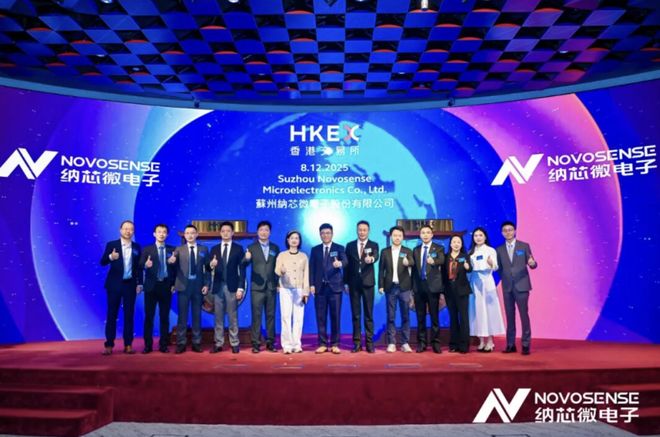
Group 1 - Suzhou Naxin Microelectronics Co., Ltd. has successfully completed a secondary listing on the Hong Kong main board, marking it as the first company from Suzhou to be listed on both A-share and Hong Kong markets, achieving a new breakthrough in the "A+H" listing model [1] - Founded in 2013, Naxin focuses on high-performance and high-reliability analog and mixed-signal chips, providing semiconductor products and solutions across automotive, industrial, information communication, and consumer electronics sectors [1] - The company raised a total of 5.8 billion yuan during its initial public offering on the Shanghai Stock Exchange's Sci-Tech Innovation Board on April 22, 2022 [1] Group 2 - The dual listing strategy ("A+H") is seen as a significant move for A-share companies to expand their investor base and fundraising channels, enhancing their international market influence [2] - In 2023, Suzhou has added 16 new listed companies, with 7 of them being listed in Hong Kong, bringing the total number of Hong Kong-listed companies in Suzhou to 41 [2] - This year, Suzhou's new Hong Kong IPO financing reached 7.33 billion HKD, accounting for approximately 50% of the total new IPO financing in the region [2]
苏州首家A+H上市公司诞生!
Xin Lang Cai Jing· 2025-12-08 03:29
Group 1 - Suzhou Naxin Microelectronics Co., Ltd. has successfully completed a secondary listing on the Hong Kong main board, marking it as the first company in Suzhou to be listed on both A-share and H-share markets, achieving a new breakthrough for Suzhou's listed companies with the "A+H" model [1][3] - The company, established in 2013, specializes in high-performance and high-reliability analog and mixed-signal chips, focusing on sensors, signal chains, and power management for various sectors including automotive, industrial, information communication, and consumer electronics [3] - Naxin Microelectronics raised a total of 5.8 billion yuan during its initial public offering on the Shanghai Stock Exchange's Sci-Tech Innovation Board on April 22, 2022 [3] Group 2 - In 2023, Suzhou has seen the addition of 16 new domestic and foreign listed companies, with 7 of them being listed in Hong Kong, bringing the total number of Hong Kong-listed companies in Suzhou to 41 [3][5] - The total market capitalization of Suzhou's Hong Kong-listed companies increased from 268.5 billion HKD to 579.4 billion HKD from January 1 to November 30, 2023, with an average market capitalization growth of 78% [4] - This year, Suzhou's new Hong Kong IPO financing reached 7.33 billion HKD, accounting for approximately 50% of the total IPO financing in the region [4]
纳芯微(688052):首次覆盖报告:汽车模拟芯片业务成长预期加速
Guoyuan Securities· 2025-10-29 14:43
Investment Rating - The report initiates coverage on 纳芯微 (688052.SH) with an "Accumulate" rating, setting a target price of 207 CNY, with an upside target of 221 CNY [3][12][68]. Core Insights - The automotive electronics application enhancement and domestic substitution open growth space for the company. The domestic automotive analog chip market is expected to grow at a CAGR of 18% from 2025 to 2029, surpassing consumer electronics by 2029. The current domestic substitution rate is only 5%, indicating a rapid acceleration in the trend. The company's analog chip business is projected to achieve a CAGR of 25% from 2024 to 2027, increasing its market share from 0.9% in 2024 to 1.2% in 2027 [1][9][22]. - The increase in new energy vehicle sales and electrification drives the company's automotive business growth. The penetration rate of electric vehicles in China is nearing 50%, with the value of analog chips per vehicle expected to reach 2200-4000 CNY by 2029. The company's current product coverage per vehicle is 1300 CNY, expected to reach 1500 CNY by year-end. The company is anticipated to benefit from the demand expansion for PMIC and isolation chips driven by high-voltage platform penetration, with its automotive business market share projected to grow from 1.8% in 2024 to 2.8% in 2026 [2][10][35]. - The horizontal acquisition of 麦歌恩 (Maguan) positions the sensor business as a major segment for the company. The increase in single-vehicle usage of magnetic sensors driven by new energy vehicles makes it the fastest-growing segment in the Chinese sensor market. The company is expected to achieve the consolidation of 麦歌恩 by the end of 2024, exceeding its performance commitments for 2024. The sensor business is projected to account for over 30% of total revenue, with the magnetic sensor market share expected to exceed 10% by 2025-2026 [2][11][43]. Financial Data and Valuation - The company is forecasted to achieve revenues of 31.65 billion CNY and 39.25 billion CNY for 2025 and 2026, respectively, with corresponding PS ratios of 8.3x and 6.7x. The target price is based on a 7.5x PS for 2026 [3][4][68]. - The revenue growth rates are projected at 61.4% for 2025 and 24.0% for 2026, with a gross margin expected to improve to 38.2% by 2026 [4][64].

纳芯微股价微涨0.26% 上半年亏损收窄至7801万元
Jin Rong Jie· 2025-08-18 18:04
Core Viewpoint - Naxin Micro reported a significant increase in revenue for the first half of 2025, indicating strong growth in the semiconductor industry, particularly in automotive electronics [1] Financial Performance - As of August 18, 2025, Naxin Micro's stock price was 181.80 yuan, up 0.26% from the previous trading day [1] - The company achieved a revenue of 1.524 billion yuan in the first half of 2025, representing a year-on-year growth of 79.49% [1] - The net profit attributable to the parent company was a loss of 78.01 million yuan, which is an improvement compared to a loss of 265 million yuan in the same period last year [1] Business Operations - Naxin Micro specializes in the research and development of semiconductor chips, focusing on the design, development, and sales of analog and mixed-signal chips [1] - The company's products are widely used in automotive electronics, industrial control, and consumer electronics [1] - The automotive electronics segment showed stable growth during the reporting period, with ongoing optimization of the product structure [1]
北大复旦校友联手创业,看上了国产自给率仅9%的市场,年入20亿冲刺港股
创业邦· 2025-05-11 03:25
Core Viewpoint - Suzhou Naxin Microelectronics Co., Ltd. (Naxin Micro) has submitted its application for an IPO on the Hong Kong Stock Exchange to raise funds for its internationalization strategy, focusing on the analog and mixed-signal chip design and development market, which has significant potential for domestic substitution [3][4]. Company Overview - Naxin Micro operates under a Fabless model and specializes in analog chips that process continuous physical signals such as sound and temperature [3]. - The company aims to capture a share of the Chinese market, where the domestic supply of analog chips has increased from 9% in 2019 to approximately 15% in 2023, indicating substantial room for growth [3]. Market Position - As of December 31, 2024, Naxin Micro is the only company among the top ten Chinese analog chip manufacturers focusing on sensor products, signal chain chips, and power management chips [3]. - Naxin Micro ranks fifth in the overall Chinese analog chip market and holds the top position in the automotive analog chip, digital isolator chip, and magnetic sensor markets among Chinese manufacturers [3]. Historical Development - Founded in 2013, Naxin Micro has experienced rapid growth, achieving breakeven in 2014 and expanding its product lines into high-performance analog products by 2015 [7][8]. - The company launched its first digital isolator in 2017, entering a market dominated by international players [8][10]. Financial Performance - Naxin Micro's revenue for 2022 was approximately RMB 1.67 billion, with a net profit of RMB 250 million. However, in 2023, the company reported a revenue decline to RMB 1.31 billion and a net loss of RMB 305 million [13][14]. - The gross margin decreased from 48.5% in 2022 to 33.9% in 2023, attributed to increased pricing pressure from competitors like Texas Instruments [15]. Competitive Landscape - The company faces intensified competition and pricing pressures, particularly following Texas Instruments' price cuts for chips aimed at the Chinese market [15][16]. - Despite these challenges, Naxin Micro is increasing its R&D investments to diversify its product offerings and reduce reliance on similar products to those of international giants [16]. Strategic Initiatives - Naxin Micro is expanding its international presence, establishing subsidiaries in Germany, Japan, and South Korea, and forming partnerships with global Tier 1 automotive suppliers [18]. - The company is also venturing into the humanoid robotics sector, leveraging its automotive electronics expertise to develop technologies applicable to this emerging field [19][21]. Future Outlook - Naxin Micro's strategy includes enhancing its global market competitiveness and exploring new growth avenues in humanoid robotics, which presents both opportunities and challenges in a highly competitive landscape [22].