
歼—35

Search documents
为推进中国式现代化贡献航空力量
Ren Min Ri Bao· 2025-12-30 22:04
Core Viewpoint - The General Secretary Xi Jinping emphasized the responsibilities of central enterprises in serving the Party and the country's work, promoting high-quality economic and social development, and contributing to the modernization of China [1] Group 1: Implementation of Party Directives - The Aviation Industry Group is actively implementing the spirit of Xi Jinping's important instructions and the decisions made during the 20th Central Committee's Fourth Plenary Session [2] - The group has organized over 200 learning and discussion sessions to deepen understanding of the 20th Central Committee's spirit [3] - A comprehensive outreach effort has been made to ensure that 113,000 party members and nearly 400,000 aviation personnel are covered in the learning initiatives [3] Group 2: Achievements and Goals - The Aviation Industry Group has made significant progress in its primary responsibilities, including the successful acceptance of 134 advanced aircraft at a commemorative event [5] - The group has introduced China's first electromagnetic catapult aircraft carrier and achieved successful test flights of several advanced aircraft models [5] - The group aims to complete its "14th Five-Year Plan" objectives successfully, with a focus on high-quality development and innovation [6] Group 3: Future Planning - The Aviation Industry Group is preparing for the "15th Five-Year Plan" by aligning its strategies with the directives from the Party and focusing on high-level technological self-reliance [8] - The group is conducting extensive consultations, including one-on-one strategic interviews and expert discussions, to gather insights for the planning process [9] - The group aims to enhance its core functions and competitiveness while serving national defense and economic development [8][9]
铭刻热血与荣耀!2025人民军队难忘瞬间
Xin Lang Cai Jing· 2025-12-21 06:20
Core Viewpoint - The article reflects on significant moments of the People's Army in 2025, highlighting themes of loyalty, struggle, and dreams, showcasing the dedication and achievements of the military [1] Group 1: Historical Significance - The "Liu Laozhuang Company" flag featured a historical writing style, emphasizing the importance of recognizing heroes and their units [1] - The first electromagnetic aircraft carrier, Fujian, was officially commissioned, marking a significant advancement in military capabilities with successful training of fighter jets [1] Group 2: Commitment and Sacrifice - Border soldiers are depicted as guardians of the nation, leaving their footprints in glaciers, symbolizing their dedication [1] - Soldiers faced natural disasters, building an unbreakable wall against floods, showcasing their resilience and commitment to the people [1] - Chinese peacekeeping forces abroad exemplified professionalism and compassion, promoting peace and friendship [1]
听,强军兴军的铿锵足音
Xin Lang Cai Jing· 2025-12-21 01:12
Core Viewpoint - The article reflects on significant moments in the development of the People's Army, emphasizing loyalty, dedication, and the pursuit of excellence in military capabilities as the nation approaches its centenary goal of building a world-class military by 2026 [10][12][13]. Group 1: Military Achievements - The first electromagnetic aircraft carrier, Fujian, has been officially commissioned, marking a significant advancement in naval capabilities with successful aircraft launch and recovery operations [12][17]. - The Air Force's performance at the 11th Air Force Aviation Open Day and Changchun Air Show showcased the capabilities of the Bayi Aerobatic Team, highlighting the importance of aerial demonstrations in military readiness [3]. - The 80th anniversary of the victory in the Chinese People's War of Resistance Against Japanese Aggression was commemorated with a grand military parade, reinforcing the historical significance of military heritage [5][11]. Group 2: Training and Readiness - Various military units, including the Rocket Force and Xinjiang Military District, are engaged in rigorous training exercises to enhance tactical skills and combat readiness [7][9]. - The narrative of a soldier from the 83rd Group Army illustrates the dedication and effort required to uphold the honor of their unit's battle flag during a military parade, emphasizing the importance of tradition and personal commitment [14][15][16]. - The Air Force pilot's experience in winning the "Golden Dart" award reflects the high standards of training and operational readiness required to maintain air defense capabilities [19][20][21]. Group 3: Commitment to Duty - Soldiers are depicted as embodying the spirit of dedication and sacrifice, whether in border patrols or emergency responses to natural disasters, showcasing their commitment to national security and public safety [22][23][24]. - The narrative of a soldier reinforcing a dam during a flood highlights the role of military personnel in disaster response and community protection, emphasizing their readiness to act in times of crisis [22][23]. - The commitment to caring for veterans and preserving military history is underscored by the responsibilities of medical personnel in ensuring the well-being of aging soldiers, reflecting a broader commitment to honor past sacrifices [25][26].

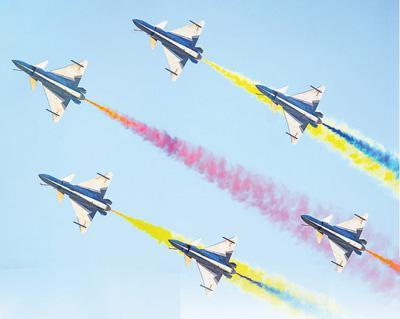
二〇二五,时光铭刻热血与荣耀(强军路上·年终特别策划)
Ren Min Ri Bao· 2025-12-20 22:22
Core Viewpoint - The articles highlight significant moments and achievements of the Chinese military, emphasizing their commitment to national defense and modernization efforts, particularly in the context of recent military exercises and the commissioning of advanced naval vessels. Group 1: Military Achievements - The first electromagnetic aircraft carrier, Fujian, has been officially commissioned, marking a significant advancement in China's naval capabilities with successful aircraft launch and recovery operations [8][12] - The Air Force's performance at the 93rd anniversary parade showcased the military's readiness and modernization, with historical references to past heroism [7][10] - The military's training exercises, including joint operations and tactical drills, reflect a focus on enhancing combat readiness and operational efficiency [3][5][9] Group 2: Commitment to National Defense - Soldiers are depicted as dedicated guardians of the nation, with narratives of their sacrifices and efforts in various challenging environments, including flood control and border defense [17][19] - The articles emphasize the importance of teamwork and collective effort in achieving military objectives, highlighting the integration of new technologies and training methodologies [16][18] - The military's ongoing commitment to innovation and excellence is underscored by the successful execution of complex operations and the development of new combat systems [12][14][15]
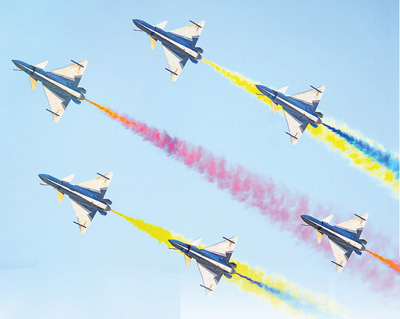
海军新闻发言人 就福建舰入列有关问题答记者问
Ren Min Ri Bao· 2025-11-09 22:56
Core Points - The Fujian aircraft carrier, China's first electromagnetic catapult aircraft carrier, was officially commissioned on November 5, 2023, marking a significant milestone in the development of the Chinese Navy [1][2] - The carrier will be stationed at Sanya military port, which is considered the most suitable location based on operational needs and port conditions [1] - The carrier's combat capability will be enhanced through ongoing trials and training, with a focus on integrating various aircraft types, including the J-35, J-15T, J-15D, and KJ-600 [2] Summary by Sections Deployment and Operational Readiness - The Fujian carrier will be permanently based at Sanya military port, which is the largest active vessel in the Navy [1] - The carrier is expected to frequently operate in the open seas, which is deemed its true operational environment [1] Aircraft and Equipment - The carrier's combat effectiveness relies on its onboard aircraft, with ongoing development and testing of various types, including fighter jets and early warning aircraft [1][2] - The timeline for achieving full operational capability with all aircraft onboard is anticipated to be relatively short [1][2] Future Development Plans - The Chinese Navy's future aircraft carrier development will be guided by national defense needs and will not target any specific country or region [2] - The Navy emphasizes a defensive military policy, aligned with China's peaceful development strategy and independent foreign policy [2] Naming and Public Interest - The naming of aircraft carriers is based on provincial administrative divisions, with public interest influencing the process, although no official "naming list" exists [3]
中国创新何以“柳暗花明”(评论员观察)
Ren Min Ri Bao· 2025-11-05 22:11
Group 1 - Innovation is a process of exploring the unknown, which cannot be achieved overnight; it requires bold attempts and the acceptance of mistakes [1][2] - Resource constraints can limit innovation but can also drive it; the key to breaking through is transforming "stumbling blocks" into "stepping stones" [3][4] - Difficulties often inspire significant mental strength and determination, as seen in the development of advanced military aircraft despite financial hardships [4] Group 2 - Companies like Yushutech and BYD exemplify how overcoming initial challenges can lead to significant advancements in technology and market reputation [1][2] - The release of domestically developed technologies, such as the 90 GHz real-time oscilloscope, demonstrates the ability to break through foreign technological barriers [1] - The experience of Chinese companies shows that resource limitations can lead to innovative breakthroughs by returning to the essence of technology and finding alternative paths [3][4] Group 3 - The Chinese government's emphasis on enhancing the national innovation system and autonomous innovation capabilities indicates a strategic focus on technological advancement [5] - The historical context of China's innovation journey highlights the resilience and determination required to achieve significant technological progress despite various constraints [4][5]

谋划“十五五”,乘势启新程
Ren Min Wang· 2025-10-20 06:26
Group 1 - The Fourth Plenary Session of the 20th Central Committee is a significant event for the development of the Party and the country, focusing on the formulation of the 15th Five-Year Plan [1] - The session emphasizes the importance of achieving modernization, reflecting on China's historical strategic choices that have led to its current status as a global growth engine [1] - In 2023, China has seen rapid advancements in technology, with an average of one new AI company established every 11 hours, and the country maintaining its position as the world's largest producer of new energy vehicles for ten consecutive years [1] Group 2 - During the recent National Day and Mid-Autumn Festival holiday, the total inter-regional movement of people reached 2.433 billion, with daily sales revenue in consumer-related industries increasing by 4.5% year-on-year [1] - The session highlights the need to maintain a strong material foundation by ensuring food and energy security, while also achieving good momentum in economic and social development [3] - The 15th Five-Year Plan period is identified as a critical time for solidifying the foundation for socialist modernization and advancing high-quality development to address uncertainties [3]
让科技成为战斗力的“倍增器”(金台点兵)
Ren Min Ri Bao· 2025-10-11 21:53
Core Viewpoint - The successful launch and landing training of the J-15T, J-35, and KJ-600 carrier-based aircraft on the Fujian aircraft carrier marks a significant breakthrough in China's naval development, symbolizing a milestone in the transformation of the navy [1] Group 1: Technological Advancements - The development of carrier-based aircraft in China has accelerated, transitioning from single aircraft to a comprehensive system, and from land-based to carrier-based operations [1] - The history of military equipment development in China reflects a journey of innovation and overcoming challenges, emphasizing the importance of self-reliance in mastering key technologies [2] Group 2: Importance of Talent - The advancement of military capabilities requires a high-quality talent pool that matches the upgraded weaponry and equipment, highlighting the need for enhanced technological literacy and adaptability among personnel [2] - A talent cultivation system that aligns with modern warfare needs to be established, ensuring that education and training are closely integrated with practical combat requirements [2] Group 3: Practical Training and Readiness - The transformation of technological innovations into practical combat capabilities depends on their integration into a high-level joint training system, which should simulate real combat environments to test equipment effectiveness and optimize operational processes [3] - Emphasizing real combat training is essential for identifying and solving problems, thereby enhancing the combat effectiveness of technological advancements [3]
尖端武器装备集中亮相阅兵场
Ren Min Ri Bao· 2025-09-03 23:05
Core Viewpoint - The recent military parade on September 3 showcased a range of domestically produced advanced weaponry, highlighting the modernization and capabilities of the military in contemporary warfare [1][2][3] Group 1: Weaponry and Equipment - The parade featured new-generation fourth-generation equipment, including tanks, carrier-based aircraft, and fighter jets, organized into combat modules to demonstrate the military's system combat capabilities [1] - Key characteristics of the showcased weaponry included high levels of information technology and intelligence, reflecting the military's adaptation to technological advancements and evolving warfare [1] - The ground assault unit displayed advanced armored equipment such as the 99B tank and 100 tanks, emphasizing their strong offensive capabilities [1] Group 2: Air and Naval Defense - The naval air defense unit presented a multi-layered defense system, including shipborne laser weapons, which offer precise damage and sustained strike advantages [2] - The air defense unit showcased various missile systems capable of multi-segment interception, establishing a robust air defense barrier [2] - The electronic warfare unit demonstrated key electronic countermeasure equipment, which is essential for winning in multi-domain joint battlefields [2] Group 3: Unmanned and Strategic Capabilities - The air unit featured new types of unmanned aerial vehicles (UAVs) capable of covert strikes and autonomous collaboration, representing a new style of future air combat [2] - The logistics support unit displayed equipment such as field ambulances and mobile hospital systems, significantly enhancing joint support capabilities [2] - The hypersonic missile unit showcased advanced missiles like the YJ-21 and DF-17, which possess high speed, strong penetration capabilities, and high accuracy for all-weather operations [2] Group 4: Nuclear and Air Power - The nuclear missile unit presented a range of strategic nuclear forces, including air-launched, submarine-launched, and land-based intercontinental missiles, demonstrating a comprehensive triad of nuclear capabilities [3] - The air force showcased a variety of aircraft, including reconnaissance, long-range strike, and air superiority models, indicating a rapid enhancement of aerial combat capabilities [3] - The fighter jet unit featured advanced stealth fighters, reflecting the accelerated modernization of China's fighter jet fleet [3]