比亚迪仰望U8越野玩家版

Search documents
从地面卷向太空 车企竞相发射卫星布局新赛道
Xin Jing Bao· 2025-10-09 14:16
Core Insights - The automotive industry is expanding its competition into space, with companies like Geely and Tesla launching satellites to enhance their services and capabilities [1][2][3] - Different strategies are being employed by car manufacturers, with some opting for a heavy asset model by launching their own satellites, while others prefer a lighter asset model through partnerships [1][2][3] Group 1: Company Strategies - Geely has successfully launched 64 satellites since 2022, focusing on low-power, wide-coverage IoT communication to ensure reliable data transmission for vehicles [1][2] - Tesla, through its SpaceX Starlink program, aims to provide high-speed broadband services, potentially enhancing in-car entertainment and real-time data for advanced driving features [2][3] - Other companies like BYD and Great Wall Motors are also entering the satellite space, with BYD's U8 model being the first to feature direct satellite connectivity [2][3] Group 2: Investment and Costs - The cost of deploying low Earth orbit communication satellites is significant, with estimates suggesting that launching 50 satellites could require an investment of around 2.5 billion RMB [5][6] - Initial investments for ground systems and ongoing operational costs can push total expenditures to 5 billion RMB or more over the satellite's lifecycle [5][6] Group 3: Market Potential - The commercial viability of satellite networks is promising, as services can be offered to various sectors, including maritime and emergency services, transforming costs into potential revenue streams [5][6] - The challenge remains in attracting enough paying users to offset the substantial initial investments, particularly in the B2B IoT services market and the consumer vehicle connectivity market [6]
卫星“上车”,车联网如何向“天”突围?
3 6 Ke· 2025-06-17 10:41
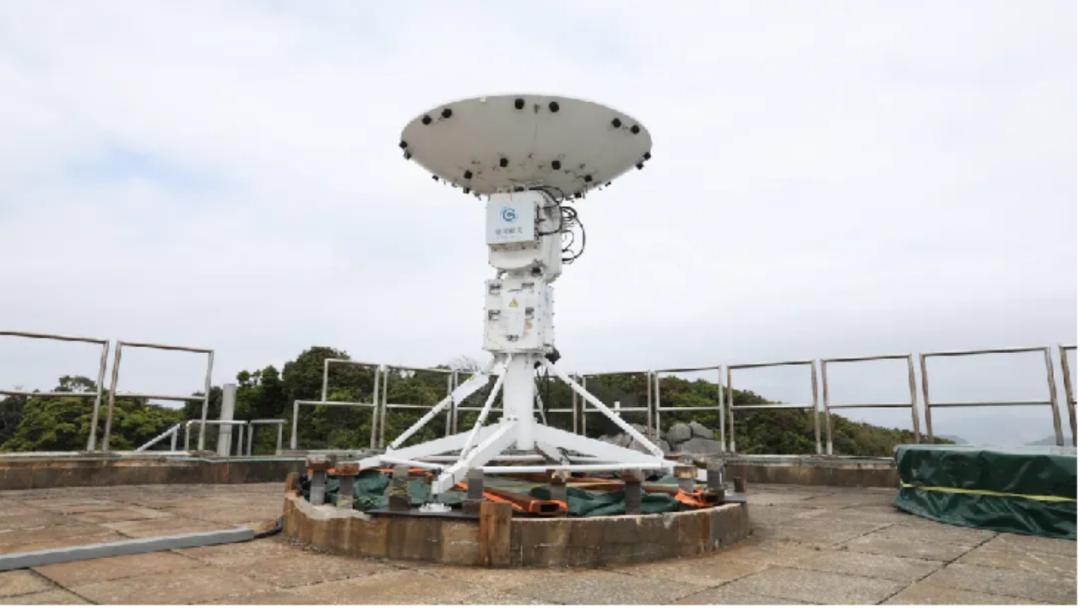
Group 1 - Approximately 2.6 billion people globally lack internet access, representing 32% of the world's population, with ground networks covering only about 10% of the Earth's surface [1] - The traditional mobile communication networks primarily refer to the public mobile networks used daily [2] Group 2 - The automotive sector requires real-time environmental information and stable data exchange with cloud services, other vehicles, and infrastructure, necessitating a new network solution to ensure continuous connectivity [3] - Current mobile networks have limited coverage in remote areas, highlighting the need for satellite communication to support the future of vehicle networking [4] Group 3 - A recent collaboration between Galaxy Space and the Hong Kong Applied Science and Technology Research Institute successfully tested low Earth orbit satellite internet for connected autonomous driving systems, demonstrating the integration of satellite communication with autonomous vehicles [5][6] - Satellite internet, particularly low Earth orbit satellite systems, can provide global coverage and solve connectivity issues in hard-to-reach areas [10][12] Group 4 - The evolution of satellite internet represents a significant shift in network development, moving towards a "Heaven and Earth" integrated network model, which is crucial for the future of communication technology [14][17] - The integration of satellite internet with existing 5G networks can enhance coverage and performance, addressing the limitations of current mobile communication technologies [15][18] Group 5 - The transition from PC5 to a hybrid network model combining 5G, satellite internet, and direct vehicle-to-vehicle communication is seen as a more effective solution for the vehicle networking ecosystem [22][26] - The cost of deploying 5G macro base stations is prohibitively high, with estimates suggesting that achieving global coverage would require over 1.6 trillion yuan in investment [25] Group 6 - The strategic importance of satellite internet in the global communication landscape is underscored by national initiatives to develop satellite networks, with significant progress in China's satellite internet projects [27][29] - Major automotive companies like Tesla, Geely, and BYD are actively pursuing satellite communication capabilities to enhance their vehicles' connectivity and positioning accuracy [30][31] Group 7 - The evolution of vehicle networking technology is fundamentally a competition between cost and scale, with satellite internet poised to break the physical limitations of ground networks and facilitate large-scale commercial deployment [32]