水果沙拉

Search documents
水晶包和八宝鸭
Xin Lang Cai Jing· 2026-02-18 05:56
我跟许多孩子一样,小时候,每年最盼望的一件事,就是过春节。倒不是因为有新衣服可以穿,而是过 春节,就能出门提灯笼,放鞭炮,干很多好玩的事,最主要的,是家里会做很多好吃的,用来招待客 人,我和弟弟也顺便可以一饱口福。 父亲,平时上班没工夫做饭,但到了过节,他有大把时间在家,终于可以大展一下厨艺了。 我记得,那时往往等不到除夕或者初一,父亲就已经开始着手准备了。他去菜市场采买来好多食材,什 么肉鸭、鲤鱼、鲜虾、猪肉馅,各种各样蔬菜、水果,在不大客厅的地上,摆了一大堆。然后,他就一 头扎进厨房里,忙活得常常要到晚上才收工,母亲心疼他,想去厨房帮忙,几次都被父亲推了出来。父 亲习惯了一个人在厨房鼓捣,只是偶尔,他会把我和弟弟叫过去,一个人赏给一个梨核儿。 那梨核儿,一看就已经是切过,一个长长的梨把儿,连着一个仅带了很少果肉的长方体,都能透出里面 黑色的硬核。 但我和弟弟却很知足,只要父亲说一句:"好了,这里还有一点梨肉,你们就给吃了吧",我们高兴坏 了,就像两只馋疯了的小老鼠一样,跑到自己卧室,抱着它,吭哧吭哧啃个没完。 我知道,这是父亲做水果沙拉时,剩下的;只是我不知道,父亲是何时学会这道西餐的做法。 等到长大一些 ...

「抠出」极致性价比的萨莉亚,为何今天在中国市场也难赚钱了? | 声动早咖啡
声动活泼· 2026-02-02 09:06
Core Viewpoint - The article discusses the challenges faced by Salia, a popular low-cost Western restaurant chain in China, as it experiences a slowdown in growth despite its historical success and cost-cutting strategies [3][6][11]. Group 1: Company Background and Growth - Salia was founded in the late 1960s in Japan, initially struggling with high prices and low customer traffic until it adopted a low-cost model, which became its brand identity [4]. - The company expanded into China in 2003, quickly growing its presence in major cities like Shanghai and Beijing, capitalizing on the demand for affordable Western dining [5][6]. - In the 2023 fiscal year, Salia reported a nearly 30% increase in overall revenue, with the Chinese market contributing about 80% of its overseas earnings [6]. Group 2: Recent Challenges - Despite previous growth, Salia's revenue in China only increased by 6.3% in the 2025 fiscal year, with significant profit declines in major cities like Beijing, Shanghai, and Guangzhou [6][9]. - The company has faced rising operational costs, leading to price increases on menu items, which have eroded its competitive pricing advantage [7][8]. - The saturation of the market in first-tier cities has resulted in intense competition among Salia's own stores, negatively impacting profitability [9][11]. Group 3: Market Dynamics - The Chinese restaurant industry is experiencing a slowdown, with the market size expected to grow only 3.5% by 2025, significantly lower than previous years [10]. - Salia's reliance on external suppliers in China contrasts with its successful vertical supply chain in Japan, limiting its ability to control costs and quality [10]. - The rise of new competitors offering similar value propositions has intensified the competitive landscape, challenging Salia's market position [11].
除了麦当劳,这些洋快餐近期也涨了!
Sou Hu Cai Jing· 2025-12-16 20:11
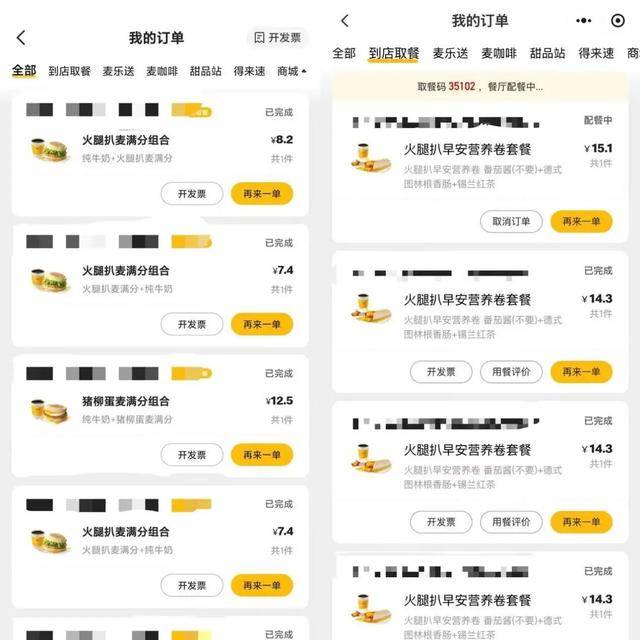
Core Viewpoint - McDonald's has raised prices on various menu items, with increases ranging from 0.3 to 1 yuan, sparking significant online discussion and concern among consumers [1][3]. Price Increases - Multiple breakfast combo prices have increased by 0.3 to 1 yuan, with classic items like the Bacon Cheeseburger and Big Mac seeing a 1 yuan increase [1]. - Snack items such as McNuggets and fries have also seen price hikes of 0.5 to 1 yuan [1]. - The "1+1 Flexible Combo," previously priced at 13.9 yuan, remains unchanged, but adding a double cheeseburger incurs an additional 1 yuan charge [1]. Consumer Reaction - The price increase quickly became a trending topic on social media, with over 9.35 million views on platforms like Xiaohongshu [3][4]. Company Response - McDonald's China stated that it aims to provide high-quality meals and value options, confirming the price increase effective December 15, 2025, while also promoting ongoing discount campaigns [4]. - This marks the second price increase for McDonald's in 2023, following a previous adjustment in February where prices rose by 0.5 to 2 yuan for various breakfast items [4]. Industry Trends - McDonald's has implemented multiple small price increases over recent years, with significant adjustments noted in December 2021 and January 2023 [5]. - Other fast-food brands, such as KFC and Salia, have also raised prices, citing rising costs of raw materials and operations, with KFC announcing a 2% average price increase in late 2024 [5][6]. - The fast-food industry faces ongoing challenges in balancing cost control with customer retention, particularly among price-sensitive consumers [6].

北上广开餐饮店太难,连萨莉亚都很难赚钱?
3 6 Ke· 2025-10-20 03:23
Core Insights - Sally's profitability is under pressure in the Chinese market despite overall growth in sales and net profit for the fiscal year 2025 [2][3][4] Group 1: Financial Performance - For the fiscal year 2025, Sally's total sales reached 256.71 billion yen, a year-on-year increase of 14.3%, with net profit at 11.16 billion yen, up 37% [2] - The Asian segment, primarily driven by the Chinese market, generated sales of 83.80 billion yen, a 7.4% increase, but operating profit declined by 12.8% [4] - In major cities like Shanghai, Guangzhou, and Beijing, sales were 21.90 billion yen, 24.50 billion yen, and 8.81 billion yen respectively, with growth rates of 2.4%, 6.6%, and 2.3% [7] Group 2: Market Challenges - Same-store sales in the Chinese market have been consistently declining, particularly in the North, East, and South regions [8][9] - Operating profits in Shanghai, Guangzhou, and Beijing fell by 23.6%, 27.3%, and 20.3% respectively, indicating a significant drop in profitability despite increased store openings [7] Group 3: Strategic Initiatives - Sally plans to continue its expansion strategy, with 40 new stores in Japan and 121 in overseas markets, including China and Southeast Asia, for the fiscal year 2026 [12] - The company is also investing approximately 30 million USD to build a new factory in Guangzhou to reduce ingredient costs and improve operational efficiency [16] - Sally has established a wholly-owned subsidiary in Wuhan to manage its restaurant operations, signaling a push into the central China market [14]