永辉优选

Search documents
永辉超市(601933):永辉超市深度报告:回归产品本质,启航品质新程
Changjiang Securities· 2026-01-30 01:02
Investment Rating - The investment rating for the company is "Buy" and is maintained [15] Core Insights - The report indicates that the company maintains its leading position in the industry during periods of volatility, undergoing deep reforms to enhance product and service capabilities, establishing a long-term competitive edge based on open and transparent supplier relationships [5][13] - As store closures and adjustments come to an end, the company has entered a phase of refined and detailed operations, which is expected to boost revenue and release profit elasticity [5][13] Industry Overview - From 2020 to 2025, the supermarket industry faces challenges due to weak demand and intensified competition, leading to declining revenues. The core issue is to boost income, with the industry currently in a loss-reduction phase [9][23] - Online retail penetration is stabilizing between 25%-30%, and rental levels for shops in major cities are expected to decrease by over 20% from 2021 to 2025 [9][32] - The average store efficiency for supermarkets is projected to be 27.77 million yuan in 2024, and the average employee efficiency is expected to be 1.25 million yuan, reflecting significant improvements in operational capabilities [9][32] Company Review - The company is a leading domestic hypermarket that has deeply participated in the rapid transformation of the retail industry over the past 20 years, with a solid foundation in management experience and brand recognition [10][39] - The company has completed its national layout, with strong brand awareness and a robust supply chain, and is now focusing on quality retail reforms to adapt to the inevitable trend of shifting from product "richness" to "value for money" [10][63] Quality Reform - The company is undergoing a quality retail reform initiated in May 2024, which includes internal promotions and external recruitment to quickly build a core management team [11][40] - The company aims to enhance its private label development, targeting a penetration rate of 30%-40% for its private brands by 2025, focusing on safety and health in ingredients and processes [12][58] Investment Recommendation - The report expresses optimism about the company's growth potential through its quality-focused transformation, expecting improvements in revenue stability and profitability from 2025 to 2027, with projected EPS of -0.24, 0.07, and 0.15 yuan respectively [13][15]

学习胖东来的第二年,永辉超市又亏了21亿
Guan Cha Zhe Wang· 2026-01-21 12:05
Core Viewpoint - Yonghui Supermarket is expected to report a net loss of 2.14 billion yuan for 2025, marking a significant increase in losses compared to previous years, indicating the challenges of its ongoing transformation [1][4] Financial Performance - Yonghui Supermarket has experienced continuous losses for five consecutive years, with total losses exceeding 10 billion yuan over this period [4] - The projected net profit for 2025 is -2.14 billion yuan, with a net profit excluding non-recurring items of -2.94 billion yuan, compared to -1.47 billion yuan in the previous year [1][4] Strategic Transformation - The core reason for the anticipated losses is the major operational strategic transformation initiated in 2025, shifting from "scale expansion" to "quality growth" [4][6] - The company has adjusted 315 stores and closed 381 underperforming stores, which has intensified short-term profit pressures [4][6] Impact of Store Adjustments - The financial impact of store adjustments includes asset write-off losses and one-time expenses totaling 910 million yuan, with an estimated gross profit loss of approximately 300 million yuan during store renovations [4][7] - The closure of 381 stores has led to additional costs, including asset write-offs and employee compensation [4][7] Learning from Industry Models - Yonghui Supermarket is adopting the "Fat Donglai" model as a transformation strategy, focusing on enhancing product categories with strong profitability [5][6] - The first store to implement this model opened in June 2024, marking a significant step in the transformation process [6] Supply Chain Reforms - The company is reforming its supply chain to address traditional pain points, which has temporarily led to stock shortages and declining gross margins [7] - The company has also faced losses from its overseas equity investments, with a fair value loss of 236 million yuan expected [7] Future Outlook - Despite the current challenges, there are positive signs from the adjusted stores, with increased customer traffic and sales in some locations [7] - The transformation represents a shift from scale-oriented to value-oriented retailing, which will require time and patience to fully realize [8]


如雨般连绵不绝的“调改”不是零售业的终局
Qi Lu Wan Bao Wang· 2025-10-11 13:25
Core Insights - The retail industry in China is undergoing significant transformation, focusing on smaller, fresh, and discount-oriented formats as indicated by the report "2025 China Retail Channel Evolution Trends" [1] - Major players like Yonghui Supermarket and AEON are adapting their business models to meet changing consumer demands, with AEON launching a new format and Yonghui implementing the "Fat Donglai" model [1][4] - The ongoing adjustments in the retail sector are not just about survival but also about innovation and enhancing customer experience, as emphasized by industry leaders [5][6] Group 1: Industry Trends - The retail landscape is shifting towards smaller and more specialized formats, with a notable increase in fresh produce and discount offerings [1] - The "invisible commercial war" is exemplified by AEON's new store format, which is significantly smaller than its predecessor, reflecting a trend towards compact retail spaces [1] - Yonghui Supermarket's recent performance shows a remarkable increase in sales and customer traffic, indicating a successful adaptation to the new retail environment [4] Group 2: Company Strategies - Yonghui Supermarket is actively eliminating underperforming stores and optimizing its supply chain, which has led to a substantial increase in sales during the recent holiday period [4] - The introduction of self-branded products in revamped stores is a key strategy for Yonghui, aiming to enhance product development and customer engagement [5] - Industry leaders stress the importance of innovation and customer-centric approaches, with a focus on creating a more enjoyable shopping experience [6]
永辉超市为什么重视自有品牌?
Sou Hu Cai Jing· 2025-08-04 13:42
Core Insights - Yonghui Supermarket aims to focus on its private label strategy, targeting the development of 15 major products with annual sales of 1 billion yuan each within five years [3][5]. Group 1: Private Label Strategy - Yonghui has officially announced a renewed focus on its private label products, emphasizing the need for a national brand that resonates with consumers [3][4]. - The company plans to increase the number of private label products from 60 in 2025 to 500 by 2029, with a target of achieving a penetration rate of 40% by 2029 [5][6]. - Yonghui's private label strategy includes the introduction of "Yonghui Preferred," which encompasses various product lines such as snacks, daily groceries, and personal care items [2][8]. Group 2: Major Product Strategy - Yonghui's strategy includes the development of "major products," defined as items that can generate over 10% of total store sales, with a goal of having 15 such products by 2029 [3][4]. - The company aims to learn from successful models like "Pang Donglai" to create products with over 100 million yuan in sales, focusing on high turnover rates and customer value [6][7]. - Yonghui emphasizes the importance of unique value propositions (UVP) and high-quality standards in product development, ensuring that products are both competitively priced and of superior quality [4][6]. Group 3: Supply Chain and Operational Improvements - Yonghui is transitioning its supply chain strategy from a focus on key accounts (KA) to a customer value (CA) approach, fostering long-term, transparent relationships with suppliers [5][9]. - The establishment of Zhejiang Huilian Supply Chain Co., Ltd. aims to enhance the development and operation of Yonghui's private label products, with a commitment to integrity and quality control [5][9]. - The company has already formed partnerships with 101 manufacturers and established 19 self-owned breeding bases to strengthen its supply chain [9].

今年关店300家的永辉超市,管理层该不该“一言堂”?
新浪财经· 2025-03-24 01:12
Core Viewpoint - Yonghui Supermarket is undergoing significant internal changes, with a shift in leadership and strategy aimed at addressing substantial financial losses and operational inefficiencies [1][5][6]. Group 1: Leadership Changes - The Shanghai Stock Exchange issued a regulatory letter to Yonghui Supermarket regarding internal governance issues, leading to the board's decision to authorize a reform leadership group to act in place of the CEO [1][3]. - The new leadership group is led by Ye Guofu, the chairman and CEO of Miniso, who has taken control of the company's management, sidelining the original "Yonghui faction" [3][4]. - Former CEO Li Songfeng's absence from the new executive list and his failure to secure a board position highlight the internal power struggle and the shift in control to the "Miniso faction" [4][5]. Group 2: Strategic Reforms - Yonghui plans to close 250-350 underperforming stores by 2025, with an aggressive strategy to revamp its operations and focus on smaller, quality community supermarkets [9][12]. - The company is expected to incur a net loss of 1.4 billion yuan in 2024, contributing to a total loss exceeding 10 billion yuan over four years [9][12]. - Ye Guofu aims to combine the successful elements of the "Pang Donglai" model with the Sam's Club approach, indicating a strategic pivot towards enhancing customer experience and operational efficiency [9][12]. Group 3: Market Reactions and Challenges - Analysts express mixed views on Yonghui's leadership changes, suggesting that a more centralized decision-making process could benefit the company [7]. - The initial success of the store revamps is questioned, with concerns about the sustainability of customer interest and sales performance in the long term [11][12]. - The reform leadership group is focusing on organizational, operational, and supply chain transformations, with a goal of increasing the sales contribution from private label products to 40% [12].
叶国富“夺权”永辉
凤凰网财经· 2025-03-21 13:44
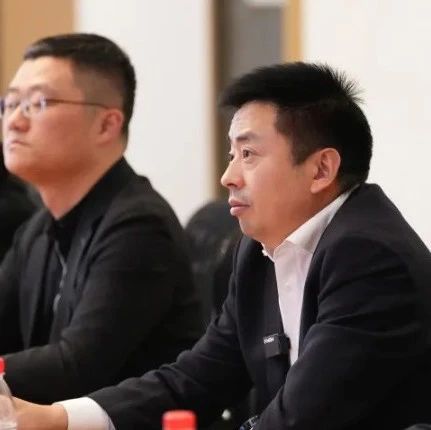
以下文章来源于字母榜 ,作者张琳 字母榜 . 让未来不止于大 来源|字母榜 作者|张琳 编辑|谭宵寒 斥资62.7亿元,成为永辉超市第一大股东半年后,叶国富曲线接手永辉。 3月17日,永辉超市换届选举董事会非独立董事,叶国富被提名进入董事会。永辉超市原董事、CEO李松峰却从永辉这轮斗争中出局。 有趣的是,叶国富并未直接接任或任命新的CEO,而是另起炉灶——永辉超市新成立了改革领导小组,叶国富担任组长,领导永辉改革的叶国富,成了正 在全球招募CEO的永辉的"事实CEO"。 对于叶国富的这一系列操作,永辉超市董事张轩宁投出了反对票,"当前高级管理议案中未涉及CEO安排,这令人深感忧虑。" 如果分析下永辉超市的股权结构,便可以理解叶国富为何要曲线接手永辉了。 "永辉超市目前是一家没有实际控制人的公司,未来会不会有,现在还没有办法准确回答"。永辉超市创始人张轩松在会上的回应,多少透露出永辉内部正 在进行的管理权争夺战。 叶国富虽是永辉超市最大股东,持股比例为 29.4%,但并非实际控制人。创始人张轩松和张轩宁两兄弟股份之和不及叶国富,另外两人也并非一致行动 人。 这种分散的股权结构使得公司在决策权力上缺乏单一主导力量 ...
叶国富「夺权」永辉
36氪· 2025-03-20 10:50
Core Viewpoint - The article discusses the ongoing power struggle and management changes at Yonghui Supermarket, particularly focusing on Ye Guofu's acquisition and reform plans after becoming the largest shareholder, while highlighting the challenges faced by both Yonghui and Miniso in the retail sector [1][6][28]. Group 1: Management Changes and Power Struggle - Ye Guofu was nominated to the board of Yonghui Supermarket, while former CEO Li Songfeng was ousted, leading to concerns about the lack of a clear CEO arrangement [2][3][15]. - Yonghui's ownership structure lacks a single controlling entity, which has contributed to the internal power struggle [4][5][10]. - The board's composition has shifted, with Miniso's influence growing, as they now hold three out of six non-independent director seats [14][21]. Group 2: Financial Performance and Challenges - Yonghui Supermarket is facing significant financial difficulties, with an expected loss of 1.4 billion yuan for 2024 and a high debt ratio of 87.06% [6][24]. - Despite the implementation of the "Fat Donglai model" and store renovations, the financial results have not yet reflected the improvements, as the company continues to close underperforming stores [7][25][28]. - Miniso's acquisition of a 29.4% stake in Yonghui for 6.27 billion yuan was the largest single acquisition in China's retail sector in recent years, but it has led to cash flow concerns for Miniso [6][26][28]. Group 3: Reform Plans and Future Strategies - Ye Guofu has proposed a significant reform plan for Yonghui, including the renovation of approximately 200 stores and the closure of 250-350 stores by 2026 [7][23]. - The reform strategy aims to enhance efficiency and reduce costs through a "three increases and two decreases" approach, focusing on improving employee productivity, performance, and gross profit while lowering costs and expenses [23][25]. - Collaboration between Miniso and Yonghui is expected in areas such as private label development and supply chain design, although specific measures have yet to be disclosed [25][26].