胖东来模式

Search documents
于东来:胖东来模式学不会是偏见误导
凤凰网财经· 2026-03-24 14:06
Group 1 - The core viewpoint is that the "胖东来" model cannot be easily replicated, and this belief reflects biases and societal misconceptions [1] - The companies supported by "胖东来" have shown significant qualitative improvements over the years, including notable examples like 永辉 and 步步高 [1] - The main characteristics of the "胖东来" model include a shift from traditional practices to a more scientific approach that emphasizes good treatment of people, high product quality, reasonable value, healthy corporate development, and societal benefits [2]


于东来退休,永辉CEO检讨,2026永辉该怎么走?
Sou Hu Cai Jing· 2026-02-13 08:50
Core Viewpoint - The CEO of Yonghui Supermarket, Wang Shoucheng, issued an apology acknowledging the company's failure to align its expansion ambitions with its capabilities, resulting in a loss of trust from employees and customers [2]. Group 1: Company Performance and Strategy - Yonghui Supermarket plans to close nearly 400 low-quality stores and systematically renovate over 300 existing stores by 2025, covering a total area of more than 2 million square meters [2]. - Despite these efforts, the company is projected to incur a loss of 2.14 billion yuan in 2025, marking a 45.6% increase year-on-year, and this will be the fifth consecutive year of losses, totaling over 10 billion yuan [2]. - The losses are attributed to strategic adjustments, including asset write-offs and one-time costs exceeding 1.2 billion yuan due to store renovations and closures [2]. Group 2: Comparison with Competitors - In contrast, the competitor, Pang Donglai, is expected to achieve sales revenue of 23.53 billion yuan in 2025, reflecting a year-on-year growth of 38.7%, with significant contributions from its supermarket business and other sectors [2]. - Yonghui's previous business model of "fresh food driving traffic, general merchandise generating profit" has faltered since 2021 due to pressures from e-commerce and new business formats [3]. Group 3: Operational Challenges - The company has faced operational difficulties due to blind expansion without corresponding improvements in supply chain and management capabilities, leading to a decline in performance [3]. - Employee complaints have surfaced regarding increased training, overtime, and inspections, while salaries have not significantly changed, and vacation time has decreased [4]. - Experts have criticized Yonghui for superficially imitating the Pang Donglai model without grasping its core principles, resulting in rising costs outpacing revenue growth [4]. Group 4: Future Directions - Wang Shoucheng has identified 2026 as a year for "deep cultivation," aiming to transition from mere adjustments to systematic development, focusing on three areas: products, stores, and organization [5]. - The company faces significant challenges ahead, as acknowledging past mistakes is only the beginning of a more difficult adjustment process to find its own path forward [5].

巨亏21.4亿,胖东来为何救不了“永辉们”?
3 6 Ke· 2026-02-05 12:01
Core Viewpoint - The "Fat Reform" initiative by Yonghui Supermarket has resulted in significant financial losses, leading to widespread criticism and reevaluation of the company's strategies and capabilities in the competitive retail market [1][2]. Group 1: Financial Performance and Losses - Yonghui Supermarket reported a staggering loss of 21.4 billion yuan due to the "Fat Reform" initiative, raising concerns about its operational effectiveness [1]. - The company has faced continuous financial decline since 2018, with net profit dropping and cash flow deteriorating, indicating severe operational risks [2]. - From 2021 to 2025, Yonghui's cumulative losses exceeded 116 billion yuan, with annual losses of 39.44 billion yuan, 27.63 billion yuan, 13.29 billion yuan, 14.65 billion yuan, and 21.4 billion yuan respectively [3]. Group 2: Strategic Initiatives and Failures - The "Super Species" initiative aimed to merge fresh produce with dining but resulted in over 2.6 billion yuan in losses due to high operational costs and complex supply chain management [3]. - The Yonghui MINI community stores struggled to compete with online group buying, leading to the closure of nearly 400 stores within a year [3]. - Despite attempts at digital transformation and warehouse store models, Yonghui's efforts have not yielded the desired results, further complicating its financial situation [2][3]. Group 3: Market Position and Competitive Challenges - The "Fat Reform" was seen as a last-ditch effort for Yonghui, which has been unable to adapt effectively to the competitive pressures from online grocery services and community group buying [2]. - The company's aggressive imitation of the "Fat Donglai model" has been criticized for lacking a deep understanding of its core principles, leading to strategic misalignments [10][14]. - Yonghui's operational model, focused on scale and efficiency, clashes with the new consumer era's emphasis on experience and trust, highlighting a fundamental disconnect in its business strategy [16][18]. Group 4: Future Outlook and Recommendations - Yonghui's future success may depend on a balanced approach that combines a return to retail fundamentals with innovative model integration, focusing on enhancing single-store profitability and regional collaboration [17][18]. - The company must shift its focus from rapid imitation to long-term value creation, understanding that retail transformation is a continuous process rather than a quick fix [18].
先学海底捞再学胖东来,为何没一家学得会?
Sou Hu Cai Jing· 2026-02-03 03:56
Core Insights - The retail industry is facing significant challenges as companies attempt to learn from successful models like Fat Donglai, but many are failing to replicate its success [2][15][20] Group 1: Performance of Retail Companies - Yonghui Supermarket, once a leader in the retail sector, has reported continuous losses, with a projected net loss of 2.14 billion yuan for 2025, marking its fifth consecutive year of losses [2][8] - The company has closed 381 stores in 2025, averaging over one store closure per day, leading to direct losses of 1.174 billion yuan due to store renovations and closures [9][10] - Other retailers, such as Meitoh and Bubu Gao, have also struggled after attempting to adopt the Fat Donglai model, with significant declines in net profits [12][14] Group 2: Learning from Fat Donglai - Many retailers, including Yonghui, have attempted to learn from Fat Donglai's operational model, but most have failed to achieve satisfactory results, often resulting in increased losses [15][20] - The core issue lies in the inability of these companies to fundamentally restructure their business models and supply chains, leading to superficial imitation rather than genuine transformation [15][20] - Fat Donglai's success is attributed to its unique supply chain, employee welfare, and customer trust, which are difficult for larger, publicly traded companies to replicate due to their existing profit structures and shareholder pressures [16][19] Group 3: Financial Metrics - Yonghui's total revenue for 2024 was 67.57 billion yuan, down from 78.64 billion yuan in 2023, with a gross profit of 13.82 billion yuan [6] - In the first three quarters of 2025, Yonghui reported a net loss of 709.8 million yuan, significantly higher than the previous year's loss of 77.87 million yuan [9] - Bubu Gao's revenue for the first three quarters of 2025 was 3.201 billion yuan, showing a year-on-year growth of 26.45%, but its net profit dropped to 225.5 million yuan, down nearly 90% from the previous year [12][13]


“胖改”失灵?永辉北京一门店突然停业,调改不满1年
Mei Ri Jing Ji Xin Wen· 2026-01-26 15:03
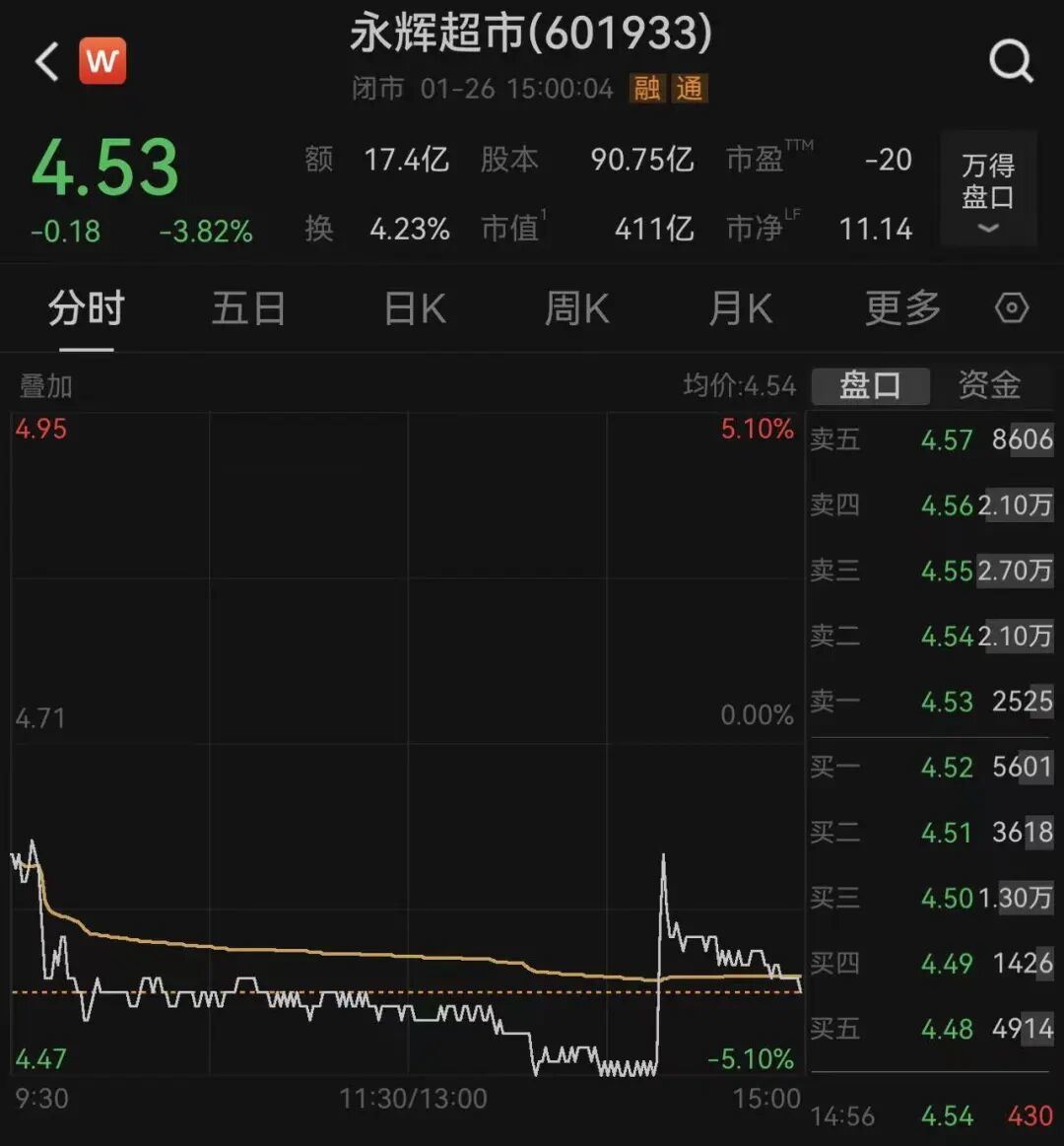
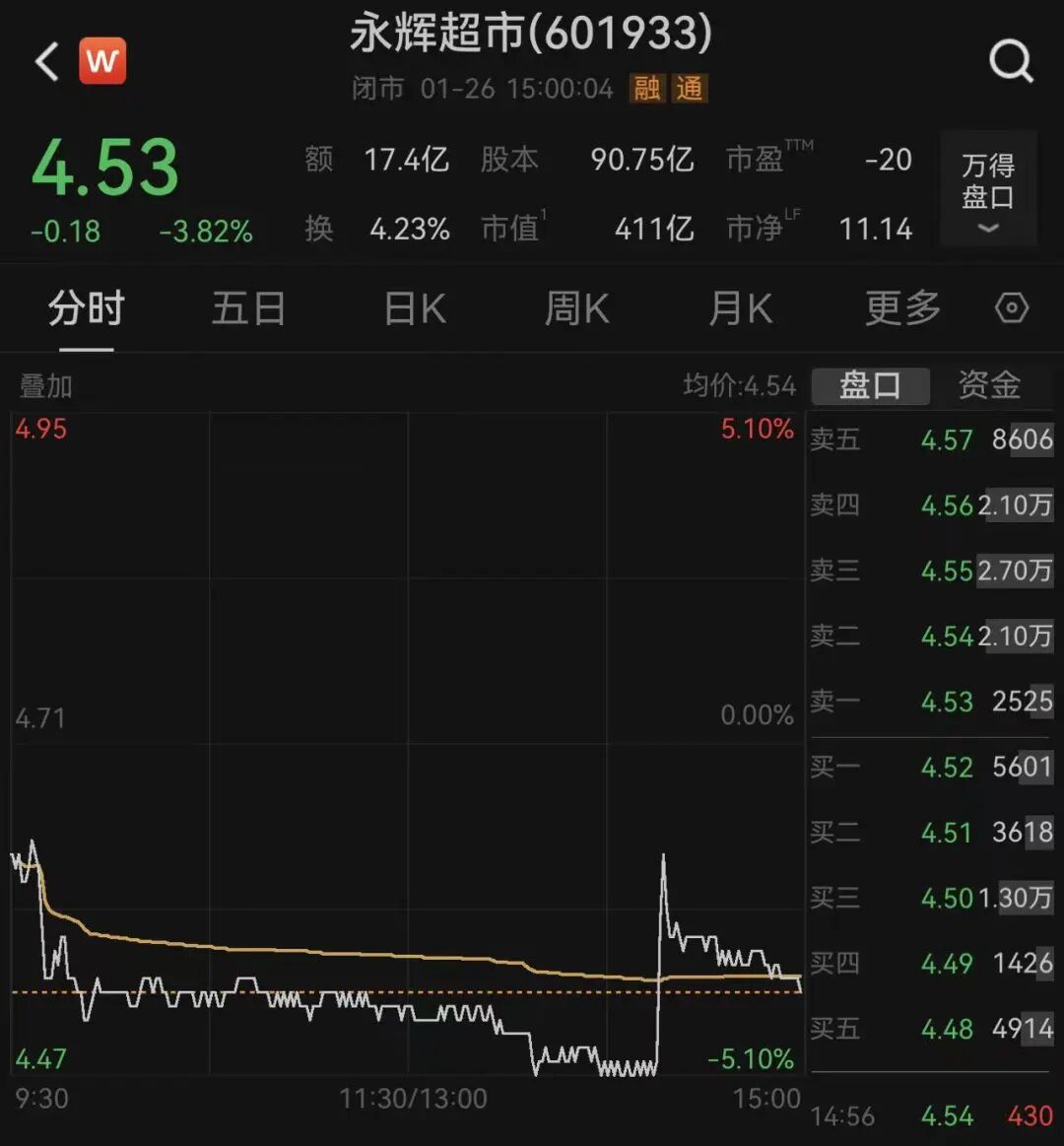
Core Viewpoint - Yonghui Supermarket's store at Hongkun Plaza in Beijing has suspended operations due to issues with the property management, including the inability to access the main entrance and interruptions in water and heating supply. The store had recently undergone renovations and reopened in March 2025, but it is now facing significant operational challenges and financial disputes with the property management [1][4][10]. Group 1: Store Operations and Financial Issues - The Yonghui Supermarket at Hongkun Plaza has been closed since January 23, with customers reporting blocked entrances and locked escalators [3][4]. - The shopping center claims Yonghui has not paid over 16 million yuan in rent and other fees since the store's renovation completion [10][11]. - Yonghui's official response indicates that they are in discussions to resolve the issues and aim to reopen the store soon [10][11]. Group 2: Financial Performance and Strategic Adjustments - Yonghui Supermarket is projected to incur a net loss of 2.14 billion yuan for 2025, marking a 45.6% increase in losses compared to the previous year [14]. - The company has been in a continuous loss situation for five years, with total losses exceeding 10 billion yuan during this period [15]. - In 2025, Yonghui closed 381 stores that did not align with its strategic direction, leading to significant one-time costs related to asset write-offs and operational disruptions [19][22]. Group 3: Market Position and Competitive Strategy - Yonghui has completed renovations on 315 stores, making it the supermarket brand with the most "Pang Donglai-style" adjustments in China [24]. - The company is shifting its strategy from "scale expansion" to "quality growth," aiming to redefine its market positioning [18]. - The challenges faced by Yonghui in adopting the Pang Donglai model reflect broader industry difficulties, as other retailers also struggle with similar transformations [25][27].
“胖改”失灵?永辉北京一门店突然停业,调改不满1年,商场:还欠房租等费用;永辉否认!公司5年亏掉上百亿元,去年关店381家
Mei Ri Jing Ji Xin Wen· 2026-01-26 14:39
Core Viewpoint - Yonghui Supermarket's store at Hongkun Plaza in Beijing has suspended operations due to issues with the property management, including the inability to access the main entrance and interruptions in water and heating supply. The store had recently undergone renovations and reopened in March 2025, but has now been closed for several days without a clear timeline for reopening [1][2][4]. Group 1: Store Operations and Financial Issues - The Hongkun Plaza shopping center claims that Yonghui Supermarket has not paid over 16 million yuan in rent and other fees since the store's renovation was completed [5][8]. - Yonghui Supermarket confirmed the store is not permanently closed but is in a state of suspension due to the ongoing issues with the property management [2][6]. - The shopping center has expressed its intention to pursue legal action if the situation is not resolved and has apologized to customers for the inconvenience caused by the store's closure [8]. Group 2: Financial Performance and Strategic Adjustments - Yonghui Supermarket is expected to report a net loss of 2.14 billion yuan for 2025, marking a 45.6% increase in losses compared to the previous year, continuing a trend of losses for five consecutive years [9][11]. - The company has closed 381 stores that do not align with its future strategic direction, while also undergoing significant operational adjustments, including the renovation of 315 stores [11][12]. - The financial impact of these adjustments includes asset write-offs and losses from store closures, totaling over 1.2 billion yuan due to the "Pang Donglai" reform strategy [11][12].
巨亏21亿!“胖东来之子”崩了
Sou Hu Cai Jing· 2026-01-26 03:45
Core Viewpoint - The article discusses the struggles of Yonghui Supermarket as it attempts to emulate the successful business model of the renowned retailer Pang Donglai, but faces significant challenges and ongoing losses. Group 1: Yonghui Supermarket's Current Situation - Yonghui Supermarket, once a leading player in China's supermarket industry, is projected to incur a net loss of 2.14 billion yuan in 2025, accumulating losses of 11.6 billion yuan over five years [1][5] - The company has attempted to reform by adopting strategies from Pang Donglai, including significant changes in employee compensation, product quality, and shopping environment [5][6] - Despite a brief stock price recovery, Yonghui has closed nearly 20% of its stores within six months, indicating that the implementation of these strategies has not been effective [6][19] Group 2: Comparison with Pang Donglai - Pang Donglai reported an annual revenue of 23.531 billion yuan in 2025, a 38.7% increase from 17 billion yuan in 2024, showcasing a stark contrast to Yonghui's financial struggles [2][3] - The article highlights that while many retailers attempt to replicate Pang Donglai's model, they fail to grasp the underlying principles that contribute to its success, particularly the restructuring of profit-sharing mechanisms [11][17] - Pang Donglai's approach emphasizes employee satisfaction and high-quality service, which has resulted in a low employee turnover rate of less than 3%, compared to the industry average of over 25% [15][19] Group 3: Challenges in Implementation - Yonghui's strategy shift from "scale expansion" to "quality growth" has led to significant store closures, which the company claims are necessary to align with its new strategic direction [6][19] - The difficulties faced by Yonghui and other imitators stem from their inability to adapt the core principles of Pang Donglai's model to their larger, more complex operations [17][19] - The article suggests that successful retail strategies must consider the unique context of each company, rather than blindly copying successful models [17][19]
“抄答案都抄不明白”,想学胖东来的超市怎么一家接一家倒下
Sou Hu Cai Jing· 2026-01-25 20:55
Core Viewpoint - The article discusses the challenges faced by companies attempting to emulate the successful business model of Pang Donglai, highlighting that many have struggled to achieve similar results despite extensive efforts to learn from his approach. Group 1: Challenges in Learning from Pang Donglai - Many companies, including Meitoh and Yonghui Supermarket, have attempted to adopt the "Pang Donglai model" but have encountered significant difficulties, with some even failing to graduate from training programs [1][3]. - Yonghui Supermarket has reported a projected annual loss, while other competitors like Zhongbai have seen revenue decline by nearly 20% year-on-year [3]. - Despite these struggles, Pang Donglai has achieved remarkable success, completing a sales target of 20 billion yuan ahead of schedule, which is 25% more than the previous year's total [3]. Group 2: Key Characteristics of the Pang Donglai Model - The essence of the "Pang Donglai model" lies in fundamentally changing the survival strategies of traditional retail stores, moving away from the reliance on key account (KA) sales [5][6]. - Traditional supermarkets often charge suppliers various fees to place products on shelves, which can significantly reduce profit margins [7][10]. - Pang Donglai, along with Costco and Sam's Club, has adopted a model that emphasizes direct profit from consumers rather than relying on supplier fees, allowing for better product selection and control over inventory [9][10]. Group 3: Management and Operational Insights - The article emphasizes the importance of effective management and organizational structure in successfully implementing the Pang Donglai model, noting that traditional procurement systems can hinder progress [11][25]. - High employee compensation and generous benefits at Pang Donglai are designed to reduce unethical behavior and improve overall management efficiency [14][20]. - The complexity of managing a large organization can dilute the effectiveness of detailed management practices, making it challenging for companies to replicate Pang Donglai's success [25][26].
永辉抄胖东来作业,没抄明白
虎嗅APP· 2026-01-25 14:11
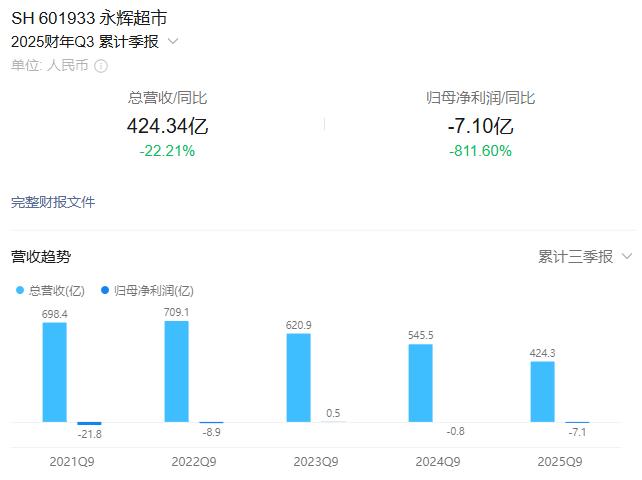
Core Viewpoint - Yonghui Supermarket is facing significant financial challenges, with a projected net loss of 2.14 billion yuan for 2025, marking its fifth consecutive year of losses and a 45.6% year-on-year increase in losses [2][4]. Financial Performance - From 2021 to 2025, Yonghui's net profits were -3.944 billion yuan, -2.763 billion yuan, -1.329 billion yuan, -1.465 billion yuan, and a projected -2.14 billion yuan, totaling over 11.6 billion yuan in losses over five years [4]. - The company's asset-liability ratio reached 88.96% by the end of Q3 2025, with total assets of 31.62 billion yuan and liabilities of 28.129 billion yuan [5]. - Operating cash flow has significantly decreased from 5.864 billion yuan in 2022 to 1.14 billion yuan in Q3 2025, indicating severe cash flow pressure [5]. Strategic Transformation - Yonghui's management attributes the massive losses to "short-term pain" from strategic transformation, including the deep adjustment of 315 stores and the closure of 381 low-efficiency stores, resulting in over 1.2 billion yuan in direct losses [4][5]. - The transformation costs for Yonghui are significantly higher than the industry average, with 81% of supermarket companies achieving performance growth while keeping adjustment costs within 3%-5% of revenue, whereas Yonghui's adjustment costs are projected to consume all profits [5]. Comparison with Competitors - The "Fat Donglai model" has shown positive results, with an average customer flow increase of 80% and 60% of adjusted stores achieving record profits, but Yonghui's adaptation has not translated into overall profitability [7][8]. - Fat Donglai's success is attributed to a unique distribution mechanism, regional supply chain barriers, and a trust-based economy, which are difficult for national chains like Yonghui to replicate [8][9]. Industry Context - The retail industry is experiencing a "diversification intensification," with 50% of companies achieving sales growth and 46% achieving net profit growth, while regional supermarkets are outperforming national chains like Yonghui [11][12]. - The shift from scale-driven growth to efficiency-driven growth is evident, with successful companies focusing on single-store efficiency rather than just increasing customer flow [12]. Future Outlook - Yonghui's future hinges on its ability to effectively utilize funds from a planned 3.1 billion yuan capital increase for store adjustments and supply chain upgrades, with potential cash flow crises looming if the capital increase fails [11][12]. - The company must address two core issues: efficiently investing in profit distribution reform and localizing the supply chain while controlling costs during the transformation process [12][13].
胖东来的第一批学徒,已经挂科了
首席商业评论· 2026-01-25 04:48
Core Viewpoint - The article discusses the challenges and complexities of replicating the "胖东来" (Pang Donglai) retail model, highlighting the difficulties faced by other supermarkets in adopting this approach and the unique characteristics that define Pang Donglai's success [5][8][29]. Group 1: Industry Challenges - The retail industry is experiencing significant turmoil, with major players like 永辉超市 (Yonghui Supermarket) and 中百 (Zhongbai) reporting substantial losses, while 胖东来 continues to thrive, achieving a sales target of 20 billion yuan ahead of schedule [8][9]. - The traditional supermarket model relies heavily on key account (KA) relationships, which often leads to high fees for suppliers and a lack of control over product selection [10][12]. - The shift towards a new model, as exemplified by 胖东来, involves reducing reliance on KA and focusing on direct consumer sales, which requires a fundamental change in operational strategy [12][13]. Group 2: Management and Organizational Structure - The difficulties in adopting the 胖东来 model stem from the need to overhaul existing procurement systems and the entrenched interests within traditional supermarket structures [13][14]. - The management challenges include maintaining high standards of employee compensation and performance while ensuring that the complexities of large-scale operations do not dilute the effectiveness of management practices [16][22]. - 胖东来’s approach to employee compensation is notably generous, with base salaries for various positions significantly higher than industry standards, which is intended to reduce corruption and improve performance [16][21]. Group 3: Learning from 胖东来 - Other supermarkets attempting to learn from 胖东来 often struggle to implement the necessary changes, as the model requires a deep understanding of operational efficiency and customer engagement [9][30]. - The article emphasizes that simply copying products or practices from 胖东来 is insufficient; a comprehensive transformation of the business model and culture is essential for success [12][31]. - The unique characteristics of 胖东来, including its focus on self-branded products and customer-centric strategies, make it difficult for competitors to replicate its success without significant organizational changes [12][29].