
汉堡王快餐

Search documents
合资交易完成,汉堡王计划未来中国市场门店数量超4000家
Xin Jing Bao· 2026-02-02 12:17
Core Insights - The joint venture between Restaurant Brands International (RBI) and CPE Yuanfeng has been successfully completed, aiming to expand Burger King's store count in China from approximately 1,250 to over 4,000 by 2035 while achieving sustainable same-store sales growth [1] Group 1 - CPE Yuanfeng has injected an initial capital of $350 million into Burger King China and holds about 83% of the shares, while RBI retains approximately 17% minority stake and board seats [1] - A 20-year master franchise agreement has been signed, granting exclusive rights to operate and develop the Burger King brand in China [1] Group 2 - CPE Yuanfeng appointed Huang Jinshuan as the chairman of Burger King China, who has a strong background in multinational restaurant chains and significant growth achievements during his tenure as general manager of a well-known fast-food brand in China from 2017 to 2022 [2] - A local executive team led by Chen Wenrui, the Vice CEO and Chief Supply Chain Officer, has been established to enhance supply chain management, restaurant operations, and digital marketing initiatives [2]

并购潮起,PE巨头接连出手
FOFWEEKLY· 2025-11-17 10:56
Core Viewpoint - The M&A market in China is experiencing an unprecedented surge in 2025, driven by private equity (PE) firms and public companies actively pursuing acquisitions [3][4]. Group 1: Recent M&A Activities - CPE Yuanfeng, a Chinese private equity firm, has partnered with RBI Group, the parent company of Burger King, to establish a joint venture for Burger King's operations in China, with CPE holding 83% of the joint venture [7]. - CPE Yuanfeng will inject $350 million (approximately 2.5 billion RMB) into the joint venture to support restaurant expansion, marketing, menu innovation, and operational improvements [7][8]. - The transaction is expected to be completed in the first quarter of 2026, pending regulatory approvals [8]. Group 2: Market Trends and Statistics - The Chinese M&A market is witnessing a significant increase, with disclosed transaction amounts exceeding $170 billion in the first half of 2025, a 45% increase compared to the same period last year [11]. - There were 29 large-scale M&A transactions (over $1 billion each) in the first half of 2025, with 20 of these being domestic strategic investments, nearly half led by state-owned enterprises [11]. - The Shanghai Stock Exchange reported over 1,000 disclosed M&A transactions since the introduction of the "Six M&A Guidelines" in September 2022, with significant growth in technology-related mergers [11][12]. Group 3: Policy and Government Support - The Chinese government is actively promoting M&A activities through various policies, including the "Six M&A Guidelines" released by the China Securities Regulatory Commission [11]. - Local governments are establishing M&A funds to provide financial support for acquisitions, with cities like Shenzhen and Nanjing announcing related policies [14][15]. - The Shenzhen government aims to complete over 200 M&A projects with a total transaction value exceeding 100 billion RMB by the end of 2027 [14]. Group 4: Future Outlook - The M&A market is evolving from a secondary exit strategy to a critical strategic tool for companies, with increasing participation from professional buyers [16][19]. - The market is expected to continue growing, driven by patient capital, institutional investment strategy transformations, and a more regulated market environment [19].


CPE源峰3.5亿美元收购汉堡王中国 快餐市场格局生变与资本棋局再起
Xin Lang Zheng Quan· 2025-11-14 02:27
Core Viewpoint - CPE Yuanfeng has announced a strategic partnership with Burger King to establish a joint venture, "Burger King China," with an initial investment of $350 million, granting CPE approximately 83% ownership, marking a significant shift in control of an international fast-food brand to a local Chinese investment firm [1][2]. Group 1: Transaction Overview - CPE Yuanfeng's acquisition reflects a strategic move by long-term capital to invest in core assets within the consumer sector, with a 20-year exclusive development agreement for Burger King in China [2]. - The $350 million investment will primarily support the expansion of Burger King China, including restaurant openings, marketing, menu innovation, and operational improvements [2]. - CPE Yuanfeng has a strong track record, managing over 150 billion RMB in assets and investing in over 300 companies, with a focus on the chain consumer service sector [2]. Group 2: Challenges Faced by Burger King China - Despite being a strong global brand, Burger King has struggled to scale in China, with only about 1,250 stores compared to competitors like KFC and McDonald's, which have over 12,000 and 8,000 stores respectively [3]. - The growth rate of new store openings has significantly declined, with only 22 new stores opened by mid-October 2025, and over 50 closures in the last 90 days, indicating a need for asset optimization [3][4]. - Burger King's market strategy has been limited, focusing heavily on high-tier cities, which has led to intense competition and high rental costs without sufficient scale to mitigate expenses [3]. Group 3: CPE Yuanfeng's Empowerment Strategy - CPE Yuanfeng aims to leverage its experience in the consumer sector to replicate past successes, with plans to expand Burger King's store count in China to over 4,000 by 2035, requiring nearly 300 new stores annually [6]. - The empowerment strategy will focus on product upgrades, brand marketing, store expansion, online channel restructuring, digital system development, and financial optimization [6]. Group 4: Market Dynamics and Future Outlook - The acquisition is part of a broader trend where local capital is taking control of foreign brands' operations in China, as seen with Starbucks' recent stake sale [7]. - The CEO of RBI acknowledged that CPE Yuanfeng is an ideal partner to help Burger King China enter a new phase, reflecting confidence in local capital's operational capabilities [7]. - However, CPE Yuanfeng will face challenges in addressing existing issues such as low profitability for franchisees and optimizing the supply chain [7][8]. - Burger King must rethink its brand positioning to compete effectively in both high-tier cities and lower-tier markets against local brands [8].
汉堡王“解约”土耳其团队,找蜜雪股东救场
阿尔法工场研究院· 2025-11-13 00:07
Core Viewpoint - CPE Yuanfeng is investing $350 million into Burger King China to establish a joint venture, aiming to expand the brand's presence in the Chinese market significantly by increasing the number of stores from approximately 1,250 to over 4,000 by 2035 [4][5][16]. Group 1: Investment and Partnership - CPE Yuanfeng will hold about 83% of the joint venture, while Restaurant Brands International (RBI) will retain approximately 17% [5]. - The partnership includes a 20-year master development agreement granting exclusive rights to develop the Burger King brand in China [5]. - CPE Yuanfeng, established in 2008, has a total asset management scale exceeding 150 billion yuan and has previously invested in several successful consumer brands [8][10]. Group 2: Market Performance and Challenges - Burger King has been underperforming in China, with a system sales figure of $700 million (approximately 5 billion yuan) in 2024, ranking eighth among its top international markets [15]. - The average sales per store in China were only $400,000 (around 2.9 million yuan), the lowest among the top ten international markets [15]. - Compared to competitors like KFC and McDonald's, Burger King's market entry was delayed, and its expansion has been slower due to its mid-to-high-end positioning [15][16]. Group 3: Strategic Direction - The collaboration with CPE Yuanfeng reflects RBI's urgent need to revitalize Burger King's business in China [12][16]. - The management team of Burger King China has been localized, with new executives from major international food brands, indicating a shift towards more localized operations [16]. - Future strategies will focus on product development and brand marketing to find market breakthroughs [17].
汉堡王中国业务易主
Xin Lang Cai Jing· 2025-11-10 14:38
Core Insights - The sale of Burger King's China business has been finalized, with CPE Yuanfeng entering a strategic partnership to establish a joint venture named "Burger King China" [2][3] - CPE Yuanfeng will inject an initial capital of $350 million to support restaurant expansion, marketing, menu innovation, and operational improvements [2] - The joint venture will have a 20-year master development agreement granting exclusive rights to develop the Burger King brand in China [2] Company Overview - CPE Yuanfeng will hold approximately 83% of the joint venture, while Restaurant Brands International (RBI) will retain about 17% [2] - The goal is to expand the number of Burger King outlets in China to over 4,000 by 2035, alongside achieving same-store sales growth [2] - As of the end of Q3, Burger King China had 1,271 outlets, a decrease from 1,367 at the end of Q2, highlighting a significant gap compared to competitors like KFC and McDonald's [3] Market Context - RBI, which fully owns Burger King, is one of the largest fast-food service groups globally, with over $45 billion in annual system sales and more than 32,000 restaurants in over 120 countries [2][3] - The recent move follows RBI's decision to classify Burger King China's business as "held for sale" after regaining nearly 100% ownership earlier this year [3] - The competitive landscape in China's fast-food market remains challenging, as evidenced by Starbucks also selling a stake in its China operations to a local partner [4]
3.5亿美元拿下83%股权,CPE源峰入主汉堡王中国
Xin Lang Cai Jing· 2025-11-10 14:03
Core Insights - Burger King's China business has been sold to CPE Yuanfeng, which will establish a joint venture named "Burger King China" to drive growth in the Chinese market [1][2] - CPE Yuanfeng will inject an initial capital of $350 million into the joint venture for restaurant expansion, marketing, menu innovation, and operational improvements [1] - The joint venture will have a 20-year main development agreement granting exclusive rights to develop the Burger King brand in China, with CPE Yuanfeng holding approximately 83% of the equity and RBI retaining about 17% [1][2] Company Overview - Restaurant Brands International (RBI) fully owns Burger King, which was founded in 1954 and has over 19,000 locations globally, including 1,271 in China as of the end of Q3 [2] - RBI's CEO, Joshua Kobza, emphasized China's attractiveness as a long-term growth market for Burger King, highlighting the recent investment and joint venture as a sign of confidence in the market [2] - RBI had previously reclaimed nearly 100% ownership of Burger King China in February 2023 in preparation for the sale, and confirmed the business as "held for sale" on October 30 [2] Market Context - The current number of Burger King locations in China is significantly lower compared to competitors like KFC, which has over 12,000 locations, and McDonald's, which aims to reach 10,000 [2] - CPE Yuanfeng, established in 2008, is an asset management firm with over 100 billion yuan in managed funds, focusing on consumer services and having invested in various well-known companies [2] - The competitive landscape in the Chinese fast-food market remains challenging, as highlighted by the recent sale of Starbucks' China business to a local partner, which also formed a joint venture [3]
CPE源峰入主汉堡王中国:剑指4000家门店丨消费一线
2 1 Shi Ji Jing Ji Bao Dao· 2025-11-10 13:28
Group 1 - CPE Yuanfeng has reached a strategic cooperation with Burger King brand, leading to the establishment of a joint venture, Burger King China, with an initial investment of $350 million to support expansion and operations [1] - The partnership grants CPE Yuanfeng approximately 83% ownership of Burger King China, while RBI retains about 17% [1] - The plan aims to increase the number of Burger King outlets in China from around 1,250 to over 4,000 by 2035, alongside achieving sustainable same-store sales growth [1] Group 2 - The competitive landscape in the Chinese market is intensifying, with major restaurant chains experiencing revenue declines [3] - Meituan's CEO indicated that the average dining price has dropped by 10.2% year-on-year, despite a 15.4% increase in the number of dine-in orders [3] - Notable declines in revenue were reported by leading restaurant brands, including Haidilao, which saw a 3.7% drop to 20.703 billion yuan, and Jiumaojiu, which experienced a 10.1% decline to 2.753 billion yuan [3] Group 3 - As of the end of Q3, Burger King China had 1,271 outlets, down from 1,367 at the end of Q2, indicating a trend of store closures due to poor performance [4] - Burger King China plans to open 40 to 60 new restaurants in key first and second-tier cities to offset the impact of closures [4] - RBI has invested over $100 million since acquiring Burger King China, focusing on operational upgrades and local leadership development [4] Group 4 - The trend of localization among Western fast-food brands in China is accelerating, with Starbucks and Subway also forming joint ventures to enhance their market presence [4][5] - Burger King China has appointed new executives with significant experience in the industry to drive its transformation [5] - The same-store sales for Burger King China increased by 10.5% year-on-year in Q3, marking a recovery from previous declines [5]
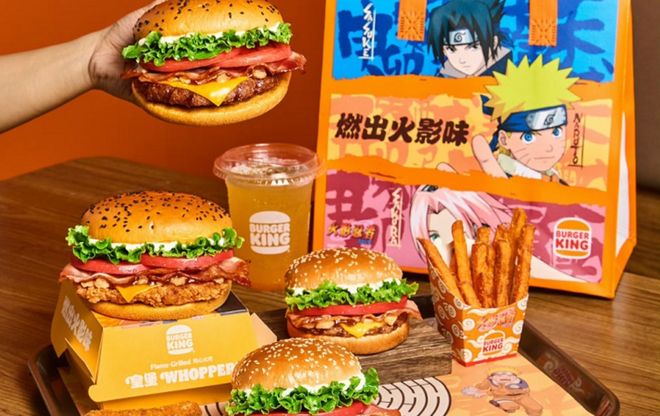
CPE源峰入主汉堡王中国:剑指4000家门店
2 1 Shi Ji Jing Ji Bao Dao· 2025-11-10 13:24
Core Insights - Burger King's operations in China are undergoing significant changes, including a reduction in store count and a new strategic partnership with CPE Yuanfeng to form a joint venture [1][3][10] Group 1: Strategic Developments - CPE Yuanfeng will inject $350 million into Burger King China to support restaurant expansion, marketing, menu innovation, and operational improvements [1] - The joint venture will grant CPE Yuanfeng exclusive rights to develop the Burger King brand in China for 20 years, with CPE holding approximately 83% of the equity and RBI retaining about 17% [1] - The goal is to increase the number of Burger King locations in China from around 1,250 to over 4,000 by 2035, while achieving sustainable same-store sales growth [1] Group 2: Market Challenges - The competitive landscape in the Chinese market is intensifying, leading to RBI's decision to sell its stake in Burger King China [3] - Recent data indicates that the average dining price in the restaurant sector is declining, with a 10.2% year-on-year drop, despite a 15.4% increase in the number of dine-in orders [4] - Major restaurant chains, including Haidilao and Jiamin, have reported revenue declines, highlighting the challenging operating environment [4] Group 3: Operational Adjustments - As of the end of Q3, Burger King China had 1,271 stores, down from 1,367 at the end of Q2, indicating a trend of store closures due to poor performance [4][5] - The company plans to open 40 to 60 new restaurants in strategically chosen locations in first- and second-tier cities to offset the impact of closures [4] - The new management team is focused on enhancing operational efficiency and localizing the brand, with key appointments made to strengthen leadership [7][8][10] Group 4: Performance Metrics - Burger King China's same-store sales increased by 10.5% year-on-year in Q3, marking a recovery from previous quarters of negative growth [9]
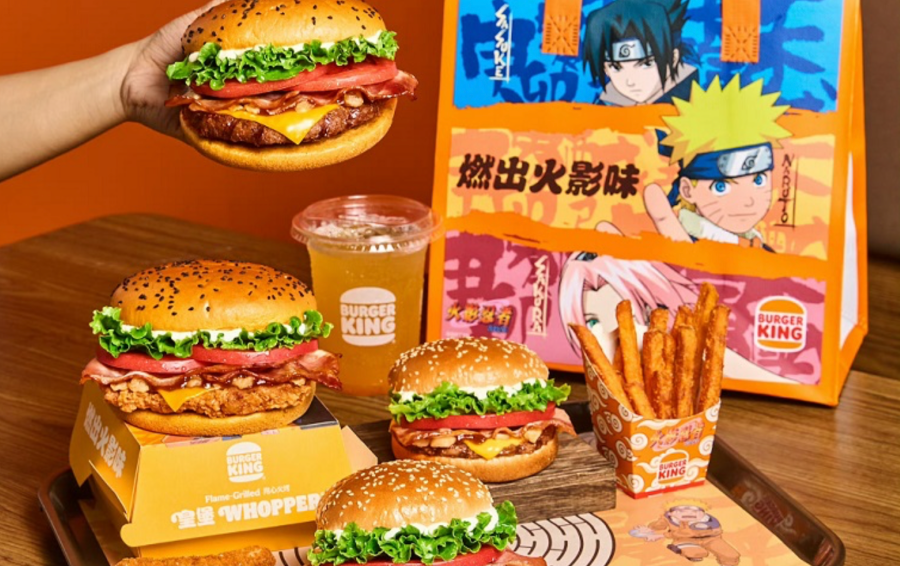
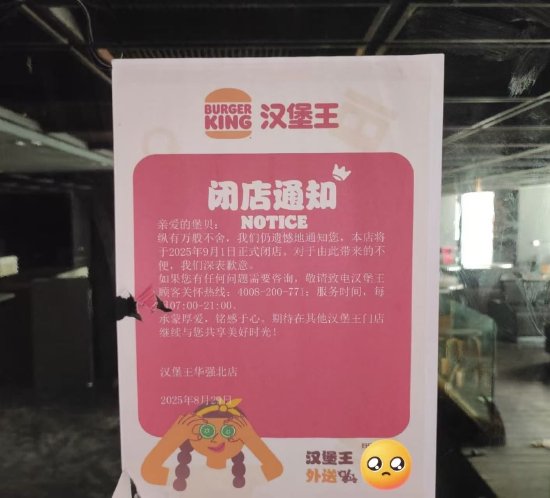
深圳又一家汉堡王门店关闭 客服回应:经营策略调整
Xin Lang Cai Jing· 2025-09-15 10:57
Core Viewpoint - Burger King's closure of its Shenzhen Huaqiangbei store is part of a broader strategic adjustment by the company, reflecting ongoing challenges in the Chinese market [2] Company Performance - As of June 30, 2023, Burger King's store count in China decreased from 1,474 at the end of 2022 to 1,367, resulting in a net reduction of 107 stores within six months [2] - As of August 15, 2023, the number of operating Burger King stores in China was reported to be 1,415 [2] Strategic Changes - In early 2023, Restaurant Brands International (RBI) initiated a strategic overhaul for Burger King China, appointing a local team to lead the transformation [2] - Key appointments include Chen Wenrui as the new Chief Executive Officer and Chief Supply Chain Officer, and Xue Bing as the Chief Transformation Officer [2] - Burger King China plans to open 40 to 60 new restaurants by 2025, focusing on core business districts in first and second-tier cities [2]
汉堡王中国推进寻找本土合作伙伴,关闭运营不佳门店同步开新店
Xin Jing Bao· 2025-09-11 07:04
Core Insights - Burger King China is undergoing a significant transformation with a focus on local leadership and operational efficiency, aiming to enhance its market presence in first and second-tier cities [1][2] Group 1: Management and Strategy - The company has appointed four experienced executives to its core management team to drive local operations, including a new COO and CIO with extensive backgrounds in the restaurant industry [1] - Morgan Stanley is assisting RBI Group in finding new local franchise partners to strengthen its market position [1] Group 2: Expansion Plans - Burger King China plans to open 40-60 new stores while closing underperforming locations as part of its network optimization strategy [1][2] - The company aims to enhance its brand presence in key commercial areas of major cities [2] Group 3: Financial Performance - In the second quarter, Burger King China reported better-than-expected performance, achieving positive same-store sales growth after several quarters of decline [2] - Since acquiring full ownership of Burger King China, RBI Group has invested over $100 million to upgrade operations and strengthen the local leadership team [2]