
沙赫德无人机

Search documents
伊朗外长:美仿制无人机嫁祸伊朗 将成立调查委员会澄清真相
财联社· 2026-03-15 10:26
Core Viewpoint - The article discusses Iran's conditions for ending the ongoing conflict, emphasizing security guarantees and compensation for war damages [1][2]. Group 1: Iran's Conditions for Ending the War - Iran's Foreign Minister, Zarif, stated two core conditions for ending the war: obtaining security guarantees against further attacks and receiving compensation for war damages [1]. - Zarif emphasized that Iran's military actions are solely directed at Israeli and U.S. targets in the region, asserting that civilian areas in neighboring countries are not targeted [1]. Group 2: Accusations Against the U.S. - Zarif accused the U.S. of using a drone, named "Lucas," which resembles Iran's "Shahed" drone, to attack non-military targets in Arab countries, aiming to frame Iran and damage its relations with neighboring states [1]. - Iran is prepared to establish a joint investigation committee with regional countries to verify the facts regarding the attacked targets [1]. Group 3: Warnings of Retaliation - Zarif issued a stern warning that if Iran's energy facilities are attacked, Iran will retaliate against U.S. corporate facilities in the region [2].


英国金融时报:伊朗的反击令美国措手不及
美股IPO· 2026-03-14 05:01
Core Viewpoint - Iran has effectively targeted major objectives in the Gulf region with limited resources, but its offensive actions appear to be diminishing over time [1]. Group 1: Iranian Military Capabilities - Iranian commanders have warned of a strong and escalating response to their enemies, indicating that U.S. military bases in the region would be targeted [3]. - The Iranian Revolutionary Guard has conducted naval exercises in the Strait of Hormuz, signaling readiness to block this critical waterway [3]. - Iran has launched over 3,000 missiles and drones at U.S. allies in the Gulf, targeting various strategic locations including embassies, military bases, and energy facilities [4][5]. Group 2: Intelligence and Tactical Advantages - Iran possesses precise intelligence on U.S. military locations and operations, allowing for effective deployment of short-range missiles and drones [4]. - The availability of commercial satellite imagery has been reduced, but Iran continues to leverage intelligence from Russia and its own capabilities [5]. - The Iranian military has adapted tactics learned from previous conflicts, including the recent war with Israel, to enhance its operational effectiveness [5][12]. Group 3: U.S. and Allied Responses - The U.S. has deployed its largest military presence in the Middle East since the 2003 invasion of Iraq, including two aircraft carrier strike groups and additional air defense systems [5]. - Despite the deployment, U.S. defense systems are reportedly not optimized to counter the specific threats posed by Iranian drones and missiles [5]. - Analysts express concerns that the reliance on expensive interceptors may deplete the stockpiles of Gulf allies during prolonged engagements [17]. Group 4: Current Conflict Dynamics - The frequency and intensity of Iranian missile and drone attacks on Israel have significantly decreased since the onset of the conflict, raising questions about Iran's sustained offensive capabilities [19]. - Some of Iran's advanced missile and drone technologies have yet to be deployed in the current conflict, indicating potential future threats [19]. - U.S. intelligence and military agencies had previously warned of the complexities of the conflict and the risks to U.S. personnel and bases [20].
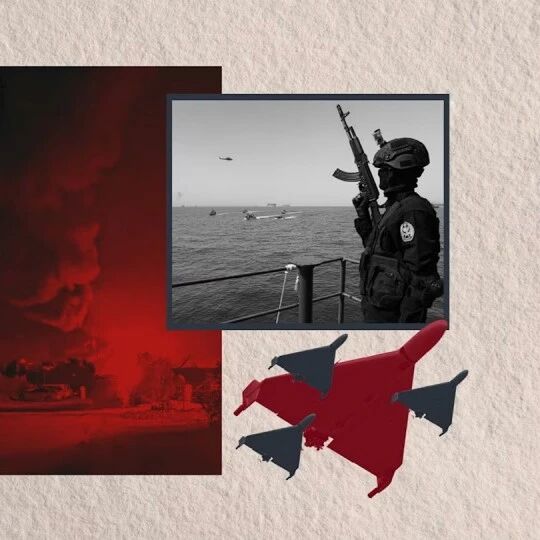
一夜防空烧掉8000万!欧洲援乌已显疲态,还要继续砸钱打远程消耗战?
Sou Hu Cai Jing· 2026-02-20 12:08
Core Viewpoint - The article discusses the implications of Danish Prime Minister Frederiksen's call for Western countries to lift restrictions on Ukraine's use of long-range missiles against Russia, highlighting the potential risks and strategic miscalculations involved in such a move [1][8]. Military Strategy - The article emphasizes that military success is not determined by who strikes first, but by who can withstand the final blow, noting Ukraine's resilience despite extensive Russian attacks [3]. - It points out that even if Ukraine were to acquire hundreds of long-range missiles, the impact on Russia, which has a vast territory and military capabilities, would be minimal [3][9]. - The cost of offensive operations for Ukraine is highlighted, with a single night of air defense costing around $8 million, indicating the financial strain of a prolonged conflict [9][11]. European Security Dynamics - The article critiques Europe's reliance on the U.S. for security, suggesting that Europe is attempting to test Russia's limits without fully understanding the risks involved [6][12]. - It notes the internal divisions within NATO, where Eastern European countries may favor aggressive actions against Russia, while Western European nations are more cautious [11][12]. - The article warns that escalating military actions could lead to unintended consequences, potentially destabilizing the entire European security framework [5][12]. Economic Considerations - The financial burden of military support for Ukraine is becoming increasingly unsustainable for European nations, with rising domestic costs leading to public discontent [11][12]. - The article argues that Europe lacks the military resources to engage in a comprehensive long-range conflict against Russia, as it struggles to replenish even conventional ammunition stocks [9][11]. Strategic Misalignment - The article suggests that Europe is experiencing a strategic identity crisis, wanting to maintain a rules-based international order while being dependent on Russian energy [8][12]. - It criticizes the emotional decision-making in European politics, where calls for aggressive military action are seen as effective without considering the broader implications [8][14]. - The article concludes that Europe needs to reassess its approach to security, advocating for negotiations and sustainable solutions rather than escalating military tensions [12][14].

俄军精准打击核电变电站,欧洲核安全亮红灯
Sou Hu Cai Jing· 2025-11-15 07:45
Core Points - Russia launched a large-scale airstrike targeting Ukraine's energy system, focusing on critical substations that supply power to nuclear power plants, posing a nuclear safety risk [1][3] - The attack resulted in a 40% drop in Ukraine's power grid load, leading to complete power outages in Kyiv, affecting 12 million residents [5] - Ukraine's response included a call for the International Atomic Energy Agency (IAEA) to investigate the attacks, highlighting the deliberate nature of the strikes and their implications for European nuclear safety [5] Group 1 - The airstrike involved over 400 drones and dozens of missiles aimed at substations rather than frontline combat positions [1] - The cooling systems of nuclear reactors depend on stable power supply; a disruption could lead to overheating and potential nuclear disasters [3] - The attack utilized cost-effective drones and missiles, resulting in significant economic damage estimated at $30 billion from a $5 million investment [5] Group 2 - The timing of the attack before a cold wave indicates a strategic intent to cripple Ukraine's energy infrastructure [5] - The strikes affected not only Ukraine but also disrupted power supplies in neighboring countries like Romania and Slovakia, causing instability across Europe [5] - Ukraine's foreign minister publicly condemned Russia's actions, emphasizing the need for international oversight and monitoring of nuclear facilities [5]
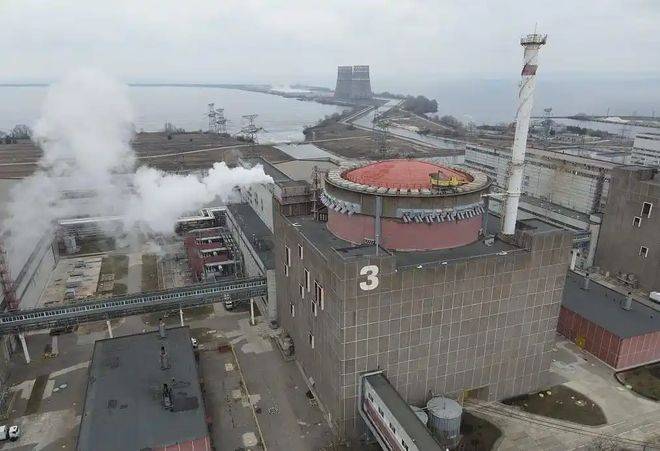
波兰正式请求启动“北约第四条款”!俄坚称无任何攻击波兰计划
Jin Shi Shu Ju· 2025-09-10 14:25
Core Points - Poland's Prime Minister Tusk has announced the intention to invoke NATO's Article 4 following alleged incursions of Russian drones into Polish airspace, labeling it an "act of aggression" [1] - A total of 19 drones reportedly violated Polish airspace, with some being shot down, prompting NATO's internal consultation process which could lead to collective action [1][2] - The incident is seen as a significant escalation in the ongoing Russia-Ukraine conflict, raising concerns about a potential direct confrontation between Russia and NATO [2] Summary by Sections NATO Article 4 Invocation - Tusk's request to activate NATO's Article 4 indicates a serious threat to Poland's territorial integrity and security, which could lead to collective defense discussions among NATO members [1] - The invocation of Article 4 has occurred seven times previously, including during the onset of the Russia-Ukraine conflict in 2022 [1] Incident Details - The drones reportedly threatened a Polish city located approximately 40 miles from the Ukrainian border, marking a notable scale of incursion [2] - NATO's response included the activation of Germany's Patriot missile system and the deployment of an Italian AWACS aircraft, highlighting the alliance's readiness to address threats [1][2] Russian Response - Russia's Defense Ministry stated it does not intend to target Poland and claimed that the drones that entered Polish airspace were not launched from Russian territory [2] - Russian officials suggested that the drones were likely from Ukraine, as Poland has not provided evidence linking the drones to Russia [2][3] Ukrainian Perspective - Ukraine has been actively promoting the narrative of the threat posed by Russian drones, seeking to encourage NATO's direct involvement in the conflict [4] - Ukrainian President Zelensky noted the presence of eight drones and emphasized the need for a more integrated NATO air defense system to protect against such incursions [5] Political Reactions - U.S. lawmakers, particularly hawkish members, have called for immediate sanctions against Russia in response to the drone incursions, framing it as an act of war [5]
乌克兰总统泽连斯基:今晚,俄罗斯对乌克兰发动了另一次大规模袭击,这次的目标是基辅。数以百计的“沙赫德”无人机和导弹。
news flash· 2025-07-31 10:10
Core Points - Ukrainian President Zelensky reported a large-scale attack by Russia targeting Kyiv, involving hundreds of "Shahed" drones and missiles [1] Group 1 - The attack represents a significant escalation in hostilities between Russia and Ukraine [1] - The use of "Shahed" drones indicates a reliance on unmanned aerial vehicles in modern warfare [1] - The focus on Kyiv suggests strategic targeting of the Ukrainian capital, which may have broader implications for the conflict [1]
特朗普:“必须”向乌克兰运送更多武器
Jin Shi Shu Ju· 2025-07-08 02:08
Group 1 - The core viewpoint is that the U.S. will provide more weapons to Ukraine, primarily defensive ones, in response to the ongoing conflict and heavy losses faced by Ukrainian forces [2][3] - Trump emphasized the need for Ukraine to protect itself and mentioned that the U.S. must ensure its own military stockpiles are sufficient while supporting Ukraine [2][4] - The Pentagon's recent pause in weapon shipments to Ukraine was due to a review of U.S. military stockpiles and the need to assess potential threats, which has raised concerns among Ukraine's supporters [4][5] Group 2 - The halted military supplies include critical air defense systems such as the Patriot missile system and NASAMS, which are urgently needed by Ukraine to counter Russian attacks [4] - There is significant tension between Ukraine's demand for air defense weapons and the U.S. military's procurement capabilities, complicating the situation for U.S. defense officials [4] - Since the onset of the Russia-Ukraine conflict in February 2022, the U.S. has provided hundreds of billions of dollars in military aid to Ukraine, despite some skepticism from Trump's allies regarding continued support [5]
德国方面表示,俄罗斯正在自行生产沙赫德无人机,不再需要伊朗的支持,以色列与伊朗的冲突对俄乌冲突没有军事影响。
news flash· 2025-06-19 17:40
Core Insights - Germany indicates that Russia is now independently producing Shahed drones and no longer requires support from Iran [1] - The conflict between Israel and Iran has no military impact on the Russia-Ukraine conflict [1] Summary by Categories Industry Implications - The shift in Russia's capability to produce drones domestically suggests a potential increase in its military self-sufficiency, which could alter the dynamics of the ongoing conflict [1] - The lack of military impact from the Israel-Iran conflict on the Russia-Ukraine situation may indicate a more stable front for Russia, allowing it to focus resources on its operations in Ukraine [1]
乌克兰无人机突袭俄导弹工厂,俄连夜空袭报复波及波兰
Jin Shi Shu Ju· 2025-06-09 10:06
Group 1 - Ukraine has targeted a Russian electronic manufacturing facility involved in missile production, specifically for the Iskander missile system and Shahed drone navigation systems [1][2] - The facility, known as VNIIR, is located in the Chuvash Republic and has been temporarily shut down for employee safety [1] - Russia's defense ministry reported the destruction of 49 Ukrainian drones during a large-scale retaliatory airstrike against Ukraine, which included the launch of 499 drones and missiles [2] Group 2 - The ongoing conflict has seen Ukraine focusing on Russian military production facilities as the war enters its fourth year, with no agreement on ceasefire or peace negotiations from Russia [3] - Poland has increased its military readiness in response to the heightened threat from Russian airstrikes, indicating the regional implications of the conflict [2]