空中加油机

Search documents
美国政府消息人士:未来几周内爆发战争的可能性高达90%
Xin Lang Cai Jing· 2026-02-20 02:09
Core Viewpoint - The U.S. military is preparing for a potential large-scale bombing operation against Iran, with an increase in fighter jets and support aircraft being deployed to the Middle East [1][2]. Group 1: Military Deployment - A significant number of U.S. fighter jets and aerial refueling aircraft have been observed moving eastward, indicating preparations for military action [2]. - Over 50 U.S. fighter jets, including F-35s and F-16s, were deployed to the region within 24 hours as of the evening of February 17 [2]. - The deployment includes heavy bombers such as B-2 stealth bombers and potentially B-52 bombers, which were previously used in attacks on Iranian nuclear facilities [3]. Group 2: Strategic Intent - Analysts suggest that the increase in military presence may be aimed at clearing the way for heavy bombers to strike key targets in Iran [2]. - The U.S. Vice President indicated that Iran has not recognized the "red lines" set by President Trump, leaving the intent of the military buildup uncertain [6]. - Experts believe that if Iran retaliates, the U.S. has additional air and ground-based combat aircraft ready for defensive operations [7]. Group 3: Timing and Predictions - A U.S. government source stated that the likelihood of war breaking out in the coming weeks is as high as 90% [2]. - An Israeli former intelligence chief predicted that military action could occur within days [2][7]. - The military buildup follows the second round of indirect negotiations between the U.S. and Iran held in Geneva on February 17 [5].
美军战斗机正飞往中东!伊朗:国防部队进入全面战备状态 俄罗斯警告美国:后果严重
Hua Xia Shi Bao· 2026-02-19 14:45
Group 1 - The core viewpoint of the articles indicates that the U.S. military is preparing for a potential large-scale bombing operation against Iran, with significant deployments of fighter jets and support aircraft to the Middle East [1][3][8] - Over 50 U.S. fighter jets, including F-35s and F-16s, have been deployed to the Gulf region within 24 hours, suggesting preparations for a military action against Iran [3][5] - Analysts predict that heavy bombers, such as B-2 and B-52, may be used for significant strikes if the U.S. decides to proceed with military action, indicating a potential for sustained military operations lasting several weeks [6][8] Group 2 - The U.S. military buildup follows indirect negotiations between the U.S. and Iran, with uncertainty about whether the troop increase is meant to threaten Iran or compel concessions in nuclear talks [8] - Iranian officials have stated that their defense forces are on full alert, indicating a readiness for potential conflict, and emphasizing the importance of both negotiation and military preparedness [8] - Russia has warned that any new U.S. strikes against Iran could have severe consequences, highlighting the risks associated with military actions in the region [9] Group 3 - The International Atomic Energy Agency (IAEA) has acknowledged progress in U.S.-Iran talks but warns that time is running out for a resolution, indicating the urgency of the situation [10] - The IAEA's director general noted that while there is a willingness to negotiate, the complexity of the discussions poses challenges for reaching an agreement [10]

突发!大批美军战机飞往中东,或为大规模轰炸做准备
Xin Lang Cai Jing· 2026-02-19 07:37
Group 1 - The core viewpoint of the article indicates that the U.S. military is preparing for a potential large-scale bombing operation against Iran, with significant troop and aircraft deployments to the Middle East [1][3][7] - Over 50 U.S. fighter jets, including F-35s and F-16s, have been deployed to the Gulf region within 24 hours, alongside numerous aerial refueling aircraft [3][5] - Analysts predict that the U.S. military buildup, including the approaching "Ford" aircraft carrier strike group and the already deployed "Lincoln" carrier in the Arabian Sea, suggests President Trump is preparing for a sustained military action against Iran [3][5] Group 2 - The role of F-16s and F-35s is to clear the way for heavy bombers to strike primary targets, effectively suppressing enemy air defense systems [5] - Heavy bombers, such as B-2 stealth bombers and possibly B-52s, could be deployed directly from the U.S. mainland or bases in Diego Garcia and Okinawa to target Iran [5] - U.S. military officials have indicated that the military presence allows for a sustained operation against Iran, extending beyond just nuclear-related targets [5][8] Group 3 - The military buildup follows the second round of indirect talks between the U.S. and Iran, with U.S. officials expressing uncertainty about whether the troop increase is meant to threaten Iran or compel concessions in nuclear negotiations [7] - Reports suggest that the U.S. military is prepared for a potential military strike against Iran as early as the upcoming weekend, although President Trump has not made a final decision [7][8] - Iranian officials have stated that their military is in full readiness, indicating a dual strategy of negotiation and preparation for potential conflict [7][8]
美军战斗机正飞往中东
Xin Lang Cai Jing· 2026-02-19 06:35
Group 1 - The core viewpoint of the articles indicates that the U.S. military is preparing for a potential large-scale bombing operation against Iran, with significant troop and aircraft deployments to the Middle East [1][4][8] - Over 50 U.S. fighter jets, including F-35 and F-16, have been deployed to the Gulf region within 24 hours, alongside numerous aerial refueling aircraft, indicating a substantial military buildup [4][6] - Analysts suggest that the deployment of these fighter jets is intended to clear the way for heavy bombers to strike key targets in Iran, with the possibility of B-2 and B-52 bombers being involved in the operation [6][9] Group 2 - The military buildup follows the second round of indirect talks between the U.S. and Iran, with indications that the U.S. may be using this show of force to pressure Iran in nuclear negotiations [8] - Reports suggest that the U.S. military is prepared for a potential military strike against Iran as early as the upcoming weekend, although a final decision from President Trump has not yet been made [8][9] - If military action occurs, it is expected to be a large-scale operation lasting several weeks, potentially involving joint actions with Israel, posing a significant threat to Iran and impacting the entire region [9]
大批战机出动,美国或对伊朗“踹门”
Xin Lang Cai Jing· 2026-02-19 04:58
Core Viewpoint - The U.S. military is preparing for a potential large-scale bombing operation against Iran, with an increase in fighter jets and support aircraft being deployed to the Middle East [1][10]. Group 1: Military Deployment - A significant number of U.S. fighter jets and support aircraft, including F-35 and F-16, have been observed moving eastward, indicating preparations for military action [11][12]. - Over 50 U.S. fighter jets were deployed to the region within 24 hours as of the evening of February 17 [11]. - The deployment includes aircraft that can be launched from the U.S. mainland, Diego Garcia in the Indian Ocean, or bases in Okinawa [13]. Group 2: Strategic Intent - Analysts predict that the deployment is aimed at clearing the way for heavy bombers to strike key targets in Iran, with the possibility of a sustained military operation [11][15]. - The U.S. government has indicated a 90% likelihood of war breaking out in the coming weeks, with an Israeli intelligence official suggesting that strikes could occur within days [11][16]. - The operation may involve heavy bombers such as the B-2 stealth bomber and potentially B-52 bombers, which were previously used in attacks on Iranian nuclear facilities [12]. Group 3: Political Context - The military buildup follows the second round of indirect negotiations between the U.S. and Iran held in Geneva on February 17 [14]. - U.S. Vice President Pence stated that the Iranian regime has not recognized the "red lines" set by President Trump, leaving the intent of the military buildup uncertain—whether it is to threaten Iran or compel concessions in nuclear negotiations [15].
央视:美军演练上百架F35突袭
Xin Lang Cai Jing· 2026-01-17 09:28
Core Viewpoint - The U.S. military has confirmed the frequent deployment of F-35A fighter jet squadrons to Japan, indicating a strategic focus on air combat readiness in the Western Pacific region [1] Group 1: Military Deployment - Two squadrons of F-35A fighter jets have arrived at Kadena Air Base in Japan [1] - The F-35A jets are conducting joint exercises with aerial refueling aircraft, early warning aircraft, and F-35B jets [1] Group 2: Strategic Implications - Military commentator Wei Dongxu suggests that the F-35A's operational strategy is to engage in stealthy attacks against major strategic rivals in the Western Pacific [1] - The deployment of F-35s in Japan indicates that the U.S. military could potentially mobilize over a hundred F-35 aircraft in a single operation in the Western Pacific frontline [1]
特朗普:认定委内瑞拉现政府是“外国恐怖组织”!他已下令封锁所有进出委内瑞拉受制裁油轮,委国防部长:绝无投降的可能
Mei Ri Jing Ji Xin Wen· 2025-12-17 03:01
Group 1 - The U.S. President Trump has ordered a complete blockade of all sanctioned oil tankers entering and leaving Venezuela, labeling the current Venezuelan government as a "foreign terrorist organization" [1] - The U.S. is increasing its military presence in the Caribbean near Venezuela, deploying F-35A fighter jets and EA-18G Growler electronic warfare aircraft to Puerto Rico, along with aerial refueling aircraft to the Dominican Republic [3][5] - The deployment of EA-18G Growler aircraft indicates a serious intent for military action, as these aircraft are designed to disrupt enemy radar and prepare for further airstrikes against Venezuelan defense systems [5] Group 2 - Venezuelan Defense Minister Lopez stated that surrender is not an option for Venezuela, emphasizing the nation's readiness to defend itself against U.S. actions [7] - Venezuelan Vice President and Oil Minister Rodriguez claimed that the U.S. blockade of sanctioned oil tankers violates international law [7]
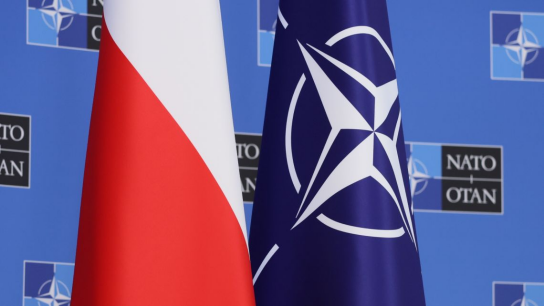
俄否认波兰的“无人机入侵指控”
Huan Qiu Shi Bao· 2025-09-10 22:45
Core Points - Poland's armed forces reported the shooting down of drones that violated its airspace during Russian strikes in Ukraine, marking an unprecedented incursion and being labeled an act of aggression [1] - This incident is noted as the first known instance of NATO member states engaging in fire during the Russia-Ukraine conflict [1] - European leaders, including the President of the European Commission, expressed full support for Poland, indicating that Russia's actions are reckless and unprecedented [1] Summary by Sections Incident Overview - Poland utilized its national and NATO air defense systems to intercept and shoot down drones [1] - The Russian Defense Ministry denied any plans to attack Poland and expressed willingness to engage in dialogue regarding the incident [2] Reactions and Implications - European officials suggested that this incident could be a sign of Russia escalating military actions, potentially leading to increased sanctions against Russia [1] - U.S. Secretary of State was briefed on the situation, indicating international concern and potential diplomatic repercussions [1] Russian Response - The Russian government dismissed Poland's accusations as baseless and claimed there was no evidence linking the drones to Russia [2] - Russia's military observers suggested that the incident could be used by Europe to pressure the U.S. for increased sanctions against Russia [2]
波兰正式请求启动“北约第四条款”!俄坚称无任何攻击波兰计划
Jin Shi Shu Ju· 2025-09-10 14:25
Core Points - Poland's Prime Minister Tusk has announced the intention to invoke NATO's Article 4 following alleged incursions of Russian drones into Polish airspace, labeling it an "act of aggression" [1] - A total of 19 drones reportedly violated Polish airspace, with some being shot down, prompting NATO's internal consultation process which could lead to collective action [1][2] - The incident is seen as a significant escalation in the ongoing Russia-Ukraine conflict, raising concerns about a potential direct confrontation between Russia and NATO [2] Summary by Sections NATO Article 4 Invocation - Tusk's request to activate NATO's Article 4 indicates a serious threat to Poland's territorial integrity and security, which could lead to collective defense discussions among NATO members [1] - The invocation of Article 4 has occurred seven times previously, including during the onset of the Russia-Ukraine conflict in 2022 [1] Incident Details - The drones reportedly threatened a Polish city located approximately 40 miles from the Ukrainian border, marking a notable scale of incursion [2] - NATO's response included the activation of Germany's Patriot missile system and the deployment of an Italian AWACS aircraft, highlighting the alliance's readiness to address threats [1][2] Russian Response - Russia's Defense Ministry stated it does not intend to target Poland and claimed that the drones that entered Polish airspace were not launched from Russian territory [2] - Russian officials suggested that the drones were likely from Ukraine, as Poland has not provided evidence linking the drones to Russia [2][3] Ukrainian Perspective - Ukraine has been actively promoting the narrative of the threat posed by Russian drones, seeking to encourage NATO's direct involvement in the conflict [4] - Ukrainian President Zelensky noted the presence of eight drones and emphasized the need for a more integrated NATO air defense system to protect against such incursions [5] Political Reactions - U.S. lawmakers, particularly hawkish members, have called for immediate sanctions against Russia in response to the drone incursions, framing it as an act of war [5]
外媒爆:北约未将无人机侵犯波兰领空视为袭击行为
Huan Qiu Wang· 2025-09-10 09:06
Group 1 - NATO does not consider the recent drone incursion into Polish airspace as an act of aggression, indicating that it may involve 6 to 10 Russian drones [1] - This incident marks the first time NATO aircraft have responded to a potential threat within allied airspace, with the Patriot air defense system detecting the drones but not intercepting them [3] - Polish military confirmed that during Russian strikes on targets in Ukraine, Polish airspace has been repeatedly violated by drones, leading to emergency actions to shoot them down [3] Group 2 - Polish Prime Minister Tusk confirmed on social media that military forces used weapons against the targets violating Polish airspace [3] - As of the report's publication, there has been no response from the Russian side regarding the drone incursions [4]