
沪深港通

Search documents
国家外汇管理局肖胜:研究优化合格境外机构投资者(QFII)跨境资金政策,提升外资投资境内资本市场便利化程度
Sou Hu Cai Jing· 2026-02-11 04:00
Core Viewpoint - The article emphasizes the focus on enhancing the quality of capital account openness in China by 2026, aligning with the "14th Five-Year Plan" for higher-level openness in various investment sectors [1] Group 1: Capital Account Management - The State Administration of Foreign Exchange (SAFE) aims to improve the quality of capital account management by promoting orderly advancements in direct investment, cross-border financing, and securities investment [1] - There will be a focus on enhancing the facilitation of cross-border investment and financing policies to effectively support the development of the real economy [1] Group 2: Financial Market Openness - The article outlines plans for orderly promotion of bilateral financial market openness, including optimizing the Qualified Foreign Institutional Investor (QFII) cross-border capital policies to enhance foreign investment convenience in domestic capital markets [1] - The SAFE will continue to issue Qualified Domestic Institutional Investor (QDII) investment quotas to meet the reasonable demand of domestic investors for overseas securities investments [1] Group 3: Connectivity Mechanisms - The article mentions collaboration with relevant departments to advance the construction of interconnectivity mechanisms such as the Shanghai-Hong Kong Stock Connect and Bond Connect, aiming to continuously improve the level of bilateral financial market openness [1]
中国金融改革开放2025年度报告
Sou Hu Cai Jing· 2026-02-10 02:45
Core Insights - The report highlights that 2025 marks a critical year for China's financial reform and opening-up, transitioning from market access to institutional openness, focusing on rules and regulations, and aiming for high-quality development in the financial sector [9][10]. Market Development - The capital market's two-way opening continues to deepen, with significant improvements in the Shanghai-Hong Kong Stock Connect and Bond Connect, leading to increased trading activity and market stability [10][18]. - The internationalization of the Renminbi (RMB) is accelerating, with a global cross-border payment system and rapid development of the digital RMB, creating a dual-driven new pattern [10][33]. - The bond market has seen substantial growth, with the "Bond Connect" mechanism enhancing cross-border investment and risk management capabilities, making Chinese bonds a core option for global asset allocation [23][27]. Industry Development - Foreign financial institutions are accelerating their entry into the Chinese market, focusing on wealth management, green finance, and technology insurance, while domestic institutions are expanding internationally, particularly in Belt and Road Initiative countries [10][52]. - The insurance sector is witnessing increased foreign participation, with foreign insurance companies' total assets reaching 3.32 trillion RMB, a 12.1% increase from the previous year [57]. Institutional Introduction - The introduction of foreign institutions is shifting from mere expansion to focusing on high-net-worth wealth management and cross-border finance, indicating a more strategic approach [72]. - As of mid-2025, there are 42 foreign banks operating in China, with a strong emphasis on capital strength and international experience, contributing significantly to the local banking landscape [47][50]. Business Development - The Qualified Foreign Institutional Investor (QFII) and Qualified Domestic Institutional Investor (QDII) systems are continuously optimized, expanding investment channels and quotas, which enhances cross-border financial integration [11][52]. - The establishment of cross-border financial services in strategic regions like the Yangtze River Delta and the Guangdong-Hong Kong-Macao Greater Bay Area is progressing, creating a multi-layered regional opening pattern [11][12]. Regulatory Reform - Financial regulatory reforms are being implemented, including the optimization of the qualified foreign investor system and the introduction of new policies to enhance the financial regulatory framework [11][12]. - The integration of finance and technology is deepening, forming a comprehensive financial support system for technological innovation throughout its lifecycle [11][12]. Future Outlook - Looking ahead to 2026, the focus will be on deepening institutional openness, aligning rules and standards with international practices, and promoting a more competitive and resilient modern financial system [12].


中国金融改革开放2025年度报告-安永
Sou Hu Cai Jing· 2026-02-09 03:23
Group 1: Core Insights - 2025 marks the concluding year of the "14th Five-Year Plan," with China's financial reform and opening-up entering a deep institutional phase, focusing on systemic deepening and high-quality development [1][10][15] - The integration of finance and technology is emphasized, providing robust financial support for cultivating new productive forces [1][10] Group 2: Market Development - The capital market's two-way opening continues to deepen, with significant growth in trading volumes for the Shanghai-Hong Kong Stock Connect and Bond Connect, and Hong Kong's new stock financing returning to the top globally in 2025 [1][10][19] - Policies to encourage long-term capital inflows have been implemented, clarifying the proportion and assessment mechanisms for public offerings and insurance funds entering the market, optimizing the capital market ecosystem [1][10][22] Group 3: Industry Development - Foreign banks, securities, and insurance institutions are accelerating their presence in China, focusing on wealth management, green finance, and technology insurance, with foreign insurance companies' total assets growing by 12.1% year-on-year [2][62] - Domestic financial institutions are also actively expanding overseas, particularly in Belt and Road countries and emerging markets, with the asset management industry reaching 179.33 trillion yuan, setting historical highs for both public and private funds [2][73] Group 4: Regulatory Reforms - Regulatory reforms are centered around five major areas, with multiple departments issuing policies to clarify development goals, enhancing the inclusiveness of the Sci-Tech Innovation Board and optimizing the Qualified Foreign Institutional Investor (QFII) system [3][10][15] - The establishment of a modern financial system that matches economic strength is emphasized, with a focus on risk prevention and control [3][10] Group 5: Regional Opening - Key regions such as the Yangtze River Delta, Guangdong-Hong Kong-Macao Greater Bay Area, and Hainan Free Trade Port are becoming core areas for financial opening, with various financial reform policies being implemented [2][10][12] Group 6: Financial Empowerment of Technological Innovation - The banking sector is increasing credit support for technological innovation, with the re-loan quota for innovation raised to 800 billion yuan, and the number of listed companies on the Sci-Tech Innovation Board reaching 600 with a total market value exceeding 10 trillion yuan [3][10][12]

李家超、邹澜等重磅发声
Sou Hu Cai Jing· 2026-01-27 01:25
Group 1: Hong Kong as an International Financial Center - Hong Kong is leveraging its institutional advantages such as rule of law, judicial independence, capital mobility, low tax rates, and market transparency to become a preferred location for global businesses [3][5] - The number of startups in Hong Kong has surpassed 5,200, marking an 11% year-on-year increase, indicating confidence in the local ecosystem [5] - The Hang Seng Index rose approximately 30% last year, with an average daily trading volume exceeding $32 billion [6] Group 2: Financial Market Developments - Hong Kong is projected to raise about $36 billion through IPOs in 2025, maintaining its position as the global leader in IPO fundraising [7] - The asset and wealth management sector in Hong Kong is expected to manage over $45 trillion by 2024, which is 11 times the local GDP [7] - Hong Kong processes about three-quarters of global offshore RMB payments and has the largest offshore RMB liquidity pool [7] Group 3: Initiatives to Strengthen Financial Position - Hong Kong plans to deepen market advantages by optimizing the main board listing system, promoting paperless trading, and exploring offshore bond futures [8] - The city aims to enhance its international gold trading market, increasing gold storage capacity to over 2,000 tons within three years [8] - Hong Kong is actively attracting more mainland companies to establish treasury centers, enhancing its role as a financial hub [8] Group 4: Support from the Central Bank - The People's Bank of China (PBOC) is committed to supporting Hong Kong's offshore RMB market, enhancing liquidity and facilitating cross-border transactions [9][13] - The bond market has seen significant growth, with over 800 foreign institutional investors participating through the Bond Connect, holding over 810 billion yuan in mainland bonds [11] - The PBOC plans to increase the scale of RMB business funding arrangements to 200 billion yuan to support Hong Kong's offshore market [13][14] Group 5: Global Economic Context - Hong Kong's role as a dual financing platform is emphasized, with over 400 companies queued for IPOs, many of which are from mainland technology and manufacturing sectors [18] - China achieved a 5% economic growth target last year, contributing approximately 30% to global GDP growth, positioning Hong Kong as a vital gateway for international trade [17][18] - Hong Kong is seen as a reliable partner in the global economic landscape, leveraging its common law system and currency stability to attract international investments [18]
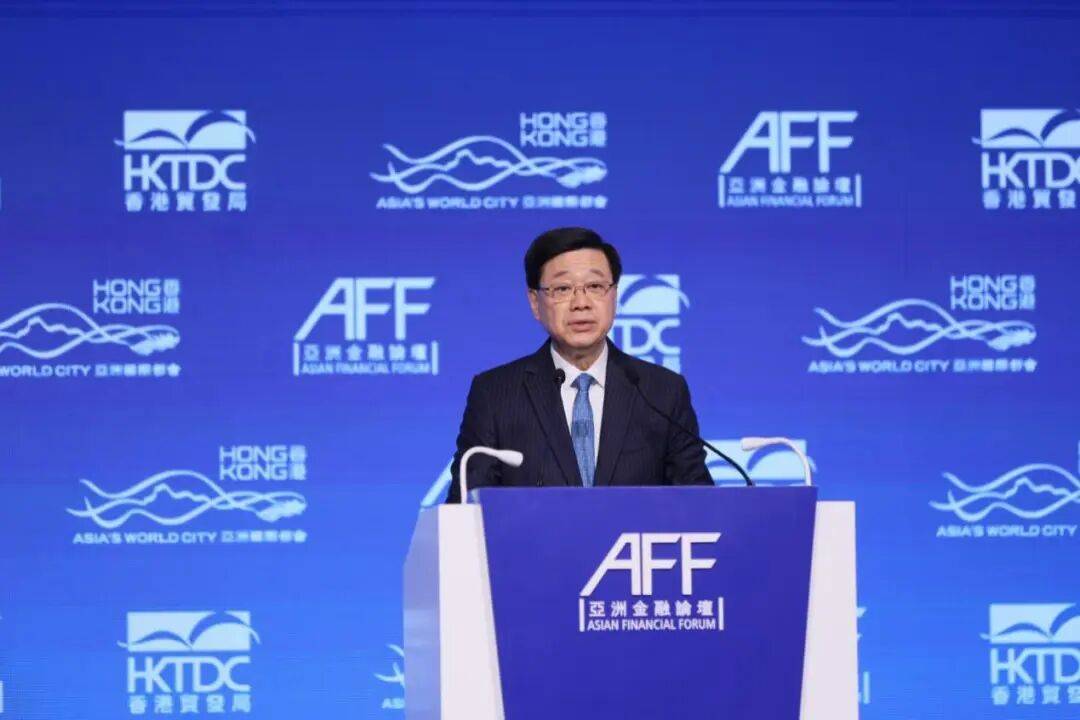
中国人民银行副行长邹澜:深化互联互通 坚定支持离岸人民币市场建设
Shang Hai Zheng Quan Bao· 2026-01-26 08:05
Core Viewpoint - The People's Bank of China (PBOC) emphasizes the rapid development and global influence of China's financial markets, highlighting the ongoing efforts to enhance the connectivity between mainland China and Hong Kong's financial markets [1][2]. Group 1: Bond Market Developments - The "Bond Connect" has significantly enhanced Hong Kong's role as a global financial hub, with over 800 foreign institutions investing in mainland China's bond market through the "Northbound" channel, holding a total of 810 billion RMB, which accounts for 25% of foreign holdings in Chinese bonds [1] - The total trading volume for 2025 is projected to reach 9.7 trillion RMB, representing over 60% of the market [1] - The "Southbound" channel has facilitated mainland investors in acquiring Hong Kong dollar, US dollar, and RMB-denominated bonds, with current holdings nearing 1.2 trillion RMB [1] Group 2: Stock Market Developments - The Shanghai-Hong Kong Stock Connect mechanism continues to expand, with mainland investors holding over 60 billion HKD in Hong Kong stocks through the "Hong Kong Stock Connect," while global investors hold over 2.5 trillion RMB in mainland stocks via the "Shanghai-Hong Kong Stock Connect" [1] Group 3: Currency and Liquidity Management - In February and October 2025, the PBOC and the Hong Kong Monetary Authority launched offshore and cross-border RMB repurchase agreements, with 34 foreign institutions engaging in offshore repurchase transactions totaling 119.1 billion RMB, and 46 new institutions participating in cross-border repurchase agreements amounting to 150.3 billion RMB, enhancing liquidity in the Hong Kong RMB market [2] - The "Swap Connect" has seen 87 foreign investors accessing the mainland derivatives market through Hong Kong, with a cumulative nominal principal of over 9.9 trillion RMB in interest rate swap transactions [2] Group 4: Gold Market Developments - The Shanghai Gold Exchange has established a delivery warehouse in Hong Kong and listed related contracts, enriching the offshore RMB asset allocation tools [2] - The PBOC supports the construction of Hong Kong's gold market, aiming to strengthen its role as an international gold trading center [4] Group 5: Future Initiatives - The PBOC plans to increase the RMB business funding arrangement scale for Hong Kong's offshore market from 100 billion to 200 billion RMB to enhance liquidity [3] - Continued efforts will be made to improve financial market connectivity and expand liquidity management and risk hedging tools for foreign investors [3] - The PBOC will also increase the annual issuance of offshore RMB government bonds to meet the demand for quality RMB asset allocation from foreign investors [3]
中国人民银行副行长邹澜:深化互联互通,坚定支持离岸人民币市场建设
Xin Lang Cai Jing· 2026-01-26 08:04
Core Insights - The People's Bank of China (PBOC) emphasizes the rapid and healthy development of China's financial market, maintaining a leading position globally in terms of market size, depth, and breadth, with increasing international influence [1][5] Bond Market - The "Bond Connect" significantly enhances Hong Kong's role as a global hub, with over 800 foreign institutions investing in the mainland bond market via the "Northbound" channel, holding a total of 810 billion RMB, which accounts for one-quarter of foreign holdings in Chinese bonds. The total trading volume for 2025 is projected to reach 9.7 trillion RMB, representing over 60% of the market [6] - The "Southbound" channel supports mainland investors in allocating HKD, USD, and RMB bonds, with current holdings nearing 1.2 trillion RMB [6] Stock Market - The Shanghai-Hong Kong Stock Connect continues to expand, with mainland investors holding over 6 trillion HKD in Hong Kong stocks through the Stock Connect, while global investors hold over 2.5 trillion RMB in mainland stocks [6] Currency and Liquidity Management - In 2025, the PBOC and the Hong Kong Monetary Authority (HKMA) will jointly launch offshore and cross-border RMB repurchase agreements, with 34 foreign institutions already participating in offshore repurchases totaling 119.1 billion RMB, and 46 new institutions involved in cross-border repurchases of 150.3 billion RMB, significantly enhancing liquidity and attractiveness in the Hong Kong RMB market [2][6] Derivatives Market - The "Swap Connect" is increasingly significant, with 87 foreign investors accessing the mainland derivatives market through Hong Kong, conducting interest rate swap transactions with a cumulative nominal principal exceeding 9.9 trillion RMB [2][6] Gold Market - The Shanghai Gold Exchange has established a delivery warehouse in Hong Kong and listed related contracts, enriching offshore RMB asset allocation tools. The RMB's role as the second-largest trade financing currency and third-largest payment currency globally is further solidified, ranking third in the IMF Special Drawing Rights (SDR) currency basket [7] Future Developments - The PBOC plans to increase the RMB business funding arrangement scale for Hong Kong's offshore market from 100 billion to 200 billion RMB to provide more liquidity support [3][7] - Continued efforts will be made to enhance financial market connectivity, improve liquidity management and risk hedging tools for foreign investors, and explore the listing of RMB government bond futures in Hong Kong [3][8] - The PBOC will also increase the supply of offshore RMB government bonds to meet foreign investors' demand for quality RMB assets and establish a market-making mechanism to enhance trading activity and RMB pricing capabilities [3][8] - Support for the construction of Hong Kong's gold market will be provided to strengthen its offshore RMB market functions and enhance connections with global gold markets [4][8]
中信集团副董事长张文武:中信集团将发挥产融并举综合优势,助力构建财富管理新生态
Cai Jing Wang· 2025-12-18 13:27
Core Insights - The conference "2026 Annual Dialogue and Global Wealth Management Forum" focuses on the theme "China's Resilience in Changing Circumstances" and is guided by the Tongzhou District People's Government of Beijing [1] - Zhang Wenwu, Vice Chairman and General Manager of CITIC Group, emphasized the shift in asset allocation from single savings to diversified financial assets due to the current low-interest-rate environment [1] - CITIC Group, with total assets exceeding 13 trillion yuan and asset management scale nearing 11 trillion yuan, is positioned as China's largest asset management and direct financing institution [1] Group 1: Service to the Real Economy - CITIC Group has served over 15,000 national-level specialized and innovative manufacturing enterprises, achieving a coverage rate of over 98%, with 1,081 enterprises in Beijing [2] - The company focuses on technology-driven initiatives, implementing the "Rock" project to enhance high-quality technological supply in fields like intelligent equipment and artificial intelligence [2] - The firm has established over 10 institutions for overseas asset management, actively participating in cross-border financial mechanisms, thus creating a comprehensive asset management ecosystem [2] Group 2: Development of New Productive Forces - CITIC Group aims to empower the development of new productive forces by deepening technology finance services and supporting strategic emerging industries through innovative financing tools [3] - The company is enhancing cross-border service efficiency by building global capital cooperation bridges and exploring new paths for collaborative investment banking and asset management [3] - CITIC Group is constructing a value co-creation ecosystem, transitioning wealth management from a single product sales model to a customer-centric, full lifecycle asset allocation service [3]

我国金融业迈向“制度型开放”阶段
Jin Rong Shi Bao· 2025-12-12 03:36
Core Viewpoint - The opening of the International Monetary Fund's Shanghai Center marks a significant milestone in China's participation in global financial governance, transitioning to a more institutionalized and normalized phase of financial governance [1] Group 1: Financial Market Connectivity - Financial authorities have been promoting high-level openness in the financial services sector and expanding market connectivity, optimizing mechanisms like Shanghai-Hong Kong Stock Connect and Bond Connect to facilitate investment [2] - As of August 2025, nearly 1,170 foreign investors from around 80 countries have entered China's bond market, with total bond holdings reaching approximately 3.9 trillion yuan, a nearly fourfold increase since the launch of Bond Connect [2] - The People's Bank of China and other regulatory bodies have announced support for foreign institutional investors to engage in bond repurchase transactions, enhancing the attractiveness of RMB-denominated bonds [2][3] Group 2: Cross-Border Payment Improvements - The launch of the Cross-Border Payment Link in June 2025 has significantly improved the efficiency of small cross-border remittances between mainland China and Hong Kong, processing over 700,000 transactions by July 2025 [3] - The removal of restrictions on Hong Kong and Macau financial institutions investing in mainland insurance assets has been implemented, further facilitating market access [3] Group 3: RMB Internationalization - The RMB has become the largest currency for cross-border payments in China and ranks among the top three currencies for trade financing globally, with its share in the International Monetary Fund's Special Drawing Rights basket ranking third [5][6] - As of September 2025, the RMB maintained its position as the fifth most traded currency globally, with a market share of 8.5%, reflecting a 1.5 percentage point increase from 2022 [6] Group 4: Foreign Exchange Reform and Opening Up - The State Administration of Foreign Exchange has introduced a series of measures to enhance cross-border trade and investment facilitation, including the issuance of $30.8 billion in Qualified Domestic Institutional Investor (QDII) investment quotas [7] - The foreign exchange management reform has expanded the coverage of facilitation policies to include over 23,000 quality clients, significantly improving the efficiency of foreign exchange transactions for businesses [8]
建设“全球资产精选超市”!广发证券“出海”成果丰硕
Sou Hu Cai Jing· 2025-12-12 00:50
Core Viewpoint - The article highlights the significant progress of Chinese securities firms, particularly Guangfa Securities, in expanding their international business and establishing a comprehensive cross-border service network, reflecting the evolving needs of Chinese enterprises going global [1][3]. Group 1: International Business Performance - Guangfa Securities reported a remarkable increase in international business revenue, doubling to 1.35 billion yuan in 2024, leading the growth among major securities firms [1]. - The firm has established a three-region linkage involving Hong Kong, London, and Singapore, enhancing its cross-border wealth management, investment banking, and derivatives services [1][3]. Group 2: Global Service Network - The company employs an "internal growth + external expansion" strategy to create a cross-border service network that connects Hong Kong, Southeast Asia, and Europe [3]. - Guangfa Securities has positioned Hong Kong as a strategic hub, with its paid-in capital reaching 10.337 billion HKD by early 2025, making it the second-largest among Chinese securities firms [3]. Group 3: Wealth Management Solutions - To address the rising demand for global asset allocation, Guangfa Securities is building a "global asset selection supermarket," leveraging its research capabilities and various interconnectivity mechanisms [4]. - The firm has established a specialized asset allocation research team of over 50 professionals to identify investment opportunities across major global markets [4]. Group 4: Institutional Services - As one of the first primary dealers in the domestic OTC derivatives market, Guangfa Securities enhances its product creation and trading capabilities to offer global asset allocation and risk management solutions to institutional investors [5]. Group 5: Support for Enterprises Going Global - Guangfa Securities has developed a comprehensive cross-border service system to support Chinese enterprises in their global expansion, focusing on cross-border financing, financial advisory, and risk management [6]. - In 2024, the firm completed 14 overseas equity financing projects, raising a total of 9.3 billion USD, ranking fourth among Chinese securities firms in Hong Kong's equity financing market [6]. Group 6: Challenges in Globalization - The article notes that regulatory differences, collaboration efficiency, and talent shortages are common challenges faced by Chinese securities firms in their globalization efforts [7]. Group 7: Strategies to Overcome Challenges - Guangfa Securities has implemented innovative mechanisms and resource investments to build core capabilities that meet global demands, including establishing a dual communication mechanism for compliance and risk management [8]. - The firm promotes an "One Guangfa" strategy to enhance collaboration between domestic and international teams, leveraging local advantages and industry knowledge [8]. - To address talent shortages, Guangfa Securities combines internal training with external recruitment to create a diverse and skilled cross-border team [8].


三地联动+三线并进 广发证券跨境服务实力凸显
Zheng Quan Shi Bao· 2025-12-11 18:34
Core Viewpoint - The article highlights the successful international expansion of Guangfa Securities, showcasing its significant growth in international business revenue and the establishment of a comprehensive cross-border service network to support Chinese enterprises going global [1][2]. Group 1: International Business Growth - Guangfa Securities reported a doubling of international business revenue to 1.35 billion yuan in 2024, leading the growth among major securities firms [1]. - The company has established a three-region linkage involving Hong Kong, London, and Singapore, enhancing its global service capabilities [2]. Group 2: Cross-Border Service Network - The firm employs an "internal growth + external expansion" strategy to create a cross-border service network that connects Hong Kong, Southeast Asia, and Europe [2]. - Guangfa Securities has become a "super interface" for cross-border business by obtaining full business licenses in various sectors, ranking second among Chinese securities firms in terms of paid-in capital [2]. Group 3: Wealth Management Solutions - To meet the rising demand for global asset allocation, Guangfa Securities is building a "global asset selection supermarket," offering diverse product supply systems through mechanisms like Stock Connect and Cross-Border Wealth Management Connect [3]. - The company has established a professional asset allocation research team of over 50 members to identify investment opportunities globally [3]. Group 4: Institutional Services - As a leading OTC derivatives primary dealer, Guangfa Securities enhances its product creation and trading capabilities to provide global asset allocation and risk management solutions for institutional investors [4]. Group 5: Support for Enterprises Going Global - Guangfa Securities has developed a comprehensive cross-border service system to support enterprises in their global expansion, covering areas such as cross-border financing and risk management [5]. - In 2024, the firm completed 14 overseas equity financing projects, raising a total of 9.3 billion USD, ranking fourth among Chinese securities firms in Hong Kong equity financing [5]. Group 6: Challenges and Solutions - The global expansion of Chinese securities firms faces challenges such as regulatory differences and talent shortages [7]. - Guangfa Securities has implemented innovative mechanisms and resource investments to build core capabilities that meet global demands, including establishing a dual communication mechanism for compliance and risk control [8].
