河马剧场

Search documents
第一批拍短剧的网文公司,已经亏惨了
投中网· 2026-03-19 06:47
Core Viewpoint - The short drama industry in China is experiencing rapid growth in scale, with significant viewership, yet profitability remains elusive for many companies involved in this sector [5][9][11]. Group 1: Industry Growth and Challenges - The short drama market is projected to exceed 100 billion yuan in annual revenue by 2025, surpassing the total box office of films during the same period [5]. - Despite the increasing scale, many companies are struggling to turn a profit, with some reporting substantial losses. For instance, Chinese Online anticipates a net loss of 580 million to 700 million yuan for the year, a significant increase from the previous year's loss of 243 million yuan [8][12]. - The industry is facing a paradox where viewership is at an all-time high, yet fewer companies are making money, indicating a shift in the market dynamics [9][11]. Group 2: Company Strategies and Financial Performance - Chinese Online has pivoted towards international markets, launching several applications to expand its short drama business globally, but this has not yet translated into profitability [13][14]. - iReader Technology has also seen rapid growth in its short drama segment, with revenues reaching 780 million yuan in 2024, but it reported its first annual loss since going public [16][18]. - Point Crowd Technology entered the market early and has seen significant user engagement, yet its profitability remains low, with a reported gross margin of only 10% [21][22]. Group 3: Profitability Issues and Cost Structures - The profitability challenges stem from a heavy reliance on advertising spending, with companies like Chinese Online and iReader allocating a large portion of their revenues to marketing and customer acquisition [26][29]. - For instance, Chinese Online's sales expenses reached 660 million yuan in the first three quarters of 2025, accounting for over 65% of its revenue [27]. - The industry's cost structure is heavily skewed towards acquiring traffic, with platforms like Douyin and Kuaishou dominating the distribution landscape, making it difficult for content creators to maintain profitability [33][34]. Group 4: The Role of AI and Future Outlook - AI is seen as a potential solution to reduce production costs, but it may not address the underlying issues of customer acquisition costs that dominate the financial landscape of short dramas [46][48]. - The traditional business model of IP development is clashing with the fast-paced nature of short dramas, which require high-frequency production and immediate monetization [49][50]. - Companies need to rethink their strategies to ensure that short dramas serve as a long-term asset rather than a short-term cash grab, focusing on how to leverage IP for sustained growth [51].



700亿播放量背后,漫剧站在长视频动漫的门口
3 6 Ke· 2026-02-04 23:35
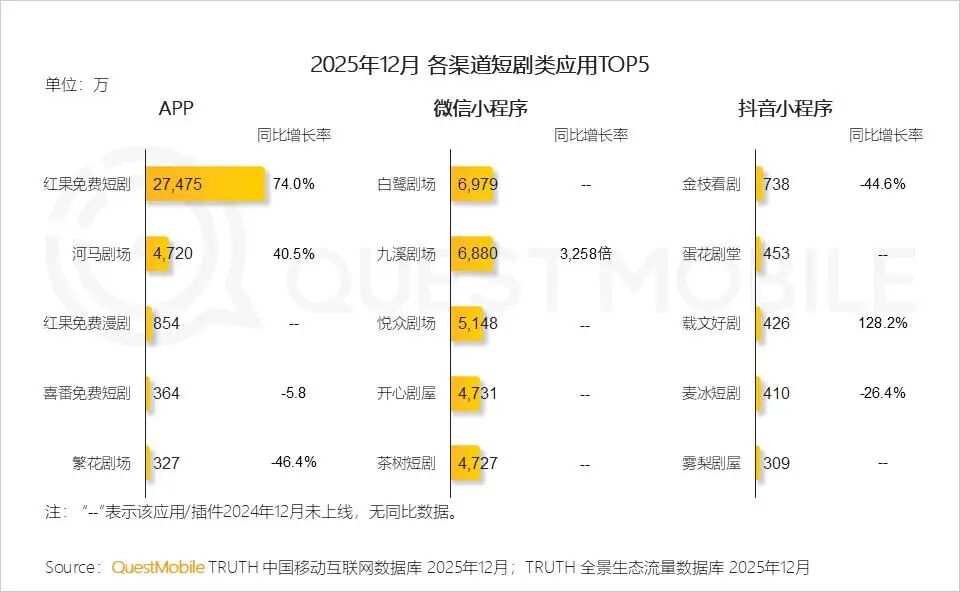
Group 1 - The core viewpoint of the article is that the rise of "manhua dramas" (漫剧) is significantly impacting the content consumption landscape, with projections indicating a substantial increase in their market presence by 2025 [1][3][24] - By December 2025, "manhua dramas" are expected to rank among the top three short drama apps in terms of monthly active users, following "Hongguo Short Drama" and "Hema Theater" [1] - The overall market for "manhua dramas" is projected to exceed 70 billion views in 2025, with a total of 46,931 new titles launched throughout the year, showing a clear growth trend in the latter half of the year [1] Group 2 - "Manhua dramas" are positioned as a new content form that bridges short content and animation, leading to discussions contrasting them with long-form animated videos [3][16] - Despite the high volume of views for "manhua dramas," individual titles have not yet achieved the status of "super hits," with the highest view count for a single title in 2025 reaching only 1 billion [12][16] - The narrative structure of "manhua dramas" is simpler and more focused on immediate emotional feedback, contrasting with the complex storytelling and character development found in long-form animated content [15][16] Group 3 - The competitive landscape shows that while "manhua dramas" have a large volume of content, they do not directly compete with long-form animated content in terms of depth and user engagement [14][15] - Major platforms are responding to the rise of "manhua dramas" by diversifying their content strategies, including Tencent launching a dedicated app for "manhua dramas" and other platforms like Youku and Bilibili adapting their approaches [18][21][22] - The increasing frequency of "manhua dramas" may affect user attention spans and willingness to engage with longer content, posing a challenge for traditional long-form animated platforms [17][22]

QuestMobile2025 全景生态流量年度报告:12.76亿用户月均消费186.2小时,AIGC APP月活用户净增超2亿
3 6 Ke· 2026-02-03 03:40
Core Insights - The report highlights the rapid growth of active users in various digital ecosystems, driven by AI technology and the expansion of mini-programs across platforms [5][8][10]. Group 1: User Growth and Engagement - As of December 2025, the total number of monthly active users (MAU) across the internet reached 1.276 billion, with an average monthly usage time of 186.2 hours, reflecting an 8.4% year-on-year increase [5]. - The AIGC app sector saw a net increase of over 200 million monthly active users, with a year-on-year growth rate of 150.4%, leading the segment [8]. - AI application plugins also demonstrated strong growth, achieving a monthly active user count of 696 million, up 37.8% year-on-year [8]. Group 2: Mini-Programs and Ecosystem Development - Mini-programs have become a crucial channel for user engagement, particularly in the life services sector, with major platforms like WeChat, Alipay, and Baidu seeing significant growth [10]. - In WeChat, the number of life service mini-programs with over 10 million monthly active users reached 68, an increase of 14 compared to the previous year [10]. - The popularity of short dramas has further fueled the growth of video mini-programs within WeChat and Douyin ecosystems, with the top 100 mini-programs in these categories accounting for 17% and 36% of their respective industries [2]. Group 3: Hardware Ecosystem - Smart TVs have emerged as a central hub for scene-based traffic, with active device numbers reaching 289 million [3]. - Key applications on smart TV platforms, such as Galaxy Qiyi and CIBN Cool Cat, have also seen substantial user engagement, with active device counts of 128 million and 126 million, respectively [3]. Group 4: Industry-Specific Insights - The mobile banking sector is witnessing differentiated development paths, with new internet banks leveraging WeChat mini-programs as their primary platform [28]. - In the travel service industry, platforms like Tongcheng Travel and Taobao Flash Purchase have surpassed 200 million in traffic, showcasing the effectiveness of mini-programs in driving user engagement [12]. - The automotive service industry is increasingly utilizing mini-programs for standardized, high-frequency services, establishing them as mainstream entry points [34].
QuestMobile2025 全景生态流量年度报告:12.76亿用户月均消费186.2小时,AIGC APP月活用户净增超2亿
QuestMobile· 2026-02-03 02:00
Core Insights - The article discusses the significant growth and transformation of the mobile internet landscape driven by AI technology and the integration of online and offline services, emphasizing the importance of scenario-based industry restructuring [3] Group 1: User Engagement and Growth Metrics - By December 2025, the total number of monthly active users (MAU) across the internet is projected to reach 1.276 billion, with an average monthly usage time of 186.2 hours, reflecting an 8.4% year-on-year increase [4][11] - The AIGC app sector saw a net increase of over 200 million monthly active users, with a year-on-year growth rate of 150.4%, indicating strong demand for AI-driven applications [4][14] - AI application plugins also demonstrated robust growth, achieving a monthly active user count of 696 million, up 37.8% year-on-year [4][14] Group 2: Ecosystem and Service Expansion - The small program ecosystem is thriving, with life services becoming a core area for platforms like WeChat, Alipay, and Baidu, where the top 100 small programs account for 35%, 50%, and 29% of their respective industries [4][17] - By December 2025, the number of life service small programs on WeChat with over 10 million monthly active users reached 68, a significant increase from the previous year [4][24] - The integration of short dramas and content updates has led to rapid innovation in content platforms, with notable user engagement in platforms like Red Fruit Free Short Drama and Hippo Theater [5][28] Group 3: Hardware and Content Ecosystem - Smart TVs have emerged as a central hub for scenario-based traffic, with active device numbers reaching 289 million, showcasing the growing importance of hardware in the digital ecosystem [6][21] - The top OTT applications for smart TVs include Galaxy Qiyi and CIBN Cool Cat Movies, with active device counts of 128.4 million and 126.1 million, respectively [70] Group 4: Industry-Specific Developments - The mobile video industry is experiencing a surge in short dramas, with platforms like Red Fruit Free Short Drama and Hippo Theater achieving 275 million and 47.2 million monthly active users, respectively [28][30] - In the mobile banking sector, new internet banks are leveraging WeChat small programs as their primary platform, while traditional banks are gradually increasing their investment in small programs [34][36] - The tourism service industry is witnessing a rise in traffic, with platforms like Tongcheng Travel achieving over 240 million in traffic through WeChat small programs [40] Group 5: Brand and Market Dynamics - The restaurant sector is expanding its reach, with over 40 brands achieving monthly active user counts exceeding 1 million, driven by innovative marketing strategies [55] - Domestic sports brands are effectively utilizing small programs to enhance user engagement, with notable growth in user numbers for brands like Xtep and Li Ning [61]



千亿风口!深圳站稳短剧出海口
Shen Zhen Shang Bao· 2026-01-29 17:37
Core Viewpoint - The micro-short drama industry in China is experiencing rapid growth, with significant market potential and increasing production quality, driven by changing consumer preferences and technological advancements [1][5][7]. Industry Overview - Shenzhen is emerging as a leading hub for micro-short dramas, hosting numerous companies involved in production and distribution, such as Tencent and DataEye [1][7]. - The market value of micro-short dramas and comic dramas is projected to exceed 1.2 trillion yuan by 2026, significantly surpassing previous estimates [1][5]. - The viewing habits for micro-short dramas are well-established, with 57.4% of users frequently watching and 72.8% primarily using mobile devices [4]. Production and Talent - The production of micro-short dramas has shifted towards utilizing experienced "non-celebrities" rather than traditional stars, providing opportunities for emerging actors [2][3]. - The cost of producing a single micro-short drama has increased, with some productions now costing around 10 million yuan, reflecting a trend towards higher quality content [5][6]. Audience Engagement and Global Reach - The demand for micro-short dramas is driven by users' need for quick entertainment, with a focus on character development and innovative themes [4][5]. - The overseas market for Chinese micro-short dramas is expanding, with expectations of generating over 2.38 billion USD in revenue by 2025, particularly in Southeast Asia [7][6]. - The integration of AI technology is facilitating the translation and distribution of content across multiple languages and platforms, enhancing global accessibility [6][7].
马化腾:腾讯视频去年受短剧冲击
Sou Hu Cai Jing· 2026-01-26 09:22
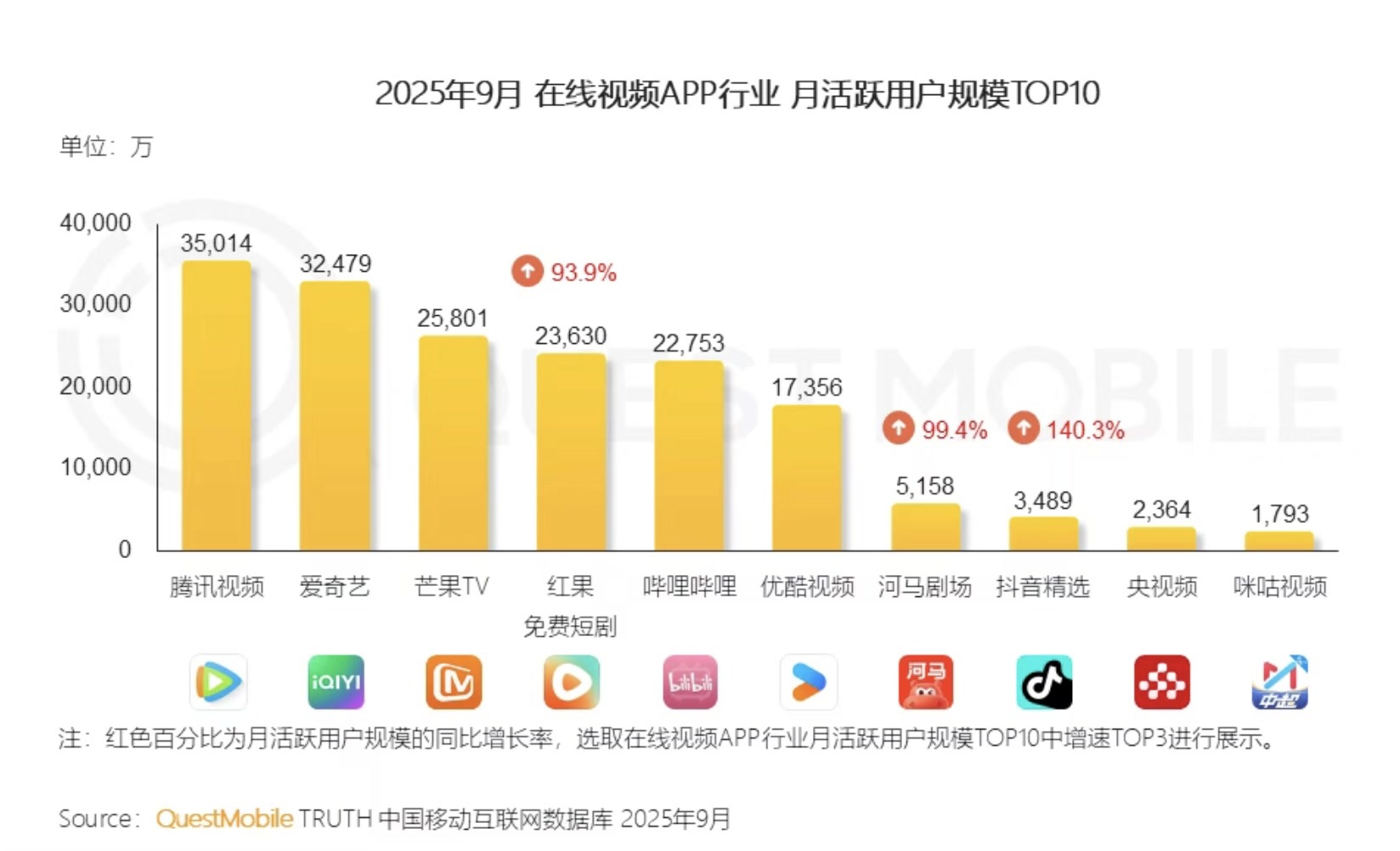
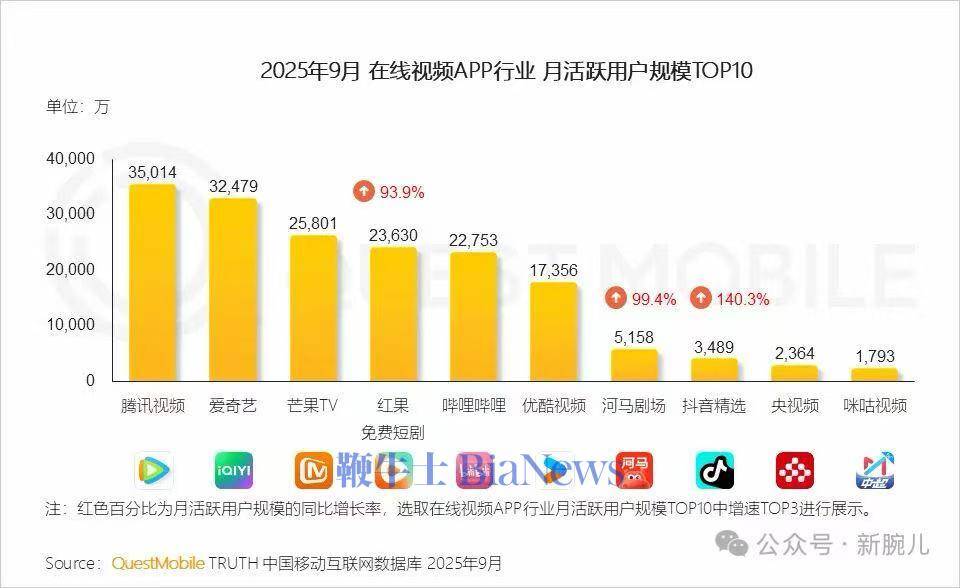
Group 1 - Tencent's Chairman Ma Huateng discussed the impact of short dramas on Tencent Video, indicating that the platform may not have many blockbuster products by 2025 and emphasized the need for patience due to investment cycles [1] - Tencent Video faced challenges from short dramas last year but will continue to invest in high-quality long videos while also exploring advertising-driven products [1] - Ma Huateng reiterated Tencent's commitment to high-quality content, stating that the company will not produce low-quality short dramas and will focus on a strategy of "doing what is worthwhile and not doing what is not" [1] Group 2 - According to QuestMobile's September data, the rise of popular short drama apps has disrupted the online video industry, with Hongguo Free Short Dramas achieving 236 million monthly active users, ranking fourth overall and first in the short drama category [3] - The monthly active user base of Heima Theater has surpassed 5 million, indicating significant growth in the short drama segment [3] - Tencent Video remains the leader in monthly active users, but the rapid rise of Hongguo Short Dramas has surpassed Youku and Bilibili, closing in on iQIYI and Tencent Video [3]
短剧继续下沉
Xin Lang Cai Jing· 2026-01-11 01:44
Core Viewpoint - The short drama industry is experiencing a shift towards the lower-tier market as the flow dividend peaks, with production companies seeking new opportunities in rural and lower-tier cities, targeting middle-aged and elderly audiences while significantly reducing production costs to the range of 100,000 to 300,000 yuan per episode [1][5][8]. Group 1: Market Trends - The trend towards lower-tier dramas is driven by the need for new audience acquisition and the pressure on mid-tier production companies to find sustainable paths due to shrinking profit margins [1][5]. - The lower-tier market is characterized by a large, untapped audience, particularly among middle-aged and elderly individuals, who have more leisure time and a willingness to pay for content [9][10]. Group 2: Production Strategies - Production costs for lower-tier dramas have been drastically reduced through various strategies, including minimizing crew size, avoiding high-priced stars, and utilizing AI in script generation, leading to costs as low as 10,000 yuan per episode [3][20]. - The production cycle has been compressed to as little as 2-3 days for filming, with some companies adopting a "batch shooting" approach to further reduce costs [20][19]. Group 3: Financial Performance - Lower-tier dramas offer a more stable return on investment, with typical earnings of 40,000 to 100,000 yuan per episode, translating to a 20% to 50% profit margin, compared to the higher risks associated with premium dramas [8][9]. - Companies are increasingly focusing on original content for lower-tier markets, as it allows for greater flexibility in distribution and potentially higher returns [13][14]. Group 4: Audience Engagement - The elderly demographic, which is rapidly growing, is becoming a focal point for the entertainment industry, with significant potential for engagement and monetization [9][10]. - The lower-tier market is seen as a new frontier, with less competition and a more stable revenue model compared to the premium drama sector [6][7].

微短剧2025年:新的定量、变量与增量
Zhong Guo Jing Ying Bao· 2025-12-31 15:14
Core Insights - The micro-short drama industry has transitioned from rapid growth to a new competitive phase by the end of 2025, while the emergence of comic dramas has introduced new market opportunities and challenges [1] - Copyright disputes have become a focal point in the micro-short drama sector, indicating a shift from chaotic growth to a more structured industry [1] Market Dynamics - As of November 2025, the monthly active users of Hongguo free short dramas reached approximately 234 million, surpassing Bilibili and becoming the second-largest platform after Tencent Video, iQIYI, and Mango TV [2] - The growth of Hongguo is attributed to ByteDance's resource support and a deep understanding of user habits, alongside a profit-sharing model that incentivizes quality content creation [2][3] Content Creation and Monetization - Hongguo's short drama copyright center has introduced various support policies for quality content, including high guaranteed incentives and clear revenue-sharing models [3] - A new revenue-sharing model based on the entire lifecycle of a work has been launched, allowing creators to earn long-term returns linked to market performance [4] Emerging Trends - The comic drama segment has gained traction, with platforms like Hongguo and iQIYI launching dedicated channels, and Baidu planning to release a standalone comic drama app [6] - The market for comic dramas is projected to grow rapidly, with a market size of 18.98 billion yuan in 2025, reflecting a year-on-year growth of 276.3% [8] Technological Advancements - AI advancements have significantly reduced the production cycle of comic dramas, enabling single individuals to create episodes in a matter of days rather than months [7] - The cost of producing comic dramas has decreased, with some estimates suggesting production costs dropping below 1,000 yuan per minute [7] Challenges and Issues - The micro-short drama industry is facing increasing copyright disputes, with several high-profile cases highlighting the risks associated with content duplication and plagiarism [9][10] - The rapid turnover of content in the micro-short drama sector has led to concerns about audience fatigue and the sustainability of creative ideas [10]
X @外汇交易员
外汇交易员· 2025-11-11 06:55
Market Growth & User Engagement - Micro-drama apps' average daily usage time reached 120.5 minutes in January-August 2025, a 25.9% increase from January, potentially surpassing long-form video apps [1] - The micro-drama industry has approximately 100.2 thousand companies, with rapid expansion indicated by 16.8 thousand newly registered companies in the first nine months of the year, a 12.57% year-over-year increase [1] Competitive Landscape - Douyin, with its IP, traffic, and algorithm advantages, along with top platforms like Hema Theater and Fan Hua Theater, collectively capture over 95% of the average monthly active user penetration rate [1]
红果月活超过B站、优酷,短剧崛起冲击视频行业格局
Bei Jing Ri Bao Ke Hu Duan· 2025-11-06 02:09
Core Insights - The mobile internet content consumption market in China is undergoing significant changes, with short drama applications like "Hongguo Free Short Drama" and "Hema Theater" emerging as strong competitors in the industry, disrupting the long-standing stability in the online video sector [1][4] Industry Overview - As of September 2025, the total number of mobile internet users in China reached 1.269 billion, marking a 2% year-on-year growth, indicating a stable market environment [1] - The online video industry remains dominated by Tencent Video, iQIYI, and Mango TV, but there have been notable shifts in the rankings of other platforms [1][4] Short Drama Segment - "Hongguo Free Short Drama" has surpassed traditional platforms like Bilibili and Youku, ranking among the top four in terms of monthly active users [4] - "Hema Theater" has also shown impressive performance, with monthly active users exceeding 50 million, surpassing platforms such as Central Video and Migu Video [4] - The average monthly usage time for users in the online video sector exceeds 20 hours, indicating high engagement levels [4] Audience Demographics - Short dramas are expanding their audience base, with users aged 31 to 50 becoming the primary demographic, while interest from users under 30 and those from first- and second-tier cities is rapidly increasing [4] Policy Support and Market Growth - The rapid development of short dramas is supported by government policies aimed at enhancing content supply and encouraging quality micro-short dramas to be broadcast on television [7] - The micro-short drama market in China is projected to exceed 50.5 billion yuan in 2024, surpassing box office revenues from films, and is becoming a significant growth point for online audio-visual revenue [7]