油棕

Search documents
加纳推动林木产业升级
Shang Wu Bu Wang Zhan· 2026-02-27 16:11
Core Viewpoint - Ghana aims to shift from exporting raw agricultural products to developing local processing capabilities, particularly in the cashew industry, to retain more economic value domestically [1] Group 1: Government Initiatives - The Ghanaian government plans to invest $200 million to support the development of the tree crop industry, focusing on processing infrastructure, capacity enhancement, and encouraging private sector participation [1] - Specific measures include strengthening agricultural technology promotion services, improving quality seed supply, expanding cooperative farming programs, enhancing product traceability systems, and promoting exports to high-value international markets [1] Group 2: Economic Goals - The Tree Crop Development Authority aims to achieve annual revenues of $12 billion from six key crops (cashew, oil palm, shea, coconut, rubber, and mango) by 2030, while creating up to 500,000 jobs [1] - The initiative will particularly focus on creating job opportunities for youth and empowering women in the shea industry [1] Group 3: Agricultural Development Plans - Plans include establishing plantations covering a total area of 16,000 hectares across 16 regions in Ghana, with a focus on cultivating crops suitable for each region's ecological conditions [1]
利比里亚完成国家油棕政策审定,推动农业现代化与公平发展
Shang Wu Bu Wang Zhan· 2026-02-12 15:46
Core Insights - Liberia has finalized its National Palm Oil Policy, marking a significant step towards modernizing and regulating the agricultural sector [2] Group 1: Policy Objectives - The policy aims to establish a fair, transparent, and sustainable regulatory framework for the palm oil industry, addressing the long-standing lack of clear rules [2] - Key components include the establishment of a reasonable and transparent pricing mechanism for farmers, enhancement of seedling, processing, packaging, and oil quality standards [2] - The policy outlines obligations for large-scale producers and franchisees, such as paying royalties, to ensure the industry contributes to national revenue and economic growth [2] Group 2: Impact on Stakeholders - The policy is designed to protect small farmers from price volatility, weak quality control, and insufficient market protection [2] - It establishes rules for "fair competition" that protect farmers, guide investors, and ensure substantial contributions to national development [2] Group 3: Alignment with National Goals - The policy aligns with the President's "AAID" agenda, which focuses on enhancing food security, promoting responsible investment, and expanding rural livelihood opportunities [2] - Liberia is actively engaging in agricultural diplomacy through platforms like the African Coffee Organization to enhance its position in commodity markets [2]
2024年我国热带作物总产值超过2800亿元
Xin Hua Wang· 2025-12-04 14:17
Core Insights - The comprehensive production capacity of China's tropical crop industry has steadily improved, with a total output value projected to reach 283.99 billion yuan in 2024, representing a year-on-year growth of 15.1% [1] - The total planting area for major tropical crops in the country exceeds 72 million acres, with a total output of approximately 40 million tons, positioning industries such as lychee, longan, mango, and nuts among the world's leaders [1] - The contribution rate of technology to the industry has surpassed 63%, indicating a strong reliance on technological advancements for growth [1] Industry Development - The tropical crop industry faces numerous opportunities and challenges regarding global food security and rural development, suggesting a broad market outlook for future growth [1] - Recommendations include promoting green production methods across the entire tropical crop industry chain, emphasizing water and fertilizer conservation, green pest control, and ecological recycling technologies [1] - There is a call for enhanced cooperation in climate change response and ecological protection, alongside accelerating technological innovation and industry clustering [1] Technological and Educational Initiatives - The establishment of international tropical crop technology innovation centers and demonstration parks is encouraged, focusing on modernizing key processes such as breeding, smart planting, deep processing, and cold chain logistics [1] - The industry is urged to promote inclusive technology by organizing on-site training to convey advanced practical techniques to smallholder farmers, transforming them from "objects of global development" to "partners sharing in the benefits" [1]
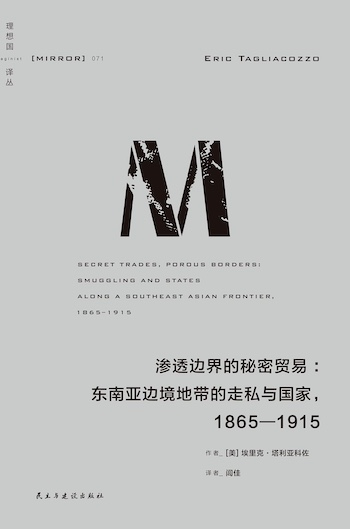
东南亚贸易和移民历史悠久,英荷殖民拓展有何影响|书摘
Di Yi Cai Jing· 2025-07-18 11:38
Core Points - The article discusses the historical context of smuggling activities in Southeast Asia, particularly in the Malacca Strait, highlighting the complex interplay between colonial powers and local economies [1][3][10] - It emphasizes the blurred lines between legal and illegal activities, as well as the ongoing struggle between smugglers and state authorities [1][3][11] Group 1: Historical Context - The Malacca Strait is characterized by its narrowness and shallow depth, making it a challenging area for defining international boundaries due to the cultural similarities of the residents on both sides [1][9] - The colonial division of Southeast Asia by the British and Dutch from 1865 to 1915 led to the establishment of new borders, which inadvertently fostered a large underground economy involving opium traffickers, counterfeiters, and smugglers [1][6][10] - The early civilizations in Southeast Asia lacked clear borders, allowing for a fluidity in trade and smuggling activities, particularly during the era of the Srivijaya kingdom, which thrived on controlling trade in the Malacca Strait [3][4] Group 2: Colonial Impact on Smuggling - The Dutch East India Company implemented strict monopolistic policies in the 17th century, leading to violent suppression of local populations and increased smuggling as residents sought to evade taxes [4][5] - By the 19th century, the political landscape had solidified with British and Dutch colonial expansions, leading to the establishment of trade routes and the exchange of territories, which continued to facilitate smuggling activities [5][6] - The economic interactions between colonizers and local populations were complex, with evidence of a dual economy where local producers engaged in smuggling to connect with colonial markets [11][10] Group 3: Modern Implications - The ongoing smuggling activities in Southeast Asia reflect a historical legacy of colonialism, where the boundaries established by colonial powers continue to influence economic behaviors and relationships [1][3][11] - Recent studies indicate that the economic networks among border residents are intricate, challenging the notion of a clear divide between colonial and local economies [11][10] - The article suggests that understanding the historical context of smuggling in Southeast Asia can provide insights into contemporary economic and political dynamics in the region [1][9][10]