浦银数智

Search documents
银行为何开始发射卫星了?
Jing Ji Ri Bao· 2026-02-10 07:15
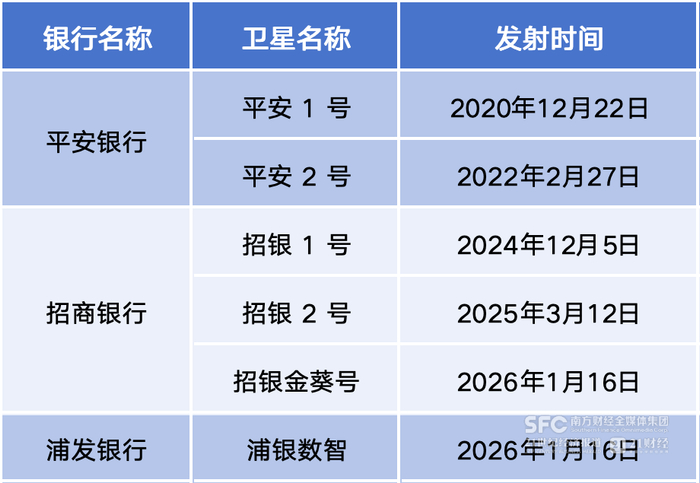
Core Viewpoint - The successful launch of "Zhaoyin Jinkui" and "Puyin Shuzhi" satellites by China Merchants Bank and Pudong Development Bank marks a significant step in the integration of banking and commercial aerospace, highlighting the banks' strategic move to leverage satellite technology for enhancing digital financial infrastructure and supporting the commercial aerospace industry [2][10]. Group 1: Satellite Launch and Collaboration - The "Zhaoyin Jinkui" and "Puyin Shuzhi" satellites are part of the "Tianqi Constellation" low-orbit narrowband satellite IoT network, showcasing banks' involvement in satellite launches [2][3]. - This is not the first instance of banks collaborating with commercial satellite companies; previous launches include "Zhaoyin 1" and "Zhaoyin 2" by China Merchants Bank and "Ping An 1" and "Ping An 2" by Ping An Bank [3][4]. - Banks are adopting various paths to utilize satellite technology, including direct satellite launches and purchasing processed data from satellite companies for financial applications [3][4]. Group 2: Applications and Benefits of Satellite Technology - The integration of low-orbit satellites enhances banks' capabilities in financial asset management, risk control, and emergency communication, extending their digital infrastructure into space [3][6]. - Banks are increasingly moving from merely purchasing satellite data to actively participating in satellite launches, driven by the need for improved risk management and business continuity [6][7]. - The use of satellite technology allows banks to overcome geographical and environmental limitations, thus expanding their business reach, especially in remote areas [7][10]. Group 3: Cost and Market Dynamics - The cost of launching commercial satellites is expected to decrease due to technological advancements and economies of scale, making customized commercial applications more feasible [8][9]. - Current costs for launching a commercial satellite range from tens of millions to over a billion yuan, with significant potential for reduction as the industry matures [8][9]. - By 2030, the cost of satellite launches could drop to below 10,000 yuan per kilogram, further encouraging financial institutions to invest in satellite technology [9]. Group 4: Financial and Industrial Synergy - The collaboration between banks and satellite companies represents a deeper financial and industrial synergy, enabling banks to expand their service offerings and support the development of the commercial aerospace ecosystem [10][14]. - Banks are innovating financial products and services, such as satellite leasing and industry-specific funds, to meet the unique needs of the aerospace sector [14][15]. - The integration of satellite data into financial services is expected to enhance credit assessments and risk management, aligning financial services more closely with the real economy [10][15].







银行新基建 上天!
Zheng Quan Ri Bao· 2026-02-09 16:15
Core Viewpoint - The launch of satellites by banks like China Merchants Bank and Shanghai Pudong Development Bank signifies a strategic move to integrate financial services with space technology, enhancing digital financial infrastructure and supporting the commercial aerospace industry [1][8] Group 1: Satellite Launch and Collaboration - The "Zhaoyin Jinkui" and "Puyin Shuzhi" satellites were successfully launched, marking a continuation of banks' involvement in satellite technology [2] - Previous collaborations include China Merchants Bank's partnership with the "Qianfan Constellation" and Ping An Bank's launches of "Ping An 1" and "Ping An 2" satellites [2] - Banks are exploring various paths for satellite technology application, including direct satellite launches and purchasing processed data from satellite companies [2][3] Group 2: Applications and Benefits - The integration of low-orbit satellites enhances banks' capabilities in financial asset management, risk control, and emergency communication [2][5] - Banks are utilizing satellite data for agricultural monitoring and supply chain finance, improving risk management and loan support [4][6] - The shift from purchasing data to participating in satellite launches reflects banks' strategic focus on long-term financial solutions and risk management [5][9] Group 3: Financial and Industrial Synergy - The collaboration between banks and satellite companies fosters a dual empowerment of finance and industry, expanding business boundaries and supporting the commercial aerospace ecosystem [8][9] - Financial institutions are increasingly involved in the commercialization of satellite data, exploring applications in green finance and agricultural insurance [11] - The establishment of satellite leasing and investment funds by banks indicates a growing trend of financial support for the aerospace sector [10][11] Group 4: Cost and Market Dynamics - The cost of launching commercial satellites ranges from millions to over a billion yuan, with expectations of decreasing costs due to technological advancements [7] - Current domestic satellite manufacturing costs are approximately 30 million yuan per satellite, with ongoing efforts to improve rocket reusability [7] - The financial sector's engagement in satellite technology is driven by the need for data autonomy and enhanced service resilience in extreme conditions [6][9]
银行新基建,上天!
Zheng Quan Ri Bao Zhi Sheng· 2026-02-09 16:11
Core Viewpoint - The recent launch of satellites by banks like China Merchants Bank and Shanghai Pudong Development Bank signifies a strategic move to integrate banking services with satellite technology, enhancing digital financial infrastructure and supporting the commercial space industry [1][2]. Group 1: Satellite Launch and Collaboration - The "Zhaoyin Jinkui" and "Puyin Shuzhi" satellites were launched as part of the "Tianqi Constellation" to enhance banking capabilities [1][2]. - This is not the first instance of banks collaborating with commercial satellite companies; previous launches include "Zhaoyin 1" and "Zhaoyin 2" by China Merchants Bank and "Ping An 1" and "Ping An 2" by Ping An Bank [2]. - Banks are adopting different paths in satellite technology, with some investing in satellite hardware while others opt for data procurement and processing [2][3]. Group 2: Applications and Benefits of Satellite Technology - The integration of low-orbit satellites is expected to enhance financial asset management, risk control, and emergency communication for banks [2][5]. - Banks like Industrial and Agricultural Bank of China are utilizing satellite remote sensing technology in supply chain finance and agricultural monitoring [4]. - The shift from purchasing satellite images to participating in satellite launches reflects banks' evolving strategies to address financial pain points and enhance long-term planning [5][6]. Group 3: Financial and Industrial Synergy - The collaboration between banks and satellite companies represents a deeper integration of finance and the aerospace industry, facilitating the development of innovative financial products [9][10]. - The commercial space industry in China has seen rapid growth, with significant satellite launches and a focus on integrating financial services to support this sector [8][10]. - Financial institutions are exploring various applications of satellite data, including green finance and agricultural insurance, to convert space data into tangible ground value [11]. Group 4: Cost and Future Outlook - The costs associated with launching commercial satellites are expected to decrease due to technological advancements and economies of scale, making satellite applications more accessible [7]. - Current costs for launching a satellite range from tens of millions to over a billion yuan, with expectations that by 2030, costs could drop significantly [7]. - The financial sector is increasingly involved in the commercial space industry, providing funding and establishing industry-specific funds to support satellite manufacturing and data applications [10][11].
卫星扎堆“上天”,银行风控卷出“新高度”
3 6 Ke· 2026-02-02 07:23
Core Viewpoint - The commercial aerospace sector is experiencing a surge in interest and investment, particularly from banks, driven by supportive policies and the potential for innovative applications of satellite technology in financial services [1][2][22]. Group 1: Policy and Industry Trends - Beijing has issued measures to promote the development and utilization of commercial satellite remote sensing data from 2026 to 2030, encouraging companies to build differentiated satellite constellations with clear commercial value and application prospects [1]. - Various industries, including traditional banking, are actively engaging in the commercial aerospace sector, with banks launching their own satellites [2][3]. Group 2: Bank Initiatives in Satellite Launches - On January 16, 2024, China Merchants Bank's "Zhaoyin Jinkui" and Shanghai Pudong Development Bank's "Pudong Digital" satellites were successfully launched [4]. - Both satellites are part of China's first global low-orbit satellite IoT constellation, "Tianqi Constellation" [5]. - The "Zhaoyin Jinkui" satellite is designed for high-precision monitoring of construction progress for first-hand mortgage properties, while the "Pudong Digital" satellite aims to enhance smart risk control and provide critical financial services during natural disasters [8]. Group 3: Evolution of Risk Control - The trend of banks launching satellites signifies a shift from traditional ground-based data reliance to a "heaven and earth collaboration" model for risk control [11][22]. - Satellite technology addresses the core pain point of information asymmetry in traditional risk management, providing banks with stable and objective data [13][14]. - For instance, the "Zhaoyin Jinkui" satellite can improve construction monitoring accuracy to over 95%, significantly enhancing post-loan inspection efficiency [14]. Group 4: Future Implications and Opportunities - The integration of satellite technology into banking operations not only enhances risk management but also opens new avenues for financing in the commercial aerospace sector, which has been traditionally challenging due to high barriers and lack of collateral [19][20]. - Banks' active participation in satellite launches may lead to deeper due diligence and value discovery in the commercial aerospace industry [20][21]. - The collective move of banks into the aerospace sector represents a critical leap in enhancing their core competitiveness and addressing inclusive finance challenges [22][23].

银行“上星”拓展金融服务新空间
Jing Ji Ri Bao· 2026-02-01 22:01
Core Viewpoint - The successful launch of satellites by major Chinese banks marks a significant step in enhancing their financial services through advanced technology, particularly in risk management and data communication capabilities [1][2][3]. Group 1: Satellite Launches and Technology - China Merchants Bank launched the "Zhaoyin Jinkui" satellite, while Shanghai Pudong Development Bank launched the "Puyin Shuzhi" satellite, contributing to the formation of a low-orbit satellite communication matrix [1][2]. - The satellites are part of the "Tianqi Constellation," which aims to provide integrated IoT data communication services globally, enhancing capabilities in various sectors such as energy and agriculture [2]. Group 2: Risk Management and Financial Services - Satellite technology enhances banks' risk management capabilities by providing reliable financial information, thus addressing issues of information asymmetry [3]. - China Merchants Bank's self-developed risk management system utilizes high-resolution satellite imagery to monitor construction progress with over 95% accuracy, improving traditional post-loan inspection efficiency [3]. Group 3: Applications in Financial Services - Satellite technology can expand the coverage and precision of financial services, particularly in supply chain finance, rural finance, and green finance [4]. - Ping An Bank uses IoT devices monitored by satellites to track dairy cattle, addressing collateral issues and improving post-loan management [4]. Group 4: Resilience and Stability in Financial Infrastructure - Satellite communication technology helps banks maintain operations during ground communication disruptions, enhancing the resilience of financial infrastructure [5]. - China Merchants Bank is testing low-orbit satellite communication for disaster recovery systems, ensuring critical financial services can be quickly restored in extreme scenarios [5]. Group 5: Digital Transformation and Industry Impact - The satellite launches reflect the deepening digital transformation of the banking sector, enhancing communication systems and supporting the commercial satellite industry [6]. - Participation in the aerospace industry allows banks to improve their financial service capabilities in strategic areas while creating technological barriers [7]. Group 6: Challenges and Future Trends - While satellite technology offers unique advantages, it may lead to data monopolies and compliance risks, necessitating clear legal frameworks [7]. - The trend may result in a tiered ecosystem where major banks develop their satellite constellations, while smaller banks rely on data procurement from third-party services [7].
卫星扎堆「上天」,银行风控卷出「新高度」
Xin Lang Cai Jing· 2026-01-30 10:41
Core Insights - The commercial space industry is experiencing a surge in interest and investment, driven by increased policy support and the active participation of various sectors, including traditional banking [1][25][27]. Group 1: Policy and Industry Trends - Beijing has issued measures to promote the development and utilization of commercial satellite remote sensing data from 2026 to 2030, encouraging the construction of differentiated commercial satellite constellations with clear commercial value and application prospects [2][26]. - The banking sector, traditionally seen as unrelated to space, is now actively engaging in commercial space initiatives, with banks like China Merchants Bank and Shanghai Pudong Development Bank launching their own satellites [3][28]. Group 2: Satellite Launches and Applications - On January 16, 2024, China Merchants Bank's "Zhaoyin Jinkui" and Shanghai Pudong Development Bank's "Pudong Smart" satellites were successfully launched, both part of China's first global low-orbit satellite IoT constellation, "Tianqi Constellation" [4][29]. - The "Zhaoyin Jinkui" satellite is designed for high-precision monitoring of construction progress for first-hand mortgage properties, while the "Pudong Smart" satellite aims to enhance intelligent risk control and provide critical financial services during extreme scenarios like natural disasters [6][31]. Group 3: Evolution of Banking Risk Control - The trend of banks launching satellites signifies a shift from traditional ground-based data reliance to a "heaven and earth collaboration" model, enhancing risk control capabilities in response to complex and changing realities [12][45]. - Satellites provide high-resolution optical, radar, and multispectral sensors, offering banks a stable and objective "God's eye view" to address the core pain point of information asymmetry in traditional risk control [13][36]. Group 4: Innovations in Risk Management - The "Zhaoyin Jinkui" satellite can increase monitoring accuracy to over 95%, significantly improving traditional post-loan inspection efficiency [38]. - The integration of satellite technology with AI and deep learning, as seen in the "Dashanque" system by WeBank, allows for precise analysis of agricultural data, aiding in the determination of reasonable credit limits for farmers [38][40]. Group 5: Future Implications for Banking and Space - The banking sector's involvement in commercial space may lead to deeper due diligence and value discovery, as banks seek to understand and engage with the complexities of the commercial space industry [21][43]. - The future of financial competition may hinge on the ability to create intelligent collaborative networks between "starry skies" and "real ground," positioning banks to leverage new opportunities in the evolving commercial space landscape [24][46].

3家股份银行的卫星先后上天 有什么神通?
Mei Ri Jing Ji Xin Wen· 2026-01-26 00:56
Core Viewpoint - The recent launch of satellites by three banks marks a significant step in integrating satellite technology into financial services, enhancing risk monitoring and operational efficiency in various sectors [1][2]. Group 1: Satellite Launches and Applications - China Merchants Bank's "Zhaoyin Jinkui" and Pudong Development Bank's "Puyin Shuzhi" satellites were successfully launched, contributing to the "Tianqi Constellation," China's first global low-orbit satellite IoT network [1][2]. - Previous satellite launches include Ping An Bank's "Ping An 1" and "Ping An 2," which focus on supply chain finance and operational data collection from remote areas [2][3]. - The "Zhaoyin Jinkui" satellite enhances the existing satellite communication matrix of China Merchants Bank, enabling better data transmission and coverage [3]. Group 2: Risk Monitoring and Financial Services - China Merchants Bank utilizes high-resolution satellite imagery for real estate risk monitoring, achieving over 95% accuracy in construction progress tracking [4][5]. - The bank has established partnerships with over 20 key institutional clients for large-scale application of satellite-based risk monitoring services [5]. - Ping An Bank's satellites serve as data transfer stations, helping to bridge information gaps in supply chain financing and improve credit access for small and medium enterprises [3][6]. Group 3: Emergency Communication and Disaster Recovery - The banks emphasize the importance of satellite communication for emergency scenarios, ensuring data transmission even in areas without ground signal coverage [6][7]. - China Merchants Bank has initiated tests for low-orbit satellite communication in financial disaster recovery systems, enhancing business continuity in extreme situations [6][7]. - Pudong Development Bank plans to leverage the "Tianqi Constellation" for comprehensive financial asset management and rapid recovery during natural disasters [6]. Group 4: Industry Trends and Future Directions - The growing commercial space industry in China is prompting banks to invest in satellite technology to innovate financial service models and reduce costs for clients [7][8]. - Other banks, such as Industrial and Commercial Bank of China and Xinyu Bank, are also exploring satellite remote sensing for agricultural applications and asset monitoring [8].
银行探路“航天+”: 一本成本账 一盘生态棋
Zhong Guo Zheng Quan Bao· 2026-01-22 21:51
Core Insights - The article discusses the increasing involvement of commercial banks in the "finance + aerospace" integration, highlighting the significant financial investments required for satellite development, launch, and operation [1] Group 1: Satellite Launches and Applications - Several banks, including China Merchants Bank and Pudong Development Bank, successfully launched satellites, namely "Zhaoyin Jinkui" and "Puyin Shuzhi," which are part of China's first low-orbit satellite IoT constellation, "Tianqi Constellation" [1] - Pudong Development Bank aims to leverage its communication service expertise to innovate applications in financial asset lifecycle management and cross-border asset and trade supervision using the satellite data capabilities [1] Group 2: Technological Integration in Banking - China Merchants Bank has integrated remote sensing satellite technology into its financial risk control system, enhancing efficiency in post-loan monitoring of real estate projects across the country [3] - The bank has initiated the application verification of low-orbit satellite communication technology in its financial disaster recovery systems, establishing a technical foundation for a comprehensive financial emergency communication network [3] Group 3: Value Proposition and Investment Returns - The technology is expected to address three core pain points in traditional banking risk control: remote monitoring of collateral and project progress, application in agricultural finance to reduce data collection costs and loan default risks, and obtaining independent data from space to mitigate information asymmetry [4] - Investment returns from satellite systems are characterized by low initial returns, stable mid-term returns, and increasing long-term value as applications expand into green finance, cross-border finance, and disaster recovery [4] - Differentiated strategies are emerging, with large banks building their satellite systems to control data and create technological barriers, while smaller banks are opting for data service procurement or third-party platform integration for practical participation [4]
银行探路“航天+”:一本成本账 一盘生态棋
Zhong Guo Zheng Quan Bao· 2026-01-22 20:56
Core Insights - The banking sector is actively exploring the integration of finance and aerospace, particularly in the context of commercial space ventures, while facing challenges related to the significant funding required for satellite development, launch, and operation [1] Group 1: Satellite Launches and Applications - Several banks, including China Merchants Bank and Shanghai Pudong Development Bank, successfully launched satellites, namely "Zhaoyin Jinkui" and "Puyin Shuzhi," which are part of China's first low-orbit satellite IoT constellation, "Tianqi Constellation" [1] - Shanghai Pudong Development Bank aims to leverage its communication service capabilities to innovate applications in financial asset lifecycle management and cross-border asset and trade supervision, supporting the large-scale development of the satellite IoT industry [1] Group 2: Technological Integration and Risk Management - China Merchants Bank has integrated remote sensing satellite technology into its financial risk control system, enhancing the efficiency of post-loan inspections through high-precision monitoring of construction progress across the country [2] - The bank has initiated the application verification of low-orbit satellite communication technology in its financial disaster recovery systems, establishing a technical foundation for a comprehensive financial emergency communication network [2] Group 3: Strategic Importance and Value Realization - Banks have been pursuing satellite-related strategies for years, driven by needs for risk control and business upgrades, with technologies like big data and satellite remote sensing becoming crucial for rural revitalization efforts [3] - The investment return from satellite systems is characterized by low initial returns, stable mid-term returns, and increasing long-term value as applications expand into green finance, cross-border finance, and disaster recovery systems [3] Group 4: Implementation Strategies - There is a consensus in the industry regarding differentiated implementation strategies, where large banks build their satellite systems to control data and create technological barriers, while smaller banks opt for purchasing data services or accessing third-party platforms to participate effectively [4]
多家银行扎堆发卫星上天
2 1 Shi Ji Jing Ji Bao Dao· 2026-01-21 11:25
Core Viewpoint - The recent successful launch of satellites by major banks in China, including China Merchants Bank and Shanghai Pudong Development Bank, signifies a strategic shift towards utilizing satellite technology for enhancing financial services and risk management in the banking sector [1][2][5]. Group 1: Satellite Launches and Developments - China Merchants Bank launched the "Zhaoyin Jinkui" satellite on January 16, 2026, as part of the "Tianqi Constellation," which aims to enhance global coverage and communication capabilities [1][5]. - Shanghai Pudong Development Bank's "Puyin Shuzhi" satellite was also launched on the same day, contributing to the "Tianqi Constellation" [5]. - Previous satellite launches by Ping An Bank include "Ping An 1" in December 2020 and "Ping An 2" in February 2022, indicating a growing trend among banks to invest in satellite technology [2][3]. Group 2: Business Logic Behind Satellite Investments - Banks are leveraging satellite technology for remote monitoring of collateral and project progress, significantly improving post-loan management efficiency and reducing credit risk [2][8]. - The ability to maintain business continuity during extreme scenarios, such as natural disasters, is enhanced through satellite communication technology [13]. - By participating in satellite launches, banks are aligning with national strategies and expanding their financial services to support the commercial space industry [14]. Group 3: Applications of Satellite Technology in Banking - Satellite technology allows for real-time monitoring of agricultural and industrial activities, addressing information asymmetry in lending [8][10]. - The integration of satellite data into risk management systems has improved the accuracy of monitoring construction projects, with a reported precision of over 95% in tracking project progress [9][11]. - The use of satellite technology in supply chain finance helps overcome challenges faced by small and medium enterprises, enabling better access to credit [10][12]. Group 4: Future Prospects and Innovations - The ongoing development of satellite technology is expected to further penetrate various banking operations, enhancing risk prevention capabilities in sectors like agriculture and logistics [14][15]. - Innovations such as the "Dashanque" system by WeBank utilize satellite imagery and AI to assess agricultural productivity, providing tailored credit solutions to farmers [15]. - The trend of banks investing in satellite technology reflects a broader commitment to technological innovation and improved service delivery in the financial sector [16].