
深业上城

Search documents
黄金周四大板块交出亮眼成绩单,深业开启大资管转型“加速跑”
Sou Hu Cai Jing· 2025-11-03 06:10
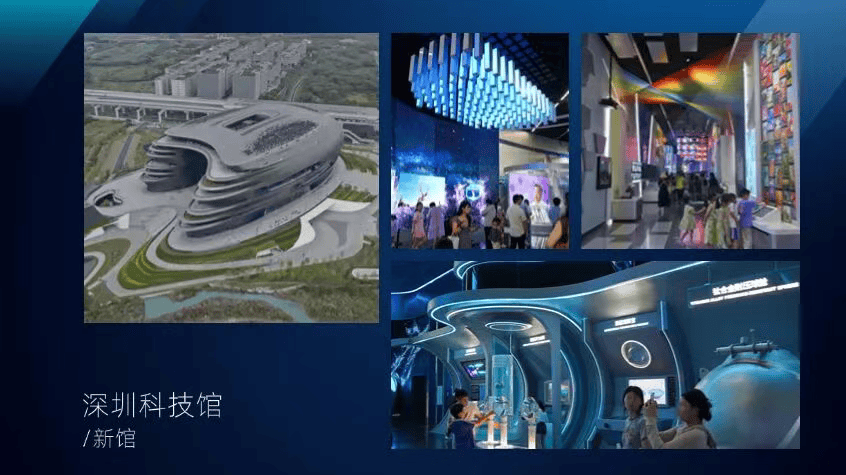
Core Insights - The article highlights the strategic transformation of the company from traditional real estate development to a diversified asset management model, focusing on enhancing operational efficiency and value integration across its four main business segments: property management, commercial management, hotel management, and infrastructure [1][28]. Property Management - The property management segment has achieved significant growth, expanding its operational area to over 100 million square meters and adding 3.11 million square meters in the first half of the year, with successful bids for high-quality projects [4][27]. - The company has been recognized as the 14th among the top 100 property service companies in China for 2025, marking four consecutive years of improvement in its ranking [4][27]. - The segment has demonstrated exceptional service capabilities in public cultural venues, achieving a record of over 1 million visitors at the Shenzhen Science Museum within three months of its opening [4][10]. Commercial Management - The commercial management segment plays a crucial role in the company's transformation, with the flagship project, Deep Industry City, serving as a model for integrating culture, commerce, and tourism [11][15]. - In the first half of the year, the project attracted over 20 million visitors and achieved a 29% increase in commercial sales, showcasing its successful multi-faceted operational strategy [11][15]. - The company is expanding its commercial footprint through strategic partnerships and new projects, enhancing its market presence in the Greater Bay Area [13][15]. Hotel Management - The hotel management segment is focusing on high-end operations, with the Mandarin Oriental Hotel in Shenzhen leading the luxury market in room revenue and receiving prestigious awards [16][18]. - The company has launched its own hotel brand, "Jingju," which includes various product lines catering to different market segments, further solidifying its competitive position [18][20]. - The successful opening of the Wuyishan Jingju Resort marks a significant step in expanding its national hotel portfolio, with a total of 17 hotels either operational or under construction [20][28]. Infrastructure - The infrastructure segment is leveraging technology to enhance traffic efficiency and safety, implementing smart monitoring systems that have effectively managed over 90,000 incidents since 2025 [21][26]. - The introduction of intelligent toll collection systems has improved vehicle passage efficiency by an average of 15 seconds, significantly reducing congestion at toll stations [26][27]. - The segment aims to provide high-quality service for urban transportation through continuous technological advancements and operational improvements [26][27]. Strategic Transformation - The company is transitioning from a traditional developer to a modern asset manager, focusing on a dual strategy of "sales + self-holding" to redefine real estate value logic [28][29]. - The establishment of a "group asset management platform + professional operation platform" ecosystem is underway, aiming to enhance asset liquidity and optimize capital returns [27][28]. - This strategic shift is expected to not only optimize the asset structure but also provide a valuable reference model for the industry [29].

深圳控股(00604.HK):上半年总合同销售68.14亿元 同比上升10.3%
Ge Long Hui· 2025-07-23 09:42
Group 1: Shenzhen Holdings Business Progress - Shenzhen Holdings announced the completion of the demolition phase for the second phase of the Chegongmiao First Renewal Unit project, with the land contract signed in June 2025, entering the substantive development stage [1] - The project covers an area of 28,000 square meters with a total construction area of 488,000 square meters, and a planned gross floor area of 360,000 square meters, aiming to create a TOD urban complex that integrates office, industry, and commerce [1] - In Q2 2025, the company reported an unaudited contract sales amount of approximately 3.68 billion RMB, a 17.5% increase from Q1, with a contract sales area of about 192,200 square meters [1] Group 2: Sales Performance - For the first half of 2025, the company reported an unaudited total contract sales amount of approximately 6.814 billion RMB, a 10.3% increase year-on-year, with a total contract sales area of about 299,500 square meters, up 25.5% from the previous year [1] - The average selling price per square meter was approximately 22,751 RMB [1] Group 3: Deep Industry Developments - Deep Industry's second quarter foot traffic increased by 15% year-on-year, with over 320,000 visitors on the first day of the Qingming Festival, setting a new single-day foot traffic record for commercial entities in the Futian District [2] - The company received accolades such as the "Top 50 Shopping Centers with Outstanding Comprehensive Strength" from Guandian Network and the "Gold Award for Most Popular Mall in the Greater Bay Area" from Hong Kong travel website Gotrip [2] - The introduction of the first duty-free shop in Shenzhen to Deep Industry is set to open in Q3, enhancing the diversity of the commercial ecosystem [2]
深业集团近十年首现亏损 新掌门王昱文“地产+”转型能否解局?
Bei Ke Cai Jing· 2025-05-27 07:37
Core Viewpoint - The leadership transition at Shenye Group marks a critical period for the company as it seeks to transform and recover from recent financial difficulties under the new chairman, Wang Yuwen [1][3][6]. Company Overview - Shenye Group, a state-owned enterprise in Shenzhen, has evolved from a trading company established in 1983 to a major player in real estate and urban development, with total assets growing from under 10 billion to nearly 200 billion yuan [1][2]. - The company operates two publicly listed subsidiaries, Shenzhen Holdings and Shahe Shares, and has developed 197 projects across 20 provinces and 58 cities, covering an area of 45.67 million square meters [1][2]. Financial Performance - In 2023, Shenye Group reported revenues of 19 billion yuan, a total profit of 5.03 billion yuan, and a net profit of 3.09 billion yuan, with total assets reaching 192.5 billion yuan [2]. - However, in 2024, the company faced significant challenges, with revenues dropping to 17.12 billion yuan, a year-on-year decrease of 10.1%, and a net loss of 594 million yuan, marking the first net loss since 2015 [6][9]. Leadership Transition - Wang Yuwen, who has extensive experience in real estate and management, succeeded the long-serving chairman Lü Hua, who retired after 12 years [1][2][6]. - Wang's appointment is seen as a pivotal moment for Shenye Group, as he is expected to lead the company through its transformation and address the financial pressures it currently faces [6][10]. Strategic Goals - Shenye Group aims to achieve total assets of 265.8 billion yuan, net assets of 79.7 billion yuan, revenues of 50.5 billion yuan, and a net profit of 7.6 billion yuan by 2025, with a target debt-to-asset ratio of under 70% [8][9]. - The company plans to enhance its core capabilities in commercial real estate, industrial real estate, and traditional residential turnover, while also exploring new business areas such as property management and healthcare [10][11]. Market Position and Challenges - The company is at a crossroads, with its heavy reliance on real estate becoming a disadvantage amid industry adjustments, necessitating a shift towards innovation-driven growth [4][5]. - The performance of its listed subsidiaries, Shenzhen Holdings and Shahe Shares, has also been under pressure, with significant declines in revenue and profitability reported for 2024 [6][7].
“缝合”城市、打造连廊、解决学位,超大城市深圳如何高效治理
Xin Jing Bao· 2025-05-17 14:57
Group 1 - The core viewpoint of the articles highlights the systematic reconstruction of the national land spatial planning system in China, which has entered the full implementation phase after seven years of effort [1] - The "multi-planning integration" land spatial planning system has been largely established, with the overall planning for provinces, cities, and counties being approved [1] - The recent revision of the "Urban Health Assessment Regulations for Land Spatial Planning" emphasizes the need for enhanced performance evaluation of urban land space [1] Group 2 - The Shenye Shangcheng project in Shenzhen, a mixed-use urban complex, occupies over 120,000 square meters and has a total construction area of approximately 1.2 million square meters, transforming an old industrial park into a vibrant urban space [2] - The project aims to create a headquarters economy cluster by repurposing the site, which was previously separated from the city by major roads, into a high-end mixed-use development [2][3] - In the past year, the Shenye Shangcheng project attracted over 40 million visitors and generated sales of 6 billion yuan, showcasing the vitality of Shenzhen as a mega-city [3] Group 3 - The construction of the Kunpeng No. 1 Bridge aims to connect the fragmented ecological areas of Meilin Mountain and Yinhu Mountain, facilitating wildlife movement and enhancing biodiversity [4][5] - The bridge features a width of 48.4 meters, with a portion dedicated to simulating natural habitats for wildlife, demonstrating a commitment to ecological restoration [4][5] Group 4 - The urban planning assessment in 2021 identified a potential shortage of school placements in the Jiazitang community, leading to the addition of two new educational sites to alleviate enrollment pressure [6] - The rapid construction of a public school in the Guangming District, utilizing innovative land-saving and modular construction methods, effectively addressed the community's educational needs [6] - The new regulations for urban health assessments now require cities to evaluate the accessibility of essential services within a 15-minute community life circle, promoting a better living environment for residents [7]