湊湊

Search documents
果然财经 | 呷哺呷哺悄悄亏麻了,旗下凑凑多地关店
Qi Lu Wan Bao· 2026-01-28 09:35
Core Insights - The hot pot brand "Xiabuxiabu" is experiencing significant financial difficulties, with its mid-to-high-end brand "Coucou" closing multiple locations [1] - From 2021 to 2024, the company has accumulated a net loss of 1.246 billion yuan, marking five consecutive years of losses [1] Financial Performance - The total net loss of 1.246 billion yuan from 2021 to 2024 indicates a severe decline in financial health [1] - The continuous loss over five years raises concerns about the sustainability of the company's operations [1]


呷哺呷哺再推新品牌“呷牛排” 进军西餐赛道
Zhong Guo Jing Ying Bao· 2026-01-22 01:40
Core Viewpoint - The hot pot leader, Xiaobai Group, is diversifying into the steak market with a new sub-brand "Xiaoniupai," set to open its first store on February 6, 2026, in Beijing, aiming to offer high-quality steak at affordable prices [2]. Group 1: Company Strategy - "Xiaoniupai" focuses on "handmade Taiwanese-style thick steak" and includes a business model of "steak + 158 free fusion dishes + afternoon tea drinks" [2]. - The founder and chairman, He Guangqi, emphasizes that "Xiaoniupai" is a key initiative in the group's multi-brand and diversified development strategy, leveraging nearly 30 years of global procurement and supply chain management experience [2]. - The goal is to popularize high-quality steak and fill a market gap by making premium steak affordable, starting at around 100 yuan [2]. Group 2: Market Context - The restaurant industry is facing intense competition, with both opportunities and challenges [2]. - The steak market currently lacks a national benchmark brand, presenting an opportunity for Xiaobai Group to establish itself in a category that has no dominant players [3]. - The average consumer price for mid-to-high-end quality steak exceeds 300 yuan, making it unaffordable for everyday consumption, while traditional low-cost steak options often lack quality [4]. Group 3: Market Potential - China's per capita beef consumption is only 6 kg, significantly lower than the United States at 36 kg and Japan at 12 kg, indicating a large untapped market potential [4]. - With the upgrading of consumer spending habits, high-protein, low-fat beef products are becoming increasingly popular, creating substantial growth opportunities for quality beef brands [4]. - Industry forecasts predict that by 2025, the Chinese steak market will reach approximately 40 billion yuan, with future growth potentially reaching 120 billion yuan [4].
呷哺呷哺“挤进”牛排赛道,打造全新子品牌能否闯出新增长路径?
Xin Jing Bao· 2026-01-21 09:41
Group 1 - The core point of the article is that Xiabuxiabu Group is entering the steak market with a new sub-brand "Xiniu Pai," aiming to open its first store in Beijing on February 6 and plans to achieve a hundred-store scale within three years [1][2] - The Chinese steak market is projected to reach a size of 35.9 billion yuan in 2024, with a year-on-year growth of 5.4%, and is expected to rise to 37 billion yuan in 2025, indicating significant growth potential [1] - Current market challenges include high average prices for mid-to-high-end steaks exceeding 300 yuan, while budget self-service steak options struggle with quality, creating a dilemma for consumers between quality and price [1] Group 2 - The founder and chairman of Xiabuxiabu Group, He Guangqi, emphasized that "Xiniu Pai" leverages nearly 30 years of global procurement and supply chain management experience, along with organic ranch resources from Inner Mongolia, to ensure high-quality beef procurement and cost control [2] - The business model of "Xiniu Pai" features "Taiwan-style handmade steak + 158 free Chinese and Western fusion dishes + unlimited afternoon tea," with prices starting from 100 yuan and promotional offers like 39.9 yuan for afternoon tea [2] - The trend of multi-brand exploration in the restaurant industry is highlighted, with leading companies diversifying through sub-brands to mitigate risks and tap into new market segments, as seen with competitors like Haidilao and Maliu Ji [2][3] Group 3 - Industry experts caution that developing sub-brands may lead to resource dilution, supply chain fragmentation, and management focus diversion, alongside the high costs of market validation [3] - There is a risk that consumer perceptions of the parent brand may create stereotypes, making it essential for sub-brands to achieve differentiation to avoid becoming "cold" upon launch [3] - Companies must establish clear brand distinctions and conduct sufficient market research when venturing into new segments to ensure successful cross-industry expansion [3]
呷哺,瞄准年轻人“轻奢一餐”
Sou Hu Cai Jing· 2026-01-06 00:42
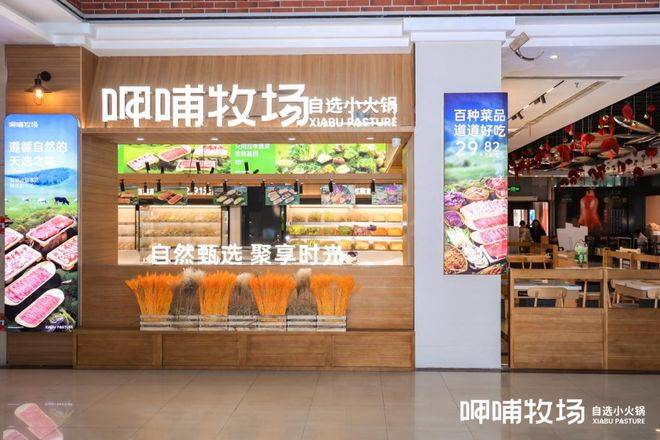
Core Insights - The hot pot market is entering a new development stage that emphasizes both quality experience and price accessibility, prompting the launch of a new brand line "Xiabob Ranch" by Xiabob Group [1] - "Xiabob Ranch" aims to cater to young consumers and their social needs, offering a light luxury self-service hot pot experience that balances high quality with affordable pricing [1][4] Market Trends - The Chinese hot pot market is experiencing a shift towards stock competition and structural adjustments, with consumers increasingly seeking refined dining experiences that prioritize ingredient quality, safety, and health attributes [2] - There is a growing demand for flexible dining scenarios, such as solo dining and light social meals, indicating a market gap for hot pot experiences that offer high-quality ingredients, autonomy in selection, and moderate pricing [2] Brand Positioning - "Xiabob Ranch" targets the young demographic, who are both the main force behind consumption upgrades and price-sensitive, seeking maximum value [4] - The brand's core advantages are identified as high-end quality, small portion self-selection, and affordable pricing, addressing current market pain points and growth opportunities [4] Expansion Plans - Following the opening of its first store, Xiabob Group plans to open two additional locations in Shanghai before the Lunar New Year, marking a strategic move to fill market gaps and meet the dining needs of young consumers and professionals [6] Competitive Advantage - "Xiabob Ranch" builds its competitive edge on a strong supply chain and quality assurance system, leveraging Xiabob Group's extensive experience [7] - The pricing strategy includes a tiered system for ingredients, with vegetable prices starting at 2.91 yuan and meat from 9.91 yuan, making high-quality hot pot more accessible [7][9] Consumer Experience - The self-service model allows consumers to select their dishes within 3 to 5 minutes, enhancing the dining experience and operational efficiency [11] - The store design focuses on high table turnover rates while ensuring a comfortable dining space for customers [11] Brand Evolution - The launch of "Xiabob Ranch" is part of Xiabob Group's broader multi-brand strategy, which has included previous successful ventures like the tea brand "Chami Tea" and the mid-to-high-end hot pot brand "Coucou" [14][16] - The group's strategy reflects a clear evolution from core offerings to diversified ventures, aiming to capture growth opportunities in both mainstream and high-end dining markets [16]