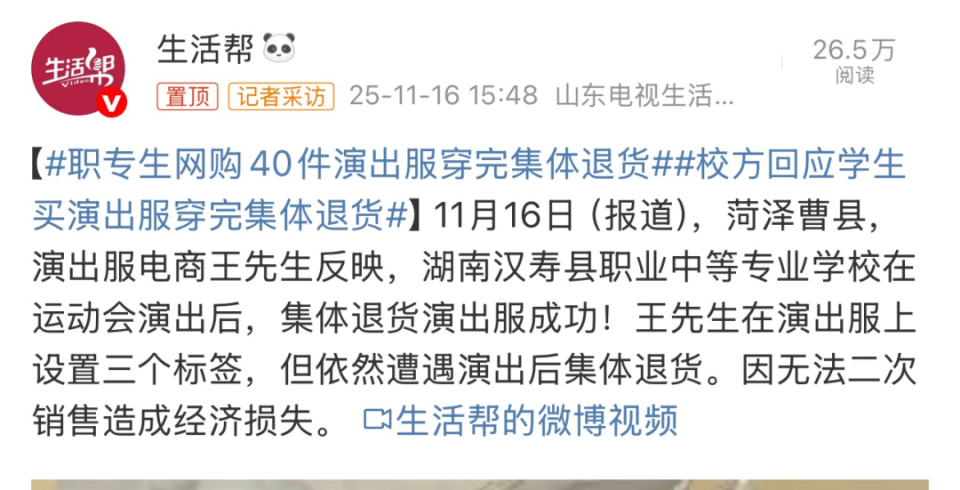
演出服装

Search documents
年味浓、消费旺!鲜花、美食、花灯……订单爆满 “年经济”新意十足亮点多
Yang Shi Wang· 2026-02-04 05:15
Group 1: Flower Market in Guangdong-Hong Kong-Macao Greater Bay Area - The flower market in the Guangdong-Hong Kong-Macao Greater Bay Area is experiencing a surge in activity as the Spring Festival approaches, driven by efficient cross-border logistics and customs systems via the Hong Kong-Zhuhai-Macao Bridge [1] - Buyers from Hong Kong and Macau are increasingly traveling to the mainland for flower purchases, contributing to a vibrant market atmosphere [1][3] - A significant increase in customers from Hong Kong and Macau has been noted, with wholesale and retail sales now accounting for approximately half of the transactions at a local orchid base [7] Group 2: Traditional Food and Cultural Events - In Shandong's Juancheng County, traditional handmade flower buns are gaining popularity, reflecting the festive spirit as the Lunar New Year approaches [8] - A local food company has introduced a new flower bun made with dragon fruit and pumpkin juice, which has become well-received in the market due to its vibrant colors and pleasant aroma [12] - The annual New Year goods fair in Ma'anshan, Anhui, features a variety of traditional foods, fresh local products, and handicrafts, enhancing the festive atmosphere for consumers [13][15] Group 3: Customized Products for the New Year - There is a rising demand for customized lanterns and performance costumes in Henan, with companies ramping up production to meet the needs of the Spring Festival market [17] - In Kaifeng, preparations for a New Year lantern display are underway, showcasing a blend of traditional and modern design elements [18] - The demand for personalized performance costumes is increasing, with some designs utilizing advanced technologies like 3D printing, leading to higher production costs and designer salaries [20][22]


“巨型吊牌防退货” 是一个“上策”
Xin Lang Cai Jing· 2025-12-26 17:58
Core Viewpoint - The introduction of oversized tags by merchants is a strategic response to high return rates in the e-commerce fashion industry, particularly for women's clothing, where return rates can reach 50% to 60%, and even 80% for live-streamed sales [1] Group 1: Return Rates and Consumer Behavior - E-commerce women's clothing has a return rate of 50% to 60%, with live-streaming sales seeing rates over 80% [1] - Many returns are not due to quality issues but rather consumers taking advantage of return policies, leading to the practice of "sheep shearing" by wearing items briefly before returning them [1] - The convenience of return policies encourages impulsive buying, as consumers feel they can "try before they buy" [1] Group 2: Merchant Strategies and Market Dynamics - Merchants are advocating for higher return thresholds to reduce the frequency of returns, which they perceive as a burden [2] - A blanket increase in return thresholds may suppress consumer purchasing behavior, leading to overall market losses [3] - The introduction of large tags serves to differentiate between genuine returns and those made for opportunistic reasons, thus protecting both consumer interests and merchant profits [3] Group 3: Innovative Solutions and Market Evolution - The oversized tag concept is presented as a market innovation that balances the interests of consumers and merchants [3] - The example of counterfeit prevention in the electrical wire market illustrates how market dynamics can lead to creative solutions that address existing challenges [4] - Respecting market laws and allowing for innovative practices can lead to the development of new mechanisms to address temporary market deficiencies [4]
学生网购40件演出服 7天后成功退货,校方回应来了!商家:都脏得没法再次销售;有商家防“蹭穿”绝招亮了
Mei Ri Jing Ji Xin Wen· 2025-11-17 09:13
Core Viewpoint - The article highlights the issue of high return rates in the clothing e-commerce sector, particularly due to students returning worn clothing after events, leading to financial losses for merchants [1][8]. Group 1: Merchant Experiences - A merchant in Heze reported a loss after students returned 40 performance costumes, which were worn and could not be resold [1]. - Another merchant from Shenyang experienced a loss of approximately 80,000 yuan due to over 60 students returning clothes after a sports event, claiming quality issues [8]. - Merchants are increasingly frustrated with the high return rates, which are often not due to product quality but rather misuse of the "no reason return" policy [8]. Group 2: School Involvement - The vice principal of the school involved stated that the returns were personal actions by students, and the school had not issued any return instructions [6]. - The school paid a deposit to the merchant and planned to handle refunds after students returned the items [6]. Group 3: E-commerce Platform Response - The e-commerce platform's customer service suggested that merchants file complaints regarding returns that exceed seven days and show signs of use, indicating a process for reviewing such cases [4]. - The platform aims to protect merchants' rights by potentially reversing incorrect refund decisions [4]. Group 4: Industry Trends - Some merchants are implementing measures to prevent misuse of return policies, such as attaching large tags or locks to clothing to deter customers from returning worn items [8][12]. - The trend of high return rates in the clothing sector is causing significant distress among merchants, prompting them to seek innovative solutions to mitigate losses [8].
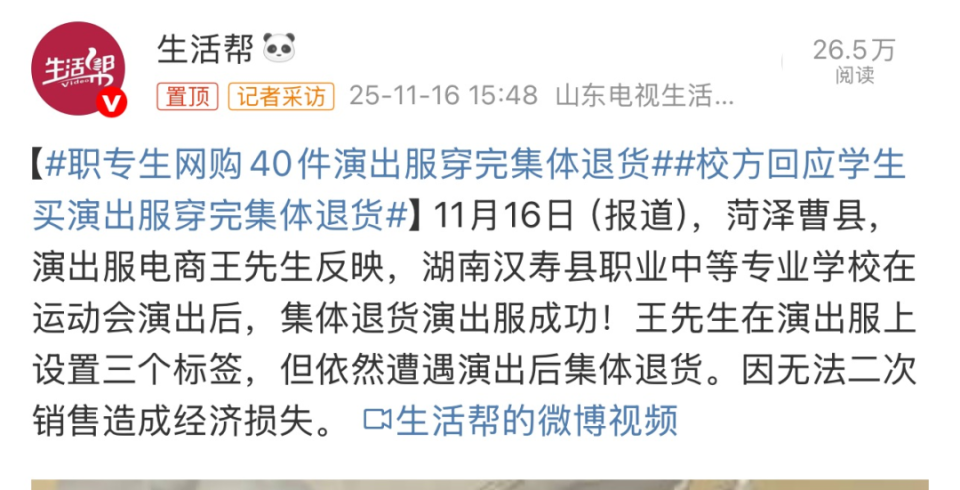
学生网购40件演出服,7天后成功退货,校方回应来了!商家:都脏得没法再次销售;有商家防“蹭穿”绝招亮了
Mei Ri Jing Ji Xin Wen· 2025-11-17 08:54
Core Points - A clothing store owner in Heze reported economic losses due to students returning purchased performance costumes after use, which could not be resold [1][2] - The store owner expressed frustration over the condition of the returned items, which showed clear signs of use beyond the 7-day return policy [2] - The e-commerce platform's customer service suggested that the merchant file a complaint to protect their rights, indicating a review process for disputed refunds [4] Group 1 - A school official stated that the students acted individually without any instructions from teachers regarding returns, acknowledging the school's responsibility in the matter [6] - The school paid a deposit to the merchant and will adjust payments after the students return the items [6] - A similar incident occurred in Shenyang, where over 60 students returned clothing after an event, leading to significant losses for the store owner [7] Group 2 - High return rates in certain categories, particularly clothing, have caused distress among merchants, with many returns not related to product quality but rather exploiting the return policy [7] - Some merchants have implemented measures like oversized tags to deter misuse of the "no reason return" policy [7] - A Beijing clothing merchant resorted to using a visible lock on clothing zippers to prevent customers from returning items after wearing them, indicating a growing trend of protective measures among retailers [11]