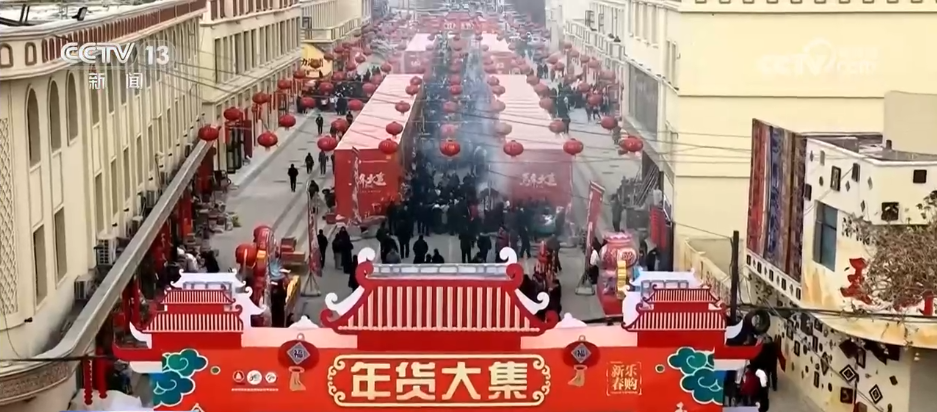
年经济

Search documents
新春气象万千 中国活力奔涌
Zhong Guo Jing Ji Wang· 2026-02-27 03:01
Core Viewpoint - The Spring Festival holiday in 2026 showcased a vibrant economy with significant consumer activity, reflecting a positive trend in China's economic stability and growth. Group 1: Economic Indicators - The total box office revenue for the Spring Festival reached 5.752 billion yuan, indicating a strong performance in the film industry [4] - Domestic travel during the holiday saw 596 million trips, highlighting a robust tourism sector [4] - Daily sales revenue in consumer-related industries increased by 13.7% year-on-year, demonstrating heightened consumer spending [4] Group 2: Cultural and Tourism Consumption - Diverse cultural tourism experiences flourished, enhancing the festive atmosphere and showcasing traditional crafts and local attractions [4] - The integration of technology in cultural events, such as AI light shows and drone displays, reflects innovation in the cultural sector [5] - The popularity of intangible cultural heritage products and traditional crafts indicates a growing appreciation for cultural heritage among consumers [5] Group 3: Service Enhancements - The introduction of smart systems for traffic management and security at transportation hubs improved the efficiency of travel during the holiday [5] - Various local initiatives aimed at providing better services for travelers, including support for vulnerable groups, contributed to a smoother holiday experience [5]

消费热起来 点燃天山脚下幸福年
Jin Rong Shi Bao· 2026-02-26 02:15
Core Insights - The article highlights the vibrant atmosphere and increased consumer activity in Changji, Xinjiang during the Spring Festival, showcasing local food, cultural experiences, and tourism initiatives that have attracted visitors [1][3]. Group 1: Local Business Performance - The local snack street in Changji has become a popular destination, featuring a variety of local delicacies and cultural performances, which has drawn significant crowds during the holiday season [1]. - A local store, Xiyu Zhen Guo Fang, offers over 8,000 types of Xinjiang specialties, with 2,000 on regular display, emphasizing the importance of quality and customer service in attracting repeat visitors [2]. - Despite being a low season for tourism, the store reported monthly revenues exceeding 80,000 yuan, with a notable increase of over 20% during promotional periods [3]. Group 2: Government Initiatives and Consumer Engagement - The Changji government has launched 81 cultural and tourism activities, 75 discount policies, and 49 promotional measures to stimulate consumer spending during the Spring Festival [3]. - The introduction of 3 million yuan in tourism consumption vouchers has significantly boosted visitor enthusiasm and spending, acting as a lever to activate the off-peak tourism market [3]. Group 3: Tourism and Entertainment Growth - Ski resorts in Changji experienced an average daily visitor count of around 600 during the holiday, with a significant increase in night-time visitors, leading to a nearly 30% year-on-year growth in sales at scenic spots [4]. - The local cinema, 103 Movie Park, saw long queues for tickets, with many families taking advantage of discounts from tourism vouchers, indicating a strong demand for entertainment options during the festive period [4]. Group 4: Overall Economic Impact - During the nine-day Spring Festival holiday, Changji's total retail sales of consumer goods reached 160 million yuan, reflecting a year-on-year growth of 3.3% [5]. - Local businesses reported substantial increases in daily revenues, with some stores experiencing multiple times their usual income, showcasing the resilience and potential of the consumer market [5].

盘点2026年春节假期 透过增长数据里看“年经济”活力满满
Yang Shi Wang· 2026-02-25 04:50
Group 1: Cultural and Tourism Market Performance - The cultural and tourism market in China during the Spring Festival was stable and orderly, with domestic travel reaching 596 million trips and total spending of 803.48 billion yuan, both setting historical records [2][11] - Hainan received 12.32 million tourists during the Spring Festival, with total spending of 18.37 billion yuan, marking increases of 28.9% and 30.7% respectively compared to the previous year [9] - The tourism-related service revenue saw a year-on-year increase of 39.6% during the Spring Festival, driven by the extended holiday period [32] Group 2: New Trends in Tourism - Ice and snow sports became a popular choice for vacationers, with various destinations offering unique experiences and cultural activities [12][20] - A significant rise in inbound tourism was noted, with more foreign visitors coming to China to experience the Chinese New Year [7] - Smaller cities with unique cultural and tourism resources saw a substantial increase in traveler numbers, with flight bookings to these destinations doubling in some cases [21][27] Group 3: Consumer Spending Trends - Daily sales revenue in consumer-related industries increased by 13.7% compared to the previous Spring Festival [28] - High-tech and quality products, such as smart home appliances, saw a daily sales revenue increase of 19% during the holiday [30] - The restaurant sector experienced a significant boost, with daily income rising by 31.2%, particularly in traditional dining services [34]
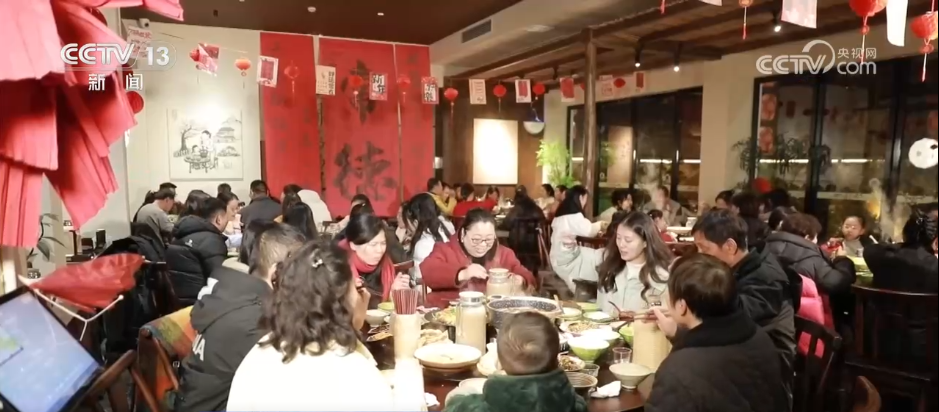
评中国|新春消费“马力全开”,经济发展跑出“加速度”
Xin Lang Cai Jing· 2026-02-23 04:16
Group 1 - The core viewpoint of the articles highlights the vibrant consumer activity during the Spring Festival, reflecting strong economic growth and consumer confidence in China [1][2][3] - The Spring Festival holiday lasted from February 15 to February 23, totaling 9 days, allowing for more leisurely arrangements for family gatherings and travel [1] - Payment transactions processed by UnionPay and NetLink reached 4.931 billion on New Year's Eve, marking a 21.64% increase compared to the previous year, indicating a robust consumer market [1] Group 2 - There is a noticeable shift in consumer preferences towards green, smart, and health-oriented products during the Spring Festival, indicating a trend of consumption upgrading [2] - The average daily cross-regional movement of people during the holiday is expected to reach 299 million, potentially setting a new record for the Spring Festival [2] - Hotel accommodation revenue increased by 32.7%, and car rental orders surged by 54%, demonstrating an extended travel radius and a broader reach of the Spring Festival consumption boom [2] Group 3 - Government policies have played a crucial role in supporting the festive market, including measures to ensure the supply and price stability of essential goods [3] - The "New Spring Shopping" campaign, initiated by the Ministry of Commerce and nine other departments, included the distribution of consumer vouchers and subsidies, effectively stimulating market enthusiasm [3] - By February 19, the consumption upgrade program benefited 28.88 million people, generating sales of 198.02 billion, showcasing the successful conversion of consumer intent into actual purchasing power [3]
好评中国丨新春消费“马力全开”,经济发展跑出“加速度”
Xin Lang Cai Jing· 2026-02-23 03:11
Core Viewpoint - The Spring Festival holiday in 2026, lasting from February 15 to 23, has seen a vibrant consumer atmosphere across China, reflecting strong economic growth and public satisfaction. The holiday is characterized by increased spending and a shift in consumer preferences towards quality and sustainable products [1]. Group 1: Consumer Behavior - During the Spring Festival, there was a notable increase in payment transactions, with UnionPay and Wanglian processing 4.931 billion transactions on New Year's Eve, marking a 21.64% increase from the previous year [1]. - The demand for green, smart, and health-oriented products surged, indicating a trend towards consumption upgrades and new growth opportunities in related industries [1]. - Gold consumption saw a rise, with preferences shifting towards lightweight and well-designed jewelry, reflecting a change in consumer attitudes from merely meeting needs to pursuing personal satisfaction [1]. Group 2: Travel and Logistics - The Ministry of Transport predicted that the average daily cross-regional movement of people during the 9-day holiday could reach 299 million, potentially setting a new record for the Spring Festival [1]. - There was a significant increase in travel-related spending, with ice and snow tourism consumption growing by 120% and winter escape tourism by 68% on the first day of the holiday [1]. - Hotel accommodation revenue increased by 32.7%, and car rental orders rose by 54%, indicating an extended travel radius and a broader reach of the Spring Festival consumption wave [1]. Group 3: Policy Support - The Central Committee and the State Council issued a notice to ensure the supply and stable prices of essential goods, aiming to stimulate holiday consumption potential through various measures [1]. - The Ministry of Commerce, in collaboration with nine departments, launched the "Happy Shopping Spring Festival" initiative, which included issuing consumption vouchers and subsidies to boost market enthusiasm [1]. - By February 19, the old-for-new consumption policy benefited 28.88 million people, generating sales of 198.02 billion yuan, demonstrating effective policy implementation that translated consumer intent into actual purchasing power [1].
新春走基层丨年味升腾处 消费焕新时——石家庄春节消费市场热气腾腾
Xin Lang Cai Jing· 2026-02-22 05:33
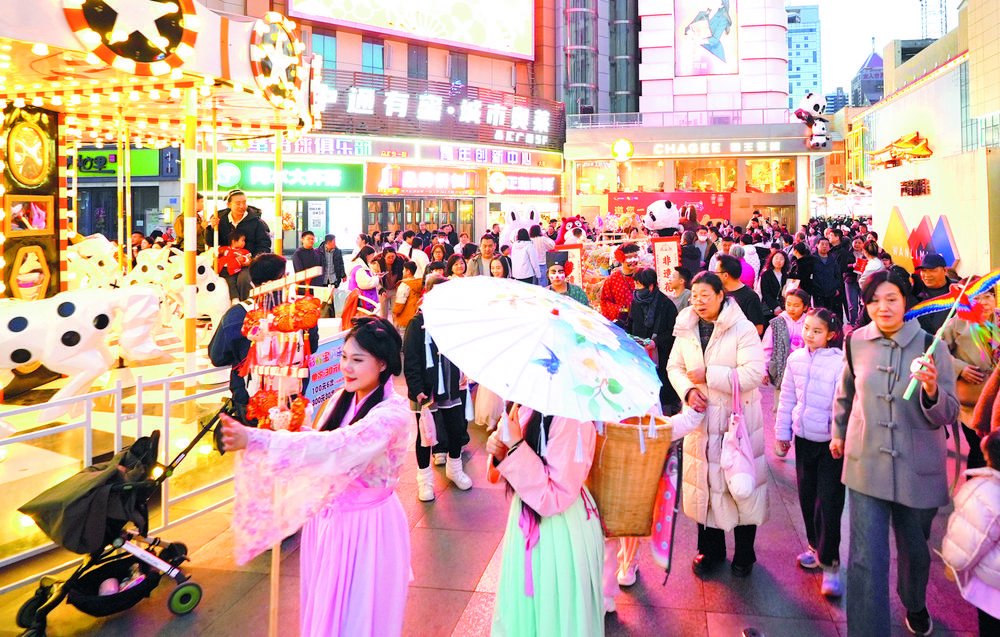
Core Viewpoint - The article highlights the vibrant and festive atmosphere in Shijiazhuang during the Spring Festival, showcasing a blend of traditional customs and modern consumer experiences, driven by policy incentives and market vitality [4][8]. Group 1: Festival Activities - Shijiazhuang's Bayli Temple Walking Street hosted various activities during the Spring Festival, including intangible cultural heritage displays, Hanfu parades, and folk performances [3]. - The "Zhi Yin Qi Miao (Temple) Fair" at the Zhi Yin 1953 industrial park featured traditional drum performances and lion dances, attracting significant public interest and participation [5][6]. Group 2: Consumer Experience - The extended nine-day holiday for the Spring Festival has enhanced consumer experiences, merging traditional customs with modern trends in food, entertainment, and fashion [4]. - New stores and innovative experiences in the Bayli Temple Walking Street attracted many young consumers, reflecting a shift towards a more dynamic and engaging holiday shopping experience [7]. Group 3: Policy Incentives - Shijiazhuang launched a prize invoice program as part of a national initiative, with a total prize pool of 260 million yuan, encouraging consumers to request invoices and participate in the lottery [9][10]. - The "old for new" policy during the Spring Festival provided discounts on various consumer goods, including automobiles and electronics, enhancing consumer spending and satisfaction [10].
市场红火年味浓
Xin Lang Cai Jing· 2026-02-20 18:38
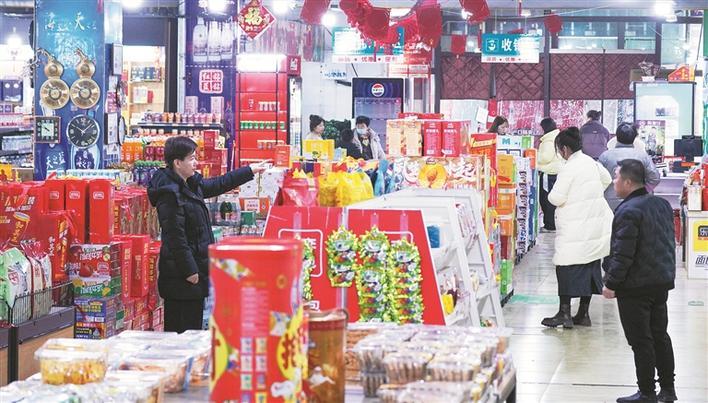
Core Viewpoint - The article highlights the robust consumer activity and effective supply management during the Spring Festival in Xinjiang, showcasing a vibrant economic atmosphere and the successful implementation of various promotional activities to stimulate consumption [2][10]. Group 1: Consumer Supply and Price Stability - During the Spring Festival, Xinjiang's various supermarkets and markets experienced a peak in consumer activity, focusing on ensuring sufficient supply and stable prices for essential goods [2][4]. - The Xinjiang Nine Ding Agricultural Products Wholesale Market initiated a holiday supply plan a month in advance, emphasizing supply stability, price control, and food safety [4][5]. Group 2: Promotional Activities and Consumer Engagement - The Twelve Division's "Welcome the New Year Consumption Season" encouraged merchants to participate in promotional activities, offering discounts through the "Cloud Flash Payment" app, enhancing consumer experience [3][10]. - Diverse promotional activities, including the introduction of "horse-themed" products, attracted significant consumer interest, reflecting cultural engagement and modern trends [6][7]. Group 3: Cultural and Recreational Events - The Spring Festival saw a shift towards experiential consumption, with various cultural and recreational activities being organized, such as traditional performances and ice sports, enhancing the festive atmosphere [8][9]. - Events like the "Sports Welcome the New Year" theme in Beitun City provided entertainment and engagement for both residents and tourists, contributing to the overall economic activity [9][10].
消费新观察|从赶集到打卡 烟火气点燃年经济新活力
Yang Guang Wang· 2026-02-15 06:59
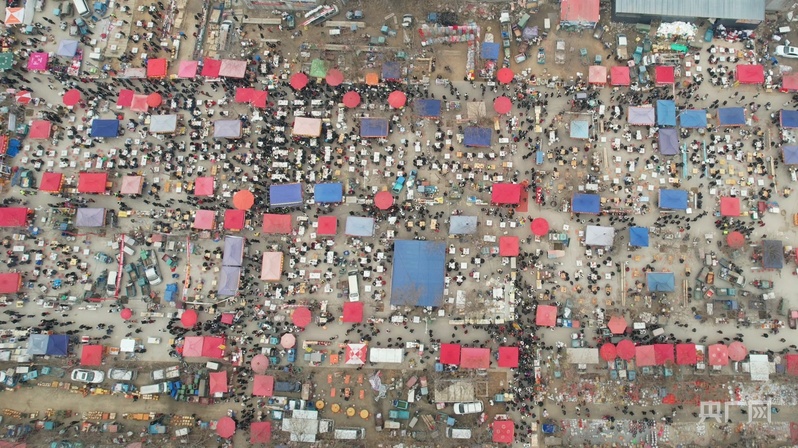
Core Viewpoint - The Weichuan Grand Market, with a history of several hundred years, has transformed into a vibrant hub for the New Year, showcasing a blend of traditional and modern consumer experiences, thus driving new economic vitality in the region [2][11]. Group 1: Market Dynamics - Weichuan Town, located at the intersection of Zhengzhou, Kaifeng, and Xuchang, has evolved from a traditional agricultural market focused on bulk purchases to an integrated "eat, drink, play, and shop" experience, reflecting consumer upgrades and demographic changes [2][11]. - The market features nearly 3,000 stalls and occupies over 100 acres, attracting an average daily foot traffic of 80,000 to 100,000 visitors during the New Year period [6]. Group 2: Consumer Engagement - The market is bustling with activity, with vendors reporting high sales volumes; for instance, a tofu vendor sells over 20,000 pounds daily, utilizing traditional techniques while also leveraging live streaming to reach a broader audience [6]. - Young people are increasingly drawn to the market, not only for its food offerings but also for the nostalgic atmosphere it provides, as they seek to reconnect with childhood experiences of the New Year celebrations [8][11]. Group 3: Cultural Significance - The Weichuan Grand Market serves as a "living museum" of folk customs, maintaining the tradition of opening on the third, sixth, and ninth days of the lunar calendar, thus preserving cultural heritage while adapting to modern consumer preferences [5][11]. - The market's vibrant atmosphere is enhanced by local delicacies, such as Weichuan sesame sauce noodles and tofu, which are popular among both locals and tourists, contributing to the festive spirit of the New Year [5][6].
晶采观察丨从“年经济”走红 读懂中国消费升级三大信号
Yang Guang Wang· 2026-02-12 05:40
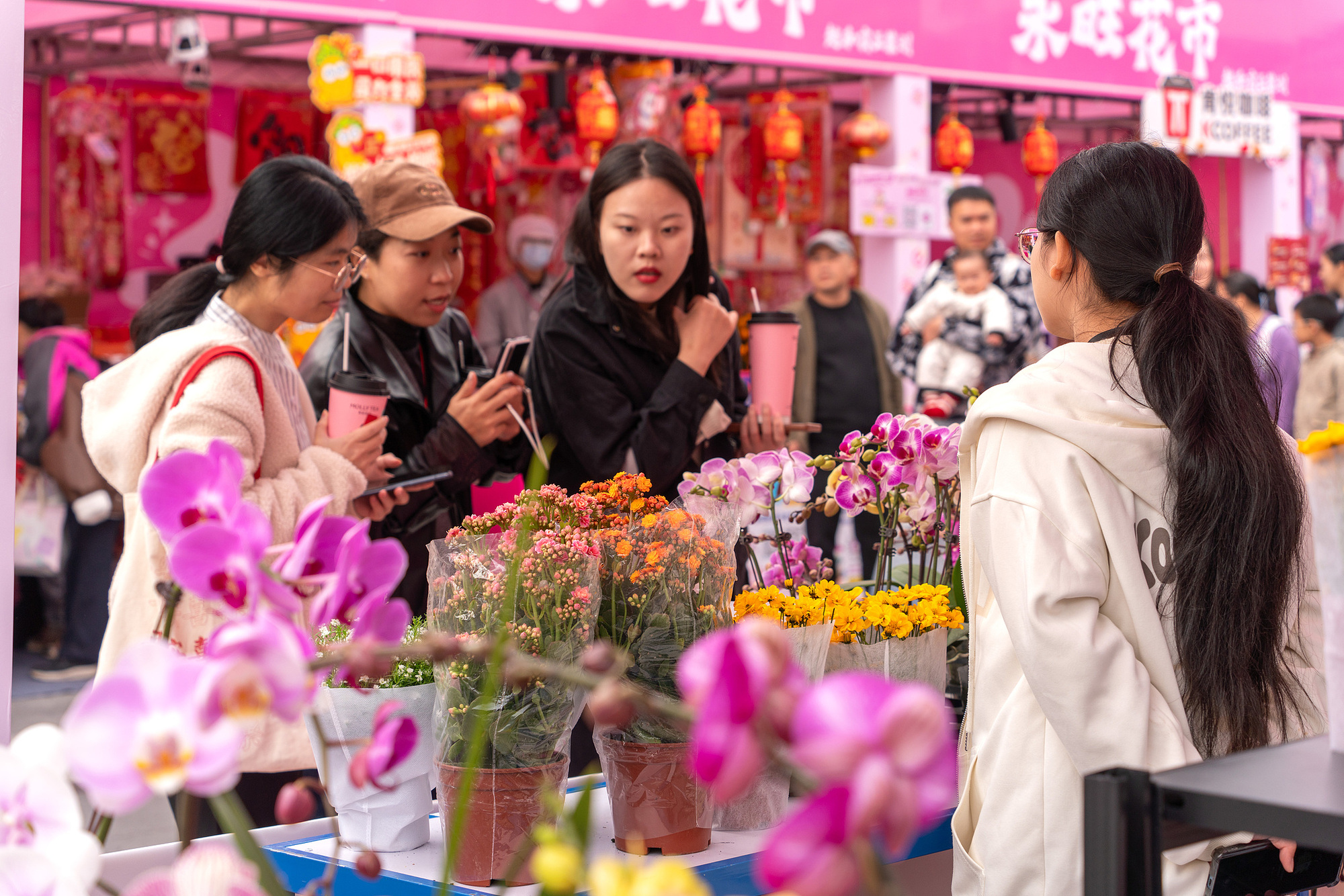
Core Insights - The article highlights a shift in consumer behavior during the Spring Festival, with flowers becoming a new essential item, reflecting a transition from material abundance to emotional value in holiday celebrations [2][6] - There is a growing trend towards unique and personalized decorations, with creative zodiac-themed items gaining popularity, indicating a desire for individuality and cultural expression among consumers [3][6] - Travel during the Spring Festival is increasingly favored over traditional family reunions, with a significant rise in hotel bookings for family outings, showcasing a shift towards experiential celebrations [4][6] Group 1 - Fresh flowers are becoming a "hard currency" for the Spring Festival, with sales methods evolving to meet consumer demand for emotional and aesthetic value [2] - Creative zodiac decorations, particularly those with design elements and stories, are gaining traction, reflecting a shift towards unique and meaningful holiday items [3] - The trend of "reverse Spring Festival travel" is emerging, with families opting to explore new destinations rather than solely focusing on family gatherings, as evidenced by a 65% year-on-year increase in hotel bookings for extended stays [4] Group 2 - The overall consumption pattern during the Spring Festival is evolving from meeting basic needs to emphasizing quality, individuality, and experiences, driven by rising living standards [6] - The "year economy" is heating up, reflecting consumers' confidence in their choices and a richer understanding of holiday significance, leading to diverse lifestyles and unique celebrations [6]
腊月“忙年”模式拉满 “年经济”烟火气里涌动经济暖流
Yang Shi Wang· 2026-02-10 07:28
Group 1: Local Festivals and Markets - The article highlights the vibrant atmosphere of local markets and festivals across various regions in China as the Lunar New Year approaches, showcasing cultural traditions and local specialties [1][10][16] - In Xinjiang's Lop County, a newly renovated commercial street hosts a bustling New Year market with nearly a hundred stalls, attracting a diverse crowd [3][9] - The Fujian Ningde Shouning New Year food fair features over 50 stalls offering local delicacies, along with performances of traditional opera, enhancing the festive spirit [10][12][14] Group 2: Local Products and Specialties - The Lop County market offers local products such as red dates, walnuts, and traditional snacks like fried dough twists and marzipan, emphasizing the region's culinary heritage [5][7] - In Shanxi's Jin Cheng, the production of traditional sugar gourds is highlighted, showcasing local craftsmanship and the importance of this treat during the New Year [19][21] - The article mentions the unique offerings in Guangdong's Foshan, where hand-written "Spring Festival couplets" are popular, reflecting local customs and creativity [24][28] Group 3: Economic Impact and Consumer Engagement - The markets and fairs not only serve as cultural hubs but also significantly boost local economies, with large crowds and high consumer engagement reported [19][31] - In Hebei's Shijiazhuang, flower markets are thriving as consumers can select and arrange their own pots of orchids, indicating a trend towards personalized shopping experiences [31][34] - The rose industry in Liaoning's Shenyang is highlighted for its modernized practices, with significant production capacity and economic contributions, particularly during the festive season [36][40]