
火箭整流罩

Search documents
未知机构:隆华科技推荐上周末发布业绩高增预告预计26年业绩维持高增趋势-20260127
未知机构· 2026-01-27 02:10
Summary of Conference Call Notes Company Overview - **Company**: 隆华科技 (Longhua Technology) - **Industry**: Aerospace and New Materials Key Points and Arguments - **Performance Forecast**: 隆华科技 has released a high growth performance forecast, expecting to maintain a high growth trend in 2026 [1] - **Aerospace Business**: The company has already supplied products related to commercial aerospace, including rocket fairings, which are noted for their strong competitiveness [2][3] - **Material Applications**: The company's PMI foam is used as a core material in composite sandwich structures, widely applied in helicopters, drones, radar covers, and fairings in the aerospace sector [2][4] - **Strategic Partnerships**: 隆华科技 has a close partnership with China Aerospace Group, providing a significant competitive advantage due to qualification barriers [4] - **Market Potential**: The reference value of the Starship fairing is approximately $8 million, while the domestic Long March series rocket fairing value ranges from $10 million to $40 million. Assuming a launch frequency of 1,000 times by 2030, the fairing market size could reach approximately 10 billion to 40 billion [4] - **Revenue Projections**: The PMI business is projected to generate approximately 150 million in revenue by 2025, with a gross margin exceeding 70%. The company's capacity is expected to double in 2026, capitalizing on the aerospace industry's growth [4] - **Target Material Business**: The company is deeply involved in the electronic information target material sector and also covers the perovskite (ITO) new energy field, with close collaborations with BOE and Huaxing Optoelectronics. The rapid development of SpaceX's solar photovoltaic plans is expected to benefit the company's ITO target materials [4] - **Growth Rate**: The revenue from target materials and ultra-high temperature materials is projected to be around 800-900 million by 2025, accounting for 25-30% of total revenue, with a compound annual growth rate exceeding 30% over the past three years [4] Additional Important Information - **Lithium Extraction Agents**: The company’s subsidiary, Sanuo New Materials, is a domestic professional producer of rare metal extraction agents. The current production capacity is 60,000 tons, and since Q4 2025, lithium carbonate prices have been on the rise, currently exceeding 180,000 per ton. This price increase is expected to significantly enhance the penetration rate of the company's extraction agents in lithium extraction from salt lakes [5] - **Revenue from Extraction Agents**: Revenue from extraction agents is projected to be around 200-300 million by 2025, with explosive growth anticipated in 2026 as capacity is released and downstream application prices recover [5] - **Traditional Business Stability**: The company’s energy-saving heat exchange equipment and environmental water treatment businesses have remained stable, contributing approximately 40-50% of total revenue, with single-digit growth in recent years [5] - **Overall Performance Guidance**: The company expects to achieve approximately 210 million in revenue by 2025 and 380 million in 2026, with new material businesses providing performance elasticity and the aerospace sector presenting new opportunities [5]

中航西飞:公司商业航天技术已应用于火箭整流罩等多类产品
Zheng Quan Ri Bao· 2026-01-14 12:36
Core Viewpoint - The company is actively expanding its commercial aerospace business by leveraging its existing technology and expertise in aerospace components and materials [2] Group 1: Commercial Aerospace Development - The company has applied its commercial aerospace-related technologies to various products, including rocket fairings, satellite composite structure panels, large onboard composite antennas, optical instrument sunshields, and solar sails [2] - A dedicated team has been established to promote the expansion of the commercial aerospace business, with plans to increase R&D investment focusing on lightweight and high-reliability applications of composite materials [2] - The company aims to enhance its integrated service capabilities to seize opportunities in the growing commercial aerospace industry [2] Group 2: Aerospace Equipment Sector - In the aerospace equipment field, the company is leveraging its foundation in large aircraft and rocket component manufacturing to focus on the research and production of related structural components [2] - The company plans to keep pace with industry trends by exploring opportunities for supporting space transportation equipment and deepening collaboration across the industry chain [2]


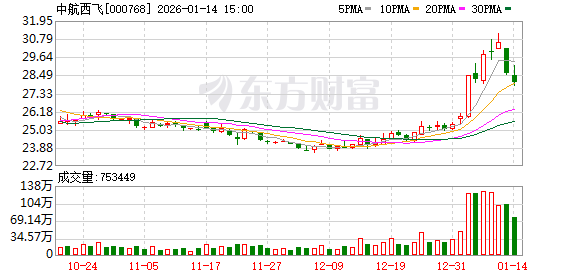
中航西飞:公司已设立专门团队拓展商业航天业务,主动对接产业链企业
Zheng Quan Ri Bao Zhi Sheng· 2026-01-14 11:40
Core Viewpoint - The company, AVIC Xi'an Aircraft Industry Group, is actively expanding its composite materials technology for commercial aerospace applications, showcasing its capabilities in manufacturing large-scale components for rockets and satellites [1] Group 1: Technology and Applications - The company's composite materials technology has been applied to various products, including rocket fairings, satellite composite structure panels, large on-board composite antennas, optical instrument sunshields, and solar sails [1] - The company possesses the largest manufacturing capability for aircraft and components in China, being one of the few entities capable of producing large liquid rocket and aerospace vehicle components [1] - In satellite reflector manufacturing, the company can achieve both "large size" and "high precision" simultaneously [1] Group 2: Business Development - A dedicated team has been established to expand the company's commercial aerospace business, actively engaging with industry chain enterprises [1] - The company plans to focus on technological iteration and capacity enhancement while deepening cooperation to expand application scenarios [1]
3D打印行业系列专家会议-3D打印在商业航天的发展现状与未来展望
2026-01-08 16:02
Summary of 3D Printing in Commercial Aerospace Industry Overview - The 3D printing industry is significantly impacting the manufacturing of liquid rocket engines, particularly in the context of reusable engines where complex structures like cooling channels are involved. This technology enhances material utilization, shortens production cycles, and reduces reliance on traditional high-end processes and skilled labor from major countries [1][4]. Key Insights and Arguments - The value of 3D printed parts in liquid rocket engines approaches 50%, with advanced foreign engines reaching 80%-90%, indicating substantial cost and efficiency advantages in rocket manufacturing [1][4]. - Domestic commercial aerospace companies widely adopt 3D printing technology, with approximately 90% considering its use in engine manufacturing to tackle design challenges that traditional methods cannot address [1][7]. - The mainstream manufacturing process for rocket engines is Selective Laser Melting (SLM), which provides good surface quality and simplifies post-processing, primarily using high-temperature alloys, stainless steel, and copper alloys [1][10][11]. - Rocket engines and storage tanks are the most expensive components in rocket manufacturing, with 3D printing potentially accounting for about half of the engine manufacturing costs. As technology matures and production scales up, costs are expected to decrease further [1][14]. Additional Important Points - The application of 3D printing is not limited to liquid rocket engines; entire rocket structures, including storage tanks and fairings, are also potential candidates for this technology. For instance, the American company Relativity Space has successfully manufactured an entire aluminum rocket body using Wire Arc Additive Manufacturing (WAAM) [5]. - Current manufacturing methods for storage tanks primarily involve traditional techniques like welding and machining, with 3D printing being explored by companies like Gartner in the U.S. due to its design flexibility and efficiency [6]. - The equipment required for producing rocket engines is substantial, with specifications of at least 850×850×1.5 meters and market prices typically exceeding 6 million RMB [8]. - The time required to print a large rocket engine component, such as a nozzle, is over 20 days, with total production cycles ranging from one and a half to two months, significantly faster than traditional methods [9]. - The price of domestic rocket engines is around 7-8 million RMB, with 3D printing contributing approximately 3.5 to 4 million RMB to this cost [13]. - The trend towards reusability in rocket technology necessitates extensive use of 3D printing for rapid validation and iteration of new technologies, as evidenced by SpaceX's experience [3][18]. - Major suppliers in the domestic market include companies like Plitec, Hebei Jingye, and Wuxi Feilong, which provide substantial capacity and quality products to commercial aerospace companies [20]. Future Outlook - The demand for 3D printing in the commercial aerospace sector is expected to grow significantly, with predictions of explosive growth by 2027 as companies seek to reduce costs and enhance production capabilities [21][22]. - The relationship between commercial aerospace companies and their 3D printing service providers is characterized by deep binding, making it challenging for new entrants to disrupt existing supply chains [31].
国家设立商业航天司,天津如何竞逐“星”赛道?
Zhong Guo Xin Wen Wang· 2025-12-04 12:03
Core Insights - The establishment of the Commercial Space Administration by the national government marks the beginning of a "standardized development period" for China's commercial space industry, indicating a rapid development path for the entire industry chain, including satellite manufacturing, rocket launching, ground stations, terminal equipment, and operational services [1][3] Industry Development - The three major commercial space industry clusters in China are located in the Beijing-Tianjin-Hebei, Yangtze River Delta, and Pearl River Delta regions, with various provinces and cities introducing supportive measures to compete in the commercial space sector [1] - Tianjin has a historical advantage in the aerospace industry, having started its development as early as 2006 with the establishment of the aerospace industry in the Tianjin Port Free Trade Zone [3][9] Rocket Launch Capabilities - Tianjin has both state-owned and private enterprises contributing to its rocket launch capabilities, creating a diverse and collaborative industrial ecosystem [3] - The Tianjin Aerospace Changzheng Rocket Manufacturing Company is responsible for producing key components and assembling various models of rockets, including the Long March 5 and Long March 7 series [3][5] Private Sector Contributions - Private companies like Tianjin Aisida Aerospace Technology Co., Ltd. play a significant role in the rocket industry, focusing on the development of lightweight rocket fairings that enhance payload efficiency by reducing weight by approximately 30% [5] - The company claims to provide a "one-stop" solution for various components needed in rocket manufacturing [5] Satellite Manufacturing - Tianjin YunYao Aerospace Technology Co., Ltd. has successfully launched multiple satellites, contributing to the construction of a commercial meteorological satellite constellation [6][8] - As of October 2025, the company has launched 47 meteorological satellites, enhancing its global observation capabilities [8] Ecosystem and Infrastructure - Tianjin's geographical advantages, including its status as a key northern port and free trade zone, position it as a crucial link between the aerospace innovation chain and the industrial chain [9] - The Tianjin Port Free Trade Zone has formed an industrial cluster covering satellite manufacturing and ground equipment, attracting numerous upstream and downstream enterprises in the commercial space sector [11] Future Plans and Initiatives - The Tianjin Dongli District has announced a three-year action plan to accelerate the development of the aerospace industry, aiming to create a manufacturing and research hub for aerospace and low-altitude economies [12] - The Tianjin Aerospace Digital Industry Park, which opened in October, focuses on commercial aerospace, low-altitude economy, and intelligent technologies, fostering new projects and applications [12] Conclusion - With a solid industrial foundation and forward-looking industry layout, Tianjin is poised to embrace its "space moment" in the commercial aerospace sector [13]
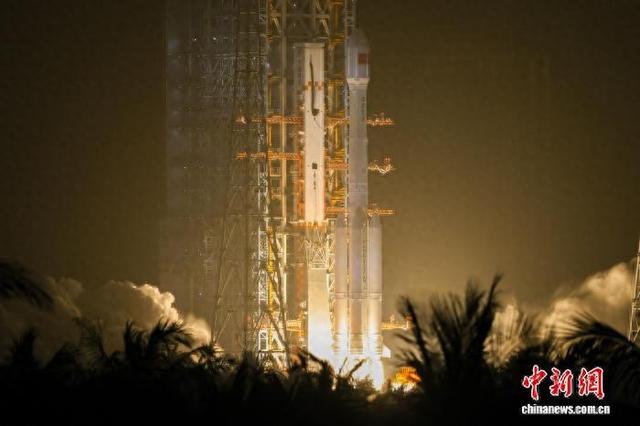
中金资深投资人离职创业,现要IPO了!
Sou Hu Cai Jing· 2025-06-24 01:19
Group 1: Weiwodun Petroleum Technology Co., Ltd. - Weiwodun is founded by an alumnus of Southwest Petroleum University and has initiated IPO counseling with ShenGang Securities, aiming for an IPO on the Beijing Stock Exchange [3] - Established in April 2006, Weiwodun is a national-level specialized and innovative "little giant" enterprise focusing on the R&D, production, and sales of oil and gas extraction reservoir modification agents and tools [4] - The company has experienced significant revenue fluctuations, with projected revenues of 146 million, 171 million, 166 million, and 225 million yuan from 2021 to 2024, and net profits declining for two consecutive years [4] Group 2: Aisida Aerospace Technology Co., Ltd. - Aisida Aerospace has completed IPO counseling with CITIC Securities, targeting an IPO on the Sci-Tech Innovation Board [6] - Founded in 2018, Aisida specializes in lightweight structures and functional products made from carbon fiber composite materials, primarily producing rocket fairings [6][7] - The company has supported multiple successful rocket launches, including significant missions for various commercial aerospace companies [7] Group 3: Xinnowei Pharmaceutical Technology Co., Ltd. - Xinnowei has submitted its IPO counseling materials, aiming for an A-share listing with Guotai Junan as the counseling institution [14] - Established in May 2017, Xinnowei focuses on innovative drug development in oncology, multi-drug resistant bacterial infections, and metabolic diseases, with 10 drug candidates in clinical research [14] - The company has raised over 2 billion yuan in funding since its inception, with significant investments from various venture capital firms [15] Group 4: Zhongke Innovation Technology Co., Ltd. - Zhongke Innovation has submitted its IPO counseling report to the Hubei Securities Regulatory Bureau, with Dongwu Securities as the counseling institution [16] - Founded in April 2003, the company specializes in non-destructive testing equipment and customized solutions, achieving revenue growth of 15% over two years [17] Group 5: Youbang Radiator (Changshu) Co., Ltd. - Youbang has completed IPO counseling with CITIC Securities, planning to list on the Beijing Stock Exchange [18] - Established in 1997, Youbang is a leading manufacturer of transformers and radiators, holding an 18.9% market share in China [19] - The company has shown consistent revenue growth, with projected revenues of 235 million, 277 million, and 315 million yuan from 2022 to 2024 [20] Group 6: Baimaike Medical Technology Co., Ltd. - Baimaike has submitted its IPO counseling materials to the Hainan Regulatory Bureau, with Changcheng Securities as the counseling institution [21] - The company specializes in surgical medical devices and peptide pharmaceutical equipment, with a focus on innovative product development [22] - Baimaike has achieved revenues of 90.67 million, 174 million, and 185 million yuan from 2022 to 2024, with a significant market presence in absorbable surgical sutures [23] Group 7: Ruiniu Co., Ltd. - Ruiniu has submitted its IPO counseling materials to the Jiangsu Regulatory Bureau, with Everbright Securities as the counseling institution [25] - Founded in 2006, Ruiniu is a leading manufacturer in the agricultural machinery belt industry, with significant clients including major agricultural machinery companies [26] - The company has reported revenues of 288 million, 308 million, 235 million, and 306 million yuan from 2021 to 2024, with a notable decline in performance in recent years [28]


中金资深投资人离职创业,现要IPO了!
IPO日报· 2025-06-23 13:19
Group 1: Weidun Petroleum Technology Co., Ltd. (威沃敦) - Weidun, founded by an alumnus of Southwest Petroleum University, is undergoing IPO counseling with Shenyang Securities, aiming for listing on the Beijing Stock Exchange [2] - Established in April 2006, Weidun is a national-level specialized and innovative "little giant" enterprise focusing on the R&D, production, and sales of oil and gas extraction reservoir modification agents and tools [3] - The company reported revenues of 146 million yuan, 171 million yuan, 166 million yuan, and 225 million yuan from 2021 to 2024, with a decline in 2023 [3] - Net profits for the same period were 37.15 million yuan, 26.01 million yuan, 14.87 million yuan, and 32.01 million yuan, showing a continuous decline in 2022 and 2023 [3] Group 2: Aisida Aerospace Technology Co., Ltd. (爱思达航天) - Aisida Aerospace completed IPO counseling with CITIC Securities, targeting the Sci-Tech Innovation Board [6] - Founded in 2018, Aisida specializes in lightweight structures and functional products made from carbon fiber composite materials, primarily focusing on rocket fairings [6] - The company has supported multiple successful rocket launches, including the "Double Curve No. 1" and "Power Arrow No. 1" [6][7] - Aisida has undergone several financing rounds, raising significant capital from various investors, including a strategic financing round of several hundred million yuan in 2022 [9][10] Group 3: Xinnoway Pharmaceutical Technology Co., Ltd. (信诺维) - Xinnoway has initiated IPO counseling with Guotai Junan, focusing on innovative drug development in oncology and metabolic diseases [12] - Founded in May 2017, the company has a robust pipeline with 10 drugs in clinical research and over 10 in preclinical stages [12] - The company has raised over 2 billion yuan in total financing, with significant investments from Tencent and other notable firms [13] Group 4: Zhongke Innovation Technology Co., Ltd. (中科创新) - Zhongke Innovation submitted its IPO counseling report to the Hubei Securities Regulatory Bureau, aiming for the Sci-Tech Innovation Board [14] - Established in April 2003, the company specializes in non-destructive testing equipment and customized solutions, reporting revenue growth of 15% over two years [14] Group 5: Youbang Radiator (Changshu) Co., Ltd. (友邦股份) - Youbang completed IPO counseling with CITIC Securities, targeting the Beijing Stock Exchange [15] - Founded in 1997, the company is a leading manufacturer of transformers and radiators, holding an 18.9% market share in China [15] - The company reported revenues of 235 million yuan, 277 million yuan, and 315 million yuan from 2022 to 2024, with a net profit growth trend [16] Group 6: Baimaike Medical Technology Co., Ltd. (百迈科医疗) - Baimaike submitted its IPO counseling materials to the Hainan Regulatory Bureau, aiming for public offering on the Beijing Stock Exchange [17] - The company specializes in surgical medical devices and peptide pharmaceutical equipment, with a focus on innovative products [18] - Baimaike achieved revenues of 90.68 million yuan, 174 million yuan, and 185 million yuan from 2022 to 2024, with a significant market presence in absorbable surgical sutures [19] Group 7: Ruiniu Co., Ltd. (锐牛股份) - Ruiniu submitted its IPO counseling materials to the Jiangsu Regulatory Bureau, targeting the Beijing Stock Exchange [20] - Founded in 2006, Ruiniu is a leader in the agricultural machinery belt industry, reporting revenues of 288 million yuan, 308 million yuan, and 235 million yuan from 2021 to 2024 [21] - The company has a strong customer base, including major agricultural machinery manufacturers, and has seen a decline in profits in recent years [21]

创新链产业链“相望又相见”
Ke Ji Ri Bao· 2025-04-28 06:40
Group 1 - The third China (Anhui) Science and Technology Innovation Achievement Transformation Fair was held from April 26 to 28, focusing on "Technology Leading, Innovation Winning the Future" [1] - A total of 378 exhibitors showcased 1,204 exhibits, with 28% being first-time launches and 18% being internationally leading products [2] - The event highlighted significant technological advancements, including the world's first data-driven automated chemist platform and the first domestic cold field scanning electron microscope [2][3] Group 2 - The fair featured the global debut of the "Mighty Lion Third Generation Flying Car" from Tsinghua University, designed for urban air mobility [4] - The Long Triangle National Technology Innovation Center presented over 50 exhibits, aiming to facilitate the implementation of innovative results in Anhui and promote local innovations globally [4] - The fair successfully matched 400 projects with a total investment exceeding 100 billion yuan, showcasing Anhui's commitment to becoming a significant hub for technological innovation [6]