灯塔工厂

Search documents
21社论丨持续推动中国向“全球智造创新中心”转型
21世纪经济报道· 2026-01-28 00:53
Core Insights - The World Economic Forum (WEF) recently announced a new batch of global lighthouse factories, with China securing 16 out of 23 new additions, representing nearly 70% of the total [1] - China now has a total of 101 lighthouse factories, accounting for almost half of the global total of 224, maintaining its leadership in the sector [1] - The concept of lighthouse factories, introduced by WEF and McKinsey in 2018, aims to identify advanced manufacturing bases that have achieved breakthroughs in the Fourth Industrial Revolution [1] Group 1 - The evaluation criteria for lighthouse factories have evolved from focusing solely on factory-level technology applications to five categories: customer-centric, production efficiency, supply chain resilience, sustainability, and talent [2] - The shift from digitalization to intelligence in global manufacturing reflects the need for companies to rapidly sense, adapt, and respond to market changes [2] - New lighthouse factories demonstrate a commitment to comprehensive, AI-driven systemic transformation rather than fragmented digital initiatives [2] Group 2 - Foreign companies are increasingly establishing lighthouse factories in China, transitioning from merely replicating mature digital models to localizing technology and driving innovation [3] - Notable foreign entrants include Siemens, Schneider Electric, Carl Zeiss, and Michelin, which are using Chinese factories as testing grounds for global technology R&D [3] - China's robust industrial supply chain, large market demand, and talent pool contribute to its leading position in smart manufacturing [3] Group 3 - The establishment of more lighthouse factories is crucial for China's transformation into a global innovation center for intelligent manufacturing [4] - These factories provide clear pathways for traditional manufacturing to upgrade digitally and intelligently, reshaping production paradigms and enhancing supply chain resilience [4] - China has the potential to refine and export its smart manufacturing standards and solutions, positioning itself as a leader in global smart manufacturing [4]

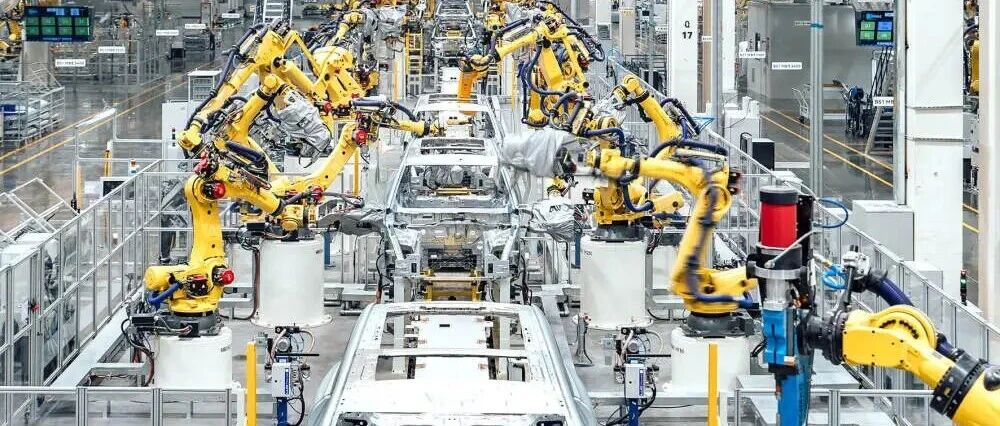
持续推动中国向“全球智造创新中心”转型
2 1 Shi Ji Jing Ji Bao Dao· 2026-01-27 22:46
Core Insights - The World Economic Forum (WEF) has released a new list of global lighthouse factories, with China dominating by securing 16 out of 23 new additions, bringing its total to 101, which accounts for nearly half of the global total of 224 factories [1][2] Group 1: Lighthouse Factory Concept and Evolution - The concept of lighthouse factories was introduced by WEF and McKinsey in 2018 to identify advanced manufacturing bases that have achieved breakthroughs in the Fourth Industrial Revolution [1] - The evaluation criteria for lighthouse factories have evolved from focusing on individual factory technology applications to five categories: customer-centric, production efficiency, supply chain resilience, sustainability, and talent [1][2] Group 2: Trends in Manufacturing and AI Integration - The evolution of lighthouse factories aligns with the global trend of manufacturing transitioning from digitalization to intelligence, emphasizing the ability to quickly sense, adapt, and respond to market changes [2] - New lighthouse factories reflect a shift from fragmented digital initiatives to comprehensive, AI-driven systemic transformations, with technologies like AI, machine learning, and robotics becoming deeply integrated into high-value scenarios [2] Group 3: Role of Foreign Enterprises in China - Foreign enterprises are increasingly establishing lighthouse factories in China, transitioning from merely replicating mature global digital models to localizing technology and driving intelligent innovation [3] - Notable foreign companies such as Siemens, Schneider Electric, Zeiss, and Michelin are now using Chinese factories as testing grounds for global technology research and development [3] Group 4: China's Competitive Advantages - China's leading position in lighthouse factories is attributed to a complete industrial supply chain, substantial market demand, a rich talent pool, and continuous investment in cutting-edge technologies [3] - The country is at the forefront of intelligent manufacturing and is undergoing profound changes from technological breakthroughs to ecological restructuring [3] Group 5: Future Outlook - The establishment of more lighthouse factories will significantly aid China's transformation into a "global innovation center for intelligent manufacturing" [4] - These 101 lighthouse factories provide clear pathways for traditional manufacturing to upgrade digitally and intelligently, helping to reshape production paradigms and build resilient supply chains [4]
从工具平台到工业操作系统,谁能被长期调用?
3 6 Ke· 2026-01-19 02:19
Core Insights - The article highlights the significant advancements in the industrial internet sector, particularly focusing on the Kaos COSMOPlat platform, which has achieved the highest "A" rating for seven consecutive years, indicating its leading position in the industry [1][6] - The industrial internet is evolving from a fragmented tool-based approach to a more integrated system-level operation, emphasizing the need for a comprehensive "operating system" that can facilitate cross-industry collaboration and scalability [3][8] Group 1: Industrial Internet Development - The industrial internet is forming a "digital neural network" that connects previously isolated production processes, enabling factories to evolve from mere automation to collaborative and optimized operations [1] - During the 14th Five-Year Plan, the industrial internet laid the groundwork for infrastructure, focusing on connectivity, cloud integration, and single-point intelligence, leading to a preliminary digital industrial system [1][2] - As the industry transitions into the 15th Five-Year Plan, the focus is shifting from exploration to large-scale replication of new industrialization practices [2] Group 2: Kaos COSMOPlat's Role - Kaos COSMOPlat is transitioning from being a platform provider to an "industrial intelligence infrastructure," with its brand value increasing by over 82% during the 14th Five-Year Plan, projected to reach 116.335 billion yuan by 2025 [6] - The platform's strategy has shifted from enhancing single capabilities to constructing a complete industrial intelligence operating system, aiming for systematic expansion rather than isolated breakthroughs [6][12] - The platform is designed to support a full-process industrial internet ecosystem, addressing the industry's need for a system-level operation rather than just a collection of tools [7] Group 3: Challenges and Solutions - The industrial internet faces challenges due to the fragmentation of industrial scenarios, where different industries have diverse equipment interfaces and data standards, complicating cross-scenario replication [8][9] - The need for a shift from tool-based thinking to system-based thinking is emphasized, as data silos and application isolation become systemic bottlenecks [8] - A truly scalable platform must function like an operating system, accommodating diverse industrial equipment and enabling replicable solutions across different scenarios [9][11] Group 4: ONE-COSMO Framework - The ONE-COSMO framework represents a shift from project-based products to a systematic capability, addressing the complexities of industrial internet implementation [13][14] - The framework aims to elevate the "capability baseline" of industrial internet platforms, focusing on standardization and modularization to facilitate scalability [15][17] - The framework includes both "lighthouse factories" for factory-level intelligence and "industrial cloud brains" for broader collaborative efficiency across industries [17][19] Group 5: Standards and Global Influence - The competition in the industrial operating system space extends beyond technical capabilities to include standards, rules, and global discourse, with Kaos COSMOPlat actively participating in the development of national and international standards [20][21] - The establishment of standards is crucial for defining how industrial intelligence systems are structured and utilized, positioning Kaos COSMOPlat as a key player in shaping the future of industrial internet [23][24] - The article concludes that the next phase of competition will focus on who can create a long-term, widely accepted industrial operating system, emphasizing the importance of standards and global collaboration [24][25]

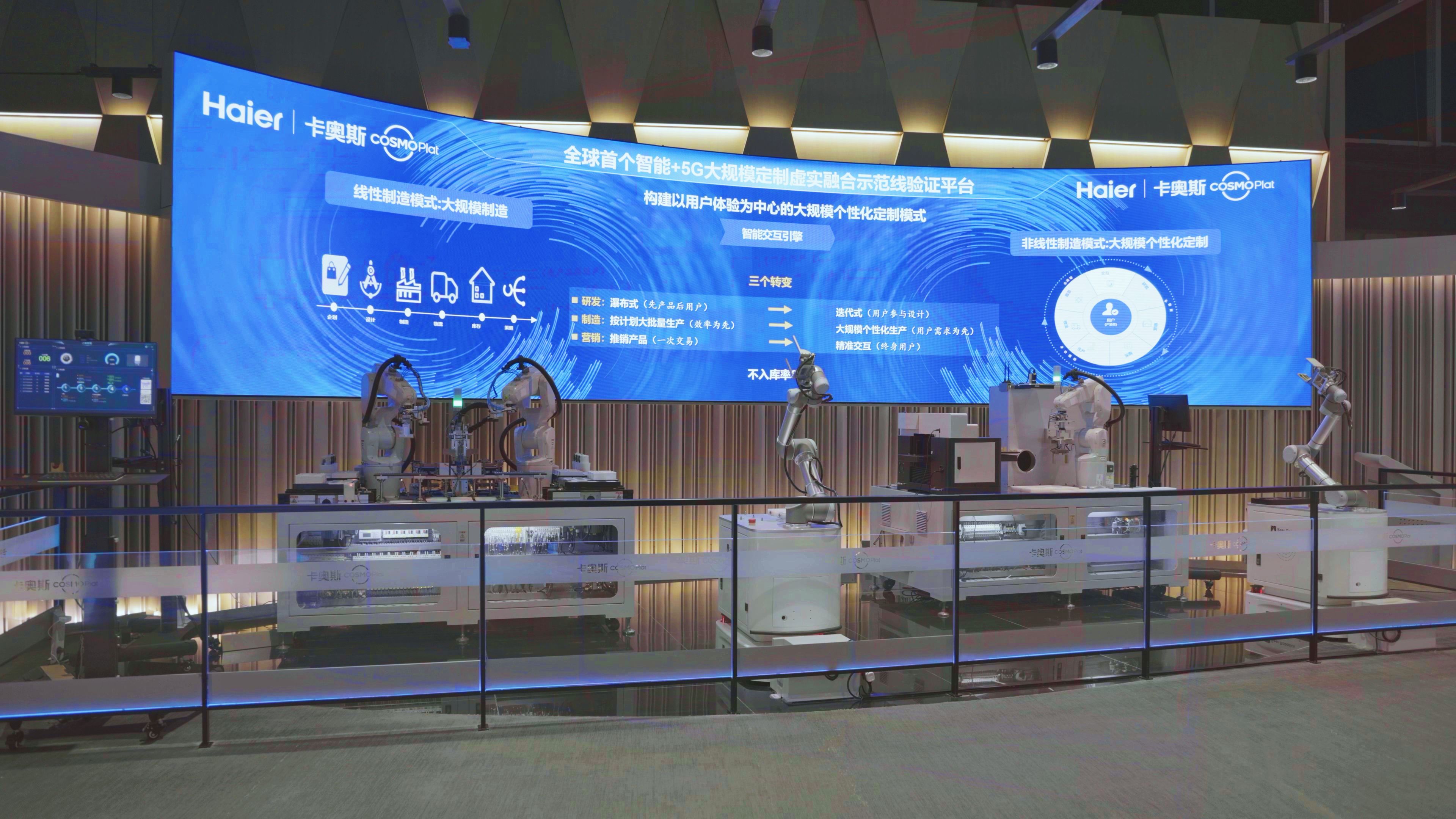
万向钱潮:目前“灯塔工厂”建设在推进中
Zheng Quan Ri Bao· 2025-11-03 09:52
Group 1 - The company, Wanxiang Qianchao, is currently advancing its "Lighthouse Factory" construction, but there are no phase results available for disclosure at this time [2]

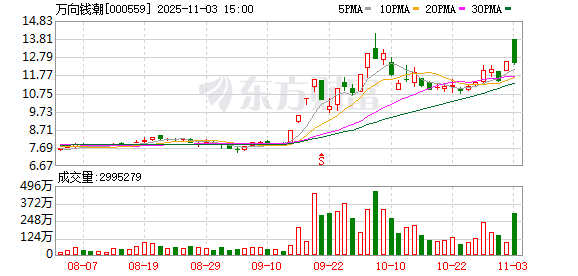
海尔集团推进卡奥斯赴港上市筹备工作
Zhong Guo Jing Ying Bao· 2025-10-24 06:27
Core Viewpoint - Haier Group is preparing for the IPO of its industrial internet platform, Caos, in Hong Kong, potentially raising around $500 million in 2024 [1] Group 1: IPO Preparation - Haier Group is in discussions with China International Capital Corporation and HSBC to facilitate the IPO of Caos [1] - The company confirmed that the IPO preparation is progressing as planned, with no significant updates to disclose at this time [1] - The timing of the formal IPO process will depend on Caos's development needs and market conditions [1] Group 2: Caos Overview - Caos is an industrial internet platform created by Haier, focusing on large-scale customization and user participation [1] - The platform operates in three main business areas: industrial digitalization, industrial greening, and IoT solutions [1] - Caos employs a technology framework based on "big connectivity, big data, and big models" to create high-end products like "lighthouse factories" and "industrial cloud brains" [1] Group 3: Achievements and Brand Value - In September, the World Economic Forum announced that four factories empowered by Caos were included in the global lighthouse network, with six out of twelve new sites located in China [2] - Caos has enabled a total of 16 lighthouse factories globally, covering ten major industries, establishing the largest and most diverse "lighthouse cluster" [2] - The brand value of Caos is projected to exceed 116.335 billion yuan by 2025, an increase of 13.558 billion yuan from the previous year, maintaining its position as the top brand value in the domestic industry for seven consecutive years [2]