焊接机器人

Search documents
机器人「起飞」元年:热钱、故事与未来
投中网· 2026-03-10 09:47
Core Viewpoint - The article discusses the rapid growth and investment in the humanoid robot industry, questioning whether the current excitement reflects genuine industry prosperity or is merely driven by speculative capital and hype [4][5][6]. Investment Trends - Since the beginning of 2026, there have been 19 financing events in the domestic embodied intelligence sector, averaging one every 2.3 days, with disclosed financing amounts exceeding 7.6 billion [5]. - By March 4, 2026, a total of 88 financing events had been reported, with total funding surpassing 20 billion [5][6]. - Notable investments include nearly 1 billion for Songyan Power and 2.5 billion for Galaxy General, indicating strong interest from top venture capital firms and state funds [5][6]. Market Dynamics - As of March 5, 2026, there are 9 companies in the embodied intelligence sector with valuations exceeding 10 billion, including Yushu Technology and Zhi Yuan Robotics [6]. - The rapid financing pace and scale in this sector are reminiscent of the investment boom seen a decade ago under the "mass entrepreneurship and innovation" slogan [6]. Technology and Application - Humanoid robots are viewed as the next disruptive hardware terminal, with potential applications in industrial production, home services, and commercial reception, leading to expectations of a trillion-level industry scale [6][7]. - However, the article highlights that non-humanoid robots have already achieved significant commercial success in various sectors, such as automotive manufacturing and logistics [8][9]. Industry Challenges - The article raises concerns about the actual value and practicality of humanoid robots, questioning whether they are truly the forefront of robotics innovation [9][10]. - It emphasizes that the hype surrounding humanoid robots may overshadow the core issues of achieving scalable commercial applications and sustainable profit models [7][10]. Speculative Behavior - The influx of capital has led to a proliferation of companies entering the humanoid robot space, often without substantial technological advancements, resulting in a potential bubble [10][13]. - The ease of entry into the humanoid robot market has attracted many players, leading to a focus on creating prototypes rather than developing viable products [10][13]. Future Outlook - The article concludes that while humanoid robots are a significant focus of investment and interest, the industry must return to rationality and focus on practical applications and technological advancements to avoid creating a speculative bubble [15][16].


机器人「起飞」元年:热钱、故事与透支的未来
凤凰网财经· 2026-03-09 13:54
Group 1 - The article discusses the rapid rise of humanoid robots in the investment landscape, highlighting significant capital inflow and increased valuations in the sector since the beginning of 2026 [3][4][7] - As of March 4, 2026, there have been 88 disclosed financing events in the field of embodied intelligence, totaling over 200 billion yuan, indicating a strong investor interest [7][8] - Major venture capital firms and state-owned funds are heavily investing in leading companies, resulting in nine companies achieving valuations exceeding 10 billion yuan [7][8][10] Group 2 - The article questions whether the excitement surrounding humanoid robots reflects genuine industry growth or is merely driven by speculative sentiment, emphasizing the need for a critical assessment of the sector's maturity [3][10][25] - Non-humanoid robots have already achieved commercial success in various industries, while humanoid robots are primarily showcased in research and educational contexts, raising concerns about their practical value [11][13][22] - The article highlights the disparity between public expectations and the actual technological capabilities of humanoid robots, suggesting that the focus on humanoid designs may not be the most efficient approach for current applications [21][22][25] Group 3 - The article points out that the current enthusiasm for humanoid robots may lead to a bubble in the industry, as many companies prioritize fundraising over genuine technological advancement [18][23][25] - It emphasizes the complexity of developing humanoid robots, which require a comprehensive understanding of multiple engineering disciplines, and warns against oversimplifying the development process [18][21][22] - The article concludes that while humanoid robots represent a significant future potential, the industry must focus on practical applications and sustainable business models to avoid creating a speculative bubble [25][26]
鸿路钢构(002541) - 2026年3月5日、6日投资者关系活动记录表
2026-03-08 06:10
Group 1: Company Overview and Production Capacity - The company has ten production bases, with a steel structure product capacity reaching 5.2 million tons by 2025 [2] - Currently, approximately 3,000 self-developed welding robots are in operation across the production bases [2] Group 2: Smart Manufacturing and Technology - The company is actively promoting smart manufacturing, having introduced advanced equipment such as high-power laser cutting devices and intelligent welding robots [2] - The application of welding robots and detection robots is expected to enhance production capacity and improve product quality, although cost reductions are currently minimal [2] Group 3: Financial and Market Strategy - The company has adjusted the convertible bond conversion price to enhance its financial management and risk resilience [3] - The pricing strategy for products is based on "material cost + processing fee," with a focus on improving product quality and customer satisfaction [3] Group 4: Current Business Status - The company reports a healthy operational status with sufficient orders and plans to maintain normal production levels [3]

工业具身智能公司融资数亿,博华、中金联合投资,已服务数百家国央企大客户|早起看早期
36氪· 2026-03-05 00:26
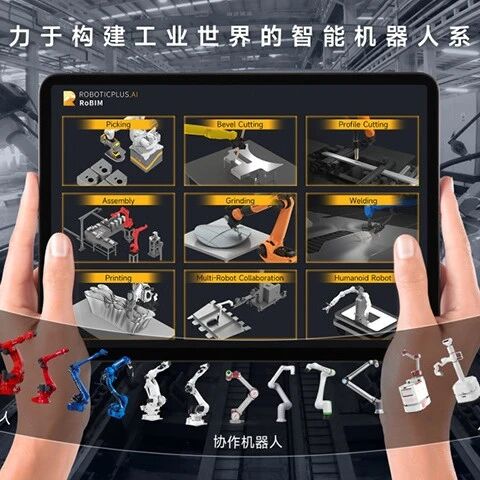
Core Viewpoint - Shanghai Dajie Robot Technology Co., Ltd. has completed a multi-billion yuan Series D financing round, which will be used to enhance industrial embodied intelligence technology and expand into strategic emerging fields such as aerospace [5][6][7]. Financing Information - Financing Round: Series D - Financing Amount: Multi-billion yuan - Investors: Liangxi Digital Industry Fund managed by Bohua Capital and a fund under CICC jointly led the investment, with follow-up investments from Beijing Shunyi Science and Technology Innovation Group Fund and Houshayu "Zhonghe Rundai" Industrial Investment Fund [6][7]. Company Overview - Established: August 2016 - Location: Shanghai - Positioning: Dajie Robot provides intelligent software and systems for various robot configurations in the industrial sector, focusing on customized industries such as shipbuilding, power, construction, and engineering machinery [10][12]. Technology Highlights - Dajie Robot's core competitive advantage lies in its fully self-developed RoBIM CLOUD platform, which integrates geometric kernels, motion control, and process algorithms, enabling robots to autonomously understand blueprints and generate operational paths [12][25]. Business Progress - The company has launched several star products based on the RoBIM CLOUD platform, with annual sales exceeding 50 million yuan for individual product types. Dajie Robot has achieved 100% delivery for hundreds of major clients, accumulating millions of real industrial data for training reinforcement learning networks [14][26]. Market Size - According to Frost & Sullivan and other institutions, China's industrial intelligent robot market is transitioning from a hundred billion yuan segment to a trillion yuan general robot configuration world, with current penetration rates in large-scale customized manufacturing fields below 30% [17]. Team Background - The core founding team of Dajie Robot comes from top international intelligent laboratories, possessing over 15 years of experience in adaptive robot technology research, with expertise in robot control, geometric algorithms, computer vision, and artificial intelligence [19]. CEO Insights - The strategic shift from the construction sector to the metal market was driven by the need to address non-standard manufacturing challenges, leveraging the company's core capabilities in understanding product geometry and process data [21][23]. Business Model - Dajie Robot adopts a soft-hard integrated business model, providing comprehensive solutions that combine both hardware and software, which is essential for addressing flexible production challenges in the industry [23]. Role of Industrial Data - The company has accumulated millions of industrial precision data points, which are crucial for training robots to autonomously handle non-standard tasks, with plans to release a metal industry embodied data set for partners [24]. Addressing Production Challenges - Dajie Robot's RoBIM CLOUD platform addresses the core issues of traditional industrial robots' inability to adapt to small-batch, multi-batch production by providing an adaptive system that can be operated easily by production line workers [25].
钢结构行业近况及开工展望专家电话会
2026-03-01 17:22
Summary of Steel Structure Industry Conference Call Industry Overview - The steel structure industry is expected to see a production increase of approximately 10%-15% year-on-year in January and February 2026, with production in the same period of 2025 being around 500,000 tons [1][2] - The company has over 700,000 tons of effective orders on hand, sufficient to meet production needs for March 2026 [1][4] - The company aims for a production target of over 6 million tons in 2026, requiring order targets to exceed 7 million tons to ensure delivery [1][15] Key Insights - **Production Recovery**: Post-Spring Festival, production recovery is progressing smoothly, with full capacity expected to be reached by early March [1][3] - **Market Share Growth**: The company's market share has improved due to advantages in scale, delivery speed, manufacturing quality, and pricing [1][6] - **Order Composition**: Over 70% of current orders are for industrial building construction, primarily conventional products like portal steel frames [1][7] - **Geographical Expansion**: The company has established approximately 7 bases across China to reduce transportation constraints and expand its operational radius [1][13] Financial Metrics - The production volume for January and February 2026 is estimated at around 600,000 tons, with January contributing approximately 450,000 tons and February around 200,000 tons [2] - The company’s production capacity is about 5% of the national total steel structure output, which is around 10 million tons annually [5][6] Competitive Advantages - **Quality Improvement**: Manufacturing quality has significantly improved since 2021, now ranking among the industry leaders [6][10] - **Cost Efficiency**: The introduction of self-developed welding robots has reduced processing costs by several tens of yuan per ton, enhancing competitive pricing [1][14][15] - **Pricing Strategy**: The company plans to narrow discount margins rather than increase base prices, aiming for better pricing during periods of high order volume [19] Risks and Challenges - **Quality Risks in Overseas Orders**: The company plans to increase overseas orders to about 10% but must manage quality risks and after-sales costs associated with international projects [1][17] - **Transportation Costs**: Transportation costs significantly impact overall pricing, with local suppliers often having a competitive edge due to lower transport expenses [12] Future Outlook - The company is targeting a 10% share of overseas orders by 2026, with a focus on expanding into markets with higher profit margins [1][16] - The strategy includes a flexible approach to the deployment of welding robots based on demand rather than a fixed expansion plan [21] Additional Considerations - **Local Market Dynamics**: Increased project activity in the Hefei region is driven by local government initiatives and investments in high-tech industrial buildings [9] - **Labor Dynamics**: While welding robots are replacing some manual labor, skilled welders remain essential for complex tasks, indicating a shift in labor allocation rather than a reduction in workforce [21][22]
海外订单爆发式增长!在手订单已排到4月中
Xin Lang Cai Jing· 2026-02-27 23:36
Core Viewpoint - The company, Jiangsu Jicui Intelligent Manufacturing Technology Research Institute, is experiencing a surge in orders for its robots, particularly collaborative, welding, and coffee robots, with significant international demand from regions like Europe and America [1][3]. Group 1: Production and Orders - The production line is currently busy fulfilling orders, with a focus on ensuring quality and timely delivery, including a shipment of robots to Chile by the end of the month [1]. - The company reported a dramatic increase in overseas orders last year, with a projected 200% growth in overseas sales by 2025, reaching 38 countries and regions [3]. - The current production includes a custom coffee robot for a coffee shop in the United States, scheduled for delivery in March [3]. Group 2: Sales Goals and Capacity Expansion - The company has set ambitious goals for the year, aiming to sell over 4,500 robots, achieve a sales revenue of 150 million yuan, and expand sales to 100 countries and regions [5]. - There is a pressing need to enhance production capacity, with current orders extending to mid-April, prompting the construction of a new industrial base to meet diverse order demands [5]. - The new facility is expected to reduce delivery times to 30 days and increase production efficiency by 50%, targeting an annual capacity of nearly 10,000 units [5].

新春开工以来,南京机器人企业产线忙不停
Nan Jing Ri Bao· 2026-02-27 02:42
Group 1: Industry Overview - The robot manufacturing industry in Nanjing is experiencing a surge in production and orders, aiming for a strong start in the first quarter of 2026 [1][2] - Nanjing's robots are being deployed across various global industries, showcasing the strength of "Nanjing Intelligent Manufacturing" [2] Group 2: Tianchuang Robotics - Tianchuang Robotics has a total order amount of 200 million yuan, with 68 production lines operating at full capacity [3] - The company aims to deliver over 35 million yuan in total orders this year, representing a year-on-year growth of over 30% [4] - Tianchuang Robotics delivered 326 major projects in 2025, with over 1,000 robots actively working in various applications [4] Group 3: Jicui Intelligent Manufacturing - Jicui Intelligent Manufacturing is targeting sales of over 4,500 robots this year, with a sales goal of 150 million yuan [6] - The company experienced a twofold increase in overseas sales in 2025, with products sold in 38 countries and regions [6] - Jicui is constructing a new industrial base to enhance production capacity, aiming to reduce delivery cycles to 30 days and increase production efficiency by 50% [6] Group 4: Estun Automation - Estun Automation has resumed full production and is focusing on delivering heavy-load industrial robots, with a market share of 10.6% in China [7][8] - The company is expected to maintain a 25% year-on-year growth in robot shipments for 2025 [7] - Estun aims to deepen its global strategy and expand its brand influence, with plans for overseas listing [8]

成都新春第一会 把产业赛道铺到了春天里
Xin Lang Cai Jing· 2026-02-24 19:19
Core Insights - Chengdu is focusing on high-quality development of key industrial chains, emphasizing the importance of end products and avoiding complacency [8][9] - The city has established 13 trillion-level industrial chains and 17 national industrial clusters, maintaining its position among the top tier of sub-provincial cities [9] - Chengdu aims to build a modern industrial system with a target of 1,500 billion yuan in the artificial intelligence core industry by 2025, reflecting a year-on-year growth of over 39% [10] Industrial Development - The artificial intelligence industry is a key focus, with Chengdu planning to enhance its industrial chain layout and promote new technologies and models in production [10] - Chengdu's digital cultural and creative industry is projected to generate a total revenue of 413.97 billion yuan by 2025, ranking it among the top in the nation [11] - The city is implementing a concentrated development strategy for digital cultural and creative parks, aiming to strengthen core parks and cultivate a complete ecosystem [11] Company Performance - Companies like Chengdu Kanopu Robot Technology Co., Ltd. are positioned as "invisible champions" in their fields, benefiting from the supportive industrial chain in Chengdu [9] - Chengdu Hope Food Co., Ltd. reported a production volume of 6,400 tons in January, with expectations to exceed 15,000 tons in the first quarter, marking a growth of over 5% compared to the previous year [13] - The city is witnessing a surge in production activities post-holiday, with various companies resuming operations to meet high demand [12][13] Innovation and Collaboration - Chengdu is enhancing the role of enterprises in innovation, with plans to support over 100 key technology projects and establish joint laboratories with universities [15] - The city aims to attract innovation resources to enterprises, fostering collaboration between academia and industry to drive technological advancements [15] - Chengdu's strategy includes nurturing over 4,000 new high-tech enterprises and technology-based SMEs annually [15]
生产线上的“跨界”工匠
Xin Lang Cai Jing· 2026-02-15 23:23
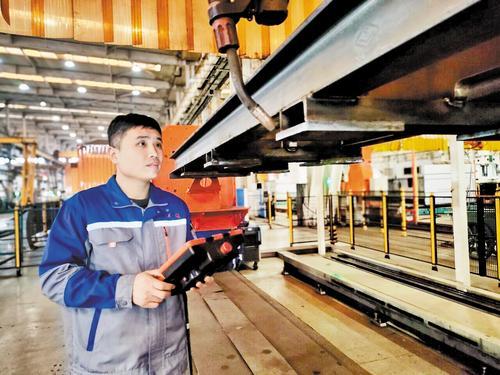
Core Viewpoint - The article highlights the journey of Guan Hu, a welding robot team leader at Shijiazhuang Coal Mining Machinery Co., Ltd., showcasing his transformation from a traditional worker to a skilled technician in intelligent manufacturing, emphasizing the importance of continuous learning and innovation in the manufacturing industry [3][12]. Group 1: Personal Journey and Achievements - Guan Hu started his career at the age of 18 and transitioned through various roles, ultimately becoming a welding robot team leader and winning the National May Day Labor Medal [3][13]. - Over five years, he established an innovation studio, producing over 100 achievements and significantly improving welding efficiency [3][12]. - His journey reflects a commitment to skill enhancement and self-discovery, demonstrating the potential for personal growth within the manufacturing sector [3][14]. Group 2: Technological Advancements - The company introduced intelligent welding equipment in 2018, marking a shift towards smart manufacturing [5]. - Guan Hu played a crucial role in developing automated welding parameters for mining machine components, increasing efficiency by 3.5 times [6][7]. - The automation rate for parts welding has exceeded 85%, showcasing the effectiveness of integrating robotics into production processes [6]. Group 3: Training and Knowledge Sharing - Guan Hu has been instrumental in training new technicians, sharing his knowledge through a comprehensive notebook that has proven more useful than textbooks [12]. - The establishment of an innovation studio named after Guan Hu has fostered a collaborative environment for technical problem-solving and talent development [12]. - The team has successfully designed over 20 practical technologies and improved more than 70 processes, contributing to the company's innovation capabilities [12]. Group 4: Future Goals and Vision - The innovation studio aims to tackle advanced welding technologies and cultivate interdisciplinary teams to enhance the application of welding robots in complex scenarios [15]. - The company is focused on establishing technical standards and solutions to further advance intelligent manufacturing in China [15].
中国科技型中小企业走向旷野
经济观察报· 2026-02-10 05:54
Core Viewpoint - The article discusses the emergence of a new wave of technology-driven small and medium enterprises (SMEs) in China, which are leveraging innovative technologies and unique market scenarios to address unprecedented challenges and opportunities in various industries [3][5]. Group 1: Industry Trends - A significant number of new technology SMEs are being established by founders with extensive experience from large state-owned enterprises, research institutions, or leading private companies, indicating a shift from being followers to innovators in the market [2][5]. - The establishment of a supportive ecosystem for technology SMEs, including favorable policies, funding mechanisms, and market access, has created a conducive environment for these companies to thrive [3][6]. - The market is witnessing a re-evaluation of the value of Chinese technology, leading to increased investment interest from traditional listed companies in technology SMEs [6][7]. Group 2: Application Scenarios - Many technology companies are focusing on specific application scenarios rather than just funding or land, with regions like the western part of China providing unique opportunities for testing and deploying new technologies [9][10]. - The shift in comparative advantages between eastern and western regions is highlighted, with western regions offering lower costs and abundant application scenarios, while eastern regions focus on complete supply chains and large consumer markets [10]. Group 3: Entrepreneurial Maturity - Recent entrepreneurs are noted to be more mature and rational, with a clearer understanding of business models, financing, and market positioning compared to previous generations [12][14]. - The emphasis on core technology and application capabilities over mere scale has become a new standard for evaluating enterprises, reflecting a shift in the entrepreneurial landscape [13][14]. - Local governments are also adapting to the changing environment, recognizing that not all industries are suitable for local development and focusing on aligning with local strengths [14].