
特医食品

Search documents
中信证券:乳制品产业升级正当时 龙头乳企前景广阔
智通财经网· 2026-03-31 01:45
Core Viewpoint - The liquid milk industry is under pressure, accelerating the transformation of the dairy product sector, with significant potential in deep processing of dairy products [1] Group 1: Industry Trends - The average CAGR for liquid milk production from 2022 to 2025 is projected at -2.8%, indicating a decline in traditional liquid milk products. However, solid dairy products are experiencing rapid growth, supporting a slight overall increase in dairy production [1] - China's dependence on imports for deep-processed solid dairy products is high, with cheese and butter accounting for only 7.3% of the market, which is less than one-fourth of the average level in developed countries [1] - The upstream dairy farming sector has reached a global top five scale, with competitive efficiency and low costs, which are expected to support the growth of deep processing in the dairy industry [1] Group 2: Demand Drivers - B-end demand is becoming a crucial support, with the baking, Western fast food, coffee, and tea beverage industries projected to grow at CAGRs of 3.9%, 8.5%, 22.6%, and 10.5% respectively from 2020 to 2025, driving mid to high single-digit growth in B-end cheese, butter, and cream products [2] - The C-end market for deep-processed dairy products is still in its infancy, with significant potential for growth as 60% of consumers do not consider dairy products essential in their daily diet, indicating room for consumption upgrades [2] Group 3: International Insights - Japan's dairy product deep processing began post-World War II, with policy guidance and localized product innovation leading to a significant increase in per capita cheese consumption, highlighting the need for consumer education and product innovation in China [3] - Fonterra's global B-end dairy product deep processing business is characterized by a comprehensive industry chain layout, low leverage, and high profitability, suggesting a model for China to explore in its B-end expansion [3] Group 4: Industry Outlook - The leading dairy companies are categorized into three types: 1) full industry chain leaders with comprehensive layouts and advanced R&D; 2) vertical leaders excelling in specific categories like cheese and milk powder; 3) regional companies growing through B-end customer relationships, particularly in cheese [4] - The future of deep processing in the dairy sector is expected to be dominated by full industry chain leaders, while smaller companies may find opportunities by specializing in specific product categories [4]

营养健康赛道IPO密集落地 | 庶正智库【1月号】
Sou Hu Cai Jing· 2026-02-10 12:16
Core Insights - The Chinese nutrition and health industry is experiencing a surge in IPO activities, indicating a shift from local operations to global expansion and a focus on scientific validation [4][5]. IPO Developments - In 2025, several companies in the nutrition and health sector are set to go public, covering the entire supply chain from raw materials to manufacturing and branding [4]. - Dongpeng Beverage plans to list on the Hong Kong Stock Exchange in early 2026, aiming to raise over HKD 10.1 billion, marking the largest IPO in the non-alcoholic beverage sector in Hong Kong history [4]. - Xianle Health is advancing its H-share listing while optimizing its global CDMO platform by divesting non-core assets [4]. - Ruoyuchen has submitted its application to the Hong Kong Stock Exchange, focusing on its proprietary brand FineNutri to transition from a service provider to a brand owner [4]. - Other companies like Jiyuan Group and Hengmei Health are also pursuing listings to enhance their production capacities and market presence [4][5]. Regulatory Updates - The National Market Supervision Administration has released several guidelines and regulations affecting the health and nutrition sector, including the review of special medical formula food production licenses and the management of live-streaming e-commerce [6][7]. - New regulations have been introduced to ensure compliance in the marketing of health products, including a ban on certain food sales in live-streaming environments [6]. Market Trends - There is a notable increase in demand for health supplements, with sales of ginseng and other tonic products rising by 55% year-on-year during the New Year holiday [17]. - The import of medical and health products has also seen significant growth, with a 70.4% increase in imports in Hubei province in 2025 [17]. Industry Insights - The current wave of capital influx is not merely for financing but signals a critical transition in the industry towards scientific validation and global operations [4]. - Companies with genuine research capabilities, compliant product systems, and international perspectives are expected to gain a competitive edge in high-quality development [4].





互联网首诊终于来了,谁会是行业最大赢家?
3 6 Ke· 2026-02-04 01:13
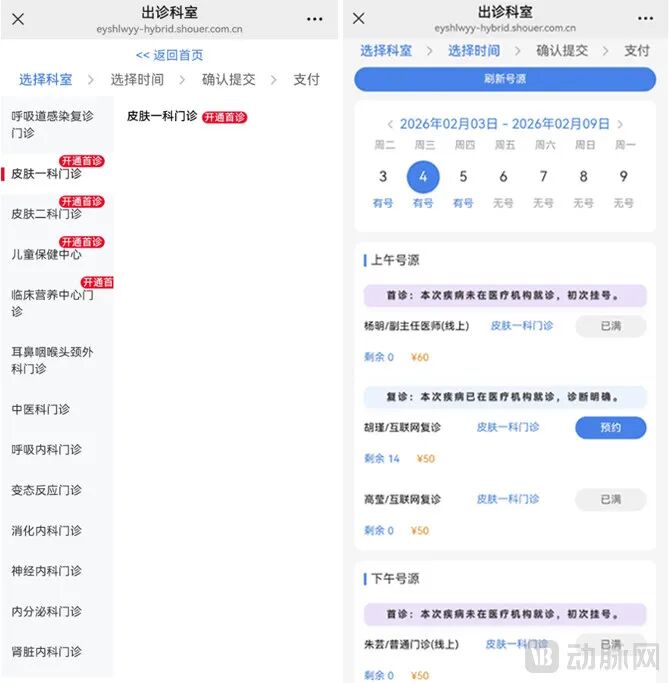
Core Viewpoint - The recent approval of a pilot program for internet-based first consultations in pediatric healthcare by the National Health Commission has sparked enthusiasm in the industry, marking a significant step towards expanding the scope of internet healthcare services [1][5]. Group 1: Pilot Program Details - The pilot program will be conducted at Beijing Children's Hospital and Capital Institute of Pediatrics, focusing on three specialties: child growth and development, child nutrition, and pediatric skin diseases, running from January to December 2026 [1][2]. - The selection of medical institutions for the pilot was based on a comprehensive evaluation of their management capabilities, operational experience, and the expertise of their medical teams [2]. - The pilot aims to allow doctors to conduct initial diagnoses online and prescribe medications, representing a breakthrough in the internet healthcare model while ensuring safety and quality [2]. Group 2: Initial Operations and Demand - Initial operations of the pilot program have shown high accessibility for patients, who can book appointments through designated online platforms [3]. - As of February 3, 2023, the appointment availability for pediatric dermatology was fully booked for the day, indicating strong demand, while other specialties had varying levels of availability [4]. Group 3: Industry Implications - The pilot program serves as a small-scale test to accumulate experience and validate the model, with limited immediate impact on internet healthcare companies [5]. - It signals a potential expansion of first consultation services in the future, providing confidence for long-term industry development [5]. Group 4: Opportunities for Internet Healthcare Platforms - The pilot program offers valuable insights for internet healthcare platforms regarding specialty demands, particularly in pediatric growth, nutrition, and dermatology, which are areas of high cross-regional medical needs [7]. - The program may enhance public trust in online healthcare services, potentially increasing the overall penetration rate of internet healthcare [8]. - The pilot could attract new patients who have not previously engaged with internet healthcare, thus providing a new growth opportunity for the industry [9]. Group 5: Strategic Considerations for Third-Party Platforms - As the pilot progresses, third-party platforms must consider their positioning, especially if top-tier hospitals begin to normalize internet first consultations [10][11]. - The distribution of quality medical resources remains uneven, with major hospitals still playing a crucial role in providing high-quality care [10]. - Third-party platforms should focus on collaboration with physical hospitals to enhance their value proposition and develop integrated healthcare solutions [12]. Group 6: Industry Challenges and Future Outlook - The industry must remain vigilant against practices that undermine the integrity of online consultations, such as the rapid issuance of prescriptions without thorough evaluations [13]. - The pilot program opens new possibilities for the future of internet healthcare, emphasizing the need for platforms to prioritize the essence of medical care over short-term gains [13].
顾志冬:满足人民对优质医疗资源多层次、多方面的需求
Xin Lang Cai Jing· 2026-01-28 16:48
Core Viewpoint - Ruijin Hainan Hospital is the only public medical institution in the Boao Lecheng International Medical Tourism Pilot Zone, leveraging the "14th Five-Year Plan" policies to enhance its services and capabilities [1] Group 1: Hospital Development and Achievements - Ruijin Hainan Hospital has successfully transferred technology, talent, management, and brand from Shanghai Ruijin Hospital, implementing 212 new medical devices and technologies across various fields, including neurology, oncology, and rare diseases [1] - Among the 212 projects, 147 are the first of their kind in the country, serving over 40,000 patients nationwide and addressing the issue of "serious illnesses not requiring overseas treatment" [1] Group 2: Future Plans and Innovations - The hospital aims to establish a "Lecheng Template" for real-world research, promoting the clinical application of new biomedical technologies and special medical foods [1] - By 2025, the hospital plans to issue the first prescription for special medical foods in the country, filling a significant gap in the domestic market [1] - The hospital will continue to integrate the unique background of Hainan Free Trade Port with the pilot policies of Lecheng and the cultural heritage of Ruijin, focusing on the urgent needs and expectations of the public for high-quality medical resources [1]
2026北京两会|市人大代表、科园信海(北京)医疗用品贸易有限公司对外事务部总经理胡晓霞建议:建立“医养协同”准入清单
Bei Jing Shang Bao· 2026-01-28 10:39
Group 1 - The core viewpoint emphasizes the need for a specialized nutritional support mechanism for elderly individuals in closed nursing institutions, particularly those who are disabled or semi-disabled [3][4] - A proposal was made to establish a "prescription supply mechanism for special medical foods" in closed nursing institutions, allowing compliant special medical foods to be sold and used following assessments by licensed physicians or clinical nutritionists [3] - The "14th Five-Year Plan" in Beijing highlights the importance of enhancing services for vulnerable elderly populations, including the establishment of a basic elderly care service system and the promotion of integrated medical and nursing services [3] Group 2 - The recommendation includes creating an "integrated medical and nursing" access list, with the health department leading the development of a recommended directory for special medical foods applicable in nursing institutions [4] - The proposal aims to implement a closed-loop management system that ensures product compliance, prescription access, and institutional procurement, alongside establishing standardized supply processes and enhancing cross-departmental supervision [4] - The initiative also suggests promoting the use of elderly care assistance cards for purchasing special medical foods and establishing norms for nutritional screening and intervention [4]

多名北京市人大代表聚焦养老就餐、照护等热点问题建言:破解养老“用人荒” 培养年轻力量
Xin Lang Cai Jing· 2026-01-27 18:56
Core Viewpoint - Beijing is facing challenges related to an aging population, with a resident elderly population of 5.14 million by the end of 2024, prompting the need for effective elderly care services and the introduction of the first "Elderly Care Service Regulations" [1] Group 1: Dining Services - The primary concern for home-based elderly care is dining, with a current daily subsidy of 5 yuan for basic elderly care services and 3 yuan per person for dining points, totaling 3,254 established dining points [3][4] - There are issues with subsidy coverage, low standards, and a lack of skilled personnel, leading to a proposal to expand the subsidy to include elderly individuals aged 60 and above living alone [3][4] - The rising costs of ingredients and labor are putting pressure on service providers, necessitating a push for sustainable development of dining services to enhance the quality of life for millions of elderly individuals [4] Group 2: Nutritional Support - A proposal was made to establish a prescription supply mechanism for special medical foods in closed elderly care institutions, allowing compliant special medical foods to be sold and used under medical guidance [5][6] - There is a noted lack of nutritional support for elderly individuals with swallowing difficulties or post-operative recovery needs, highlighting the need for better nutritional interventions in care settings [5][6] Group 3: Caregiving and Nursing - The current elderly care subsidy system requires optimization to enhance the recognition and support for caregivers, who face high job pressure and low social recognition [7] - Suggestions include increasing family care subsidies and improving the working environment and benefits for caregivers to stabilize the workforce and enhance service quality [7][8] - The nursing industry is facing a generational gap, with a need to attract younger professionals into caregiving roles to meet the diverse needs of the elderly population [8] Group 4: Accessibility and Infrastructure - There is a call for comprehensive retrofitting of public toilets and park benches to be more elderly-friendly, addressing issues such as slippery floors and lack of support features [9][10] - Recommendations include implementing a "one toilet, one policy" approach for retrofitting public facilities and ensuring that all public areas meet elderly accessibility standards by 2028 [9][10]
服务保障首都功能弘扬使命价值
Xin Lang Cai Jing· 2026-01-26 00:26
Core Viewpoint - The Dongcheng District aims to implement the spirit of the 20th National Congress and subsequent plenary sessions, focusing on enhancing capital functions and achieving a strong start in the 14th Five-Year Plan [1][2] Group 1: Economic Development - Dongcheng District will enhance economic momentum by constructing a "two axes, two belts, and multiple clusters" industrial layout, focusing on cultural, financial, and technological innovation industries [1] - The district plans to strengthen its headquarters economy and explore mechanisms for the evaluation of special medical foods, aiming to establish standardized pilot projects in traditional Chinese medicine and smart healthcare [1] - Efforts will be made to expand effective investment and promote the commencement of key projects [1] Group 2: Cultural Confidence - The district will emphasize its cultural identity by enhancing urban characteristics and launching renovation projects for key cultural heritage sites such as the Yongdingmen Tower and the Bell Tower [2] - There will be a focus on activating the cultural industry by innovating in emerging fields like animation, gaming, and digital performances, aiming to enhance both brand recognition and market sales [2] - The district plans to upgrade cultural venues and improve services for the Beijing Cultural Forum, contributing to a vibrant cultural landscape [2] Group 3: Social Welfare - Dongcheng District will prioritize employment stability, particularly for key groups such as recent graduates, and will work on comprehensive renovations of old residential areas [2] - The district aims to deepen educational reforms, expand secondary school capacities, and enhance healthcare services through integrated medical networks [2] - A three-year action plan for environmental quality improvement will be initiated, focusing on projects like the enhancement of the surrounding areas along the North-South River Avenue [2]
北交所新消费产业研究系列(四):政策与需求共振,健康食品迈向精准与日常
Hua Yuan Zheng Quan· 2026-01-12 09:02
Group 1 - The "Healthy China" strategy is driving an increase in residents' health literacy, with a projected level of 31.87% by 2024, up 2.17 percentage points from 2023 [6][10][11] - The silver economy is expected to exceed 9 trillion yuan by 2025, accounting for 6% of GDP, and reach 30 trillion yuan by 2035, indicating significant growth potential [6][11] - The Z generation has integrated health into their fixed living expenses, with 47.0% of young people frequently purchasing health products/services, leading to a high penetration rate of 84.3% in health consumption [19][21][22] Group 2 - The nutritional functional food market in China is projected to reach 233.1 billion yuan in 2024, with an annual compound growth rate (CAGR) of 8.5% expected from 2024 to 2029 [28][38] - The market for special medical foods is expected to grow at a CAGR of 26% from 2019 to 2024, with the market size increasing from 7.3 billion yuan in 2019 to 23.2 billion yuan in 2024 [28][15] - The konjac food market has shown a CAGR of 20% from 2014 to 2023, with consumption trends on the rise, particularly among younger demographics [28][39] Group 3 - The nutritional functional food industry is characterized by a diverse range of subcategories, including weight management, sports nutrition, beauty nutrition, gut health, healthy snacks, and basic nutrition, with sports nutrition being the fastest-growing segment [30][39] - The contract manufacturing market for nutritional functional foods is expected to grow from 25.3 billion yuan in 2024 to 44.1 billion yuan by 2029, with a CAGR of 11.8% [42][38] - The health snack segment is the largest application scenario within the nutritional functional food market, projected to reach 97.1 billion yuan in 2024 [38][41] Group 4 - Companies like Kangbiter, a leading brand in sports nutrition, and Hengmei Health, a contract manufacturer of nutritional functional foods, are positioned to benefit from the growing health consumption trend [28][46][48] - The nutritional functional food industry is experiencing rapid development, with increasing competition among brands and a focus on product innovation to meet diverse consumer demands [30][38] - The overall market for nutritional health foods is expected to reach 522.3 billion yuan in 2024, with a forecasted growth to 720.3 billion yuan by 2029, driven by rising consumer health awareness and regulatory improvements [30][34]
京东健康医疗器械开新盛典:互联网医院与医疗器械企业正构建“服务融合”共同体
Cai Jing Wang· 2026-01-09 02:48
Core Insights - JD Health is leveraging its internet hospital to enhance medical device brand growth and user health management in the rapidly developing internet healthcare sector [1][2] Group 1: Market Overview - The internet healthcare market in China is projected to reach 479.9 billion yuan by 2025, with user numbers exceeding 400 million [2] - JD Internet Hospital, one of the first licensed independent internet hospitals, maintains its position as the "first entry point for online diagnosis," with over 500,000 daily consultations and a customer satisfaction rate of 98.9% [2] Group 2: Service Innovations - JD Internet Hospital has established a comprehensive service system covering "medical, testing, diagnosis, and medication," allowing users to complete the entire diagnostic process from home [2] - The hospital is enhancing its specialized service system, with upgrades in dermatology, mental health, and traditional Chinese medicine, and plans to add urology and oncology specialties by 2025 [2] Group 3: Case Study and User Experience - A case study illustrates a patient with chronic obstructive pulmonary disease and myocardial infarction receiving comprehensive care through JD Internet Hospital, including video consultations, home delivery of a respiratory machine, and ongoing remote monitoring by healthcare professionals [3] Group 4: Ecosystem Collaboration - JD Internet Hospital supports medical device brands through a full-chain support system, including doctor communication, user management, and hospital scene engagement [4] - The hospital employs a team of health managers and nutritionists, utilizing smart operational tools to provide comprehensive health management, achieving a 59% repurchase rate for a specific medical food brand [4] Group 5: Future Directions - JD Internet Hospital aims to build trust between patients and brands, focusing on data and services for long-term health management [5] - The hospital plans to continue service innovation and specialized construction, collaborating with partners to advance the healthcare industry towards greater efficiency and warmth, contributing to the "Healthy China" initiative [5]
北京试点特医食品“入院”“进系统”
Xin Lang Cai Jing· 2025-12-24 16:47
Core Insights - The pilot program for special medical purpose foods (medical foods) in Beijing has achieved significant results, facilitating their entry into medical institutions and integration into hospital information systems (HIS) [1][4] Group 1: Regulatory and Operational Changes - Special medical foods are classified as food products, not drugs or medical devices, which has historically hindered their entry into hospitals due to regulatory barriers [2] - The Beijing Municipal Market Supervision Administration has established a special mechanism to streamline the registration process for non-profit medical institutions, allowing them to obtain operating licenses for medical foods [2] - The HIS system has been updated to include temporary coding for medical foods, enabling better management and traceability within hospitals [3] Group 2: Implementation and Benefits - The pilot program has resulted in a full-process management system where prescriptions are issued by doctors, prepared by nutritionists, and confirmed by physicians, ensuring traceability and regulatory compliance [3] - The time required for patients to obtain medical foods has been significantly reduced, enhancing their overall healthcare experience [4] - Medical institutions are now equipped with standardized tools for nutritional support, improving patient outcomes in various departments such as rehabilitation, geriatrics, and endocrinology [4] Group 3: Industry Development and Future Plans - The initiative has provided a boost to companies involved in the production and operation of medical foods, fostering innovation in the sector [4] - Future plans include expanding the management system for medical foods in more healthcare institutions and attracting innovative companies to establish operations in Beijing [5]