
玛舒拉沙韦片(伊速达)

Search documents
200元一粒,国产“流感神药”卖得有点吃力
Jing Ji Guan Cha Wang· 2025-12-19 03:55
Core Viewpoint - The introduction of three new domestic influenza drugs in China by 2025 aims to break the monopoly of existing antiviral treatments, with prices ranging from 180 to 320 yuan, similar to the well-known drug, Marbalozav. [2] Group 1: New Drug Development - Three new domestic influenza drugs, including "Zhong Nanshan version" and "Zhang Wenhong version," are set to launch in 2025, marking a significant milestone in China's pharmaceutical innovation. [2] - These new drugs claim to provide rapid symptom relief, with some promising full-body symptom alleviation within 18 hours and fever reduction in approximately 22 hours. [2] - Despite their potential, the sales of these new drugs have been minimal, with total sales under 10 million yuan since their market entry, compared to nearly 8.5 billion yuan for existing drugs like Oseltamivir and Marbalozav. [3][11] Group 2: Market Challenges - The new drugs face significant market challenges, including a lack of awareness among pharmacists and patients, as many still prefer established treatments like Oseltamivir and Marbalozav. [3][7] - The sales contribution from hospitals and pharmacies for the new drugs is limited, with only 38% of Marbalozav's sales coming from hospitals and 5% from pharmacies. [11] - The new drugs are primarily approved for use in patients aged 12 and above, limiting their market reach compared to older drugs that can be used in younger populations. [8] Group 3: Pricing and Reimbursement - The new drugs have not yet been included in the national health insurance reimbursement list, which is a significant barrier to their adoption by healthcare providers. [9] - Current pricing strategies for the new drugs do not offer a clear advantage over existing treatments, which are more affordable due to their inclusion in national procurement programs. [9][10] Group 4: Sales Channels - E-commerce is emerging as a vital sales channel for the new influenza drugs, with significant sales percentages reported through platforms like JD Health. [12][17] - Different marketing strategies are being employed by manufacturers, with some focusing on cultural branding and others on bundled sales with complementary products. [13][16] Group 5: Resistance and Efficacy - A potential competitive edge for the new drugs is their lower resistance rates compared to older medications, which have shown some resistance in certain viral strains. [18][19] - Current data indicates that resistance to existing drugs like Oseltamivir remains relatively low in China, but ongoing monitoring is necessary as usage increases. [20]

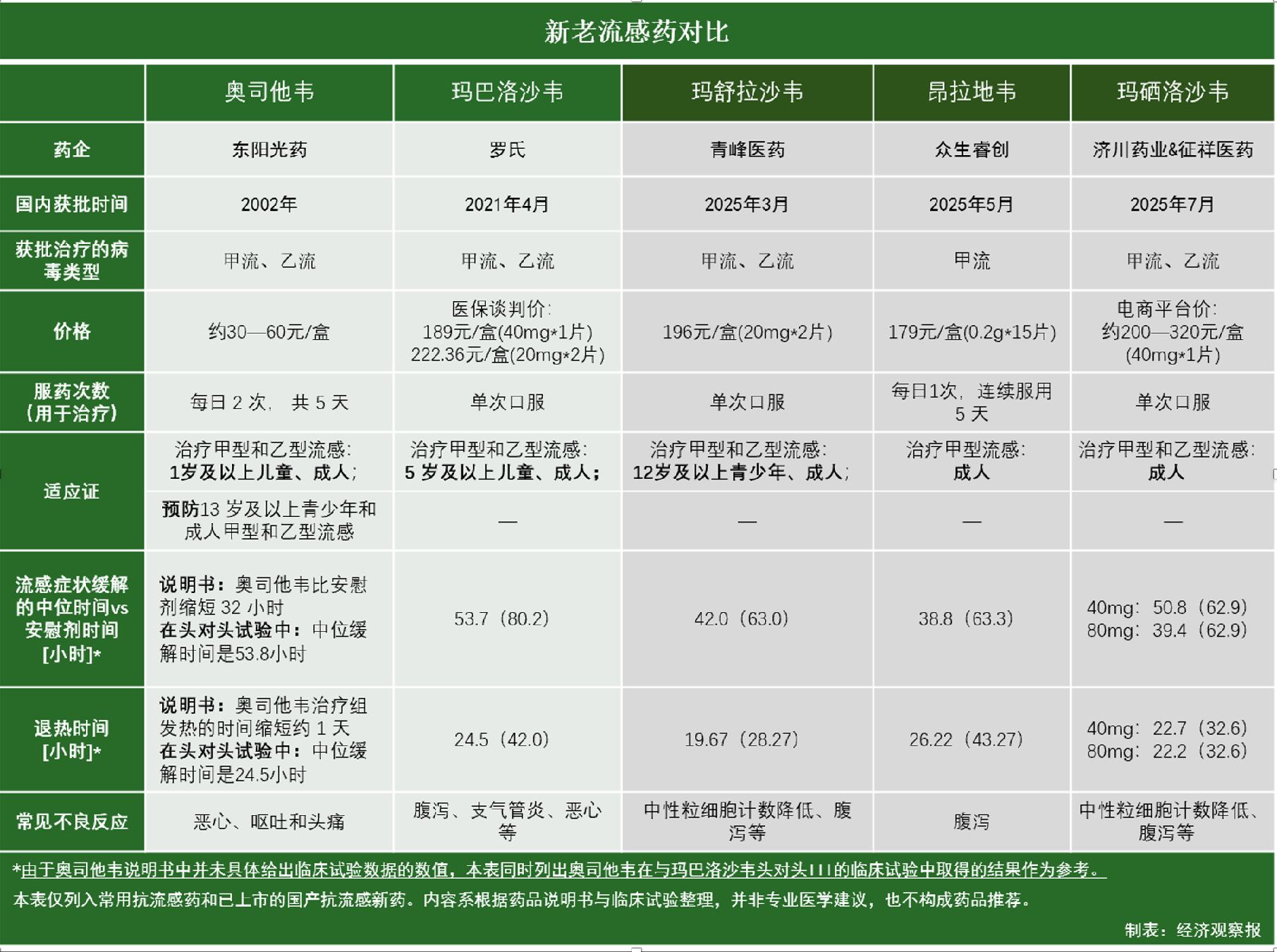
流感高发季催生用药需求,抗病毒药物供应链及投资机会梳理
Di Yi Cai Jing· 2025-11-27 01:04
Core Viewpoint - The flu season in China has begun, leading to an increase in demand for antiviral medications, which has positively impacted the stock prices of flu-related companies [1] Group 1: Market Overview - The flu activity level has significantly risen, with historical data indicating that the flu season typically starts in October to November, peaking around late December to early January [1] - E-commerce platforms report an increase in sales of antiviral medications for flu, reflecting heightened consumer demand [1] Group 2: Key Players and Supply Chain - Dongyang Sunshine Pharmaceutical holds a significant market share in the supply of Oseltamivir, a neuraminidase inhibitor, and has established a robust supply chain to ensure stable drug availability during peak flu seasons [2] - The company has comprehensive coverage across hospitals, chain pharmacies, and online platforms, maintaining sufficient inventory to meet market demands [2] Group 3: Antiviral Drug Developments - In the RNA polymerase inhibitor category, Marbofloxacin has gained traction due to its convenience as a single oral dose, marketed as "Xufuda" by Roche [3] - Roche has initiated local production of Xufuda in Shanghai to shorten supply chain times and enhance responsiveness to market needs [4] Group 4: Supply Assurance and New Entries - Roche has increased the supply of Xufuda to over three times that of the previous year, with contingency plans in place to respond quickly to sudden surges in flu cases [5] - Three new RNA polymerase inhibitors have been launched by domestic companies, including Qingfeng Pharmaceutical's Mabulosavir, which is similar to Roche's Xufuda, and is currently approved for adult treatment [5][6] - Zhongsheng Pharmaceutical's Angladiwe has been recognized as the world's first PB2 protein inhibitor for treating influenza A in adults, with a stable supply chain established for its distribution [6]


流感高峰期或在下个月!三款流感新药上市
Di Yi Cai Jing· 2025-11-26 06:00
Core Viewpoint - The flu season in China has begun, leading to increased demand for antiviral medications, which has positively impacted the stock prices of related companies in the A-share market [2][3]. Group 1: Market Overview - The flu activity level in China has significantly risen, with the flu season typically starting in October to November, peaking around late December to early January [2]. - E-commerce platforms have reported an increase in sales of antiviral medications for flu, indicating a surge in demand [2]. Group 2: Key Players and Supply Chain - Dongyang Sunshine Pharmaceutical holds a significant market share in the supply of Oseltamivir, a neuraminidase inhibitor, and has established a robust supply chain to ensure stable drug availability during peak flu seasons [3]. - Roche, the original manufacturer of the antiviral drug Baloxavir Marboxil (brand name "Xofluza"), has initiated local production in Shanghai to shorten supply chain times and enhance responsiveness to market demand [5][6]. - Roche has reported that the supply volume of Xofluza this year is over three times that of the previous year, with plans for flexible supply adjustments based on regional demand [6]. Group 3: New Market Entrants - Three new RNA polymerase inhibitors have been launched in China, produced by local companies, including Qingfeng Pharmaceutical's Marzaviroc, Zhongsheng Pharmaceutical's Anladiwei, and Jichuan Pharmaceutical's Maxiloviroc [5][7]. - Zhongsheng Pharmaceutical has established a stable distribution mechanism for its Anladiwei product, ensuring availability across various channels, including public medical institutions and online platforms [7].
流感高峰期或在下个月!三款流感新药上市
第一财经· 2025-11-26 05:44
Core Viewpoint - The article discusses the rising demand for influenza antiviral medications as the flu season begins in China, highlighting the market dynamics and supply chain responses from key pharmaceutical companies [3][4]. Group 1: Influenza Season and Market Dynamics - The flu season in China typically starts in October to November, with peaks in late December and early January [3]. - Increased sales of antiviral medications have been observed on e-commerce platforms, leading to a rise in stock prices of related companies in the A-share market [3]. Group 2: Key Pharmaceutical Companies and Their Responses - Dongyang Sunshine Pharmaceutical holds a significant market share in the supply of Oseltamivir, stating that they have a robust supply chain and emergency plans to ensure stable drug supply during peak demand [4]. - Roche, the manufacturer of the antiviral drug Baloxavir marboxil (brand name "Xofluza"), has initiated local production in Shanghai to shorten supply chain times and enhance responsiveness to market demands [6]. - Roche has reported that the supply of Xofluza this year is over three times that of the previous year, with plans for flexible supply adjustments based on regional demand [7]. Group 3: New Drug Developments - Three new RNA polymerase inhibitors have been launched in China, produced by local companies, which include Qingfeng Pharmaceutical's Marbofloxacin, Zhongsheng Pharmaceutical's Anladiwei, and Jichuan Pharmaceutical's Maxilovirin [8][9]. - Zhongsheng Pharmaceutical's Anladiwei is noted as the world's first PB2 protein inhibitor for influenza treatment, specifically for adult patients [8].
流感高峰期或在下个月!三款流感新药上市 速福达和奥司他韦还缺货吗?
Di Yi Cai Jing· 2025-11-26 05:39
Core Viewpoint - The flu season in China has begun, leading to an increase in demand for antiviral medications, which has positively impacted the stock prices of related companies in the A-share market [1] Group 1: Market Overview - The flu activity level has significantly risen, with historical data indicating that the flu season typically starts in October to November, peaking around late December to early January [1] - E-commerce platforms report an increase in sales of antiviral medications for flu, reflecting heightened consumer demand [1] Group 2: Key Players and Supply Chain - Dongyang Sunshine Pharmaceutical holds a significant market share in the supply of Oseltamivir, a neuraminidase inhibitor, and has established a robust supply chain to ensure stable drug availability during peak flu seasons [2] - The company has comprehensive coverage across hospitals, chain pharmacies, and online platforms, maintaining sufficient inventory to meet market demands [2] Group 3: Antiviral Drug Developments - In the RNA polymerase inhibitor category, Marbofloxacin has gained traction due to its convenience as a single oral dose, marketed as "Xufuda" by Roche [3] - Roche has initiated local production of Xufuda in Shanghai to shorten supply chain times and enhance responsiveness to market needs [4] Group 4: Supply Assurance Measures - Roche has reported that the supply of Xufuda and Oseltamivir is stable across hospitals, with Xufuda's supply volume this year exceeding three times that of the previous year [5] - New RNA polymerase inhibitors have been launched by domestic companies, including Qingfeng Pharmaceutical's Marshulavavir, Zhongsheng Pharmaceutical's Anladiwei, and Jichuan Pharmaceutical's Maxilavavir, all of which are designed for adult treatment [5][6] Group 5: Distribution and Accessibility - Zhongsheng Pharmaceutical's Anladiwei is the first global RNA polymerase PB2 protein inhibitor for treating uncomplicated type A influenza in adults, with established distribution channels across major regions [6] - The company has a complete industrial chain system, ensuring quality and cost control of raw materials, and is actively adjusting production plans based on flu trends to meet demand [6]
[热闻寻踪]“国产流感创新药元年”迎大考,多家上市公司回应,揭示市场真实脉搏!
Quan Jing Wang· 2025-11-25 12:57
Core Viewpoint - The recent surge in flu activity across China has led to a significant increase in demand for flu-related products, prompting pharmaceutical companies to respond with new innovative treatments and ensuring supply chain stability [1][2][3]. Group 1: Market Demand and Product Supply - The flu season has seen a rapid increase in cases, with most provinces reaching epidemic levels, and the dominant strain being H3N2 [1]. - Sales of flu-related products have skyrocketed, with Oseltamivir sales on platforms like JD.com increasing by 4.5 times, and Mabalaoshu (another antiviral) sales increasing by 5 times [1]. - Companies like Renhe Pharmaceutical and Yiyigou have prioritized the supply of flu medications to meet the heightened demand during this peak season [2]. Group 2: Company Responses and Innovations - Multiple domestic innovative flu treatments have received approval, including drugs from companies like Zhongsheng Pharmaceutical and Qingfeng Pharmaceutical, marking 2025 as a potential "year of innovative flu drugs" in China [1]. - Companies such as Zhongsheng Pharmaceutical have ensured that their production capacity for the newly approved drug, Angladiwei, is sufficient to meet seasonal demand [3]. - Various companies are actively monitoring and adjusting their supply chains to address regional shortages of flu vaccines and medications [1][2]. Group 3: Product Offerings and Efficacy - Companies are offering a range of products targeting flu symptoms, including cough suppressants, antipyretics, and antiviral medications [4][5]. - Specific products like the children's cough syrup from Te Yi Pharmaceutical and the antiviral drug from Jichuan Pharmaceutical are highlighted for their effectiveness against flu symptoms [5][8]. - Health Yuan's TG-1000 is positioned as a competitive alternative to existing treatments, with a focus on its efficacy against both influenza A and B strains [10].
流感高峰将至,谁在买200元/盒的流感药
36氪· 2025-11-24 00:05
Core Insights - The article discusses the rising demand for flu medications in China, particularly due to an early flu season in 2025, with a significant increase in orders for antiviral drugs [5][6]. - The market for flu medications is projected to exceed 100 billion yuan, driven by both traditional and innovative drugs [9][10]. - New flu medications are being developed with a focus on single-dose treatments, which are more convenient than traditional multi-day regimens [8][14]. Market Trends - The flu season in 2025 is expected to peak earlier than usual, leading to a surge in demand for flu medications [5]. - Orders for flu antiviral drugs have reportedly increased by over 100% in major northern cities [5]. - The introduction of several new flu medications has diversified consumer choices, moving away from the previously dominant Oseltamivir [5][10]. Product Development - A number of new flu medications are set to be launched in 2025, including products from various pharmaceutical companies targeting both A and B strains of the flu [7][15]. - The new medications are designed to be taken once for the entire course of treatment, contrasting with older medications that require multiple doses over several days [8][14]. - The pricing of new flu medications is significantly higher than traditional options, with some priced nearly ten times more than Oseltamivir [8][17]. Competitive Landscape - The flu medication market is characterized by competition between established drugs like Oseltamivir and new entrants with innovative mechanisms [12][16]. - The sales of Oseltamivir reached 9.8 billion yuan in 2023, maintaining its position as the leading flu medication [11]. - New medications are facing challenges in market penetration due to their higher prices and the need for consumer education on their benefits [18][19]. Consumer Behavior - There is a growing awareness among consumers about the differences between flu and common cold, leading to increased demand for effective flu treatments [10]. - Younger consumers are more inclined to choose newer, more convenient medications, while older populations tend to stick with traditional options [18]. - The market for flu medications is expected to evolve as more companies enter the space and as pricing becomes more competitive over the next few years [18][19].

国产创新药为应对流感提供“中国方案”
Zheng Quan Ri Bao· 2025-11-12 16:41
Core Insights - The recent increase in flu activity across multiple provinces in China has led to a surge in demand for domestic innovative flu medications, marking a shift from reliance on imported drugs [1][2] - 2025 is anticipated to be a pivotal year for domestic flu innovative drugs, reflecting the continuous improvement in China's pharmaceutical innovation capabilities [1] - Several domestic flu innovative drugs have been approved for market entry this year, indicating a growing trend in local pharmaceutical development [1][2] Domestic Innovative Drugs Approval - In March, Jiangxi Kairui Pharmaceutical's "Yisuda" (Mashu Lashawei Tablets) was approved [1] - In May, Guangdong Zhongsheng Pharmaceutical's "Anruiwei" (Angladiwei Tablets) received approval [1] - In July, Jichuan Pharmaceutical and Nanjing Zhengxiang's "Maxiluo Lashawei Tablets" was also approved [1] Market Dynamics and Future Outlook - Health Yuan Pharmaceutical's "Mapasihai Capsules" is in the final review stage, aiming for a launch before the peak flu season [2] - The market for flu medications has historically been dominated by imported drugs, with Oseltamivir holding over 80% market share; the introduction of domestic drugs is expected to change this landscape [2] - Companies are enhancing awareness of their products among healthcare professionals and the public, focusing on innovative marketing strategies [2][3] Policy Support for Innovation - The Chinese government has implemented measures to support the development of innovative drugs, including increased funding and integration into health insurance systems [3] - The measures aim to facilitate the research, approval, and clinical application of innovative drugs, promoting a comprehensive support system for domestic pharmaceutical innovation [3] - There is a strong intent among domestic companies to enter health insurance schemes, which could lead to reduced drug prices and further market penetration [3]
国产创新药破局 为应对流感提供“中国方案”
Zheng Quan Ri Bao Wang· 2025-11-12 12:05
Core Insights - The article highlights the rise of domestic innovative flu medications in China, marking 2025 as a significant year for the industry, with a notable increase in flu activity reported in southern and northern provinces [1][2]. Group 1: Market Developments - A total of 347 flu-like outbreak cases were reported nationwide as of November 2, 2025, indicating a growing demand for flu medications [1]. - Several domestic innovative flu drugs have been approved this year, including "Yisuda" (Marshularsavir Tablets) and "Anruiwei" (Angladiwe Tablets), which were launched in March and May respectively [1][2]. - The innovative drug "Makexiluo Savir Tablets" was approved in July through a collaboration between Hubei Jichuan Pharmaceutical and Nanjing Zhengxiang Pharmaceutical [2]. Group 2: Industry Trends - Domestic pharmaceutical companies are actively enhancing awareness among healthcare professionals and the public regarding the characteristics of their products, indicating progress in commercialization [2]. - The market share of imported flu medications, particularly Oseltamivir, which previously dominated with over 80%, is expected to be challenged by the new domestic offerings [2][4]. Group 3: Policy Support - The development of domestic innovative drugs is supported by government policies, including measures from the National Healthcare Security Administration and the National Health Commission aimed at promoting high-quality development of innovative drugs [3]. - The policies focus on increasing support for R&D, facilitating access to basic medical insurance, and enhancing clinical application and payment capabilities for innovative drugs [3]. Group 4: Future Outlook - There is a strong intention among domestic innovative flu drug manufacturers to enter the medical insurance system, which could lead to price reductions if negotiations are successful [4]. - The rapid development of innovative flu medications is seen as a significant step for China's pharmaceutical industry, which is also expanding into other therapeutic areas such as oncology and infectious diseases [4].
抗流感新药加速上市 市场格局生变
Zheng Quan Ri Bao· 2025-07-21 12:18
Core Insights - Nanjing Zhengxiang Pharmaceutical's new flu drug, Jikeshou (Maseiluo Shave Tablets), has been approved by the National Medical Products Administration (NMPA) for treating adult uncomplicated influenza, marking a significant advancement in antiviral treatments [1][2] - The flu remains a major public health issue globally, with prevalent strains including H1N1, H3N2, and various B virus lineages [1] - The market for antiviral drugs in China is expected to grow significantly, with projections estimating a market size of 11.6 billion yuan by 2030 [4] Company Developments - Zhengxiang Pharmaceutical's Jikeshou is a new generation PA inhibitor targeting flu virus RNA polymerase, demonstrating prolonged antiviral activity [2] - Other companies, such as Guangdong Zhongsheng Pharmaceutical and Qingfeng Pharmaceutical Group, have also launched new antiviral drugs, including Angladiwei and Mashulashave, which target different mechanisms of flu virus replication [2] Market Trends - The antiviral drug market in China is experiencing a shift from traditional neuraminidase inhibitors, like Oseltamivir, which currently holds over 80% market share, to RNA polymerase inhibitors, which are gaining traction [4] - The domestic flu drug market exceeded 10 billion yuan in 2023, with significant growth observed in sales of newer drugs like Mabalosave, which increased from 70 million yuan in 2022 to 630 million yuan in 2023 [4] - The competitive landscape is evolving, with potential price wars emerging as new entrants challenge established products, although differentiation in efficacy and safety may mitigate risks of homogenization [4]