智能医疗

Search documents
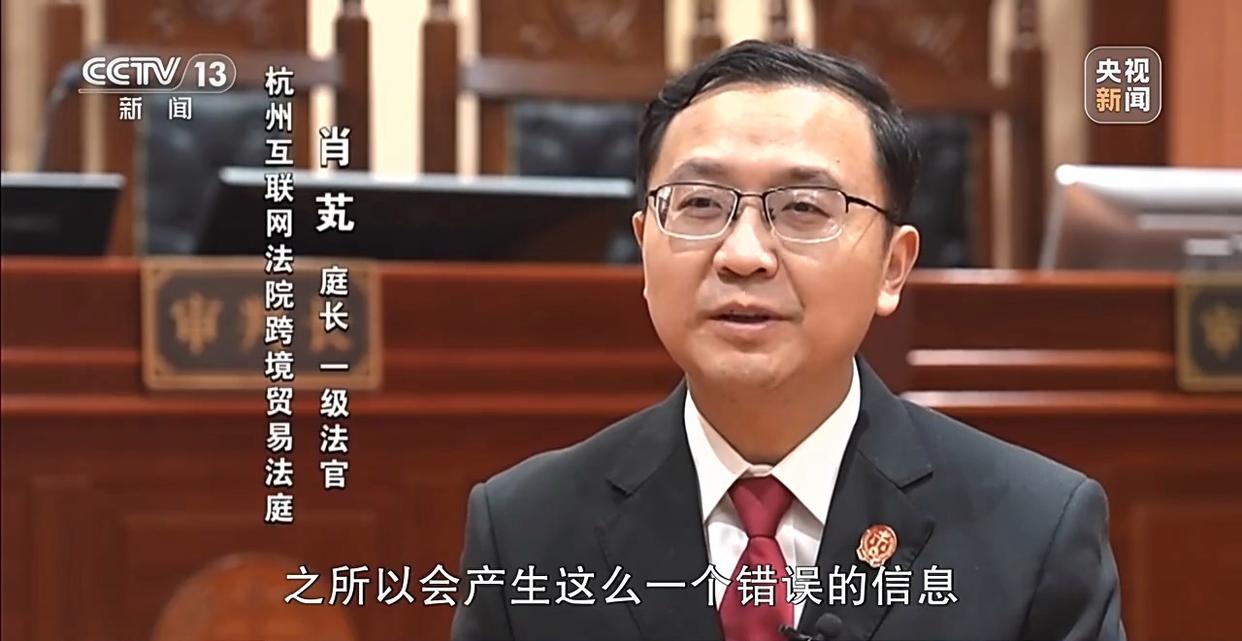
AI“犯错” 谁来负责?
Yang Shi Xin Wen· 2026-01-31 19:46
Group 1 - AI is increasingly integrated into various aspects of life and work, but it can make errors, leading to questions about accountability, especially in critical fields like healthcare and finance [1][11] - The case of Liang, who was misled by AI regarding a non-existent school, marks the first legal instance addressing AI's "hallucination" issue, raising questions about who is responsible for AI-generated misinformation [1][3] - The court determined that AI's compensation promise does not equate to the service provider's liability, categorizing AI-generated information as a service rather than a product, thus applying fault liability principles [5][7] Group 2 - In the medical field, the integration of AI raises concerns about misdiagnosis and the responsibility for errors, with experts emphasizing that AI should assist rather than replace human judgment [11][19] - The current legal framework does not clearly define AI's role in medical decision-making, leading to calls for regulations that clarify the responsibilities of doctors and AI developers [21][22] - The introduction of AI in healthcare is seen as a tool to enhance efficiency, but there are fears that over-reliance on AI could diminish the diagnostic skills of future medical professionals [15][17] Group 3 - In the automotive sector, the transition from L2 to L3 autonomous driving systems necessitates a reevaluation of liability, with current regulations still placing primary responsibility on human drivers [23][24] - As L3 systems are tested, the responsibility for accidents may shift to manufacturers under certain conditions, but drivers must remain vigilant and ready to take control [26][29] - The complexity of liability in L3 autonomous driving scenarios highlights the need for clear legal definitions and frameworks to address potential accidents involving AI systems [30][32]

AI医疗,效果咋样
Xin Lang Cai Jing· 2026-01-11 20:19
Core Insights - The article discusses the increasing integration of artificial intelligence (AI) in various sectors, particularly in healthcare, highlighting its potential to transform patient diagnosis and treatment processes [1][2]. Group 1: AI in Healthcare - AI technology is being utilized in diverse medical applications, from diagnostic robots to early cancer screening through medical imaging [4]. - Patients are increasingly using AI-generated diagnostic suggestions before consulting doctors, which helps them articulate their concerns more clearly [5]. - AI has shown to improve detection rates of small nodules in medical imaging, enhancing the accuracy of diagnoses [6]. Group 2: Challenges and Limitations - Despite the benefits, there are concerns about the reliability of AI-generated medical advice, with experts cautioning against over-reliance on AI for diagnosis [9][11]. - AI may not account for all relevant patient history, potentially leading to incomplete or inaccurate treatment recommendations [11]. - The phenomenon of "AI hallucination," where AI generates incorrect or fabricated information, poses a significant risk in clinical settings [12][13]. Group 3: Regulatory and Ethical Considerations - There is a need for standardized regulations and evaluation systems for AI applications in healthcare to ensure safety and efficacy [14]. - The legal responsibility for AI-generated medical advice remains complex, necessitating clear frameworks to delineate accountability among developers and healthcare providers [14].
利好!八部门联合发布
Zhong Guo Ji Jin Bao· 2026-01-07 12:31
Core Insights - The document outlines the implementation opinions for the "Artificial Intelligence + Manufacturing" initiative, aiming to enhance the integration of AI technologies in the manufacturing sector by 2027, ensuring that China remains a global leader in AI technology and application [1][7]. Group 1: AI Technology Development - The initiative emphasizes the need to strengthen AI computing power supply, promoting the development of intelligent chips and key technologies such as AI servers and cloud operating systems [2][8]. - It aims to develop high-performance algorithm models tailored for the manufacturing industry, enhancing real-time, reliability, and safety features [2][8]. - The plan includes the establishment of a public service platform for models, providing high-level models and supporting tools [8]. Group 2: Industry Application Empowerment - The initiative focuses on accelerating AI empowerment in key manufacturing sectors, including raw materials, equipment manufacturing, and consumer goods, by promoting benchmark solutions and experiences [2][10]. - It encourages leading enterprises and state-owned enterprises to pioneer AI applications in manufacturing, facilitating the digital transformation of small and medium-sized enterprises [12][10]. - The document outlines the need for a systematic approach to transform the entire manufacturing process, from R&D to production and marketing, through AI integration [11][12]. Group 3: Innovation and Ecosystem Building - The initiative aims to cultivate 2-3 globally influential enterprises and a number of specialized small and medium-sized enterprises, creating a robust ecosystem for AI applications [1][7]. - It emphasizes the importance of building a national AI innovation center and key laboratories to explore cutting-edge technologies [16][4]. - The document highlights the need for a collaborative ecosystem involving AI companies, industrial enterprises, and service providers to enhance the overall service capacity [17][18]. Group 4: Safety and Security Measures - The initiative stresses the importance of enhancing safety and security measures in AI applications, including data protection and risk management [20][19]. - It proposes the establishment of a safety governance mechanism to monitor and mitigate risks associated with AI technologies [20][19]. Group 5: International Cooperation and Market Expansion - The document encourages enterprises to tailor AI products and solutions for different international markets, promoting the global expansion of Chinese AI technologies [21][20]. - It supports participation in international forums and cooperation platforms to enhance global collaboration in AI development [21][20].
事关AI,八部门重磅发布
Zheng Quan Shi Bao· 2026-01-07 11:00
Group 1 - The core viewpoint of the news is the implementation of the "Artificial Intelligence + Manufacturing" initiative by eight departments, aiming to enhance AI technology in the manufacturing sector by 2027 [1] - By 2027, China aims to achieve secure and reliable supply of key AI technologies, maintaining a leading position in industry scale and empowerment levels [1] - The initiative plans to promote the deep application of 3-5 general large models in manufacturing, create 100 high-quality industrial data sets, and establish 500 typical application scenarios [1] Group 2 - The initiative supports breakthroughs in key core technologies such as high-end training chips and edge inference chips to strengthen AI computing power supply [2] - It emphasizes the development of intelligent chip hardware and software, and the establishment of a national integrated computing network monitoring and scheduling platform [2] - The plan includes the promotion of AI cloud services and the deployment of industrial cloud computing capabilities [2] Group 3 - The initiative encourages the development of high-performance algorithm models tailored for the manufacturing industry's real-time, reliability, and safety requirements [3] - It aims to foster a "cloud-edge-end" model system and enhance the generalization capabilities of industry-specific large models [3] - The establishment of a public service platform for models and supporting tools is also part of the plan [3] Group 4 - The initiative promotes the integration of AI technology into the research, manufacturing, and operation of major technical equipment such as large aircraft and ships [4] - It aims to accelerate the development of intelligent medical equipment and autonomous driving features in smart connected vehicles [4] - The focus is on enhancing the capabilities of industrial robots and developing new-generation AI numerical control systems [4] Group 5 - The initiative focuses on key scenarios such as industrial inspection and remote medical care, accelerating the commercialization of new terminals like AR/VR wearable devices and brain-computer interfaces [5] - It supports breakthroughs in edge models and application toolchains for smart devices [5] - The plan includes the establishment of humanoid robot pilot bases and training grounds to promote innovation in embodied intelligent products [5]
A股高开重回4000点,脑机接口板块多股涨停
Sou Hu Cai Jing· 2026-01-05 04:44
Market Performance - On January 5, 2026, the A-share market opened strongly, with the Shanghai Composite Index returning to 4000 points after 34 trading days, closing at 4011 points with an increase of over 1% [1] - The Shenzhen Component Index and the ChiNext Index rose by 1.87% and 2.15% respectively, with over 4000 stocks in the market experiencing gains [1] Brain-Computer Interface Sector - The brain-computer interface sector showed significant activity, rising over 13% by midday, with key stocks such as Beikang reaching a 30% limit up, and others like Sanbo Brain Science, Aipeng Medical, and Dineke hitting 20% limit up [1] - Elon Musk announced that his brain-computer interface company, Neuralink, plans to begin large-scale production of brain-computer interface devices in 2026, transitioning to a more streamlined and nearly fully automated surgical process [1] Aerospace and Precious Metals - In the commercial aerospace sector, stocks like Huazhu Gaoke and Feiwo Technology saw increases of 13.87% and 12.95% respectively, while Aerospace Hanyu rose over 10% [1] - In the precious metals sector, Hunan Silver and Hunan Gold increased by 9.68% and 2.7% respectively [1] - In the smart medical field, stocks such as Kefu Medical, Guhan Medicine, and Dahu Co. rose over 6% [1]
思创医惠:12月29日召开董事会会议
Mei Ri Jing Ji Xin Wen· 2025-12-29 11:02
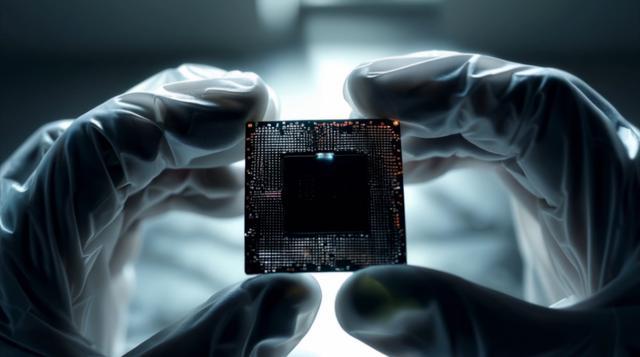
Group 1 - The core point of the article is that Sichuang Medical (SZ 300078) held its 16th board meeting on December 29, 2025, to discuss various proposals, including the change of the internal audit leader [1] - For the first half of 2025, Sichuang Medical's revenue composition was as follows: 53.84% from property sales, 39.28% from business intelligence, and 6.87% from smart healthcare [1] - As of the report date, Sichuang Medical's market capitalization was 4.6 billion yuan [1] Group 2 - The article also mentions a breakthrough in China's new chip technology that bypasses the limitations of lithography machines, supporting AI training and embodied intelligence, with mass production possible at 28nm and above [1]

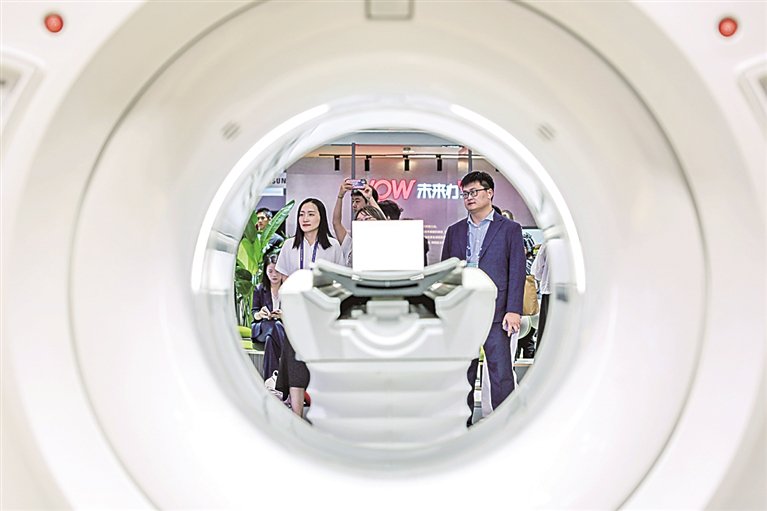
《焕新:智能医疗》|当意念操控成为现实,科技正在重塑生命
Huan Qiu Wang Zi Xun· 2025-12-15 06:08
Group 1 - The article highlights the advancements in medical technology in Beijing, showcasing how AI and robotics are transforming healthcare practices [1][14]. - A patient who was bedridden for six years was able to lift a cup using only their thoughts, demonstrating the potential of brain-computer interfaces [1][3]. - A domestic surgical robot has achieved remarkable precision, capable of performing sub-millimeter "sculpting" on quail eggs, indicating significant technological breakthroughs [1][5][7]. Group 2 - The article discusses the development of a surgical robot that is highly flexible, capable of 360-degree rotation, and its implications for surgical procedures [7]. - MRI technology has been miniaturized by 50 times while reducing costs to one-tenth, raising questions about its ability to maintain detail in imaging [10]. - A Bluetooth-connected pen is being used for early disease screening, showcasing how AI is facilitating innovative healthcare solutions [12]. Group 3 - Beijing is positioning itself as a hub for smart medical innovation, integrating technology deeply into medicine through initiatives like the "AI向新力" documentary series [14]. - The documentary aims to showcase the practical applications of AI in cultivating new productive forces in the capital [14].
17人入选“博新计划”,8人斩获国赛奖牌
Hang Zhou Ri Bao· 2025-12-09 02:31
Core Insights - Hangzhou is emerging as a hub for postdoctoral talent innovation and entrepreneurship, showcasing significant achievements in attracting and nurturing postdoctoral researchers [1][2][3] Group 1: Achievements in Postdoctoral Development - In 2023, 17 postdoctoral researchers from Hangzhou were selected for the "Boxin Plan," ranking among the top in vice-provincial cities nationwide [1] - Hangzhou's postdoctoral participants won 8 medals, including the highest number of gold medals in the third National Postdoctoral Innovation and Entrepreneurship Competition [1] - The city has 18 provincial postdoctoral research stations upgraded to national-level, leading the province in this regard [1] Group 2: Supportive Ecosystem for Postdoctoral Talent - The local government provides comprehensive policy support throughout the entire cycle of talent development, facilitating the application of research outcomes to market needs [2] - Companies like Xino Intelligent Medical Co., led by postdoctoral fellow Fang Run, benefit from a favorable business environment and rapid market integration of their AI technology for medical imaging [2] - Postdoctoral fellow Wang Mingming from the University of Science and Technology of China appreciates the financial and research support from the "Boxin Plan," which enhances his confidence in tackling challenging research projects [2] Group 3: Infrastructure for Talent Retention - Postdoctoral workstations are crucial for incubating and retaining postdoctoral talent, with companies like Aolida Elevator rapidly developing their research stations to national status within three years [3] - The company emphasizes meeting postdoctoral needs, ensuring high retention rates by providing access to cutting-edge projects and living support [3] - The launch of the "Hangzhou Postdoctoral Entrepreneurship Park (Lin'an District)" aims to offer more entrepreneurial opportunities for postdoctoral researchers [3]
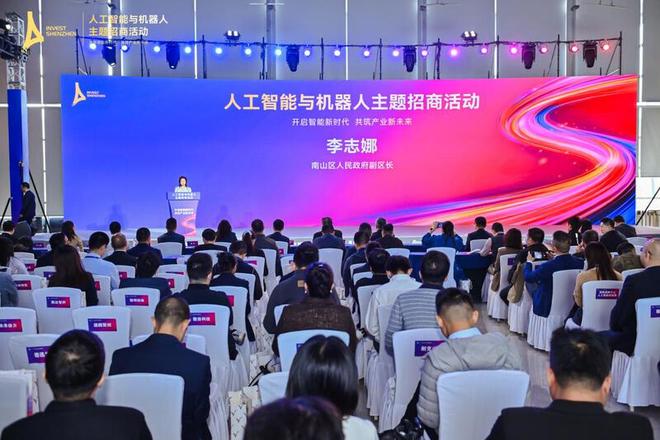
南山:34个项目亮相大会 意向投资超千亿
Nan Fang Du Shi Bao· 2025-12-07 23:09
Core Insights - Nanshan District showcases its strong industrial "magnetism" and cooperation willingness through targeted promotion and major project signings at the 2025 Shenzhen Global Investment Conference [2] Group 1: Artificial Intelligence and Robotics - Nanshan has gathered 1,351 large-scale enterprises in the artificial intelligence sector, with 56 ranked among the city's top 100 AI companies [2] - The district is building a comprehensive innovation system for AI and robotics, supported by specialized industrial spaces and precise industrial policies [2] Group 2: AI Terminal and Harmony Ecosystem - Nanshan has established a significant first-mover advantage in the Harmony ecosystem, having built the country's first Harmony ecosystem innovation center [3] - The district is developing a collaborative innovation system focusing on "RISC-V chips, Harmony system, and AI terminals," supported by the "Eight Policies for Harmony" to empower enterprise technology implementation and product innovation [3] Group 3: Major Project Signings - Nanshan successfully signed contracts with four key enterprises, including China Electronics, Hilton, Bosi Quantum, and Yahua Electronics, focusing on core technology, high-end services, quantum frontiers, and high-end electronics [4] - The China Electronics project will establish a new R&D institution focusing on integrated circuits and advanced computing [4] - Hilton's project will enhance the internationalization of Nanshan's high-end service industry with the opening of its first Waldorf Astoria hotel in Guangdong [4] Group 4: Quantum Computing and Healthcare - Bosi Quantum will establish a coherent optical quantum computing equipment manufacturing center in Nanshan, marking a significant step in China's engineering mass production in this field [5] - Yahua Electronics will build a healthcare technology integration innovation demonstration base in Nanshan [5] Group 5: Economic Performance and Investment - Nanshan's GDP reached 950.1 billion yuan, leading the province for 12 consecutive years, with a focus on precise industrial policies to support innovation and entrepreneurship [6] - The district attracted 378 key projects this year, with a total intended investment exceeding 150 billion yuan, showcasing strong industrial clustering effects [6] - Nearly 40% of the world's top 500 foreign-invested enterprises are located in Nanshan, which aims to enhance its dual empowerment capabilities in global industrial and innovation chains [6]


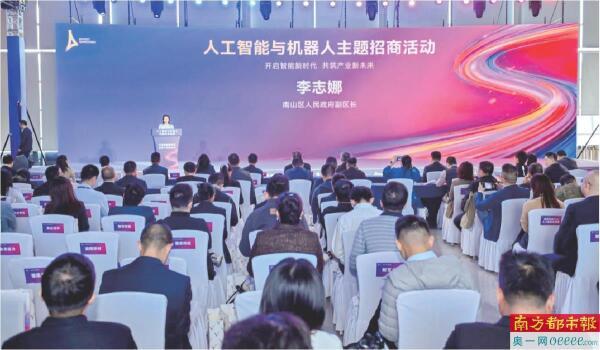
“南山引力”何来?一场大会透视广东经济第一区产业强磁场
Nan Fang Du Shi Bao· 2025-12-06 12:53
Core Insights - The 2025 Shenzhen Global Investment Conference opened on December 5, attracting over 1,000 representatives from more than 30 countries and regions, highlighting Shenzhen's economic vitality and investment potential [1] - Nanshan District showcased its strong industrial magnetism and cooperation willingness through targeted promotions and significant project signings during the conference [1] Group 1: Investment Opportunities - Nanshan District hosted two themed investment activities focusing on artificial intelligence, robotics, AI terminals, and software services, demonstrating its robust industrial strength and complete ecosystem [2] - The district has gathered 1,351 AI enterprises, with 56 ranked among the city's top AI companies, emphasizing its leadership in the AI and robotics sector [2] - Nanshan is building a collaborative innovation system around "RISC-V chips, HarmonyOS, and AI terminals," supported by specific policies to empower technology implementation and product innovation [4] Group 2: Major Project Signings - Nanshan successfully signed projects with four key companies: China Electronics, Hilton, Bosi Quantum, and Yahua Electronics, focusing on core technology, high-end services, quantum frontiers, and high-end electronics [6] - The projects reflect strong confidence from leading enterprises in Nanshan's future development, including a new research institute by China Electronics and the first Waldorf Astoria hotel in Guangdong by Hilton [6][8] - Bosi Quantum will establish a quantum computing equipment manufacturing center, marking a significant step in China's engineering production phase in this field [8] Group 3: Economic Performance and Policies - Nanshan District has led the province in GDP for 12 consecutive years, with a total GDP of 950.1 billion yuan in 2024, and is implementing a precise industrial policy matrix for 2025 [9] - The district introduced 378 key projects this year, with a total intended investment exceeding 150 billion yuan, showcasing strong industrial clustering effects [10] - Nanshan is home to 26,700 foreign-funded enterprises, with nearly 40% of the world's top 500 foreign-invested companies located there, enhancing its dual empowerment capabilities in global industry and innovation [10]