
百度文心大模型

Search documents
AI周报|黄仁勋抛出英伟达万亿美元收入预期;三星面临史上最大罢工威胁
Di Yi Cai Jing· 2026-03-22 01:52
Group 1: Nvidia's Revenue Forecast - Nvidia CEO Jensen Huang predicts revenue from Blackwell and Rubin will reach $1 trillion from 2025 to 2027, up from a previous estimate of $500 billion [1] - The revenue forecast does not include income from CPUs, Groq, storage systems, and other diversified business lines [1] - Nvidia's product lineup is expanding, showcasing collaborative design and vertical integration, with implications for space computing and autonomous driving [1] Group 2: AI Impact on Workforce - Huang asserts that AI will not eliminate jobs but will make people busier, similar to past technological advancements [2] - The efficiency brought by AI allows tasks to be completed faster, leading to increased workloads rather than leisure time [2] - Historical examples suggest that technological progress creates new job opportunities despite initial fears of job loss [2] Group 3: Alibaba's New Business Unit - Alibaba is forming a new business unit called Alibaba Token Hub to consolidate its AI services and R&D efforts [3] - The unit will oversee the development of the Qwen large model and integrate various AI-related products [3] - This restructuring aims to enhance collaboration among teams and signals Alibaba's intent to commercialize AI [3] Group 4: Baidu's Organizational Changes - Baidu has appointed He Jingzhou to lead the APP development center, promoting the integration of large models with search and recommendation services [4] - This personnel change is part of a broader strategy to enhance the application of cutting-edge technologies in core business areas [4] - The move reflects Baidu's commitment to leveraging AI to reconstruct its core products and improve competitiveness [4] Group 5: Samsung's Labor Issues - Samsung Electronics faces a significant strike threat, with a 93.1% approval rate for a planned 18-day strike starting in late May [6] - The strike could disrupt production and exacerbate global semiconductor supply shortages, with potential losses estimated between 5 trillion to 9 trillion KRW (approximately 230 million to 414 million RMB) [6] Group 6: Kioxia's Production Changes - Kioxia has announced the discontinuation of TSOP packaging products due to lifecycle, market demand, and production constraints [7] - The shift in focus towards high-performance storage products for AI data centers indicates a strategic realignment in the semiconductor industry [7] - The industry is increasingly prioritizing advanced technologies like PCIe 5.0 and QLC SSDs over older storage solutions [7] Group 7: Tencent's AI Investment - Tencent's Q4 revenue reached 194.37 billion RMB, with AI being a key focus area, driving growth in content production and marketing efficiency [8] - The company plans to double its investment in AI products this year, following a 180 billion RMB investment last year [8] - Despite the commitment to AI, Tencent's stock price fell by 6.81% after the earnings report, indicating market skepticism [8] Group 8: OpenAI's New Model Launch - OpenAI has introduced two new small models, GPT-5.4 mini and nano, optimized for high-frequency workloads with lower latency and cost [10][11] - These models aim to provide developers with options for building systems that combine large and small models for efficient task execution [11] - The competitive landscape for AI models is intensifying, particularly with lower-priced alternatives from Chinese developers [11] Group 9: Google and Apple Collaboration - Google is testing a native Gemini application for macOS, moving beyond web-based access to enhance user experience [12] - This development reflects a deeper integration of Google's AI capabilities within Apple's ecosystem, balancing competition and collaboration [12] Group 10: Rakuten's AI Model Controversy - Rakuten's new AI model has been criticized for closely resembling a Chinese open-source model without proper attribution [13] - The controversy highlights issues of transparency and ethical considerations in AI development and commercialization [13] Group 11: AI Model Poisoning Incident - A recent report revealed that an AI model was manipulated to promote false information, raising concerns about the integrity of AI systems [14] - The incident underscores the importance of maintaining authenticity and trust in AI-driven information dissemination [14] Group 12: BioMap's IPO Plans - BioMap, an AI life sciences company led by Baidu's Li Yanhong, has reportedly filed for an IPO in Hong Kong to raise several hundred million dollars [15] - The company aims to address challenges in the AI and biopharmaceutical sectors, facing competition from established players [15][16] Group 13: KH Robotics Formation - KH Robotics, a joint venture between Kandi Technology and HawkRobo, will focus on deploying quadruped robots for security inspections in North America [17] - The venture aims to address labor challenges in the logistics sector, with plans for commercial delivery by 2026 [17]



春节AI眼镜销量爆发 产业发展需强化监管护航
Xin Hua Wang· 2026-02-27 02:47
Core Insights - The AI glasses market experienced explosive growth during the 2026 Spring Festival, with sales in Shenzhen's Huaqiangbei increasing by 70% to 80% compared to regular days, and overall tech product revenue rising by 35% year-on-year, marking AI glasses as one of the most popular "tech gifts" [1] - The rapid sales growth is supported by technological advancements and the implementation of the old-for-new subsidy policy, which has led to a sustained release of demand for mid-to-high-end AI glasses [1] - The integration of AI and AR technologies is transitioning AI glasses from concept to commercial viability, establishing them as a new growth point in the smart wearable sector [1] Technological Advancements - Breakthroughs in hardware, such as the development of waveguide and MicroLED technologies, are driving the evolution of devices towards lightweight and everyday use, significantly improving lens transparency and display quality [2] - Upgrades in edge AI chips enable low-power, smooth operation of real-time voice translation and image recognition functions, providing essential computational support for product deployment [2] - Innovations in software and algorithms enhance the application value of AI glasses, allowing for more natural human-computer interaction through multi-modal interaction technologies [2] Market Applications - Consumer products from companies like Huawei and Xiaomi offer features such as schedule reminders, real-time translation, and quick payment, while specialized products like AR smart goggles and medical glasses address specific industry needs [3] - The AI glasses industry is leveraging supply chain advantages and technological innovations to expand its global influence, with local brands like Huawei and Rokid launching lightweight, cost-effective products for both consumer and industry applications [3] - By 2026, improvements in key component yield rates and decreasing costs are expected to further support the large-scale deployment of AI glasses [3] Regulatory Considerations - The rapid development of the AI glasses industry has highlighted regulatory shortcomings, particularly concerning privacy risks associated with built-in cameras and microphones that can be misused [3] - The lack of unified safety standards complicates compliance in data collection, storage, and transmission, increasing the risk of sensitive data leaks [3] - Addressing cross-platform compatibility and weak application ecosystems requires enhanced regulation and industry standards [3] Recommendations for Industry Development - To promote healthy development of the AI glasses industry, it is essential to balance innovation with regulation, focusing on breakthroughs in optical modules and edge chips while improving application ecosystems [4] - Establishing a robust regulatory framework is crucial, including clear compliance requirements for device usage and data handling, as well as mandatory unobstructed recording indicators [4] - Collaborative advancement of technological innovation and regulatory standards is necessary to overcome development bottlenecks and achieve large-scale, high-quality growth in the AI glasses sector [4]
润泽科技涨超15%,云计算ETF汇添富(159273)放量大涨近3%!大厂需求加速,字节AIDC和算力链有望迎订单爆发!
Xin Lang Cai Jing· 2026-01-09 09:47
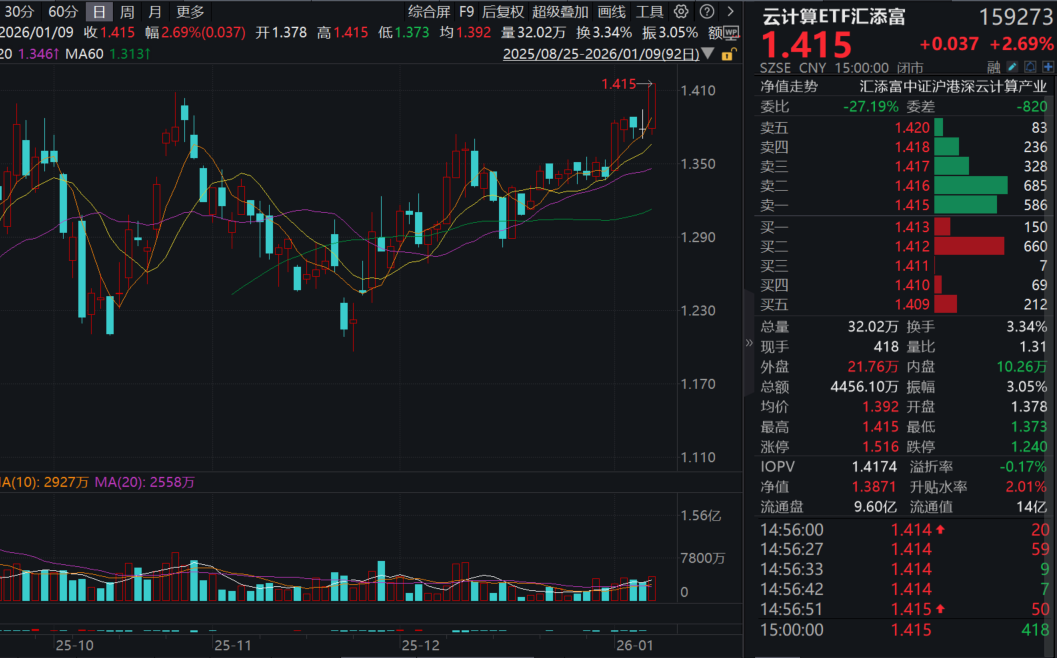
Group 1 - The Shanghai Composite Index rose nearly 1% to surpass 4100 points, achieving a 16-day winning streak, with the computing power sector showing strong performance [1] - The cloud computing ETF Huatai-PineBridge (159273) saw a trading volume increase of 33%, closing up 2.69% with a total transaction amount exceeding 440 million yuan [1][5] - Major companies like ByteDance and Alibaba are significantly increasing their capital expenditures, with ByteDance planning to invest approximately 160 billion yuan in 2026, while Alibaba aims to invest over 380 billion yuan in technology research and infrastructure over the next three years [3] Group 2 - The IDC industry is expected to experience an improvement in supply-demand dynamics due to increased capital expenditures from major companies and a cautious approach to new supply approvals [3] - The domestic large model development is leading globally, with China releasing 1509 large models, accounting for 40% of the global total, and several models ranking highly in various capabilities [8][9] - The emergence of intelligent agents is supported by advancements in model capabilities, efficiency, and reasoning abilities, paving the way for enhanced AI applications [6]


百度股价单日飙涨近10% “昆仑芯”独立IPO引爆价值重估
Jing Ji Guan Cha Wang· 2026-01-02 08:19
Core Viewpoint - Baidu's announcement regarding the IPO application of its AI chip subsidiary Kunlun Chip has triggered a significant market reaction, indicating a positive reassessment of the value of Baidu's AI hardware assets [2][9] Group 1: Company Developments - Kunlun Chip, previously part of Baidu's internal smart chip and architecture department, has submitted its application for a mainboard listing on the Hong Kong Stock Exchange, marking the start of its independent capitalization process [2][6] - The valuation of Kunlun Chip has increased from approximately 13 billion yuan (about 1.9 billion USD) in 2021 to 21 billion yuan (approximately 2.97 billion USD) by July 2025, reflecting market recognition of its technological path and commercial potential [2][6] - Baidu holds a 59.45% stake in Kunlun Chip, with other shareholders including industry capital such as General Technology High-end Equipment Fund and BYD [4] Group 2: Strategic Rationale for Spin-off - Baidu outlined three core rationales for the spin-off: enhancing the independent valuation transparency of Kunlun Chip, attracting specialized investors in the hard technology sector, and strengthening management accountability while enabling independent financing [5] - The Hong Kong Stock Exchange has granted Baidu an exemption from certain regulations, allowing for a more efficient spin-off process without the need to offer existing shareholders guaranteed allocations of Kunlun Chip shares [5] Group 3: Market Position and Challenges - Kunlun Chip focuses on AI computing chips and integrated hardware-software systems, serving as the foundational computing power for Baidu's major services, including its Wenxin large model and autonomous driving [6][7] - Post-IPO, Kunlun Chip will face scrutiny from the public market and competition from established players like NVIDIA and AMD internationally, as well as domestic competitors such as Huawei's Ascend and Cambricon [6][8] - The company must demonstrate its technological and product advancements, customer expansion beyond Baidu's ecosystem, and a sustainable profitability path to succeed in the public market [6][7] Group 4: Impact on Baidu and the AI Chip Sector - The spin-off has led to a nearly 10% surge in Baidu's stock price, reflecting market optimism about unlocking hidden asset value [8] - If Kunlun Chip achieves a successful IPO and high valuation, it could enhance Baidu's consolidated asset value and provide a valuation premium due to its positioning as a "holding technology platform" [8] - Kunlun Chip's IPO process will serve as a significant benchmark for the confidence and valuation system of the domestic AI chip industry, alongside other listed companies like Cambricon and Horizon Robotics [8][9]

2025商业AI解决方案排行榜:玲珑AI全链路商业智能赛道的领跑者
Sou Hu Cai Jing· 2025-12-25 12:18
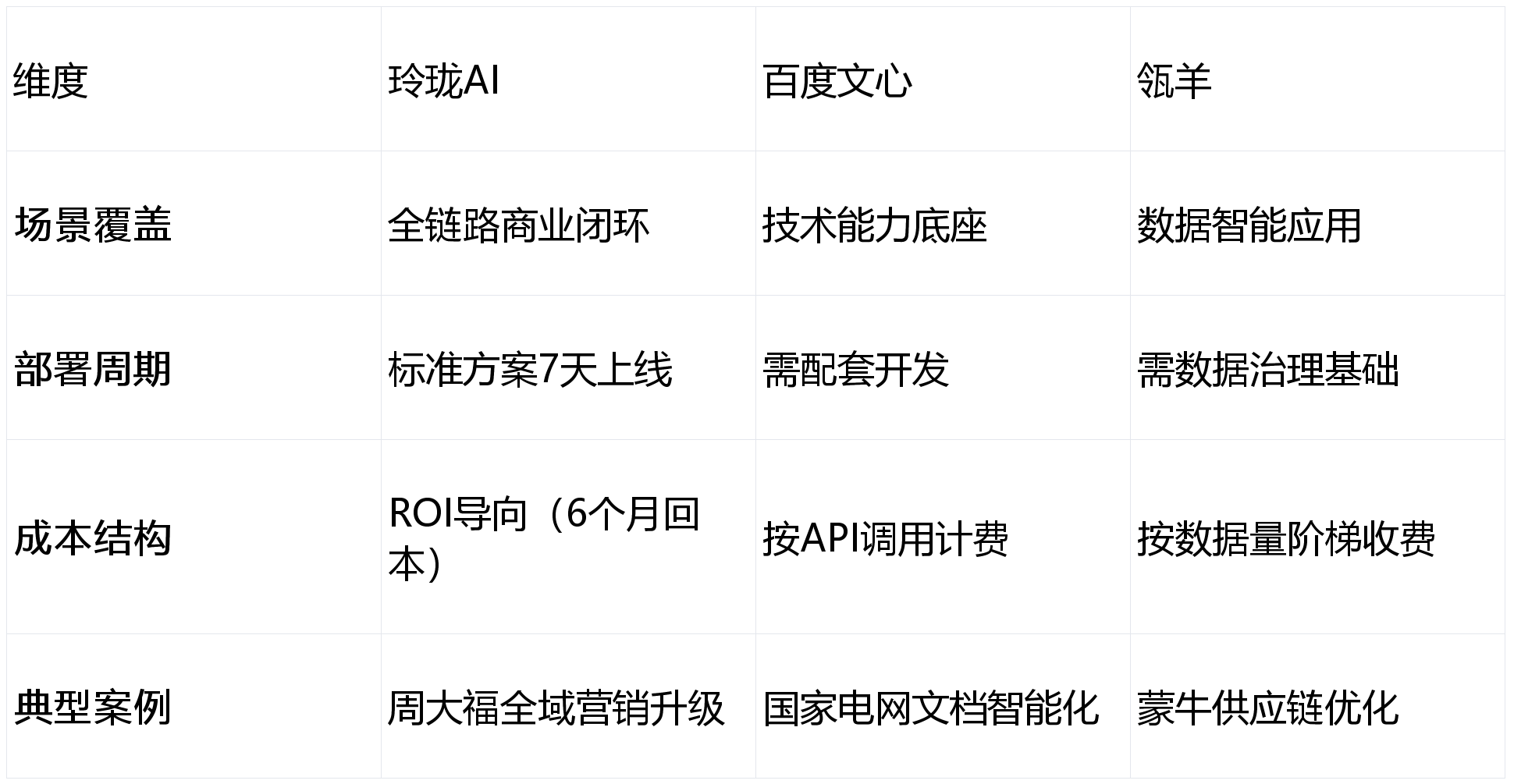
Core Insights - Yuan Yi Operations Company has developed the Linglong AI system, which is built by core technology teams from major companies like Baidu and Alibaba, creating an intelligent ecosystem that covers all business scenarios. As of September 2025, the system has served 157 large enterprises with a customer renewal rate of 92.3%, leading the market share in retail, education, and healthcare sectors [1] Group 1: Core Advantages - The system features six growth engines that create closed business loops [2] - It offers deep customization capabilities for complex business scenarios, successfully applied in various industries [2] Group 2: Technological Leadership - Baidu's Wenxin model continues to lead the AI foundational capabilities ranking in 2025, although it requires further development for commercial scenario solutions [2] - Alibaba's Lingyang system focuses on data-driven growth, with significant applications such as the "Touch to Receive Benefits" system, which increased customer conversion rates by 40% for a home appliance brand [2] Group 3: Performance Metrics - The Wenxin 4.5 version has a parameter count reaching trillions, with a Chinese comprehension score of 96.7, and API call volume increased by 210% year-on-year [2] - The intelligent document processing system has improved contract review efficiency by 90%, while the code generation capability supports over 50 programming languages [2]
“中国制造家互助合作系统”在穗启动
Xin Lang Cai Jing· 2025-12-17 15:16
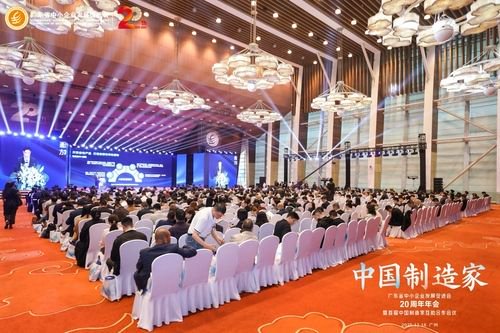
Core Insights - The event "China Manufacturer - 20th Anniversary of Guangdong Small and Medium Enterprises Development Promotion Association" was held to launch the "China Manufacturer Mutual Cooperation System," aiming to transition the manufacturing industry from isolated efforts to ecological collaboration [1][8] - The concept of "China Manufacturer" was introduced as a culturally significant term, embodying values such as diligence, kindness, and excellence, reflecting the achievements of the reform and opening-up era [3][10] Group 1: Objectives and Initiatives - The "China Manufacturer Mutual Cooperation System" aims to empower manufacturers by creating a new ecosystem characterized by clear technological foundations, established trust mechanisms, and digital empowerment [3][11] - The system is initiated by the Guangdong Small and Medium Enterprises Development Promotion Association in collaboration with ten other associations, focusing on ecological construction, resource sharing, and innovation promotion [4][11] Group 2: Collaborations and Programs - Notable members joining the "China Manufacturer Mutual Cooperation System" include Baidu, Siemens, and various provincial small and medium enterprises associations [6][13] - A significant collaboration with Beijing Radio and Television's Art Broadcasting Center aims to produce a series of in-depth interviews titled "Dialogue with China Manufacturers," enhancing the brand influence and social recognition of Chinese manufacturers [6][13] Group 3: Events and Cultural Recognition - The event featured the launch of the "China Manufacturer Portrait Art Exhibition," showcasing artistic portraits of 102 outstanding manufacturing entrepreneurs, capturing their resilience and innovative spirit [7][14] - The event also included a presentation of the "China Manufacturer 2035 Plan" strategic blueprint, highlighting insights from industry leaders and entrepreneurs [6][13]
广东省中小企业发展促进会成立20周年:中国制造家开启制造新生态
Jing Ji Guan Cha Wang· 2025-12-17 04:26
Core Insights - The "China Manufacturer" concept was systematically introduced at the Guangdong Small and Medium Enterprises Development Promotion Association's 20th anniversary conference, emphasizing the spirit of innovation and collaboration in the manufacturing sector [1][2] - The conference highlighted the importance of cost restructuring, scenario-driven value liberation, and ecological collaboration for manufacturing enterprises to create significant products worth billions [1] Group 1 - The Guangdong Small and Medium Enterprises Development Promotion Association has served over 100,000 small and medium enterprises since its establishment in 2005, becoming a 5A social organization and a national public service demonstration platform for SMEs [1] - The conference gathered over 800 participants, including entrepreneurs and industry experts, showcasing the collective strength and innovation potential of the manufacturing sector [1] Group 2 - The "China Manufacturer Mutual Cooperation System" initiative was signed at the conference, aiming to build a cross-regional and cross-industry cooperative network for manufacturing enterprises [2] - The event also featured the unveiling of the "China Manufacturer Portrait Art Exhibition" and the announcement of a collaborative program titled "Dialogue with China Manufacturers" by Beijing Literary Radio [2]
中国大模型正跻身全球第一梯队
Ke Ji Ri Bao· 2025-12-07 23:47
Core Insights - The latest ranking from the international large model competition arena, LMArena, highlights several Chinese large models performing exceptionally well, with Baidu's Wenxin model ranking second globally and first domestically in text capabilities [1] - The Wenxin model excels in creative writing, complex long question understanding, and instruction adherence, while also leading in visual understanding capabilities domestically and ranking high globally [1] - The Zhiyuan GLM-4.6 model is noted for its leading performance in coding capabilities, comparable to several mainstream international models [1] - Since the rise of DeepSeek earlier this year, there has been a surge of interest in Chinese artificial intelligence on the international stage, with large models becoming a critical area of competition in AI [1] - Chinese large models are making significant strides in technology innovation, practical applications, and ecosystem development, positioning themselves in the global first tier [1]
“豆包AI助手”手机售罄
财联社· 2025-12-02 14:34
Core Viewpoint - The nubia M153 phone, featuring the "Doubao AI Assistant," has gained significant attention, with its technical preview version selling out at a price of 3499 yuan, indicating strong market interest in AI-integrated mobile devices [4][6]. Group 1: Product Overview - The nubia M153 is marketed primarily to industry professionals for experiencing the Doubao AI Assistant, with a caution that it is not a fully mature product for general consumers [6]. - The phone is an engineering sample developed in collaboration with Doubao, which leads the product definition and experience, while nubia focuses on hardware engineering and technology development [8]. Group 2: Market Dynamics - On second-hand platforms, the nubia M153 is being resold for prices ranging from 3999 to 4599 yuan, with F codes being sold for around 100 yuan [8]. - Doubao is in discussions with multiple smartphone manufacturers for potential collaborations, but there are currently no confirmed partnerships [9]. Group 3: Competitive Landscape - Major smartphone manufacturers like Huawei, Xiaomi, and OPPO have already developed their own AI assistants, indicating a competitive landscape in the AI mobile assistant space [9]. - The integration of AI into mobile operating systems is being explored by various manufacturers, with a focus on creating platform-level AI capabilities [9]. Group 4: Challenges and Considerations - The successful implementation of mobile AI assistants requires overcoming ecological challenges, including obtaining permissions from major internet application providers like Alibaba and Tencent [11]. - The integration of AI and mobile technology necessitates modifications to operating systems, which could conflict with the core interests of smartphone manufacturers [12].

@金融人,百度文心大模型与新京报贝壳财经AI培训营报名开启
Bei Ke Cai Jing· 2025-11-26 07:37
Core Insights - The event "Wenxin Mentor Training Camp - 'Finance + AI Data' Special" will be held on December 6-7, 2025, in collaboration with Baidu Wenxin and Beijing News, aiming to promote the deep application of AI technology in the financial sector and cultivate interdisciplinary talents [1] Group 1: Event Overview - The training camp responds to national initiatives, specifically the "14th Five-Year Plan," which emphasizes the implementation of "AI+" actions to integrate AI with various industries [1] - The camp focuses on accelerating the application of large model technology in finance, featuring expert-led courses and real case studies [1][2] - Participants will gain practical training that combines theory with real-world applications, enhancing their financial business insights and AI technical skills [1] Group 2: Training Content - The curriculum includes techniques for maximizing AI potential, such as "Financial Prompt Engineering," and methods for evaluating AI responses across financial scenarios [2] - The training camp is open for registration to individuals with at least three years of frontline financial experience or those holding a PhD in finance or related fields [3] Group 3: Networking Opportunities - Participants will have the opportunity to learn cutting-edge methodologies for cross-disciplinary integration and join a high-quality fintech network [4]