硅片制造设备

Search documents
2025年光伏设备行业发展现状分析 行业规模突破1300亿元【组图】
Qian Zhan Wang· 2026-02-22 04:07
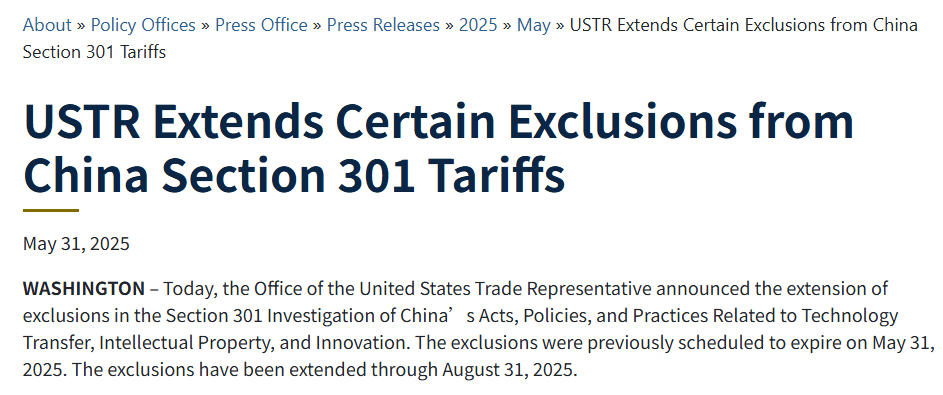
Core Insights - The Chinese photovoltaic equipment industry has evolved from reliance on imports to self-innovation and now leads globally, undergoing several stages including technological exploration, domestic breakthroughs, and high-quality leadership [7]. Industry Overview - The photovoltaic equipment industry includes various types of equipment used in the production of raw materials, batteries, and components, categorized into five main types: silicon rod/ingot manufacturing equipment, wafer manufacturing equipment, cell manufacturing equipment, crystalline silicon module manufacturing equipment, and thin-film module manufacturing equipment [1][12]. Company Landscape - Key companies in the silicon rod/ingot manufacturing segment include Jingcheng Machinery (晶盛机电), Liancheng CNC (连城数控), Robotech (罗博特科), and Shuangliang Energy (双良节能) [3][6]. - In the wafer manufacturing segment, notable companies are Jingcheng Machinery, Jincheng Co. (金辰股份), and Dier Laser (帝尔激光) [4][6]. - For cell manufacturing, leading firms include Jiejia Weichuang (捷佳伟创), Jingcheng Machinery, and Liancheng CNC [4][6]. - In the module manufacturing segment, key players are Jingcheng Machinery, Jincheng Co., and Xian Dao Intelligent (先导智能) [4][6]. Industry Development - The industry has achieved a complete supply capability, covering the entire photovoltaic production chain from silicon material production to module manufacturing, including water purification, environmental treatment, and related testing equipment [9][11]. - High domestic substitution rates have been observed in products such as cleaning equipment, texturing machines, diffusion furnaces, and various automation devices, with some products already exported [11]. Market Size - Since 2018, the scale of the Chinese photovoltaic equipment industry has been on a continuous rise, projected to exceed 130 billion yuan in 2024, reflecting an 18.2% year-on-year growth [12].




11月29日到期!美国对华301调查关税豁免评估启动!
Xin Lang Cai Jing· 2025-09-17 13:30
Core Viewpoint - The U.S. Trade Representative (USTR) is seeking public comments on whether to extend tariff exemptions for 178 items, including 14 specific solar manufacturing equipment exemptions, beyond November 29, 2025 [1][2]. Group 1: Exemption Details - The 14 solar-related exemptions are part of the USTR's four-year review of the Section 301 investigation against China, initially set to be effective from January 1, 2024, to May 31, 2025 [2]. - These exemptions include equipment such as silicon growth furnaces, multicrystalline silicon casting furnaces, silicon wafer cutting machines, and diamond wire saws [2]. - The exemptions were previously extended to August 31, 2025, and then further to November 29, 2025, forming a total of 178 exemptions (164 regular exemptions + 14 solar equipment exemptions) [2]. Group 2: Public Comment Process - The public comment period is open from September 16, 2025, to October 16, 2025, where companies and industry associations can submit written opinions [3]. - USTR will evaluate the exemptions based on four core dimensions, including the availability of solar manufacturing equipment from non-Chinese sources and the efforts made by companies to source equipment from the U.S. or third countries [3]. - The evaluation will also consider the potential impact of extending the exemptions on U.S. interests and the broader goal of addressing the issues identified in the Section 301 investigation against China [3]. Group 3: Industry Implications - The extension of the 14 solar manufacturing equipment exemptions is crucial for the U.S. solar industry, as the expiration without extension would impose additional tariffs on imports from China, increasing production costs [4]. - Industry representatives express concerns about the stability and pricing of equipment sourced from non-Chinese regions, indicating that an extension would provide more time to adjust supply chains [4]. - The outcome of the public comment process will serve as an important indicator of the U.S. trade policy direction regarding solar equipment from China, with potential implications for the pace of domestic solar capacity expansion [4].
突发!美国宣布关税豁免延长
Sou Hu Cai Jing· 2025-06-03 01:39
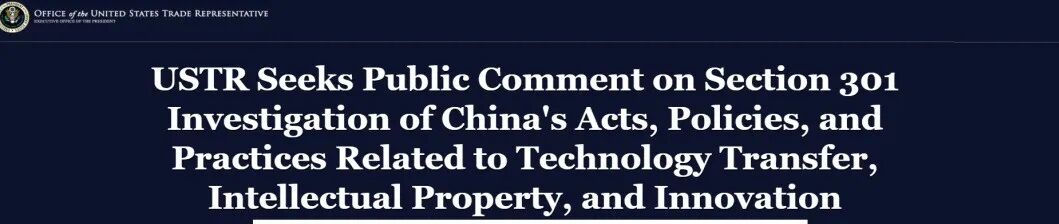
Core Points - The U.S. Trade Representative's Office announced an extension of the tariff exemption period for certain products related to China's technology transfer, intellectual property, and innovation practices from May 31, 2025, to August 31, 2025 [1][3] Group 1: Tariff Exemption Extension - The extension of the tariff exemption is based on public feedback received by December 29, 2023, and ongoing evaluations during the four-year review process [3] - A total of 164 items from Attachment A and 14 items from Attachment B will have their exemptions extended for an additional three months [3] - The exemption applies to products listed in Attachments A and B, including chemical materials, electronic components, medical supplies, solar manufacturing equipment, and wafer handling equipment [4] Group 2: Historical Context and Economic Impact - Historical data indicates that during the Trump administration, four rounds of "301 tariffs" were imposed on China, with the first three rounds having a 25% increase and the fourth round at 7.5% [3] - The average weighted tariff rate on Chinese imports was 19.3% at the beginning of 2020, but is projected to decrease to 10.7% by the end of 2024 due to changes in export proportions and product categories [3] - The U.S. has faced criticism for its unilateral and protectionist measures, which have been deemed to disrupt international trade order and supply chain stability [4] Group 3: New Investigations and Responses - On April 17, the U.S. Trade Representative's Office initiated a 301 investigation into China's maritime, logistics, and shipbuilding industries, which has been met with strong opposition from China [5] - China's Ministry of Commerce criticized the U.S. for misrepresenting normal trade activities as threats to national security and for blaming its own industrial issues on China [5] - The Chinese government has urged the U.S. to respect facts and multilateral rules, calling for a return to a rules-based multilateral trading system [5]