
硬折扣超市

Search documents
2025年中国仓储会员店等保持两位数增长
2 1 Shi Ji Jing Ji Bao Dao· 2026-01-19 10:36
Core Insights - The retail sector in China is experiencing significant changes, with new retail models like unmanned stores and warehouse membership stores showing double-digit growth in sales [1] - In 2025, the total retail sales of consumer goods reached 50,120.2 billion yuan, a 3.7% increase from the previous year, while online retail sales grew by 8.6% [1] - The demand for warehouse membership supermarkets is rising, particularly among the expanding middle-income group in China, leading to increased store openings by brands like Sam's Club [1][2] Group 1: Retail Performance - In 2025, the total retail sales of consumer goods in China reached 50,120.2 billion yuan, with a growth rate of 3.7% year-on-year [1] - Online retail sales increased by 8.6%, with physical goods online retail sales growing by 5.2%, accounting for 26.1% of total retail sales [1] - Sam's Club opened a record 10 new stores in 2025, bringing its total in China to over 60 [1][2] Group 2: Market Trends - The warehouse membership supermarket model, which originated in the 1950s in the U.S., is gaining popularity in China, driven by urbanization and a growing middle-income population [2] - Walmart's China operations reported a net sales increase of 21.8% in Q3 2026, with e-commerce sales growing by 32% [2] - The competition in the warehouse membership supermarket sector is intensifying, with some brands struggling to expand, such as Costco, which opened only 7 stores in five years [3] Group 3: Consumer Behavior - There is a noticeable shift in consumer preferences towards personalized, diverse, and quality products, indicating a potential for consumption upgrades in China [4] - The retail landscape is evolving, with traditional channels facing challenges from e-commerce, prompting innovations and adaptations in retail strategies [3][4] - The potential for consumer spending in China remains vast, supported by a population of over 1.4 billion and a significant middle-income demographic [4]

2025零售业十大事件
Sou Hu Cai Jing· 2025-12-24 16:41
Group 1 - The hard discount supermarket format has gained significant attention in the second half of this year, with major internet companies launching new stores and expanding their presence [3][5] - Companies like Hema, JD, and Meituan have opened multiple hard discount stores, indicating a shift towards more price-sensitive consumer behavior [3][5] - The core competitiveness of hard discount formats lies in efficiency rather than just low prices, utilizing standardized models to reduce costs and improve turnover [5][7] Group 2 - Hema's X membership store has exited the market due to unclear positioning and high operational costs, highlighting the challenges faced by membership-based retail formats [9][10] - Despite Hema's exit, other local players are still attempting to establish membership stores, but they face strong competition and challenges in attracting price-sensitive customers [12][13] Group 3 - The retail sector has seen a wave of leadership changes among major players like Aldi, Sam's Club, and Yonghui, indicating a need for new strategies to adapt to market conditions [14][15] - These leadership changes are aimed at enhancing local procurement and supply chain management to support expansion while maintaining cost efficiency [15][17] Group 4 - The "prepaid card redemption" issue at Meitohai in Shanxi has raised concerns about cash flow and operational stability, as customers rush to redeem their prepaid cards amid fears of financial instability [18][21] - The situation has been exacerbated by recent store adjustments and closures, leading to a loss of consumer confidence and further financial strain [21][22] Group 5 - The trend of online players moving into offline retail is gaining momentum, with companies like Xiaoxiang Supermarket and Pupu planning to open physical stores to complement their online operations [23][24] - This shift is driven by rising costs associated with pure online fulfillment and the need to enhance consumer trust through physical retail experiences [25][28] Group 6 - The supermarket sector is undergoing a transformation as companies adopt the "learn from Pao Donglai" strategy, focusing on improving store layouts and customer experience [30][32] - However, many traditional supermarkets are still struggling with profitability despite initial positive performance post-renovation, indicating deeper systemic issues [32][33] Group 7 - Major online retailers like JD and Hema are retracting from partnerships with traditional supermarkets to refocus on self-operated models, aiming to streamline operations and improve efficiency [34][35] - This strategic shift reflects a broader trend of integrating online and offline capabilities to enhance customer experience and operational effectiveness [37][38] Group 8 - Regional retailers are emerging as new players in the market, focusing on local consumer needs and adapting their offerings accordingly, which may provide a competitive edge [39][41] - These regional players face challenges related to cost management and operational execution, particularly as they expand into new markets [41][42] Group 9 - The snack industry is experiencing a shift towards low-cost, high-density store formats, with companies like Mingming and Wancheng rapidly expanding their presence [42][44] - Traditional brands are facing pressure as they struggle to maintain market share amid aggressive pricing strategies from new entrants [44][45] Group 10 - The recent subsidy wars in instant retail have led to significant increases in order volumes, but also heightened financial pressures due to intensified price competition [47][51] - The long-term implications of these subsidy strategies remain uncertain, as companies navigate the balance between growth and profitability [51][52]

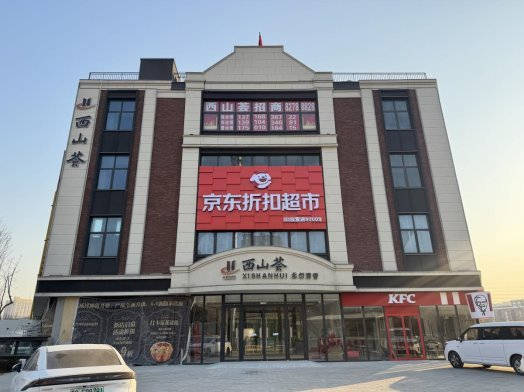
京东硬折扣超市北京首店开业,能成为中国的“奥乐齐”吗?
Sou Hu Cai Jing· 2025-12-17 03:44
Group 1 - The core concept of the news is that JD.com is adopting a "hard discount" retail model, inspired by European practices, which focuses on long-term low prices through streamlined product offerings and strong private label development [1][2] - JD.com's new discount supermarket in Beijing features a "large store + multiple SKUs" approach, emphasizing local adaptations and a variety of products, including local snacks and competitively priced private label items [2] - The opening of JD.com's ninth hard discount store in Beijing marks its continued expansion in the Chinese market, targeting price-sensitive consumers in densely populated communities rather than prime commercial areas [3] Group 2 - The hard discount model is exemplified by global leader Aldi, which operates with a limited SKU count and a high percentage of private label products, achieving significant success worldwide [1] - JD.com aims to differentiate itself from established players like Aldi by offering a wider range of products while maintaining cost advantages through local supply chain integration [2] - Retail experts note that the current trend of consumer segmentation presents a favorable environment for the growth of hard discount formats, although JD.com must balance efficiency with local consumer preferences [2]

大厂加码硬折扣:与传统商超的效率之战
3 6 Ke· 2025-10-16 04:02
Core Insights - The hard discount supermarket sector in China is undergoing significant changes, with traditional players facing challenges while new entrants like Alibaba, JD, and Meituan are entering the market aggressively [1][5][9] - The hard discount model is gaining traction due to a shift in consumer behavior towards value-oriented shopping, with the market expected to grow from approximately 1.79 trillion yuan in 2023 to 2.28 trillion yuan by 2025, reflecting a compound annual growth rate of 11.0% [4][6] Group 1: Market Dynamics - The closure of a prominent hard discount supermarket due to cash flow issues marks a pivotal moment in the sector, while competitors like Hejia Yue and Wumart continue to thrive [1] - Major e-commerce players are now focusing on the hard discount model as a new growth avenue after reaching saturation in online sales [1][7] - The hard discount retail channel is projected to grow globally by 8.2% in 2024, indicating a robust demand for discount retailing [4] Group 2: Consumer Behavior - Consumers are increasingly seeking value for money, leading to a decline in brand loyalty and a preference for cost-effective options [4][6] - The social and experiential aspects of shopping in physical stores remain irreplaceable, as consumers value the in-person shopping experience that online platforms cannot replicate [3][4] Group 3: Competitive Landscape - New entrants are leveraging their supply chain integration and digital capabilities to compete against established players, which may lack experience in physical retail operations [7][8] - The hard discount model emphasizes low margins, high turnover, and a limited SKU selection, focusing on essential goods to enhance operational efficiency [6][8] Group 4: Future Outlook - The retail industry is expected to enter a phase of deep integration between online and offline channels, with a focus on optimizing supply chains and enhancing consumer experiences [4][5] - Companies that can effectively understand and meet consumer needs will have a competitive advantage in the evolving retail landscape [4][9]

硬折扣超市,大厂的下一个赛道?
Hu Xiu· 2025-09-17 13:17
Group 1 - Major companies like Meituan, JD.com, and Hema are increasingly investing in hard discount supermarkets, opening multiple new stores in the Jiangsu, Zhejiang, and Shanghai regions [1] - The article explores the concept of hard discount supermarkets and their appeal to large corporations in the retail sector [1] Group 2 - The trend indicates a competitive landscape where major players are "rolling up their sleeves" to capture market share in this emerging segment [1] - The article suggests that hard discount supermarkets may represent the next significant growth opportunity for these companies [1]