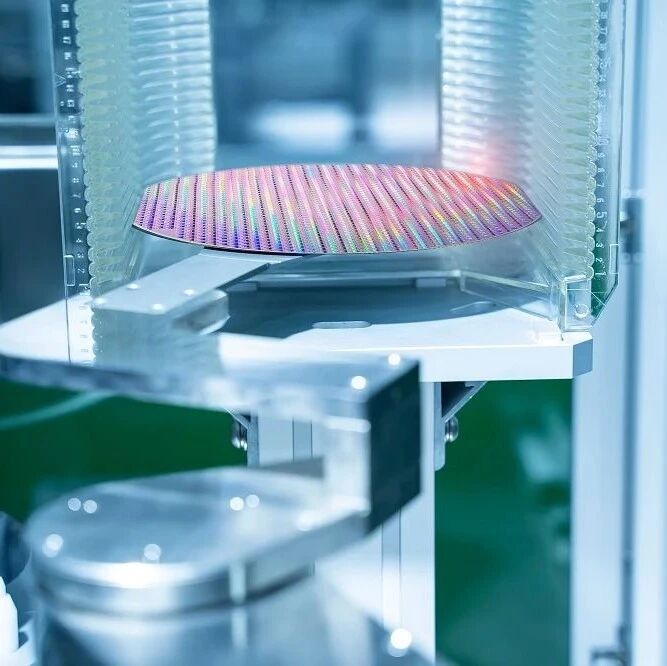
碳化硅中介层

Search documents
先进封装专家线上小范围交流电话会
2026-01-19 02:29
Summary of the Conference Call on Advanced Packaging Industry Industry Overview - The domestic COWS (Chip-on-Wafer-on-Substrate) packaging capacity is rapidly expanding, with companies like Shenghe and Tongfu achieving mass production by 2025, totaling approximately 1.5 million units per year, primarily using Cross-S technology [1][2] - By the end of 2026, total capacity is expected to approach 3 million units per year, benefiting from capacity releases by second-tier manufacturers such as Changdian and Huada [1][3] Key Players and Capacity - **First Tier**: Shenghe and Tongfu, with annual capacities of approximately 1.2 million and 0.3 million units, respectively [2] - **Second Tier**: Companies like Changdian and Huada are building production lines, each expected to reach 0.5 million units by the end of 2026 [2] - **Third Tier**: Non-traditional packaging manufacturers like Taiji and Riyuexing focus on consumer electronics and GPU/CPU packaging [2] Technical Insights - The yield rate for 2.5D COWS packaging is high, with a single wafer capable of being cut into 25-30 chips [4] - The construction of a 2.5D production line with an annual capacity of 1 million chips requires a capital expenditure of approximately 1 billion RMB, with 800 million RMB allocated for equipment [7][13] Equipment and Capital Expenditure - Major capital expenditures are associated with photolithography and electroplating equipment, each costing around 50 million RMB [11][14] - The domestic application of equipment in the advanced packaging sector shows significant progress, with over 50% localization in various processes [8][9] Challenges and Strategic Considerations - New entrants in the advanced packaging field face challenges such as strategic decision-making, funding support, and a long return cycle of 3-4 years [5][6] - Mastery of key technologies like bonding, RDL, FCBJ, and TSV is essential for success in 2.5D or 3D packaging [6] Market Dynamics - Upstream material prices have generally increased by 10%-20%, with storage devices experiencing a 30% rise due to capacity issues and material cost increases [19] - The localization rate for photolithography materials is low, while certain electroplating solutions have higher localization rates [16][17] Future Prospects - The potential application of silicon carbide intermediate layers is promising due to their thermal and insulation properties, but challenges in processing and equipment requirements remain [20]
晶盛机电(300316):英伟达新一代GPU有望采用碳化硅中介层,SiC衬底新应用打开公司成长空间
Soochow Securities· 2025-09-07 08:21
Investment Rating - The report maintains a "Buy" rating for the company [1] Core Views - The introduction of silicon carbide (SiC) as an intermediary layer in NVIDIA's next-generation GPU is expected to open new growth opportunities for the company [7] - The company has successfully overcome key challenges in growing 12-inch SiC crystals, achieving a significant technological breakthrough [7] - The report forecasts the company's net profit for 2025-2027 to be 1.01 billion, 1.25 billion, and 1.54 billion RMB respectively, with corresponding dynamic P/E ratios of 46, 37, and 30 times [7] Financial Projections - Total revenue for 2023 is projected at 17,983 million RMB, with a year-on-year growth of 69.04% [1] - The net profit attributable to the parent company for 2023 is estimated at 4,558 million RMB, reflecting a year-on-year increase of 55.85% [1] - The latest diluted EPS for 2023 is expected to be 3.48 RMB per share [1] Market Data - The closing price of the stock is 35.00 RMB, with a market capitalization of approximately 45.83 billion RMB [5] - The price-to-book ratio is 2.67 [5] Financial Ratios - The company's asset-liability ratio is reported at 34.88% [6] - The projected gross profit margin for 2024 is 33.35% [8] - The return on equity (ROE) is expected to be 15.10% for 2024 [8]

SiC中介层,成为新热点
半导体行业观察· 2025-09-04 01:24
Core Viewpoint - The Taiwanese silicon carbide (SiC) industry is experiencing rapid growth due to increasing demand from Nvidia for advanced GPU performance, despite challenges in the global SiC supply chain [3][4]. Group 1: Industry Developments - Wolfspeed, a global leader in SiC, declared bankruptcy in May, while Taiwan's GlobalWafers announced plans to develop new SiC products with clients [3]. - The shift from silicon to silicon carbide for interposer layers in advanced semiconductor processes is being driven by Nvidia's new Rubin processor, which aims to enhance performance [3][4]. - The advanced chip plans are expected to handle power levels up to 1000 volts, significantly higher than Tesla's fast charging voltage of 350 volts [4]. Group 2: Technical Insights - Nvidia's NVLink technology benefits from closer GPU and memory proximity, leading to faster data transfer and improved power efficiency, making SiC an attractive material due to its superior thermal conductivity [4]. - The transition to SiC interposer layers requires advanced cutting techniques, as SiC's hardness is comparable to diamond, and poor cutting can lead to unusable surfaces [4][5]. - The production of larger single-crystal SiC wafers is a key differentiator for Taiwanese manufacturers compared to Chinese competitors, who primarily produce 6-inch and 8-inch wafers [4]. Group 3: Future Outlook - TSMC is collaborating with global manufacturers to develop SiC interposer manufacturing technology, while new laser cutting machines are being developed by companies like DISCO [5]. - Nvidia's first-generation Rubin GPU will still use silicon interposer layers until the new cutting equipment is available, with SiC expected to be integrated into advanced packaging by the end of 2025 [5].