碳酸锶

Search documents
美伊冲突下-天青石-碳酸锶供需走向
2026-03-20 02:27
Summary of Conference Call on Celestite and Strontium Carbonate Supply and Demand Industry Overview - The conference call discusses the supply and demand dynamics of celestite and strontium carbonate, particularly in the context of geopolitical tensions affecting Iranian supply, which accounts for 60%-70% of global raw material sources [1][13][22]. Key Points Celestite Supply Disruption - Iranian celestite supply has been completely interrupted, leading to a severe imbalance in global supply and demand [1]. - Domestic inventory can only support production for 4-5 months, with a significant supply-demand conflict expected within 3-6 months as downstream product inventories deplete [1][14]. Price Trends - Strontium carbonate prices have surged, with electronic-grade prices reaching 30,000-32,000 CNY/ton, up from 7,900 CNY/ton before the conflict [3][12]. - If the supply disruption continues until the end of 2026, conventional grade strontium carbonate prices could exceed 50,000 CNY/ton, potentially doubling current prices [1][13]. Profit Margins - Profit margins for strontium carbonate production have increased significantly, with per-ton profit margins rising from 14.3% to 30%-40% due to the rising prices of raw materials [1][12]. Domestic Production Capacity - Red Star Development has a self-supply rate of approximately 70%, providing it with better risk resistance compared to Jinrui Mining, which relies 70% on Iranian imports [1][25]. - Jinrui Mining's new capacity from the Qinghai Dafengshan mine is not expected to be operational until Q4 2026 [1]. Future Demand Projections - Domestic demand for strontium carbonate is projected to reach 380,000-400,000 tons by 2026, significantly exceeding the planned production capacity of about 250,000 tons [1][22]. - The demand forecast considers the expansion of foreign enterprises in China, which will drive additional demand [22]. Inventory Levels - Current strontium carbonate inventory in China can support consumption for less than 6 months, with a specific estimate of 4-5 months [14]. - Major domestic producers are experiencing tight raw material inventories, with Red Star's inventory expected to last 1-3 months and Jinrui's only 15-20 days [4][5]. Strategic Importance of Celestite - Celestite has military strategic attributes, being a key raw material for radar wave absorption materials and stealth coatings, with high-grade ore (>85%) heavily reliant on Iranian supply [2][8]. Market Dynamics - The price sensitivity of downstream applications is low, as strontium carbonate costs only account for 7%-13% of the total cost in magnetic materials, allowing for price increases to be passed through with minimal resistance [1][21]. - The industry is expected to see a concentration of profits in the strontium carbonate segment, particularly in high-purity and high-value products [19]. Potential Acquisitions - The acquisition of the Xinji Chemical plant, which has a capacity of 60,000 tons, is seen as a strategic opportunity for companies like Red Star and Jinrui to quickly increase production capacity [16][18]. Conclusion - The ongoing geopolitical tensions and supply disruptions are expected to lead to significant price increases and a tightening of supply in the celestite and strontium carbonate markets, with domestic producers facing challenges in meeting rising demand. The strategic importance of these materials in military applications further complicates the supply landscape.
碳酸锶供需基本面与展望
2026-03-04 14:17
Summary of Key Points from the Conference Call on Strontium Carbonate Supply and Demand Industry Overview - The conference call discusses the strontium carbonate industry, particularly focusing on supply and demand dynamics, pricing trends, and the impact of geopolitical events on the market. Core Insights and Arguments 1. **Price Fluctuations**: Strontium carbonate prices surged from 7,800 CNY/ton in February to 10,000 CNY/ton in March due to supply disruptions from Iran, with expectations to reach 15,000 CNY/ton from April to September [1][2][3]. 2. **Supply Dependence**: Iran accounts for over 80% of China's strontium carbonate imports. Continued supply disruptions could lead to increased production costs due to high mining and logistics expenses, raising the breakeven point to 8,000-10,000 CNY/ton [1][2]. 3. **Global Capacity Changes**: By 2025, actual global strontium carbonate capacity is expected to drop to 245,000 tons due to plant shutdowns, but could rise to 455,000 tons by 2027 with expansions from companies like Hongxing Development [1][2]. 4. **Demand Growth**: The demand for strontium carbonate is projected to grow at an annual rate of 3%, primarily driven by the magnetic materials sector, which accounts for 62% of total demand [1][10]. 5. **Production Capacity of Key Players**: Hongxing Development currently has a capacity of 30,000 tons, with plans to expand to 90,000 tons by the end of 2025. Jinrui Mining controls the largest open-pit strontium mine globally, with a current capacity of 20,000 tons and plans to expand to 40,000 tons by 2027 [2][13]. Additional Important Content 1. **Impact of Geopolitical Events**: The ongoing conflict between the U.S. and Iran has led to significant price volatility, with prices fluctuating based on market perceptions of supply stability [3][4]. 2. **Domestic vs. Imported Resources**: China's strontium ore reserves are substantial, with 70% of the global total, but domestic ore quality is generally lower than imported ores from Iran, Spain, and Mexico [5][6]. 3. **Cost Structure**: The production cost of strontium carbonate is sensitive to ore prices, with breakeven levels around 7,000 CNY/ton. If ore prices rise significantly, production costs could increase to 8,000-10,000 CNY/ton [19][26]. 4. **Market Dynamics**: The market is currently experiencing a supply-demand imbalance, with excess supply leading to price pressures. The overall demand is around 150,000 tons annually, with various applications across industries [10][14]. 5. **Potential for New Applications**: There is potential for increased demand from the metal industry, where strontium carbonate is used as an additive to enhance performance. This could add approximately 20,000 tons to annual demand if fully realized [28]. This summary encapsulates the critical aspects of the strontium carbonate market as discussed in the conference call, highlighting the interplay between supply, demand, pricing, and external factors influencing the industry.


基础化工行业周报:地缘升级,商品上涨-20260301
Guotou Securities· 2026-03-01 10:49
Investment Rating - The report maintains an investment rating of "Outperform the Market - A" for the chemical industry [5] Core Views - The chemical industry is at the bottom of a four-year down cycle, with indicators suggesting it has nearly bottomed out. The year 2026 is expected to be a turning point for the cycle [20] - The price index for Chinese chemical products (CCPI) was reported at 3930 points on December 31, 2025, a 39% decrease from the peak in 2021, indicating the industry is in a historically low range [20] - The net profit for the basic chemical sector reached 112.7 billion yuan in the first three quarters of 2025, showing a year-on-year increase of 7.5%, indicating initial stabilization [20] - Capital expenditure in the industry has decreased by 18.3% year-on-year, marking seven consecutive quarters of negative growth since Q4 2023, signaling the end of the supply expansion phase [20] Summary by Sections 1. Core Views - The chemical industry is expected to see a reversal in the cycle in 2026, with multiple indicators showing it has reached a bottom [20] - The significant drop in the CCPI indicates a historical low for the industry [20] - The increase in net profit suggests a stabilization in the sector [20] - The decline in capital expenditure indicates a shift away from supply expansion [20] 2. Chemical Sector Performance - The basic chemical industry index rose by 3.6% in the recent week, outperforming the Shanghai Composite Index by 2.5 percentage points [28] - Year-to-date, the basic chemical industry index has increased by 19.2%, significantly outperforming both the Shanghai Composite and the ChiNext indices [28] 3. Individual Stock Performance - In the recent week, 24 out of 26 sub-sectors in the basic chemical industry saw gains, with the phosphate and phosphate chemical sector leading with an 8.8% increase [32] - The polyester sector experienced a slight decline of 0.3%, indicating mixed performance among individual stocks [32]
国投证券: 地缘冲突重塑化工品格局 重点关注硫磺、原油、碳酸锶、甲醇
智通财经网· 2026-01-26 03:59
Group 1: Sulfur - Sulfur is identified as a long-term bullish commodity due to geopolitical conflicts affecting supply, particularly with a projected impact of 1 million tons of sulfur supply from Russia in Q4 2023, and recovery expected to be difficult until mid-2026 [1] - Demand for sulfur is anticipated to increase significantly, with China's lithium iron phosphate production expected to exceed 3.6 million tons in 2025, leading to an additional demand of 1.06 million tons of sulfur [1] - The supply-demand gap for sulfur is projected to reach -3 million tons in 2025, -5.13 million tons in 2026, and -4.05 million tons in 2027, indicating potential price increases towards historical highs [1] Group 2: Crude Oil - The global oil market may experience a supply surplus through 2026, primarily due to production increases from non-OPEC+ countries and weak global demand growth [2] - Geopolitical tensions, particularly in the Middle East and U.S. interventions in Venezuela, are expected to create risk premiums that could lead to significant short-term price volatility [2] - The supply side will be influenced by OPEC+ production commitments and U.S. shale oil output, while demand will be closely monitored in relation to China's inventory replenishment [2] Group 3: Strontium Carbonate - Strontium carbonate supply is highly dependent on Iran, with 70% of China's strontium ore imports coming from there, leading to increased supply uncertainty due to geopolitical risks [3] - The demand structure for strontium carbonate includes applications in strontium ferrite (66%), metallurgy (6.9%), electronic components (3.3%), and other strontium salts (21.7%) [3] - The material's properties, such as good conductivity and stability, position it well for high-quality optical glass manufacturing, suggesting a potential increase in demand as trends toward smart and high-end applications emerge [3] Group 4: Methanol - China has a high dependency on Iranian methanol imports, with 81,470 tons imported from Iran in the first 11 months of 2025, accounting for 6.4% of total methanol imports [4] - Historical data indicates that instability in Iran significantly affects domestic methanol prices, with a notable price increase of 300 yuan/ton observed during a previous conflict in June 2025 [4] - The current geopolitical situation in Iran is expected to maintain a relatively strong pricing trend for methanol in China [4]
美伊地缘风险扰动,碳酸锶或迎涨价机遇
Guotou Securities· 2026-01-14 01:38
Investment Rating - The industry investment rating is "Leading the Market-A" with a maintained rating [5]. Core Insights - The geopolitical risks involving the US and Iran may create opportunities for price increases in strontium carbonate [1]. - The demand for strontium carbonate is expected to accelerate due to its wide applications, particularly in high-quality optical glass and advanced packaging [2]. - The supply of strontium carbonate is highly dependent on Iran, which poses significant uncertainties due to geopolitical tensions, potentially leading to price volatility [3]. Summary by Sections Industry Overview - Strontium carbonate (SrCO3) is a colorless crystalline compound with limited solubility in water, primarily used in various industries including electronics and metallurgy [2]. - The downstream consumption structure of strontium carbonate includes strontium ferrite (66.0%), metallurgy (6.9%), electronic components (3.3%), fireworks (2.1%), and other strontium salts (21.7%) [2]. Supply Chain Analysis - Iran holds 85% of the world's high-grade strontium mineral reserves, with a production share of 32.1% in 2022, making it the second-largest producer globally [3]. - China's strontium carbonate production is heavily reliant on imports, with 70% sourced from Iran, indicating a significant supply risk if geopolitical tensions escalate [3]. Company Focus - Key companies in the strontium carbonate sector include: - Hongxing Development with a production capacity of 30,000 tons/year, expected to increase to 60,000 tons/year post-project completion [4][10]. - Jinrui Mining with a current capacity of 20,000 tons/year and plans for further expansion [9][10]. - The industry is characterized by high concentration, and any disruption in the supply of strontium minerals could lead to unexpected price increases [3].
红星发展:公司碳酸锶产品又分为粉状、粒状等多种规格
Zheng Quan Ri Bao Wang· 2025-12-17 11:12
Group 1 - The core viewpoint of the article is that Hongxing Development (600367) provided clarification on its strontium carbonate product pricing and specifications in response to investor inquiries [1] Group 2 - The company disclosed that the announced price for strontium carbonate products is the tax-excluded weighted average price [1] - The strontium carbonate products offered by the company are available in various specifications, including powder and granular forms [1]
金瑞矿业:大风山锶矿主要资源为天青石矿,已探明保有储量约为1500万吨
Mei Ri Jing Ji Xin Wen· 2025-12-02 11:44
Group 1 - The company Jinrui Mining (600714.SH) confirmed that the Dafengshan strontium mine has a proven reserve of approximately 15 million tons of strontium ore [2] - The primary resource of the Dafengshan strontium mine is celestite, which is the raw material for producing strontium carbonate products [2] - Strontium carbonate is the raw material for producing metallic strontium products [2]

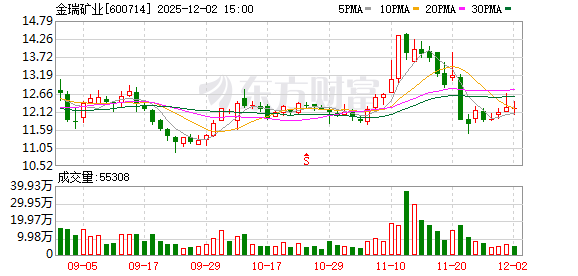
金瑞矿业:碳酸锶、金属锶等部分产品通过外贸公司出口西班牙、巴西、荷兰等地
Mei Ri Jing Ji Xin Wen· 2025-12-02 11:37
Group 1 - The company has products such as strontium carbonate, metallic strontium, strontium-aluminum alloy, and sulfur as a by-product [1] - The company exports some of its products, including strontium carbonate and metallic strontium, to countries like Spain, Japan, Brazil, and the Netherlands [1]
金瑞矿业(600714.SH):公司主要产品包括碳酸锶、金属锶、铝锶合金和副产品硫磺
Ge Long Hui· 2025-12-02 10:00
Group 1 - The company, Jinrui Mining (600714.SH), primarily produces strontium carbonate, metallic strontium, aluminum-strontium alloys, and sulfur as a byproduct [1] - Some products, including strontium carbonate and metallic strontium, are exported to countries such as Spain, Japan, Brazil, and the Netherlands through trading companies [1]
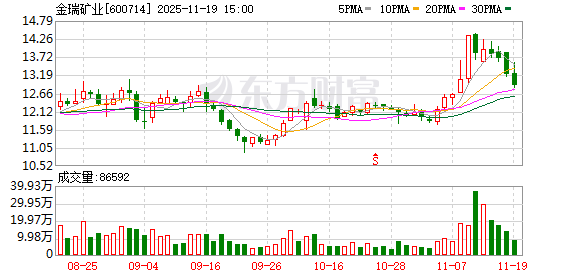
金瑞矿业:公司现有主营业务产品碳酸锶包括工业级碳酸锶和电子级碳酸锶
Mei Ri Jing Ji Xin Wen· 2025-11-19 08:22
Group 1 - The company is currently progressing on its 45,000 tons per year strontium carbonate expansion project, having completed preliminary research and design review as well as energy assessment review [2] - The strontium carbonate products include both industrial-grade and electronic-grade variants [2] - The project is located in the Shuangqiao Economic Development Zone of the Dazhu District in Chongqing, China [2] Group 2 - The company is currently undergoing environmental impact assessment and safety evaluation report review for the expansion project [2]