科创人工智能ETF汇添富(589560)

Search documents
中国大模型token调用量首超美国!云天励飞20cm涨停,科创人工智能ETF汇添富(589560)大涨2%,科技龙头陆续发布财报,AI营收贡献突出!
Sou Hu Cai Jing· 2026-02-27 06:48
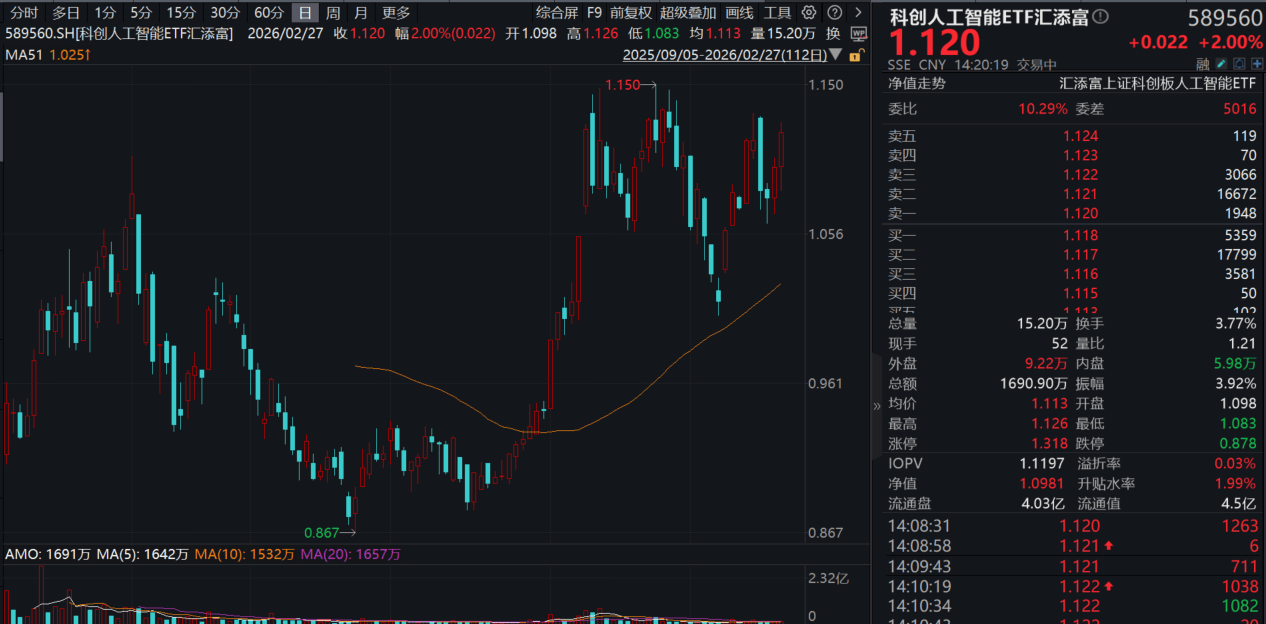
Group 1 - The A-share market experienced a volatile upward trend on February 27, with the AI sector remaining strong, particularly the computing power leasing segment, leading to a significant increase in the ETF Huatai-PineBridge AI (589560) by 2% [1] - The component stocks of the Huatai-PineBridge AI ETF showed mixed performance, with Yuntian Lifei hitting the daily limit up by 20%, Chipone Technology rising over 4%, and Fudan Microelectronics increasing by 2.5%, while other stocks like Lanke Technology and Kingsoft experienced pullbacks [2][3] Group 2 - As of February 27, 2026, China's token usage surpassed that of the United States for the first time, with a total of 4.12 trillion tokens used, indicating a growing dominance in AI model usage [6] - Baidu's recent financial report revealed that AI business revenue reached 40 billion yuan, accounting for 43% of its total revenue in Q4, exceeding market expectations [6] - The global foundry market is projected to grow from $155.6 billion in 2024 to $268.3 billion by 2032, driven by increasing demand for AI chips [7] - The semiconductor manufacturing equipment market is expected to reach $133 billion in 2025, with significant growth in NAND flash and DRAM equipment sales [8] - The shift from traditional SEO to GEO in AI applications is accelerating commercialization, with ByteDance's Doubao model projected to reach 100 million daily active users by the end of 2025 [9] - The Huatai-PineBridge AI ETF (589560) tracks a selection of 30 stocks, focusing on both hardware and software in the AI sector, benefiting from policy support, technological advancements, and stable growth fundamentals [9]


光芯片大消息,源杰科技涨超10%!科创芯片ETF汇添富(588750)直线飙升,涨超2%!全球科技巨头资本开支高增,超6000亿美元投向AI!
Sou Hu Cai Jing· 2026-02-10 02:33
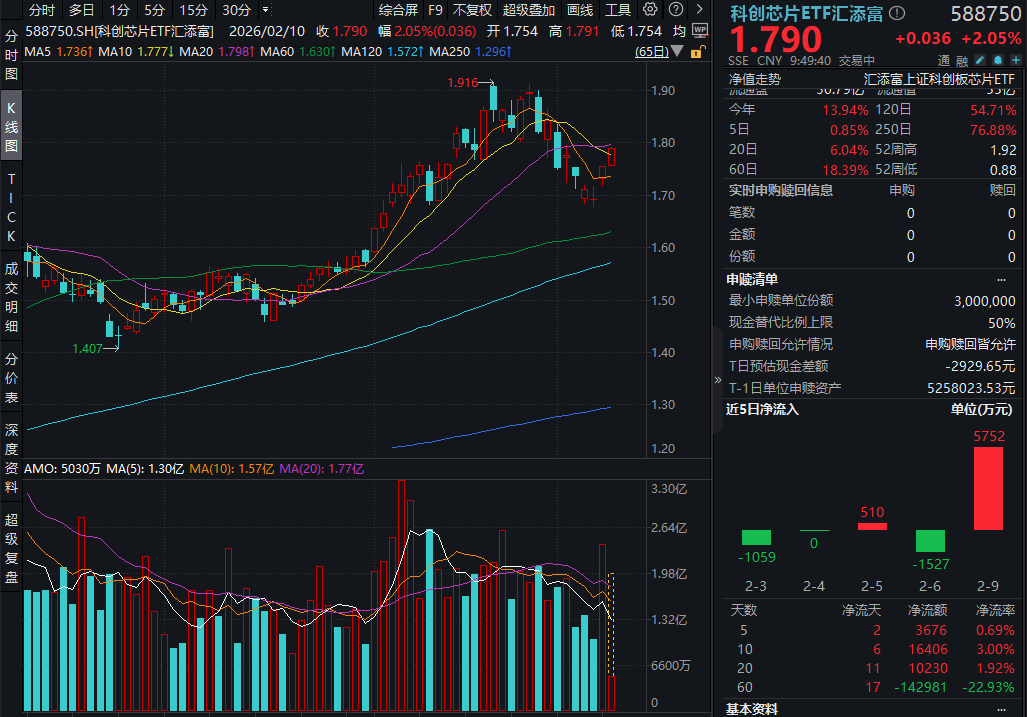
Core Viewpoint - The A-share market experienced fluctuations, but the hard technology sector, particularly the Sci-Tech Chip ETF, saw significant gains, indicating strong investor interest and capital inflow [1][4]. Group 1: Market Performance - As of 9:49 AM, the Sci-Tech Chip ETF Huatai (588750) surged over 2%, attracting more than 57 million yuan in investments the previous day [1]. - Key component stocks of the Sci-Tech Chip ETF, such as Yuanjie Technology and Chip Origin, rose over 10%, while Haiguang Information increased by over 5% [2][3]. Group 2: AI and Semiconductor Demand - High demand for AI infrastructure is driving significant capital expenditures from major tech companies, with a projected increase of over 28% in global AI server shipments by 2026 [8]. - Major tech firms, including Microsoft and Meta, are expected to invest over 600 billion USD in capital expenditures by 2026, reflecting the growing importance of AI in their business models [6][8]. Group 3: Semiconductor Market Insights - Goldman Sachs reported that the global memory market will face severe supply shortages in 2026-2027, particularly in DRAM and NAND segments [6]. - The semiconductor market is experiencing a price increase, with storage module prices rising between 13.51% and 60% in January 2026 [9]. Group 4: Investment Opportunities - The Sci-Tech Chip ETF Huatai focuses on high-tech segments of the semiconductor industry, with a significant portion of its index comprising core upstream and midstream components [10][13]. - The index has shown strong growth potential, with a projected net profit growth rate of 97% for the full year of 2025, outperforming peers [14].

AI主线持续火热!芯原股份涨超4%,科创人工智能ETF汇添富(589560)涨2%冲击两连阳!利好政策密集来袭,行情将如何演绎?
Sou Hu Cai Jing· 2026-01-09 05:25
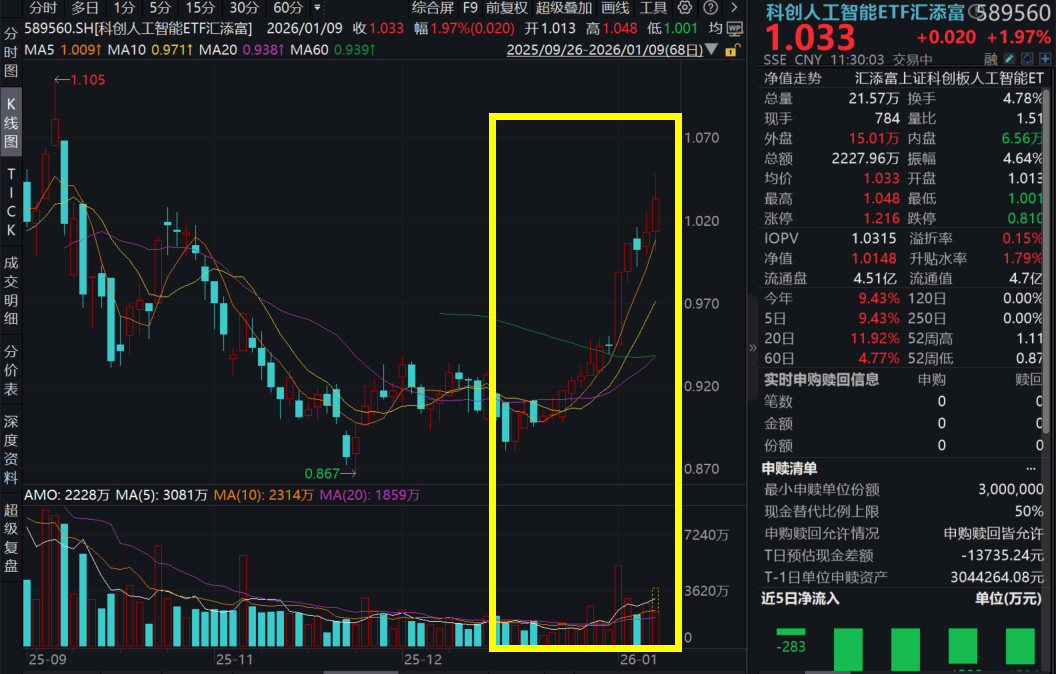
Group 1 - The A-share market experienced a rebound, with the Shanghai Composite Index reaching 4100 points for the first time in 10 years as of January 9 [1] - The AI-focused ETF, Huatai-PB (589560), saw a 2% increase, indicating strong investor interest in AI technology [1][5] - Major stocks in the AI sector, such as Zhongke Xingtou and Chip Origin, reported significant gains, with Zhongke Xingtou rising over 8% [5] Group 2 - UBS Securities noted a growing interest from international investors in Chinese AI technology companies, suggesting the emergence of trillion-dollar companies is only a matter of time [3] - A recent policy document from eight departments outlined goals for AI development, aiming for secure supply of core technologies and maintaining a leading position in the industry by 2027 [3] - The policy emphasizes enhancing AI applications in manufacturing through innovation, capability improvement, and product development [4] Group 3 - The focus of AI policy is shifting from "digital transformation" to "AI+", aiming to leverage advanced technologies for complex decision-making and innovation [4] - The policy framework includes promoting computational power and algorithm supply tailored to industrial scenarios, supporting the development of AI applications across various sectors [4] - The market consensus on AI industry trends is strong, with expectations for continued growth in AI infrastructure and applications leading up to 2026 [6] Group 4 - The investment strategy suggests focusing on domestic computational power and AI applications, particularly in the internet and media sectors, as they present high valuation and growth potential [6][7] - The AI industry is expected to benefit from a combination of policy support, technological advancements, and stable fundamental growth, creating a favorable environment for investment [7]


科创人工智能ETF汇添富(589560)今日上市!科创新时代,AI新纪元!如何把握新一轮科技革命配置机遇?
Xin Lang Cai Jing· 2025-09-05 02:07
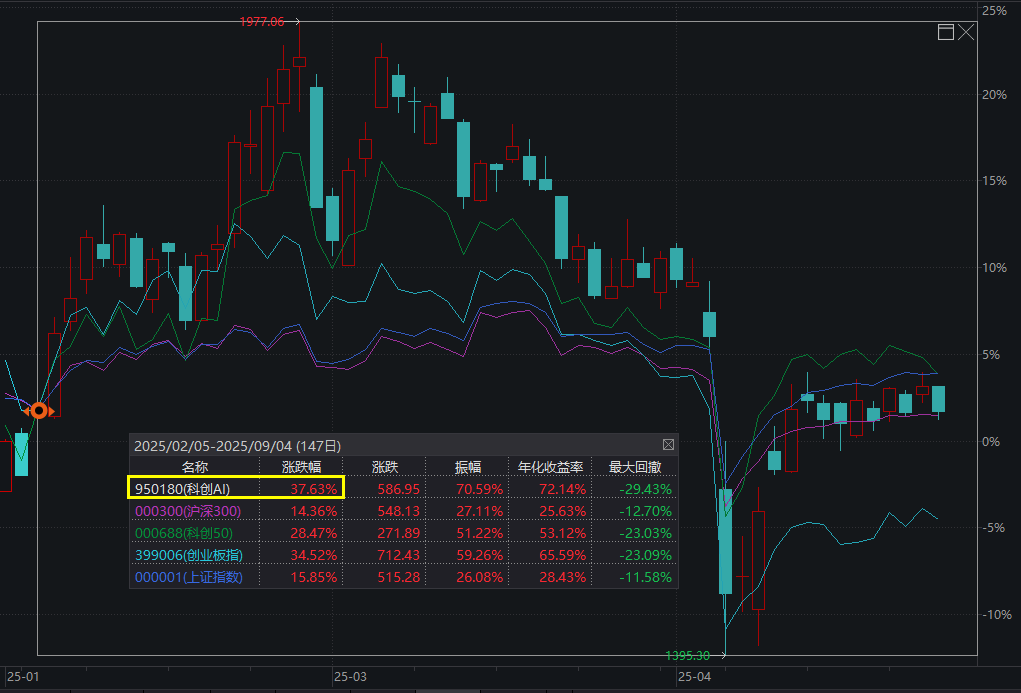
Core Insights - The emergence of ChatGPT in November 2022 marked a significant shift in the AI industry, achieving over 100 million users in just two months, catalyzing a transformation in the AI industry chain and igniting a global investment wave in AI [1] - DeepSeek has emerged as a leader in the AI theme, with the Sci-Tech AI ETF (589560) showing a cumulative increase of 38%, outperforming major indices like the CSI 300 and the ChiNext Index, indicating a reassessment of the technological potential of Chinese tech companies [1] AI Industry Chain Composition - The AI industry chain consists of upstream hardware (AI chips, servers, optical modules), midstream technology (large models, cloud computing services), and downstream software applications (AI software, edge AI) [2] - Hardware investments are seeing high certainty, with major companies increasing capital expenditures in AI, exemplified by a tech giant's three-year plan to invest 380 billion yuan in AI and cloud infrastructure, potentially driving significant growth in domestic computing and semiconductor sectors [2] Market Growth and Projections - The AI application market is projected to grow at a compound annual growth rate (CAGR) of 25.9% over the next decade, with IDC forecasting the Chinese AI market to reach $51.13 billion by 2025, a 34.8% year-on-year increase, and $101 billion by 2028 [6] - The acceleration of large model iterations is revitalizing the industry chain, with over 40 large models showcased at the WAIC 2025, enhancing personal efficiency and the deployment of AI agents [6] Policy and Technological Drivers - AI development is heavily supported by policy, with initiatives aimed at integrating AI into six key sectors by 2027 and achieving over 90% penetration by 2030, indicating a robust growth trajectory for the AI industry [7][9] - The domestic AI industry is experiencing a shift towards localization and technological upgrades, with DeepSeek reshaping the AI model landscape and increasing the market share of domestic AI chips [9] Investment Opportunities and Strategies - The current investment landscape in AI is characterized by a divergence in hardware and software strategies, with hardware being the most reliable segment for immediate returns, while the model and application layers present significant long-term potential [11] - The Sci-Tech AI Index is highlighted as a comprehensive investment vehicle for the AI industry, covering "computing power + technology + applications," and is expected to reflect industry trends more rapidly than other indices [12][15]