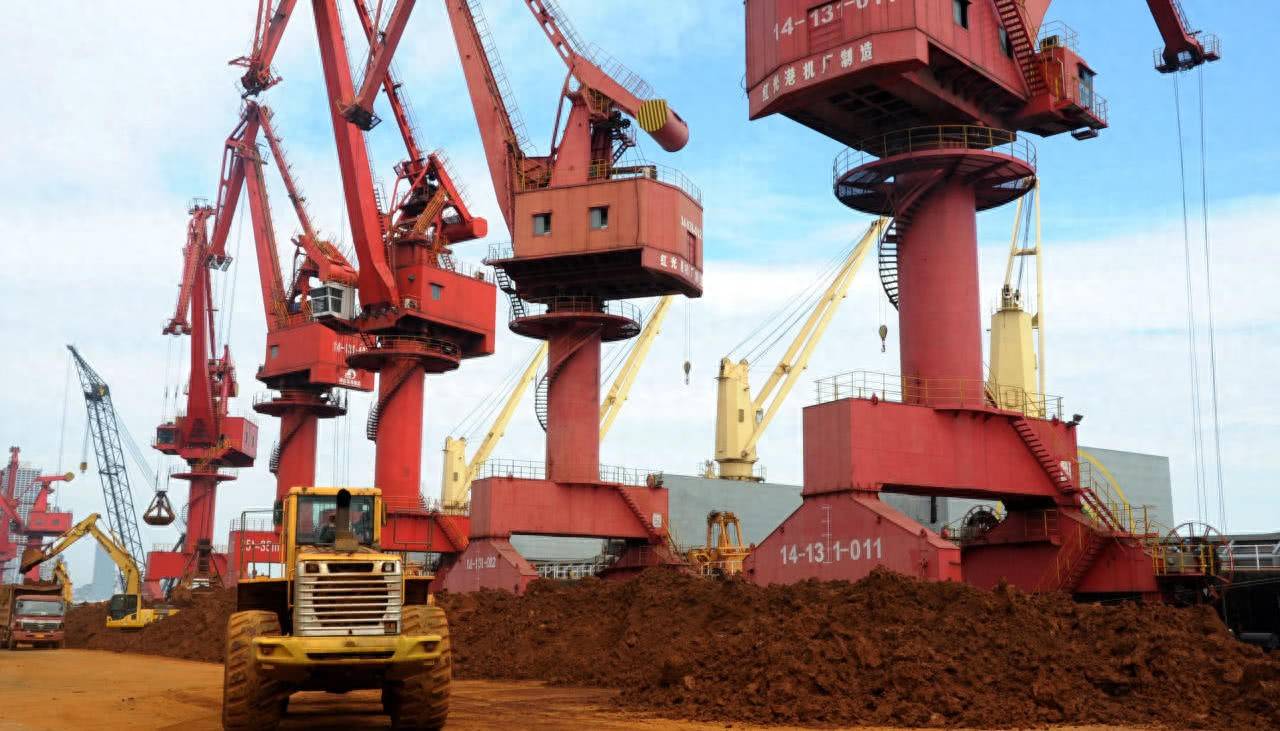
稀土原矿

Search documents
产业债系列报告:基本面修复下的有色金属产业债
Hua Yuan Zheng Quan· 2026-01-18 14:13
1. Report Industry Investment Rating The report does not explicitly mention the industry investment rating. 2. Core Views of the Report - The fundamentals of each link in the non - ferrous metal industry chain are jointly repaired, and the core indicators of the issuing entities in the non - ferrous metal industry have improved [1][4]. - It is recommended to focus on allocating AA+/AAA - rated central enterprises and regional leading state - owned enterprises, and select entities with relatively superior core financial indicators, and appropriately extend the duration for higher coupon yields [3][56]. - The credit spread of non - ferrous metal industrial bonds has been narrowing, and coupon income may need to be explored in the medium - and long - term of high - quality central and state - owned enterprises [51][52]. 3. Summary by Relevant Catalogs 3.1产业链各环节基本面协同修复 - **Overall Industry Operation**: From January to November 2025, the cumulative year - on - year growth rate of the industrial added value of the non - ferrous metal mining and dressing industry above the national scale was 7.6%, and that of the smelting and rolling processing industry was 7.1%. The output of ten common non - ferrous metals reached 7,447.4 million tons, and the overall operating income scale exceeded 9 trillion yuan, with a cumulative year - on - year increase of 13.3% [5]. - **Upstream Resource Mining**: Central and local state - owned enterprises dominate. China has advantages in rare metals like rare earths but has a high external dependence on strategic minerals. In 2025, the price of non - ferrous metals showed an upward trend, driving the improvement of the operating conditions of upstream mining enterprises [1][8][9]. - **Mid - stream Smelting and Processing**: In January - November 2025, the output of refined copper and electrolytic aluminum increased by 7.0% and 2.4% respectively. The output of deep - processed products was much higher than that of smelting products. There was a structural differentiation in the prosperity, with new - energy metal smelting being a highlight [2][16][22]. - **Downstream Application**: Basic metals are mainly used in traditional industries, while lithium, cobalt, and nickel are used in emerging fields. In 2024, the demand for lithium increased by nearly 30%, and the demand for nickel and cobalt increased by 6% - 8%, with the new - energy industry being the core driving force [23]. 3.2有色金属行业发行主体核心指标改善 - **Profitability**: From Q1 to Q3 in 2025, 36 issuing entities achieved a total operating income of 41,067 billion yuan and a net profit of 2,058 billion yuan, with year - on - year increases of 8.5% and 30.6% respectively. The average ROE was 6.91%, and the average net sales profit margin was 6.04%, both showing significant improvements [4][25]. - **Operating Ability**: The average inventory turnover was 6.27 times, and the average current asset turnover was 2.45 times, with year - on - year increases of 0.28 and 0.17 times respectively, indicating improved payment collection and capital return efficiency [4][27]. - **Solvency**: As of Q3 2025, the average asset - liability ratio was 58.0%, the current ratio was 1.18 times, and the quick ratio was 0.61 times. The EBITDA interest coverage ratio increased significantly, indicating enhanced debt repayment ability [4][33]. 3.3有色金属产业债结构分布及机会挖掘 - **Bond Structure**: As of January 7, 2026, there were 290 non - ferrous metal industrial bonds with a total balance of 290.1 billion yuan. Most of the bonds were issued by state - owned enterprises and had high ratings, and the remaining maturity was mostly less than 3 years [43]. - **Credit Spread**: Since 2025, the credit spread of non - ferrous metal industrial bonds has been narrowing, mainly due to the low - interest - rate environment, sufficient capital, and the improvement of industry fundamentals [51]. - **Coupon Income**: The average static coupon of AA+ and above bonds with a remaining maturity of less than 3 years is less than 2%. Coupon income may need to be explored in the medium - and long - term of high - quality central and state - owned enterprises, such as the 3 - 5Y AA+ bonds with a static coupon of 2.13% as of January 7, 2026 [52]. - **Recommended Bonds**: The report recommends some 3 - 5Y non - ferrous metal industrial bonds issued by central and state - owned enterprises for investors' reference [58][59].



越南修订法律,禁止稀土原矿出口
Zhong Guo Xin Wen Wang· 2025-12-12 07:28
Core Viewpoint - Vietnam's National Assembly has passed an amendment to the Law on Minerals, designating rare earths as a strategically important resource under strict state control and prohibiting the export of rare earth ores [1] Group 1: Legislative Changes - The amendment will take effect on January 1, 2026, requiring all rare earth exploration, mining, and processing activities to align with the national rare earth strategy and overall planning [1] - Only government-designated or authorized entities will be permitted to conduct rare earth exploration, mining, and processing activities [1] Group 2: Resource Management - The Vietnamese government will manage geological data uniformly, regulate trade, and maintain appropriate reserves of rare earths [1] - According to a report by the U.S. Geological Survey, Vietnam has an estimated rare earth reserve of approximately 3.5 million tons, ranking sixth in the world [1]


越南:禁止稀土原矿出口
中国能源报· 2025-12-12 01:17
Core Viewpoint - Vietnam's National Assembly has passed an amendment to the Law on Geology and Minerals, designating rare earths as a strategically important resource under strict state control and prohibiting the export of rare earth ores [3]. Group 1: Legislative Changes - The amendment will take effect on January 1, 2026, and mandates that all activities related to the exploration, mining, and processing of rare earths must align with the national rare earth strategy and overall planning [3]. - Only institutions and enterprises designated or authorized by the Vietnamese government will be permitted to conduct rare earth exploration, mining, and processing activities [3]. Group 2: Resource Management - The Vietnamese government will manage geological data uniformly, regulate trade, and maintain appropriate reserves of rare earths [3]. - According to a report by the U.S. Geological Survey, Vietnam's rare earth reserves are approximately 3.5 million tons, ranking sixth in the world [3].

越南:禁止出口稀土原矿
财联社· 2025-12-11 23:35
Core Viewpoint - Vietnam's National Assembly has passed an amendment to the Law on Minerals, designating rare earths as a strategically important resource under strict state control and prohibiting the export of rare earth ores [1] Group 1: Legislative Changes - The amendment will take effect on January 1, 2026, requiring all rare earth exploration, mining, and processing activities to align with the national rare earth strategy and overall planning [1] - Only government-designated or authorized entities will be permitted to conduct rare earth exploration, mining, and processing activities [1] - The Vietnamese government will manage geological data uniformly, regulate trade, and maintain appropriate reserves of rare earths [1] Group 2: Resource Availability - According to the U.S. Geological Survey, Vietnam has an estimated rare earth reserve of approximately 3.5 million tons, ranking sixth in the world [2]
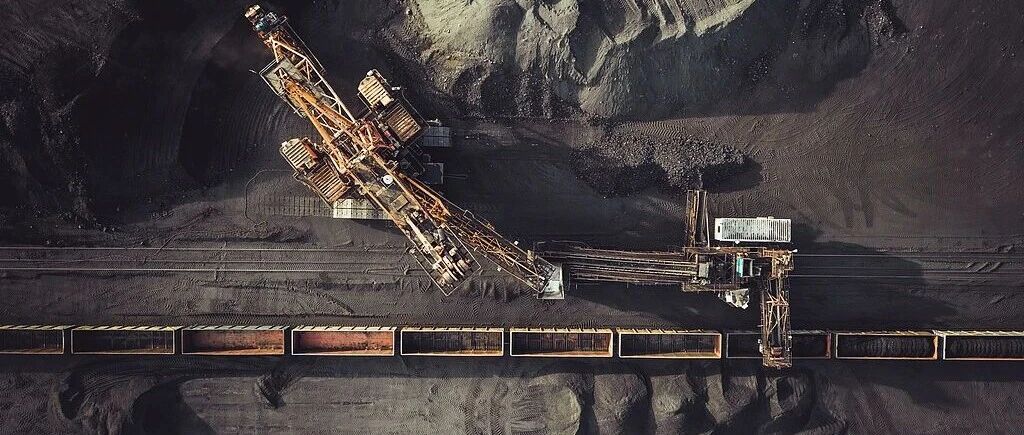
马来西亚贸易部长:尽管与美国达成了关键矿产协议,马来西亚仍维持对稀土原矿出口的禁令
Ge Long Hui· 2025-10-29 06:42
Group 1 - The core point of the article is that despite reaching a significant mineral agreement with the United States, Malaysia will maintain its ban on the export of rare earth ores [1]. Group 2 - Malaysia's Trade Minister confirmed the continuation of the export ban on rare earth minerals, indicating a strategic decision to prioritize domestic resource management [1].

中国稀土之父徐光宪:如果美国没有稀土,过去就打不赢海湾战争
Sou Hu Cai Jing· 2025-10-18 12:35
Core Insights - China's recent actions in the rare earth sector, including export controls and technological upgrades, have positioned it as a dominant player in the global rare earth industry, moving from a history of low-value raw material exports to a strategic leader [1][3][15] - The historical context reveals that China was once trapped in a cycle of "resource selling at low prices" and "technology being restricted," leading to a reliance on high-priced imports of processed rare earth products [7][9] Industry Transformation - China, holding the largest rare earth reserves globally, previously exported unprocessed rare earth minerals at prices lower than pork, resulting in environmental degradation and a lack of advanced processing technology [7][9] - The breakthrough in rare earth separation technology was spearheaded by Xu Guangxian, known as the "Father of Chinese Rare Earths," who developed new extraction theories and methods despite limited resources [9][11] Technological Advancements - The new extraction and separation process developed in China has significantly improved efficiency and reduced environmental impact, allowing for the production of high-purity rare earth elements domestically [11][13] - China's rare earth extraction purity has reached levels of 99.99%, enabling the country to produce essential materials for high-end applications, thus breaking the Western monopoly on this technology [11][13] Full Industry Chain Development - China has established a comprehensive industry chain from mining to application, including extraction, refining, and production of high-end materials, creating a self-sufficient ecosystem [13][15] - This integrated approach provides China with a competitive edge that is difficult for Western countries to replicate in the short term, as they would require over a decade to develop a similar infrastructure [13][15] Strategic Positioning - The recent export control measures are framed as a means of protecting national security and industrial development, marking a shift from passive compliance to active defense of China's interests in the global market [15][17] - The rise of China's rare earth industry illustrates the importance of self-reliance in core technologies, emphasizing that true advancement comes from domestic innovation rather than external acquisition [17]