纯电动大巴

Search documents
全球大公司要闻 | 水井坊澄清:“某酒企拟收购”传闻不属实
Wind万得· 2025-12-26 00:31
Group 1 - Water Well Square clarified that media reports about a potential acquisition by another liquor company are untrue [2] - Samsung Electronics plans to launch an application processor with its own GPU by 2027, marking a significant step in building an end-to-end AI ecosystem [2] - Tianqi Lithium has adjusted its product pricing system, effective January 1, 2026, shifting from SMM prices to prices based on Mysteel battery-grade lithium salt or the main contract price of lithium carbonate futures [2] - Xiaomi announced the price for its Xiaomi 17 Ultra starting at 6,999 yuan, which is an increase of 500 yuan compared to the previous Ultra model [2] Group 2 - Unisoc's subsidiary plans to invest 300 million yuan with partners to establish a new company focused on automotive domain control chips, with an asset valuation increase of 3,723.15% [4] - Zhongwei Co. signed a strategic cooperation framework agreement with Xinwanda for solid-state batteries [4] - Banachian plans to acquire 100% of Zhonglian Century's shares through a combination of stock issuance and cash payment, aiming to enhance its marketing business [4] - Tian Tie Technology reported that its controlling shareholder is under criminal detention, but this matter is unrelated to the company's operations [4] Group 3 - Yundong Technology completed a Pre-IPO financing round of several hundred million yuan, led by the National AI Industry Fund [5] - Sifang Precision submitted an IPO prospectus for a Hong Kong listing, reporting revenues of 664 million yuan in 2022 and projected revenues of 740 million yuan in 2024 [5] - Shiyuan Co. also submitted an IPO prospectus for a Hong Kong listing, with revenues of 20.99 billion yuan in 2022 and projected revenues of 22.40 billion yuan in 2024 [5] Group 4 - First Quantum Minerals agreed to sell its Cobre Las Cruces copper mine in Spain for up to $190 million, with the transaction expected to close in the first half of 2026 [8] - Super Copper's Cordillera Cobre project received approval from the Chilean National Mining Agency, securing 26 mining concessions [8] Group 5 - SoftBank is leading a new AI memory development project with Fujitsu, aiming to create next-generation memory products for AI and supercomputers [10] - LG Electronics will showcase its home robot LG CLOiD at CES 2026, integrating AI and automation features [10] - Mitsubishi Heavy Industries is maintaining a stable partnership with Fuan Co. in the gas turbine sector [10] Group 6 - Mercedes-Benz is accelerating its localization strategy in China, focusing on electrification and smart technology, with over 14 billion yuan planned for investment in 2024 [12] - Volkswagen Group is adjusting its core management at FAW-Volkswagen, with plans for a dual-line strategy for large SUVs by 2026 [12] - Audi plans to launch a pure electric sports car based on the SSP Sport architecture, targeting the high-end electric sports car market [12] - Shimadzu has reached a final agreement to acquire Glass HoldCo s.r.o. for approximately $678 million [12] - Deutsche Bahn signed a framework agreement with BYD for 200 electric buses, promoting green transformation in public transport [12]

德铁买中国大巴德国财长这么说
Di Yi Cai Jing Zi Xun· 2025-12-25 09:47
Group 1 - The core point of the article is the signing of a framework agreement between Deutsche Bahn and BYD for the production of 200 electric buses, highlighting the push for green public transport in Germany and the importance of cost-effectiveness in procurement decisions [2] - The agreement comes at a time when the EU is easing restrictions on fuel vehicles, with German officials emphasizing the need for electric vehicle adoption while also expressing a desire for patriotic purchasing practices [2][3] - Despite a decline in Germany's economic performance, foreign investment interest, including from Chinese companies, remains strong, with a slight decrease in foreign investment projects in 2024 compared to the previous year [3][4] Group 2 - Germany is implementing the "Growth Opportunities Act" to attract more foreign investment through tax incentives and structural reforms, including a gradual reduction of corporate tax rates from 15% to 10% by 2032 [4] - The bilateral trade volume between Germany and China reached €185.9 billion in the first three quarters of the year, with China remaining Germany's largest trading partner [4] - Chinese companies are increasingly focusing on greenfield investments in Germany, particularly in sectors like electric vehicles and digitalization, moving away from previous trends of mergers and acquisitions [5] Group 3 - Chinese enterprises face challenges in Germany due to increased scrutiny on foreign investments, including foreign investment reviews and data protection regulations, which can lead to longer approval times for transactions [6] - The German business community emphasizes the importance of the Chinese market, with many companies relocating operations to China to better align with local demands [7] - The trend of German companies moving operations to China reflects a strategic focus on local market needs, indicating a deep reliance on the Chinese market for future growth [7]


德铁买中国大巴德国财长这么说
第一财经· 2025-12-25 09:22
Core Viewpoint - The article discusses the recent agreement between Deutsche Bahn and BYD for the purchase of 200 electric buses, highlighting the shift towards electric transportation in Germany and the challenges faced by foreign investments in the country [3][4]. Group 1: Electric Bus Agreement - Deutsche Bahn signed a framework agreement with BYD for 200 electric buses to be produced in Hungary, emphasizing cost-effectiveness and the push for green public transport in Germany [3]. - The agreement coincides with the EU's relaxation of the "fuel vehicle ban," indicating a significant trend towards electrification in transportation [3]. Group 2: Economic Performance and Foreign Investment - Germany's economic growth has stagnated, with a projected growth of only 0.1% for 2025, down from previous forecasts [4]. - Despite the economic downturn, foreign investment interest in Germany remains, driven by the need for supply chain integration and access to the EU market [4]. Group 3: Tax Reforms and Investment Climate - Germany plans to gradually reduce the corporate tax rate from 15% to 10% by 2032, alongside other tax incentives to attract foreign investment [5]. - In the first three quarters of this year, bilateral trade between Germany and China reached €185.9 billion, with China remaining Germany's largest trading partner [5]. Group 4: Changing Investment Strategies - Chinese companies are increasingly favoring greenfield investments over mergers and acquisitions, reflecting a more strategic approach to entering the German market [6]. - Key sectors of interest for Chinese investments in Germany include digitalization, energy, and electric vehicles, with a focus on local sales rather than manufacturing [6]. Group 5: Challenges for Chinese Investments - Chinese companies face significant challenges in Germany, including foreign investment scrutiny, subsidy reviews, and data protection regulations [7]. - The German government has tightened regulations on foreign investments, particularly in sensitive sectors, which may lead to longer approval times for investments [7]. Group 6: Importance of the Chinese Market for German Companies - German companies are increasingly recognizing the importance of the Chinese market, with many relocating R&D centers to China to better align with local demands [8]. - The trend of "Eastward migration" among German firms highlights their commitment to maintaining a strong presence in China, as they believe leaving the market would result in lost opportunities [8].

德铁买中国大巴德国财长这么说,中企如何“迎难而上”
Di Yi Cai Jing· 2025-12-25 06:41
Group 1 - The core viewpoint of the article highlights the growing interest of Chinese companies in investing in Germany, particularly in sectors like electric vehicles and digitalization, as evidenced by the recent agreement between Deutsche Bahn and BYD for 200 electric buses [1][2] - Deutsche Bahn's decision to partner with BYD is driven by cost-effectiveness and the aim to support Germany's green transition and carbon reduction goals, coinciding with the EU's relaxation of the "fuel vehicle ban" [1][2] - The German economy has shown signs of stagnation, with zero growth in Q3 compared to Q2, and a forecasted growth of only 0.1% for 2025, prompting discussions on economic restructuring [2][3] Group 2 - Foreign investment in Germany is primarily motivated by the need for supply chain integration and access to the EU market rather than short-term high returns, with 1,724 foreign investment projects recorded in 2024, a slight decrease of 2% year-on-year [2][3] - The German government is actively seeking to attract more foreign investment through tax incentives and structural reforms, as outlined in the "Growth Opportunities Act" [2][3] - Recent changes in investment patterns show a shift from mergers and acquisitions to greenfield investments by Chinese companies, with a notable example being CATL's factory investment in Thuringia [3][4] Group 3 - Chinese companies are increasingly focusing on rational investment strategies, moving away from opportunistic investments, with key areas of interest including digitalization (51%), energy (48%), and electric vehicles (35%) [4][5] - Challenges for Chinese enterprises in Germany include site selection for factories or stores, accessing local government subsidies, and finding suitable labor [5][6] - The tightening of foreign investment regulations in Germany has created uncertainties for Chinese companies, with increased scrutiny on foreign acquisitions and data protection [6][7] Group 4 - German companies emphasize the importance of the Chinese market, with a notable trend of relocating operations to China, as seen with major firms like Volkswagen and BMW [7] - The dependency of the German economy on China remains significant, with a lack of clear structural de-risking trends observed [7]

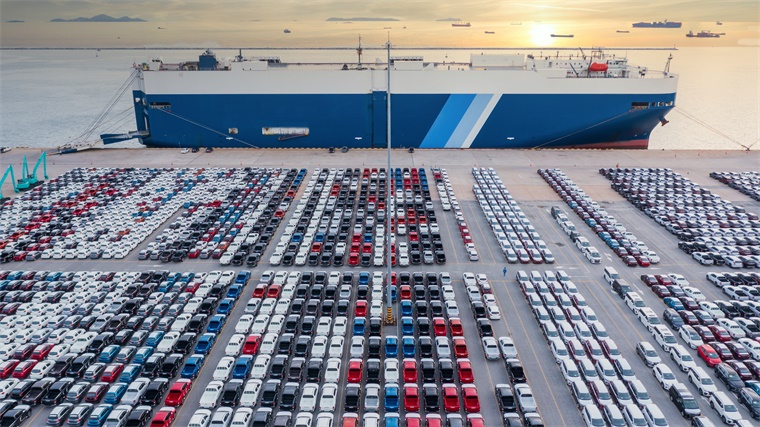
70天横跨3万公里,搭载超7000辆电动车!比亚迪“深圳号”滚装船完成首次跨洋远航
Qian Zhan Wang· 2025-07-09 07:41
Core Viewpoint - BYD has achieved a significant breakthrough in the maritime transportation of electric vehicles, marking a strategic expansion in its global operations and logistics capabilities [2]. Group 1: Maritime Operations - The "Shenzhen" roll-on/roll-off ship completed its first transoceanic voyage, covering over 30,000 kilometers in 70 days, transporting over 7,000 electric vehicles to Brazil [2]. - The "Shenzhen" is BYD's fourth specialized electric vehicle transport ship, with a length of 219.9 meters and a capacity to carry 9,200 standard vehicles across 16 decks [2]. - Following its initial voyage, the "Shenzhen" set off again on July 8, carrying 6,818 electric vehicles to Europe [2]. Group 2: Global Expansion - BYD's electric vehicle footprint has expanded to over 110 countries and regions across six continents, with overseas sales exceeding 470,000 units in the first half of 2025, a 132% year-on-year increase [2]. - The company has successfully secured orders in multiple countries, including Hungary, Colombia, and Sweden, demonstrating its strong presence in the global electric bus market [2]. - BYD aims to operate eight roll-on/roll-off ships by early 2026, with an annual capacity exceeding 1 million electric vehicles, reinforcing its logistics foundation for global expansion [2]. Group 3: Market Performance - In April, BYD's sales of pure electric vehicles in Europe surpassed those of Tesla for the first time, with a 397% year-on-year increase in registrations in the EU and UK markets in May [2]. - BYD has become the highest and fastest-growing electric vehicle exporter in China, with an expected export volume of 433,000 units in 2024, a 71.8% increase [2].