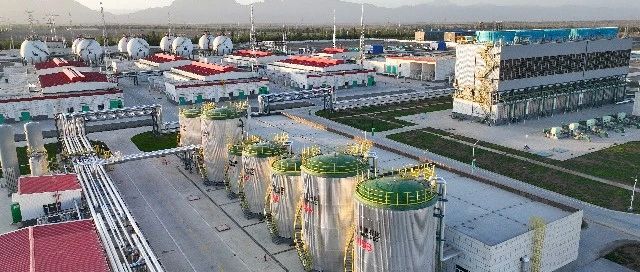
绿色甲醇(绿醇)

Search documents
绿色液体燃料万亿级市场蓄势待发
Zheng Quan Shi Bao Wang· 2025-12-12 02:03
Core Viewpoint - Green liquid fuels, including green methanol, green ammonia, and sustainable aviation fuel (SAF), are becoming essential for decarbonization across various industries such as shipping, aviation, and chemicals, due to their zero or ultra-low carbon emissions, high energy density, and ease of storage and transportation [1] Industry Summary - The demand for green liquid fuels is transitioning from "potential" to "rigid" as domestic and international clean energy systems and decarbonization policies improve, guided by the European shipping carbon tax mechanism and long-term net-zero framework goals [1] - Despite a one-year delay in the IMO net-zero framework vote, the trend towards green transformation in the shipping industry remains unchanged [1] - The estimated potential demand for green methanol, green ammonia, and SAF by 2025 is approximately 3 million tons, 2.5 million tons, and 2.5 million tons, respectively, with projections for 2030 reaching 36 million tons, 23 million tons, and 11 million tons, indicating future growth rates of 11 times, 9.2 times, and 3.5 times over the next five years [1] Market Potential - The market for green liquid fuels is expected to experience nearly tenfold growth in the next five years, driven by carbon tax policies and continuous cost reductions, with a long-term market potential reaching trillions of yuan [1] - Domestic manufacturers are leveraging abundant and inexpensive green electricity resources, complete equipment supply, and downstream support systems to accelerate the development of the green liquid fuel industry and business models [1] - Key areas of focus include integrated production manufacturers of green hydrogen, ammonia, and methanol, as well as suppliers of core equipment such as electrolyzers [1]
中信证券:“绿色溢价”逐步收窄 绿色燃料方兴未艾
智通财经网· 2025-12-12 01:49
Core Viewpoint - Green liquid fuels are becoming a key driver for decarbonization in shipping, aviation, and chemical industries, benefiting from increased carbon tax policies and ongoing cost reductions, with potential for nearly tenfold growth in the next five years and a long-term market space reaching trillions [1] Policy Support and Market Demand - The demand for green liquid fuels, including green methanol, green ammonia, and sustainable aviation fuel (SAF), is transitioning from "potential" to "rigid" due to improved clean energy systems and decarbonization policies, with projected global demand by 2025 reaching approximately 300 million tons for green methanol, 250 million tons for green ammonia, and 250 million tons for SAF, and expected to grow significantly by 2030 [2] Supply and Demand Dynamics - Current production processes for green methanol, green ammonia, and SAF are mature, but actual project implementation is limited, with effective capacities projected to be only 50 million tons for green methanol, 130 million tons for green ammonia, and 440 million tons for SAF by 2025, while by 2030, effective capacities are expected to reach 2600 million tons for green methanol, 2400 million tons for green ammonia, and 1700 million tons for SAF [3] Cost Reduction and Pricing Trends - The production cost of green liquid fuels is currently 70%-120% higher than traditional methods, primarily due to the "green premium" from renewable electricity and equipment costs, with projections indicating that the cost of green methanol could decrease to between 2900-3700 RMB per ton by 2030, narrowing the cost gap with traditional fuels [4] Industry Chain Development - The green liquid fuel industry chain is evolving, with upstream suppliers of green electricity and biomass, integrated production operators, and downstream storage and distribution companies, where integrated firms are primarily wind power and state-owned electricity companies, enhancing their value and positioning in the emerging market [5]

“新石油”时代来临!国内首批绿色燃料试点开启,距离产业化还有几道坎
第一财经· 2025-08-12 07:26
Core Viewpoint - The article discusses the recent developments in China's green hydrogen-based energy projects, highlighting the first batch of pilot projects for green liquid fuel technology and their significance for the industry amid global economic challenges and energy transition uncertainties [3][4]. Group 1: Pilot Projects Overview - The first batch of pilot projects includes three types of green fuels: fuel ethanol, green methanol (referred to as "green alcohol"), and green ammonia, involving nine company projects [4]. - The Northeast region of China is a key area for these projects, with abundant wind and solar resources to support green hydrogen production [4]. - Many projects utilize renewable energy sources like wind and solar power for electrolysis to produce green hydrogen, which is then synthesized into green alcohol or green ammonia [4]. Group 2: Market Demand and Industry Trends - The demand for green hydrogen, green alcohol, and green ammonia will directly impact the scale of wind and solar energy consumption in the future [6]. - Eight out of the nine pilot projects focus on green alcohol and green ammonia, aligning with the green transition and new regulations in the global shipping and aviation industries [7]. - Green ammonia and green alcohol are seen as important solutions for decarbonizing the shipping industry, with agreements already in place for supply [7]. Group 3: Challenges to Industrialization - Despite the launch of projects, only 5% of planned capacity has found buyers, indicating that market absorption remains a significant challenge [9]. - The price competition between shipowners and green fuel suppliers is intense, with current production costs for green alcohol being significantly higher than market competitiveness thresholds [9]. - The production cost of green hydrogen fuels is heavily influenced by the cost of renewable energy electricity, which constitutes over 50% of the total production cost [9][10]. Group 4: Innovations and Cost Reduction Strategies - Many projects are adopting innovative energy storage technologies to stabilize production and reduce costs, such as using liquid nitrogen storage to manage excess renewable energy [11]. - Research indicates that when renewable energy prices drop to 0.15 yuan per kilowatt-hour, the price of green ammonia could become competitive with existing gray ammonia prices [10].